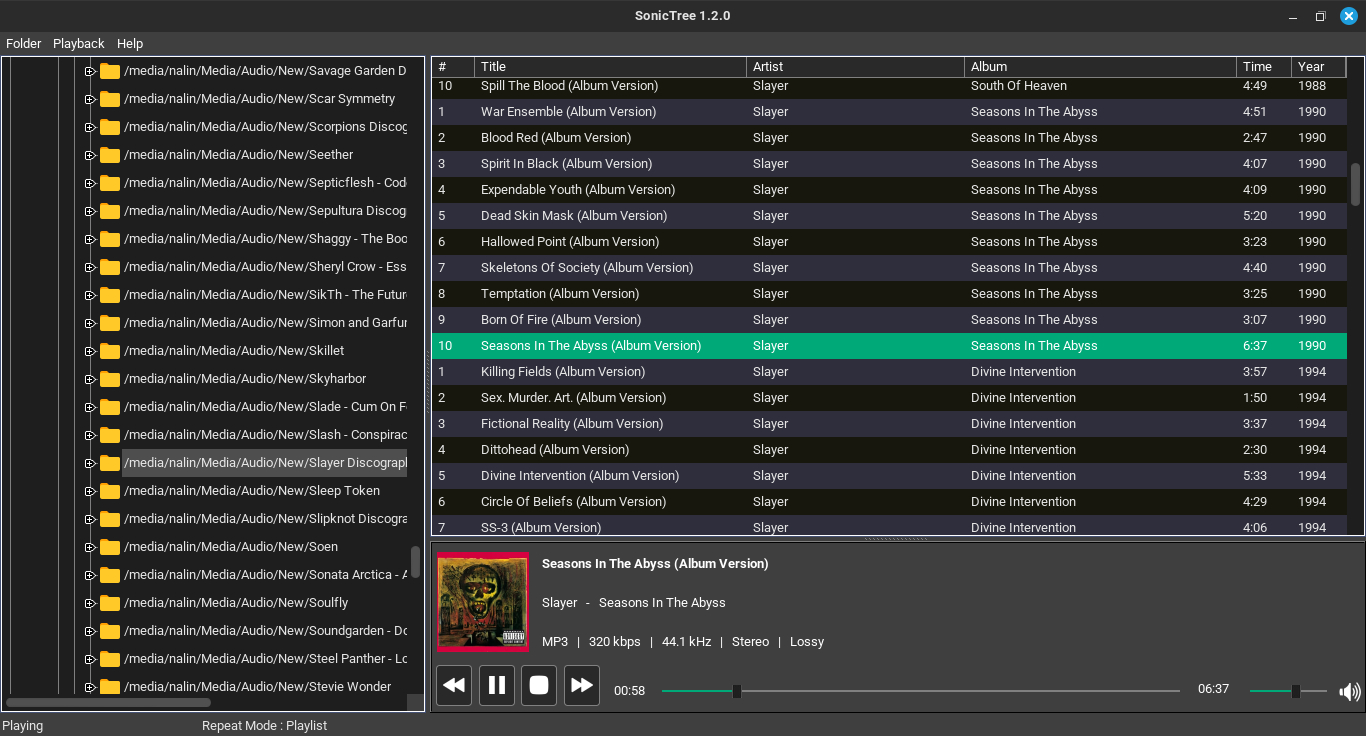
SonicTree is a Linux music player for local music playback and filesystem-based navigation. It allows you to browse and play music directly from your existing folder structure without requiring a separate music library database.
Features:
Designed around local folder-based music playback for clean and distraction-free listening experience
Playback architecture powered by GStreamer for stable playback pipeline and decoder handling
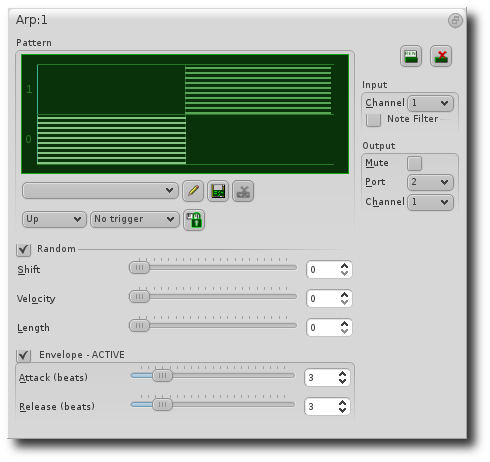
QMidiArp is a MIDI arpeggiator, phrase generator and controller LFO for ALSA and JACK. It can run multiple synchronized arpeggiators, LFOs and step sequencers. The modules are also available as LV2 plugins with Qt user interface. QMidiArp has been growing since June 2009 on top of Matthias Nagorni’s original arp idea.
Features:
Programmable arpeggio patterns, LFO waveforms and sequences
Modular setup of arpeggiators, MIDI LFOs and step sequencers
MIDI-controllable (MIDI-Learn)
Synchronization with MIDI Clock or JACK Transport possible
Optional triggering by keyboard or continuous play mode for all modules
Patterns can be stored and switched by MIDI control while running
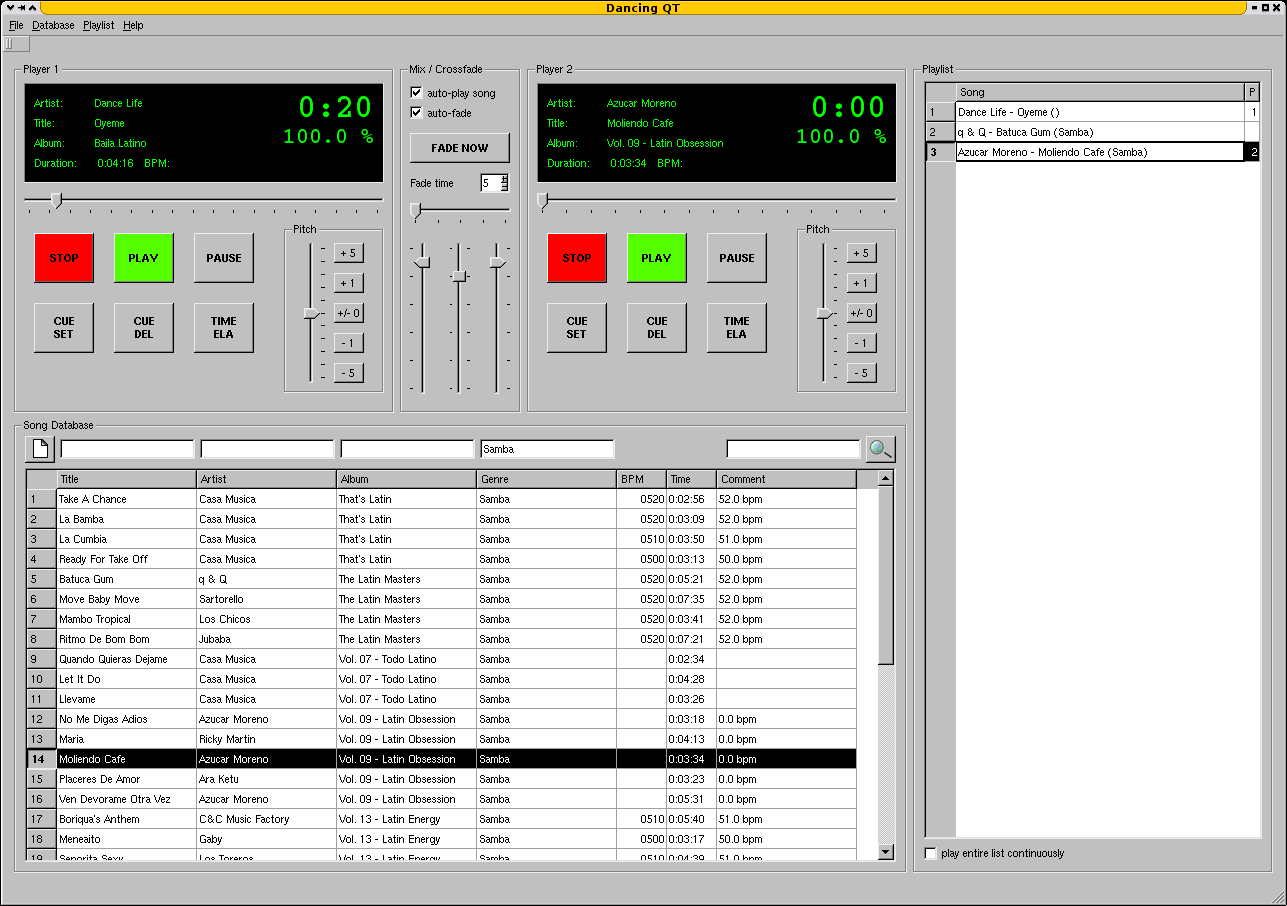
Dancing QT is a combined music database and player application specially designed for dancing schools and equivalent applications. Key features are an easy-to-use interface, fast search capabilities, playlist management, exact pitching and crossfading.
Looking around the open source landscape for a while, I tried to find a music database and player that is suitable for use in a dancing school environment – without success. Most mixing applications tend to be too confusing for the intended audience, most players lack database searching capabilites and most song databases don’t know how to pitch 😦
Because of this, I decided to setup a new application – Dancing QT. It uses alsaplayer because of its excellent interface and pitching capabilities, it uses an embedded SQLite DBMS to maintain a song database, and it uses taglib to populate the database. The interface is written in C++ using Qt. Because of the alsaplayer dependency, the target platforms will be limited to environments providing alsaplayer.
Sequencer64 is a live MIDI looper with a song-creation layout window. Sequencer64 is a reboot of seq24, extending it greatly over the last six years. The heart of seq24 remains intact. It is an old friend with a whole lot of added equipment. It has an extensive manual and Windows installers. Sequencer64 has build options for ALSA, PortMidi, JACK, Gtkmm 2.4, Qt 5, Windows, and a command-line/daemon.
A tool to create audio processing pipelines for applications such as active crossovers or room correction. It is written in Rust to benefit from the safety and elegant handling of threading that this language provides. Supported platforms: Linux, macOS, Windows.
Audio data is captured from a capture device and sent to a playback device. Alsa, PulseAudio, Jack, Wasapi and CoreAudio are currently supported for both capture and playback.
The processing pipeline consists of any number of filters and mixers. Mixers are used to route audio between channels and to change the number of channels in the stream. Filters can be both IIR and FIR. IIR filters are implemented as biquads, while FIR use convolution via FFT/IFFT. A filter can be applied to any number of channels. All processing is done in chunks of a fixed number of samples. A small number of samples gives a small in-out latency while a larger number is required for long FIR filters. The full configuration is given in a YAML file.
PipeWire is a project that aims to greatly improve handling of audio and video under Linux. It provides a low-latency, graph-based processing engine on top of audio and video devices that can be used to support the use cases currently handled by both PulseAudio and JACK. PipeWire was designed with a powerful security model that makes interacting with audio and video devices from containerized applications easy, with support for Flatpak applications being the primary goal. Alongside Wayland and Flatpak, we expect PipeWire to provide a core building block for the future of Linux application development.
Capture and playback of audio and video with minimal latency.
Real-time multimedia processing on audio and video.
Multiprocess architecture to let applications share multimedia content.
Seamless support for PulseAudio, JACK, ALSA, and GStreamer applications.
Sandboxed applications support. See Flatpak for more info.
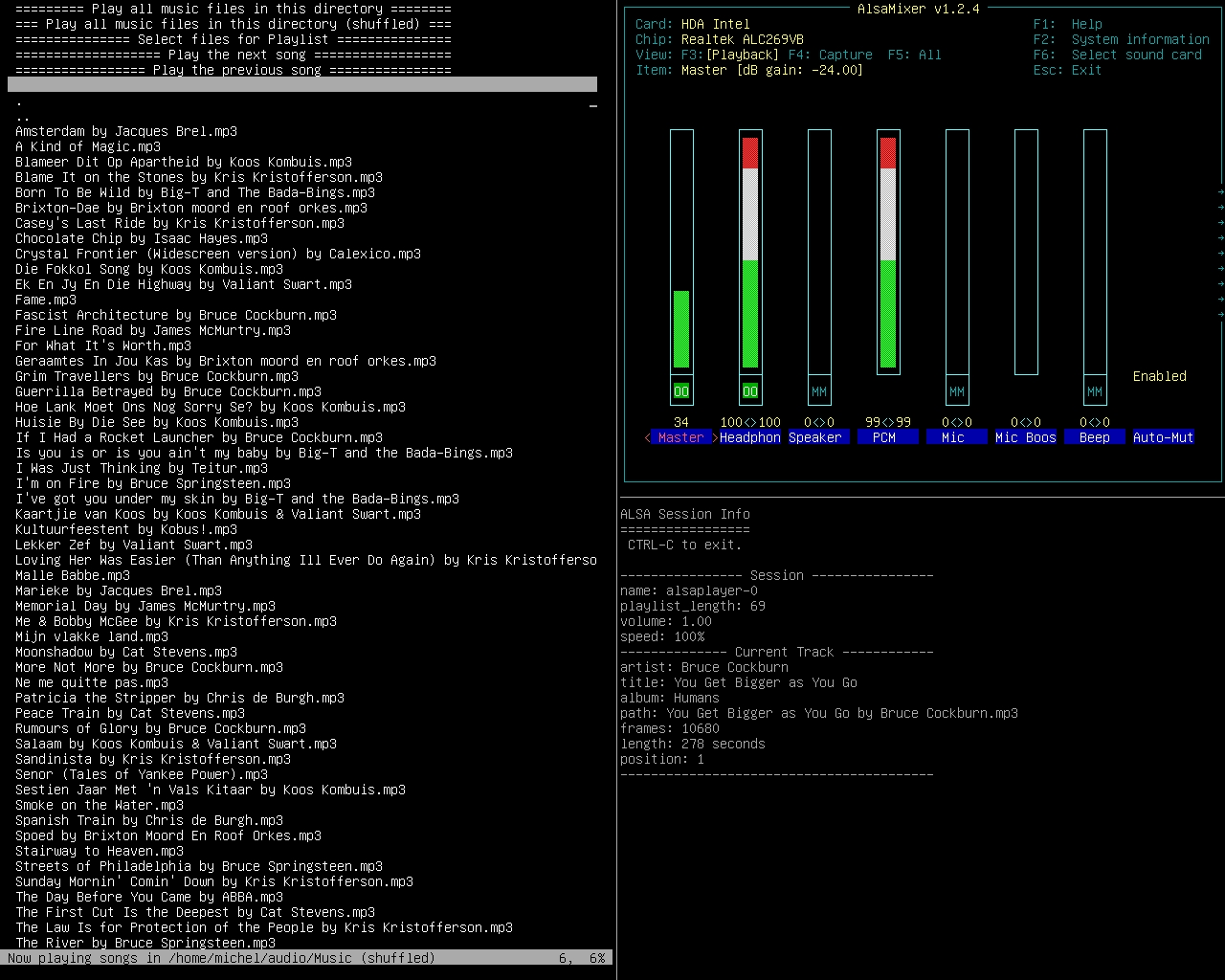
mp3menu lets you select and play your music files using iselect and AlsaPlayer. Mainly MP3’s, but this will actually play anything AlsaPlayer and libaudio can handle, so WAV and FLAC are covered, as well as a bunch of ancient formats dating back to the 1980s. Sadly, M4A is not.
Requires: 1. AlsaPlayer 2. Iselect 3. Bash – mp3menu is a bash script. It might work with zsh, dash and other shells, or it might not.
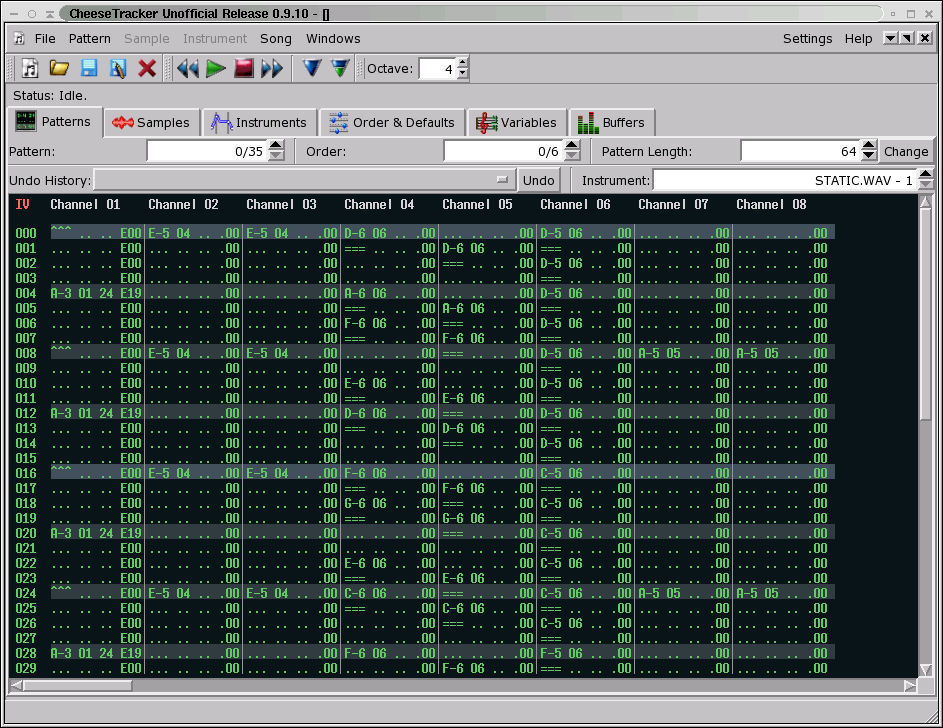
CheeseTracker is a software sampler and step-based sequencer. It allows a musician to turn single-note samples into instruments capable of covering three or four octaves (by playing the samples at different speeds, resulting in different pitches). In addition, it is possible to take a collection of samples that are recorded at different octaves, and combine them into a single “instrument,” allowing for even more octaves without sampling artifacts.
Using the Pattern Editor, it is possible to compose songs with these instruments that the computer plays automatically. The Pattern Editor allows the user to arrange samples in several independant channels, so that many samples can play simultaneously. These songs, and the samples which comprise their instruments, can be saved together in one-file archives called modules.
CheeseTracker imposes no limits on the length of the samples used. As a result, it can be used as a mixer as well as a sampler/sequencer. Effects such as reverb can be applied to each sample individually, eliminating the need for expensive pedals.
AlsaPlayer for Linux is a new kind of player that effectively runs pulse-code modulation or .PCM files. The player uses multithreading pretty heavily and was written specifically for giving some good exercise to the new Advanced Linux Sound Architecture (ALSA) driver and the library system. If you look closely, you’ll observe that AlsaPlayer has some highly interesting features that can be found only in the UNIX-based or Linux-based players. The main goal of the people who created AlsaPlayer for Linux was to develop a completely pluggable framework that could playback every type of media file, with majority of focus on the PCM audio data.
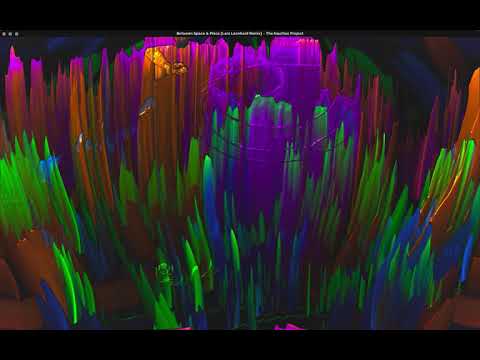
projectM is an open-source, cross-platform reimplementation of Winamp MilkDrop, the music visualizer created by Ryan Geiss. What began as a way to bring MilkDrop-style graphics to more platforms has grown into an ecosystem of visualization libraries, desktop frontends, audio plug-ins, media-player integrations and large community preset collections.
The projectM engine
The central project is libprojectM, a reusable C++ library rather than a complete desktop application. It accepts audio samples (PCM), analyses the signal using FFT and beat detection, interprets MilkDrop-style preset equations and shaders, and renders the resulting animation with OpenGL. It can render into an OpenGL context or a texture so that another application can display the output.
This separation matters: the library does not provide a complete audio player or desktop audio-capture interface. A frontend or host application supplies audio, provides the user interface and graphics context, and makes presets and textures available. The core library is licensed under LGPL-2.1; individual frontends, plug-ins and integrations may use different licenses.
These projects provide a desktop interface around the visualization engine:
projectMSDL (SDL/C++) — the official cross-platform standalone frontend. It captures desktop audio and displays projectM visualizations on platforms supported by SDL and libprojectM. The current 2.0 application is a development preview; the project documentation cautions that it is not yet feature-complete and may contain bugs.
Qt frontend — a Linux desktop application supporting PulseAudio, PipeWire and JACK. It adds a preset playlist editor, saved preset ratings and a graphical settings dialog.
SDL/Rust frontend — a Rust and SDL3 standalone application under development.
Audio plug-ins and player integrations
One of projectM’s strengths is that it can be embedded in other audio software instead of running as a separate visualizer window.
DISTRHO ProM — an audio plug-in implementation of projectM using the DISTRHO Plugin Framework. It provides CLAP, LV2, VST2 and VST3 formats, allowing a compatible DAW or plug-in host to display MilkDrop-style visualizations. ProM is a separate downstream project, not an official projectM frontend.
foobar2000: foo_vis_projectM — a Windows visualization component by djdron. Its source is at GitHub. It bundles the Cream of the Crop presets and textures. The component repository lists version 0.0.5, released in August 2022, for 32-bit and 64-bit Windows and foobar2000 1.5 or newer.
foo_uie_vis_projectM — an older foobar2000 visualization-panel component. This is a separate, historical implementation; do not confuse it with foo_vis_projectM.
Apple Music plug-in — an official projectM front-end plug-in for Apple Music on macOS. The project documentation currently describes it as a development preview.
libvisual plug-in — exposes projectM visualizations to applications that support the libvisual plug-in interface.
Media players and processing pipelines
Kodi visualization.projectm — a Kodi visualization add-on with its own source repository. Build branches need to match the Kodi version being used.
gst-projectm — a GStreamer plug-in that inserts projectM visualization into an audio/video pipeline. It can be used for offline rendering and audio-to-video conversion as well as pipeline-based playback.
pmstream — an unusual Linux implementation that renders projectM frames as ASCII or Sixel graphics in a terminal. It can work with the kew terminal music player.
The projectM developers also document integrations in Kodi, VLC and Silverjuke.
Presets and textures
MilkDrop-style presets are the creative heart of projectM. A preset describes a visualization through equations, parameters and shaders.
Cream of the Crop — a curated collection of approximately 9,795 MilkDrop presets assembled by Jason Fletcher. It became the default preset pack for projectM releases beginning in 2022.
MilkDrop texture pack — the original MilkDrop textures plus additional images used by many presets. The texture pack is recommended alongside preset collections.
The main projectM repository has hundreds of GitHub forks, but most are ordinary copies or development branches:
Project-M by ford442 — a fork of the official C++ projectM library that adds a browser/WebAssembly host and related web functionality. It is an independent extension of the engine, not the official desktop frontend.
foo_vis_projectM — a downstream foobar2000 implementation using a modified projectM source tree, including support for reading preset resources from ZIP archives.
projectm-frontend-sdl-py — a Python/SDL2 frontend that wraps projectM and routes captured audio to the engine.
Lactea belongs in the wider MilkDrop-compatible ecosystem, but it is not a projectM fork or a frontend using libprojectM. It is an independent Rust implementation supporting MilkDrop 2/3 and projectM-compatible presets, with its own standalone application, library, Kodi add-on and web demo.
Other distributions
projectM Music Visualizer on Steam provides an end-user distribution of the visualizer. The official project documentation currently identifies the modern desktop version as a development preview. The Android projectM app is maintained by an independent app author; the projectM developers explicitly state that they do not develop or support the Android apps.
Project status and links checked November 2026. projectM is an evolving ecosystem: the core library, frontends and third-party integrations have separate release schedules, licenses and support arrangements.





 , Mac OSX
 and Windows