A pure-Python inspector, editor, and forensic tool for audio files and synth/DAW presets: read the metadata, decode the format structure byte by byte, flag anomalies, repair broken containers, and identify how a file was made.
Reads BPM, key, duration, tags, and format info from WAV, AIFF, MP3, FLAC, OGG, Opus, M4A, MIDI, and Serum presets. Also structurally decodes Bitwig (.bwpreset/.bwclip), Native Instruments (Massive/Absynth/Kontakt/NKS/KORE), Vital, NCW, SoundFont (SF2/SF3), tracker modules (MOD/XM/IT), MP4, VST FXP, ReCycle RX2, and RMID containers via inspect. Beyond reading: repair and validate fix and check container structure (stale sizes, offset tables, counts, pad bytes) without touching a byte of audio, and audit gives a forensic verdict (structure, integrity, hidden data, and the writing tool). One pure-Python dependency (mutagen); the native inspect walkers need nothing. Optional librosa analysis for BPM/key detection and ML feature extraction.
Also ships per-library SQLite indexes (acidcat index) tracked in a small global registry, plus an MCP server (acidcat-mcp) so an LLM can query your whole collection across libraries by bpm, key, tags, or full-text.
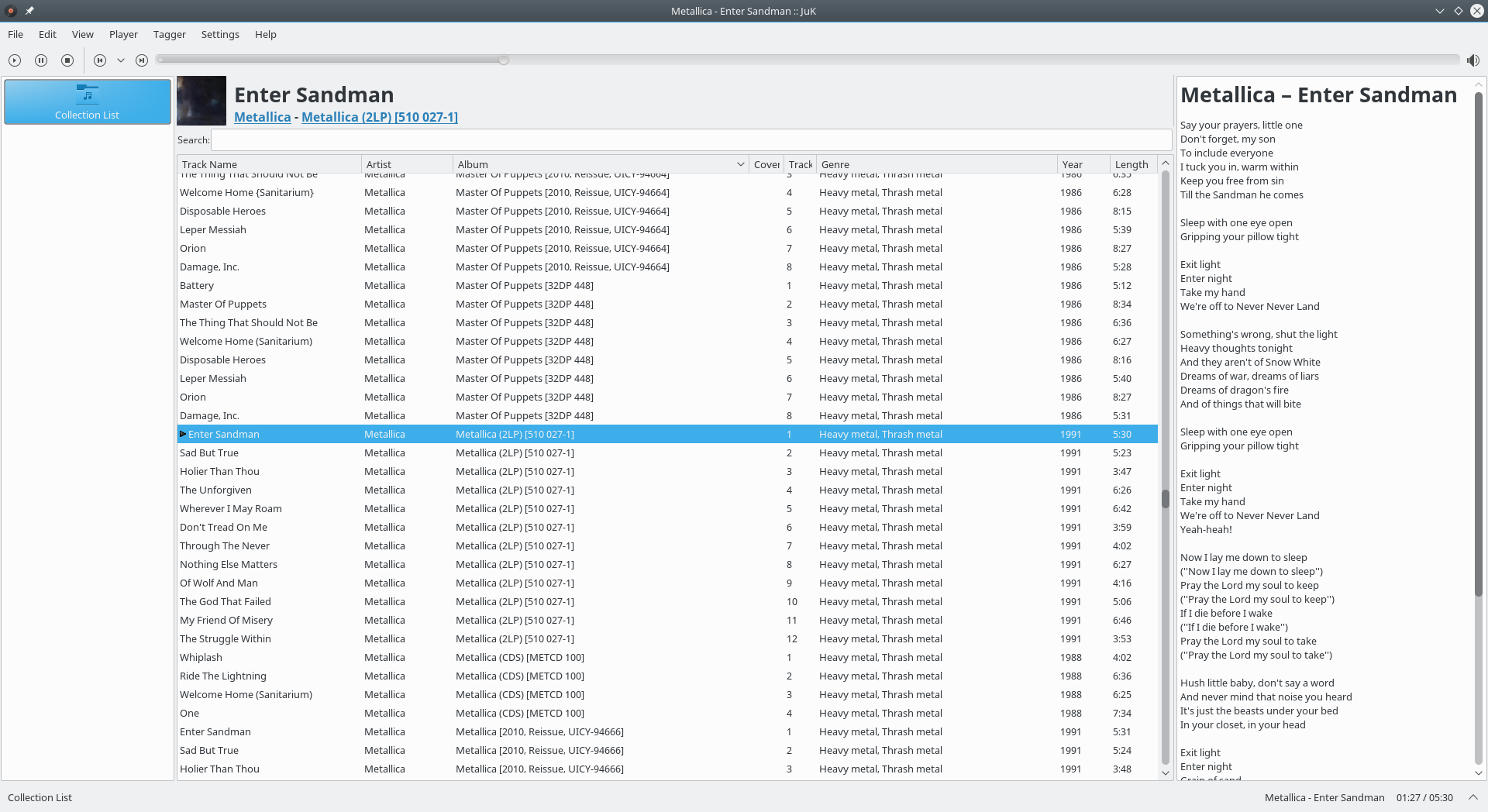
JuK is an audio jukebox application, supporting collections of MP3, Ogg Vorbis, and FLAC audio files. It allows you to edit the “tags” of your audio files, and manage your collection and playlists. Its main focus, in fact, is on music management.
Features:
Collection list and multiple user defined playlists
Ability to scan directories to automatically import playlists and music files on start up
Dynamic Search Playlists that are automatically updated as fields in the collection change
A Tree View mode where playlists are automatically generated for sets of albums, artists and genres
Playlist history to indicate which files have been played and when
Inline search for filtering the list of visible items
The ability to guess tag information based on the track’s file name
File renamer that can rename files based on the tag content
Tag reading and editing support for many formats including ID3v1, ID3v2 and Ogg Vorbis
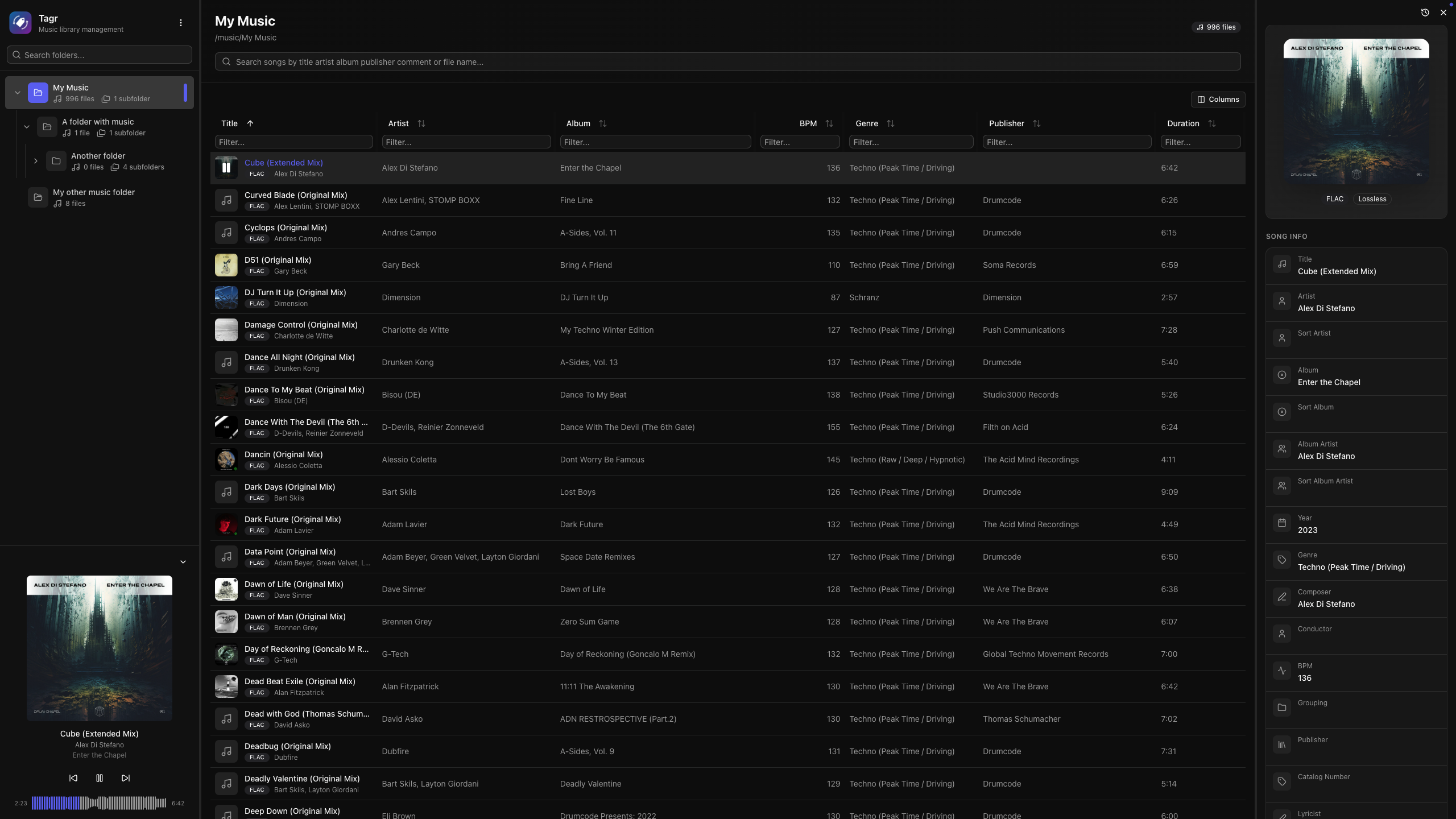
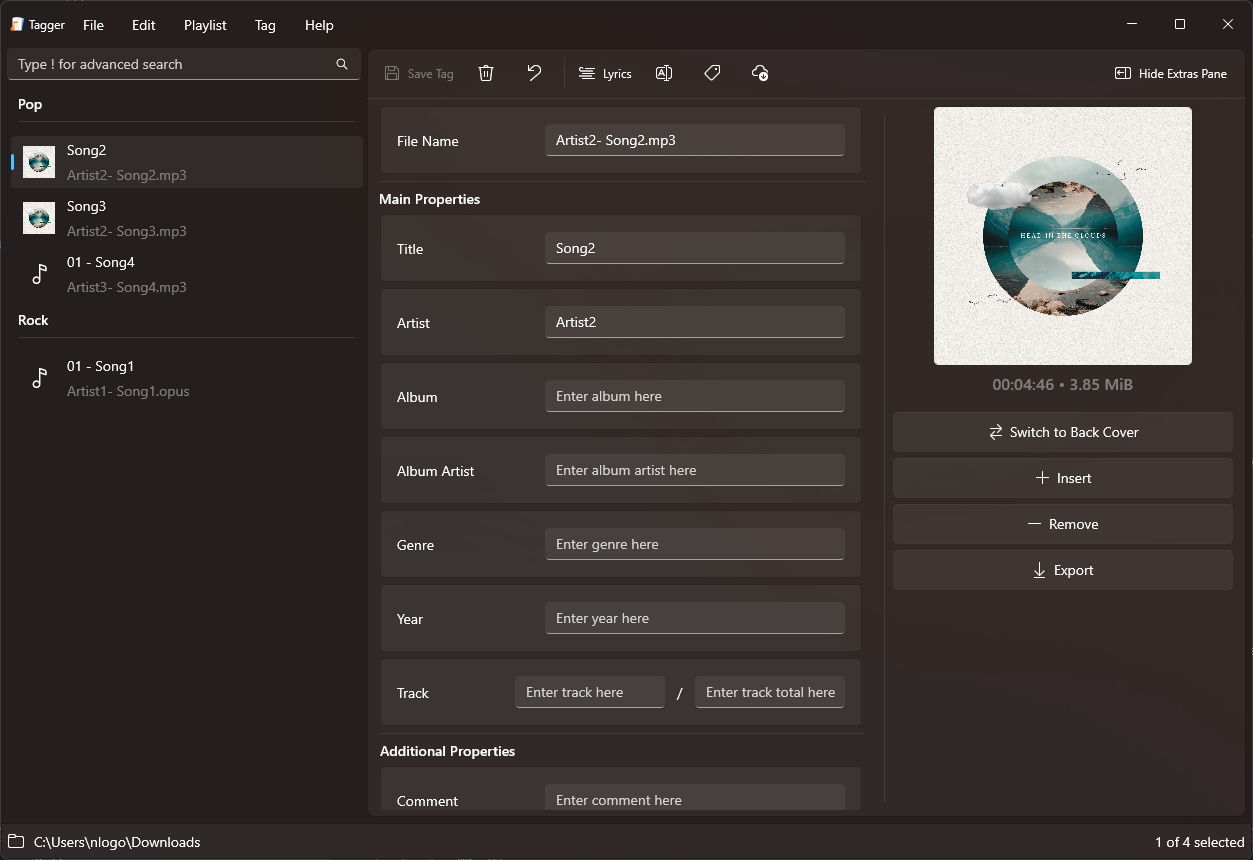
Self-hosted web app for browsing, playing, and editing music file metadata. Features a three-panel UI to navigate your library, listen to tracks, and write tag changes directly back to audio files. Built with Next.js, React, Prisma + SQLite, and node-taglib-sharp.
Most metadata editors are either desktop-only, command-line tools, or bloated apps with steep learning curves. If your music lives on a NAS, a server, or a headless machine, editing tags means SSH, mounting drives, or syncing files back and forth.
Tagr takes a different approach:
Run it anywhere — Docker, bare metal, your NAS. If it runs Node.js, it runs Tagr.
Edit from any browser — No installs, no plugins. Just open a tab.
Do one thing well — Browse your library, edit tags, save. That’s it.
Features:
Metadata Editing
Edit 40+ metadata fields inline — title, artist, album, year, genre, composer, BPM, lyrics, and more
Album art management — view, replace, and upload cover images directly
Star ratings (1–5) with a visual widget
Support for track/disc numbering, sort fields, catalog numbers, barcodes, and extended tags
Read-only display of audio properties (codec, bitrate, sample rate, channels, bits per sample)
Music Player
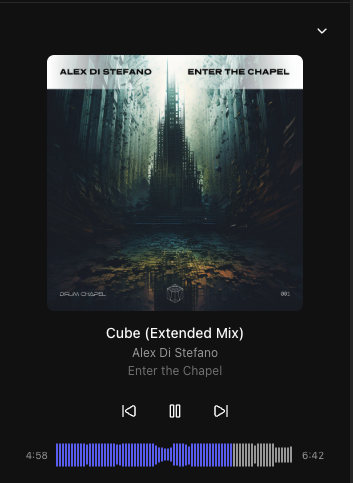
Built-in audio player with interactive waveform visualization (WaveSurfer.js)
Play/pause, previous/next track navigation
Click-to-seek on the waveform
Auto-advance to next song
Collapsible sidebar player with album art, title, and artist display
Library Browsing
Three-panel layout — folder tree, song list, and detail editor side by side
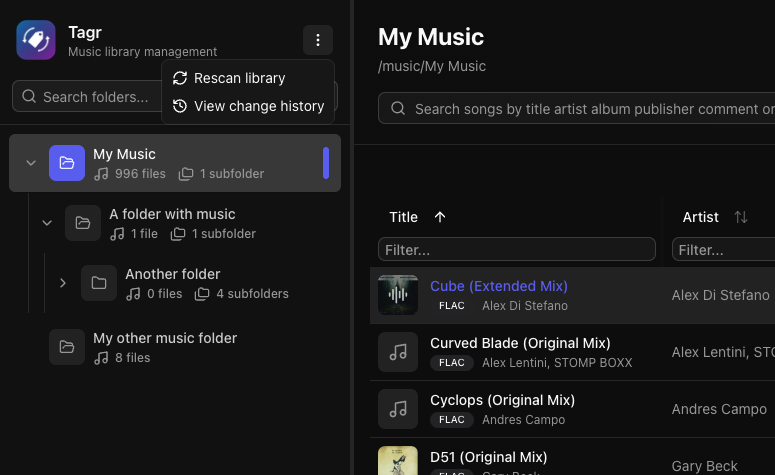
Folder tree with hierarchical navigation and real-time search
Sorting on any column — title, artist, album, year, duration, bitrate, date added, and dozens more
Advanced filtering — text, numeric ranges, date ranges, and boolean filters across all fields
Customizable columns — show/hide any of 40+ columns to match your workflow
Virtual scrolling and infinite pagination for large libraries
TagLib is a library for reading and editing the meta-data of several popular audio formats. Currently it supports both ID3v1 and ID3v2 for MP3 files, Ogg Vorbis comments and ID3 tags and Vorbis comments in FLAC, MPC, Speex, WavPack, TrueAudio, WAV, AIFF, MP4 and ASF files.
Demlo is a music library organizer. It can encode, fix case, change folder
hierarchy according to tags or file properties, tag from an online database,
copy covers while ignoring duplicates or those below a quality threshold, and
much more. It makes it possible to manage your libraries uniformly and
dynamically. You can write your own rules to fit your needs best.
Demlo can address any of these recurring music library issues (and much more):
Fix the lack of folder structure.
Normalize tags, fix their case, chose which tags to keep and which to discard.
WMP Tag Support Extender expand support of artist, title, etc. (“metatags”) information in Windows Media Player.
It adds support of APE tag format (read & write), FLAC MetaData (read & write), OGG Vorbis Comments (read-only), and MPEG4 ‘meta’ atom (read-only).
You can then extract the information save in your files and modify it directly in Media Library. No need to use an external program, you manage your library with just ONE tool !
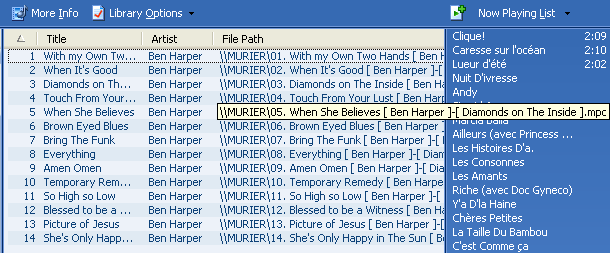
This component displays several groups of items which are described in the following sections. The item names are displayed in upper-case letters in the UI element, but can also be used in lower-case in title formatting code, since field names in title formatting are case-insensitive.
The Location group contains information about the physical location of the track.
The Tag Fields group contains the user-modifiable metadata fields of the track.
The technical Fields groups contains technical information fields that are provided by the decoder.
The Replaygain group contains the Replaygain data of the track.
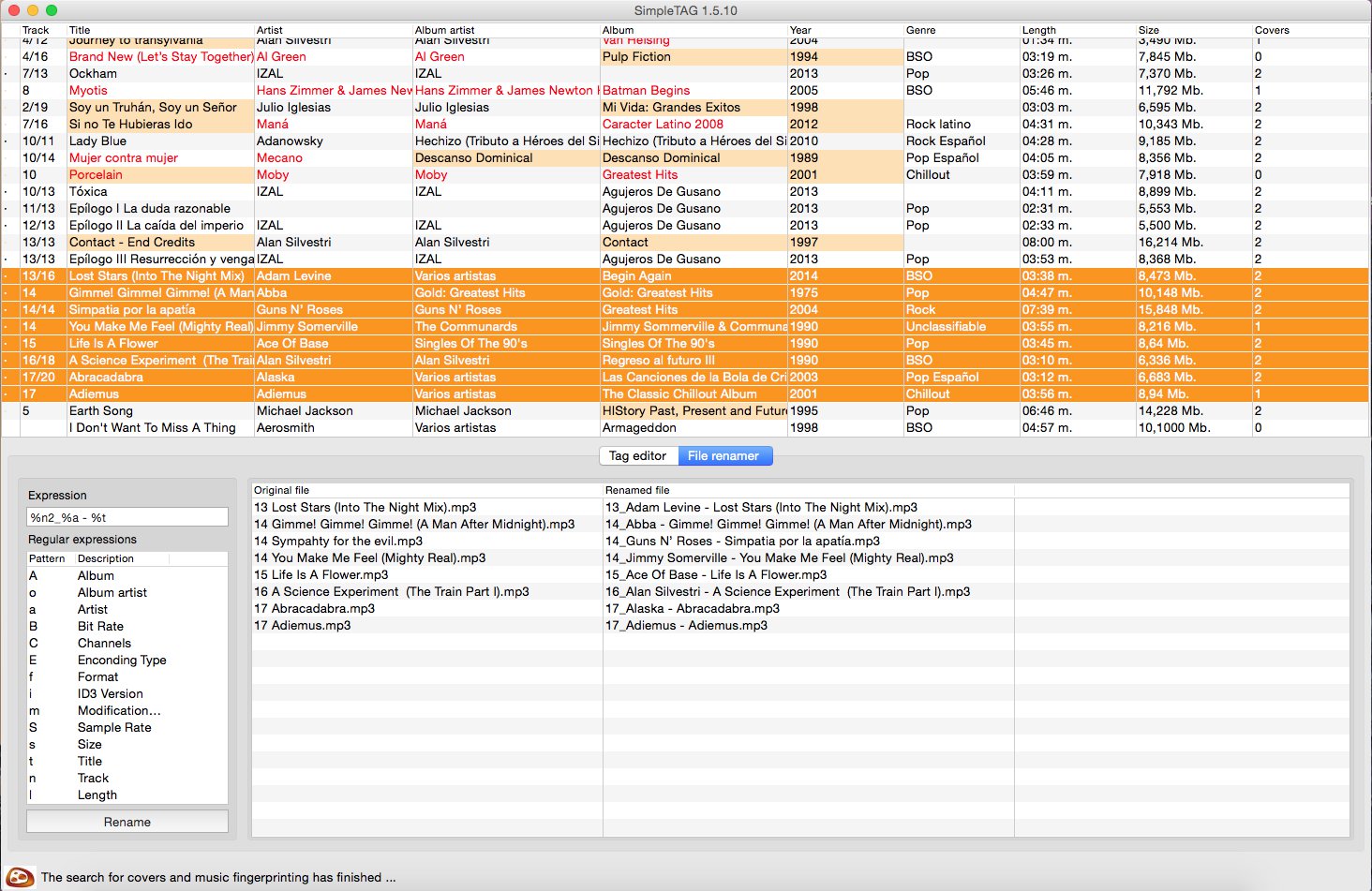
SimpleTag is a cross-platform desktop tool, which allows to update the labels of all your music before incorporating it into a musical library or cloud service.
Nowadays, the amount of music we have in our equipment is large, it is no longer possible to manage with the traditional system of filenames and directories. The most convenient way is to use the concept of libraries that handle the big market music players: iTunes, Amarok, Windows Media Player, Google Music, … etc.
The labels of music files contains all the information on artist, album, genre, title, lyrics … etc, associated with a song. This information is used by music players to manage their libraries. A good labeling enhances the user experience.
Do you want your music in the cloud? Then before, you have to check the tag information is correct before incorporating. If you do not, you will be unable to locate many of your songs.
Features:
Complete file information from audio fingerprint (AcoustID database). This uses the service provided by AcoustId (http://acoustid.org). One colors simple system gives you information about your search results
Locate the covers of your songs by the artist/album the song. The location of the cover image, uses Google image services. It also incorporates images that are in the directory you’re processing, treating them as potential cover images.
Allows mass renaming music files on disk, based on the tag information. If in addition to either your tagged songs, you want the file names follow a pattern that identifies them, you can use this feature.
Supports MP3, Ogg/Vorbis formats
Mass-tagging of multiple files
Auto enumerate the selected songs. In many cases, the songs do not have track numbers. With this feature, you can set the sequence numbers for all the songs on an album.
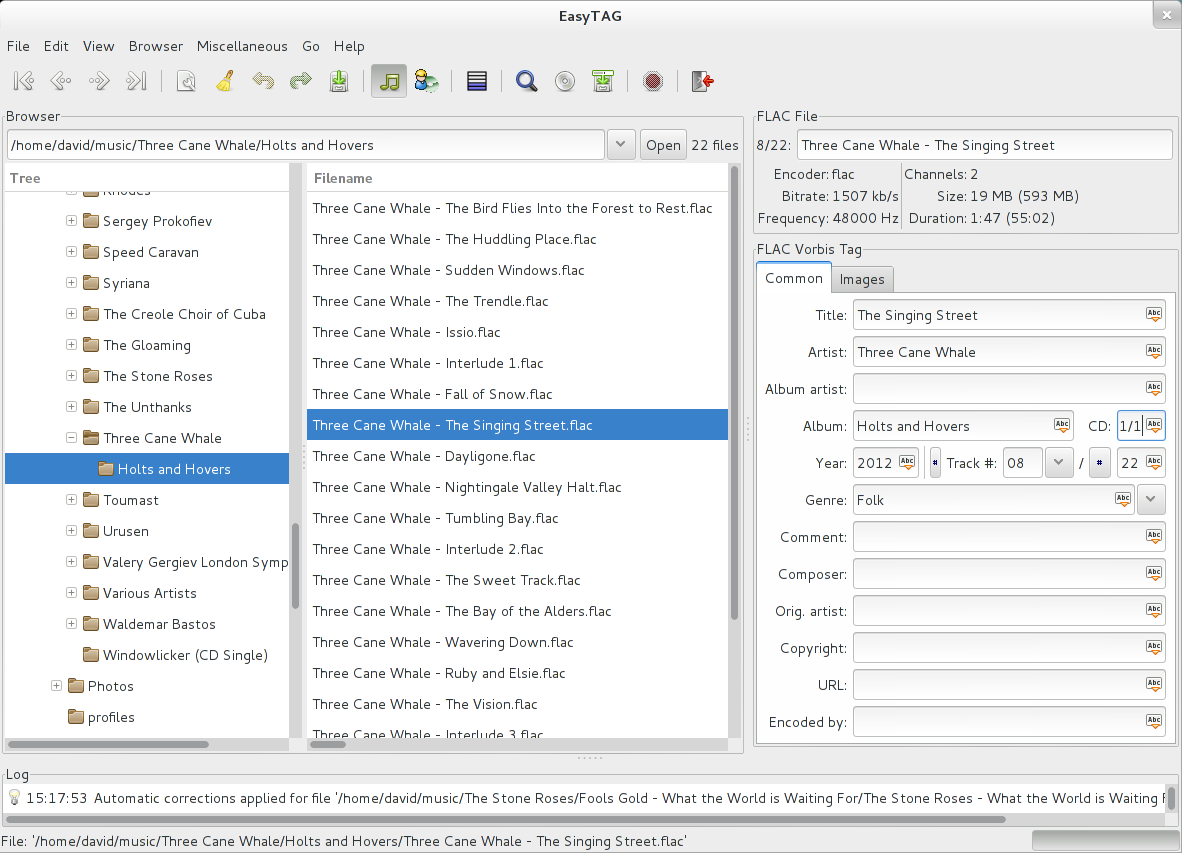
EasyTAG is a simple application for viewing and editing tags in audio files.It supports MP3, MP2, MP4/AAC, FLAC, Ogg Opus, Ogg Speex, Ogg Vorbis, MusePack, Monkey’s Audio, and WavPack files, and it works under Linux or Windows.
Features:
View, edit, write tags of MP3, MP2 files (ID3 tag with pictures), FLAC files (FLAC Vorbis tag), Ogg Opus files (Ogg Vorbis tag), Ogg Speex (Ogg Vorbis tag), Ogg Vorbis files (Ogg Vorbis tag), MP4/AAC (MP4/AAC tag), MusePack, Monkey’s Audio files and WavPack files (APE tag)
Can edit more tag fields: title, artist, album, disc number, year, track number, comment, composer, original artist/performer, copyright, URL, encoder name and attached picture
Auto tagging: filename and directory to automatically complete the fields (masks)
Ability to rename files and directories from the tag (using masks) or by loading a text file
Process selected files of the selected directory
Ability to browse subdirectories
Recursion for tagging, removing, renaming, saving…
Can set a field (artist, title,…) to all other files
Read and display file header information (bitrate, time,…)
Auto completion of the date if a partial one is entered
Undo and redo last changes
Ability to process fields of tag and file name (convert letters into uppercase, lowercase,…
Ability to open a directory or a file with an external program
CDDB support using Freedb.org and Gnudb.org servers (manual and automatic search)