A small browser-based ear-training tool for practicing pitch, intonation, and frequency recognition using the Web Audio API.
440lab.com
github.com/qwell/440-lab

A small browser-based ear-training tool for practicing pitch, intonation, and frequency recognition using the Web Audio API.
440lab.com
github.com/qwell/440-lab

Drop a track. EarChord reads the chord progression, the key and the tempo. The audio is analysed on this device and never leaves your browser.

This is a community driven effort (like Wikipedia) with the aim of collecting as many Internet radio and TV stations as possible. Any help is appreciated!
- Free for ALL!
- Data license: public domain, software license: GPL, server software: open source
- Open API for usage in own apps
- Everyone is free to use the collected data (station names, tags, links to stream, links to homepages, language, country, state) in their works. I give all the rights I have at the accumulated data to the public domain.

Pitch Playground is a free, ad-free collection of simple tools for musical tuning, rhythm, pitch, and intonation ear training.
Tuning and reference pitches
Use the tuner to check the pitch of a note with your microphone, or play reference tones to practice matching and tuning by ear. The reference pitch is adjustable, so you are not limited to A440.
Pitch and intonation ear training
Practice hearing small differences in pitch and recognizing whether a note is sharp or flat. The exercises are intended to develop pitch discrimination and a more accurate sense of intonation without requiring perfect pitch.
Metronome and rhythm practice
Use the metronome for a steady beat while practicing, choose from common simple, compound, and odd meters, or tap a tempo to set the BPM by feel.
Simple by design
Pitch Playground is designed to be a small, straightforward set of music practice tools: open it, choose a tab, and start practicing. Works well on desktop and mobile.
Free forever
Pitch Playground will always remain free, ad-free, and without in-app purchases. To run this site locally, download and unzip the latest release, which can be hosted on a webserver like nginx or by directly opening index.html.
p.jeltz.org
github.com/qwell/pitch-playground

Discover songs you are aching to know with an easy-to-use interface.
Mousai is a simple application that can recognize songs similar to Shazam. Just click the listen button, and then wait a few seconds. It will magically return the title and artist of that song!
Note: This uses the API of audd.io, so it is necessary to log in to their site to get more trials.
Why you will love Mousai?
- 🎵 Identify songs within seconds or save for later when offline
- 🎙️ Recognize from desktop audio or your microphone
- 🎸 Build a repertoire of recognized songs
- 🎼 Quickly preview the song within the interface
- 🌐 Browse and listen the song from different providers
- 📱 Easy-to-use user interface
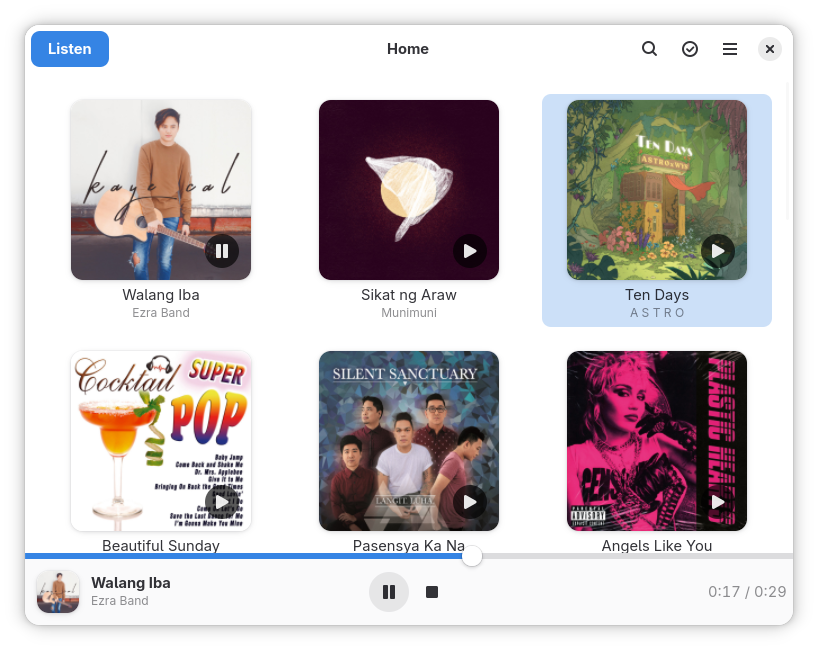
apps.gnome.org/Mousai
github.com/SeaDve/Mousai
audd.io

gpodder.net is a libre web service that allows you to manage your podcast subscriptions and discover new content. If you use multiple devices, you can synchronize subscriptions and your listening progress.
It works best with the gPodder application, but you can also use it with Amarok, other supported clients or as standalone web application without any client app.

Bitmeter visualization with fixed-point and floating-point modes.
codepen.io/TF3RDL/pen/ZYpbNYZ
hydrogenaudio.org/index.php/topic,129362.0

What started as a straightforward Python script to sort and organize my vinyl records, in order to visualize my collection, ended up being a bit more than the initial intent was.
I was sat at home, sick, for the last few days which gave me plenty of time to listen to and organize my collection whilst also programming this custom gallery view with an obvious nod to the old IOS -6 Cover Flow which I always wished came back somehow.
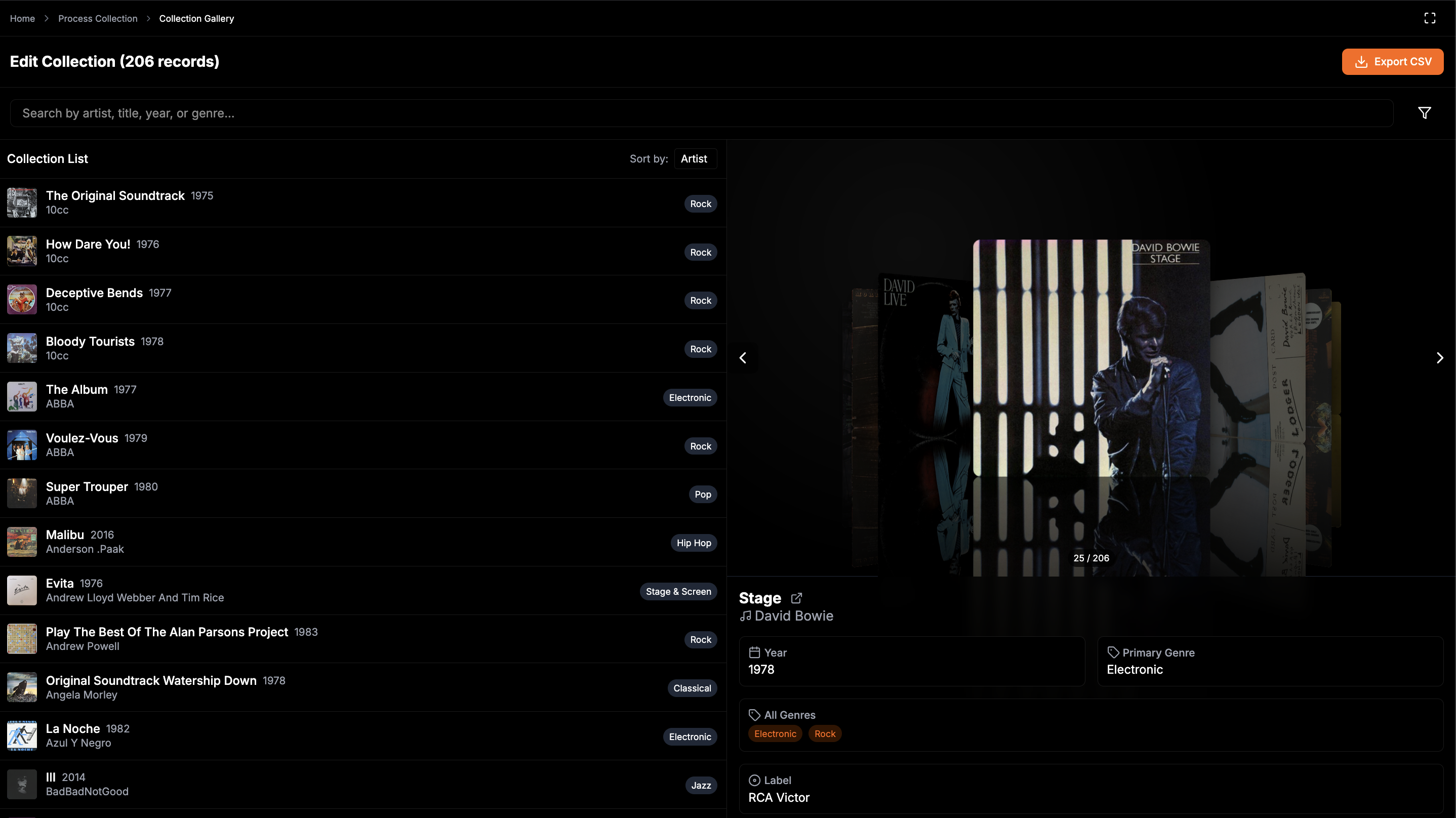
github.com/rinus-vh/Discogs-Gallery

Shovel is your sidekick for digging on Discogs. Build a playlist by queuing releases from any page. Browse your selections in record time.

DiscoLister connects directly to Discogs so you can browse your collection, search the Discogs database (including barcodes), see wantlist/collection badges while you search, inspect release details with videos, and build reusable tracklists that stay synced locally across sessions, perfect for planning mixes or powering the Now Spinning overlay for your broadcast.
What you can do:
- Browse your Discogs collection with fast filtering
- See wantlist and collection indicators while searching Discogs
- Search the full Discogs catalog, including barcode scanning on mobile
- Open release detail modals with cover art, videos, and wantlist/collection controls
- Add, reorder, replace, or manually enter tracks in your working tracklist
- Save named tracklists, export/import JSON, or copy formatted lists for sharing
- Stream with Now Spinning overlays for OBS plus optional Twitch auto-posting
- Installable PWA with offline support, responsive layout, and dark mode

/synth is a minimalist, array-oriented synthesis environment. Heavily inspired by the K/Simple lineage and the work of Arthur Whitney, it treats sound not as a stream, but as a holistic mathematical vector.
This isn’t a DAW; it’s a vector-processing engine designed for “Base Camp” signal processing.
It uses:
Sound is a vector. A kick drum is a vector. A two-second bell tone is a vector. You do math on vectors and the result is audio. There are no tracks, no timelines, no patch cables — only expressions.
octetta.github.io/k-synth
github.com/octetta/k-synth

Four easy steps to make your headphones sound better.
autoeq.app
github.com/jaakkopasanen/AutoEq


