HiFi Log is a platform for the hi-fi community. Its aim is to create an all-encompassing database of audio brands and their products, both existing and discontinued. It is designed to help users discover new products while also allowing them to keep track of what they currently own or used to own.
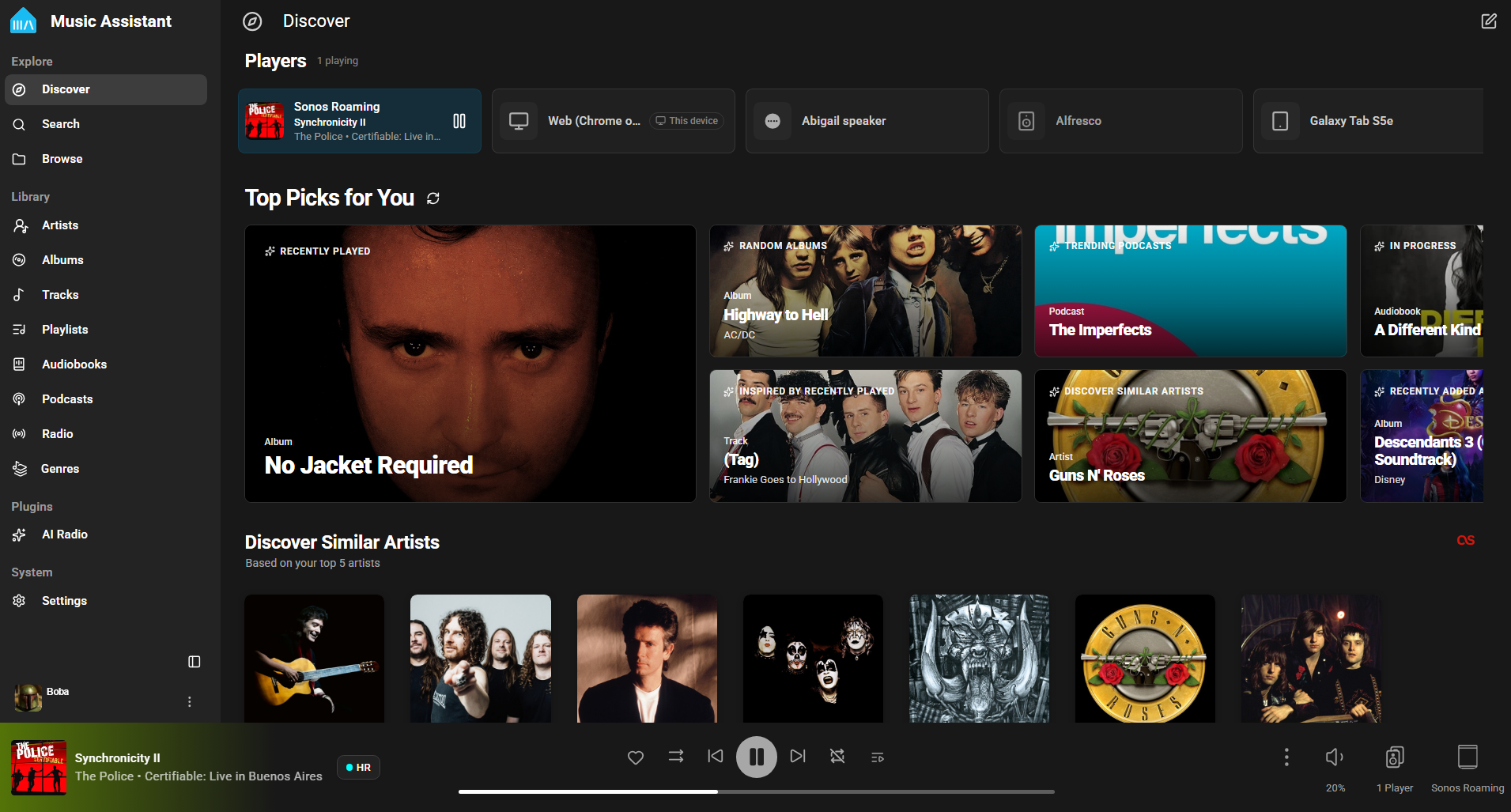
Music Assistant is a free, opensource media library manager that connects to your streaming services and a wide range of connected speakers. The server is the beating heart, the core of Music Assistant and must run on an always-on device like a Raspberry Pi, a NAS or an Intel NUC or alike.
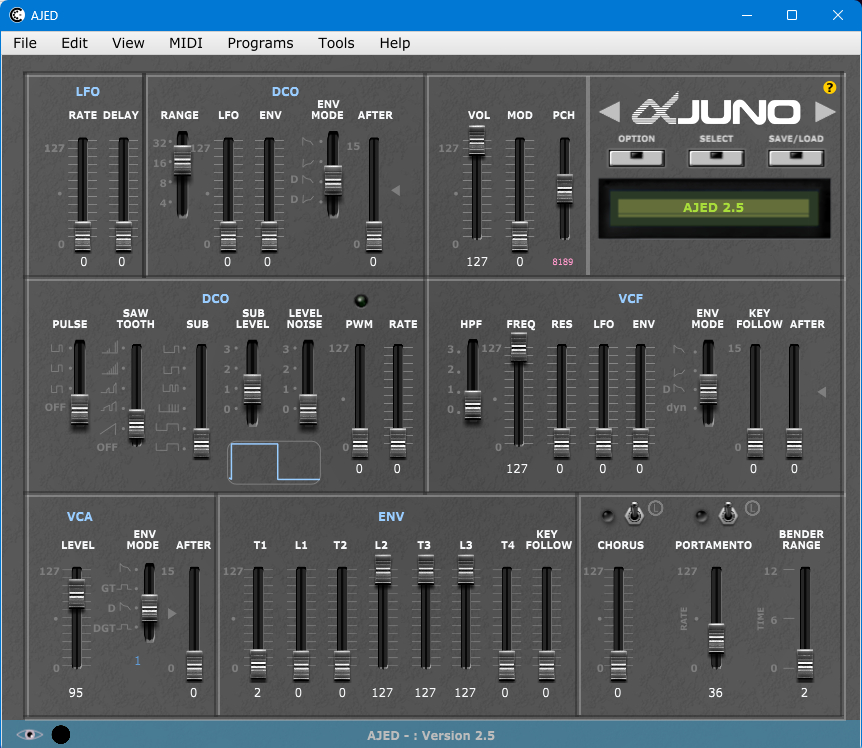
Make hardware instruments behave like plugins. A Raspberry Pi 4B plays as an instrument track in Ableton Live today — Git-style total recall through the project’s own save/reopen, knobs as sample-accurate automation lanes, and offline bounce through the physical box.
Hardware synths, drum machines, and effects have connected to computers for forty years, and the connection is still fragile in one specific way: recall. Audio mostly works, MIDI mostly works — but reopen last month’s project and the hardware is not in the state you saved, and nothing will tell you. The deep integrations that fix this (multichannel USB audio, plugin-shell control, total recall) have existed only inside closed single-vendor ecosystems, because every vendor has to rebuild drivers, state sync, and DAW compatibility from scratch.
HARP is a complete, working implementation of that integration — with an open spec underneath, if you want to build a device on it. The reference device is a Raspberry Pi running a 16-part multitimbral, 8-voice-polyphonic synth (13 params per part); anything that speaks the protocol gets the same treatment from any conforming host:
Total recall, Git-style — device state is content-addressed and hash-verified; a saved project reopens with the hardware provably in the saved state, every overwrite preceded by a free snapshot, every mismatch resolved through explicit safe actions — never silently. The archive doubles as patch time-travel: every state the box has ever been pushed over is one click away.
Audio as a plugin — a dedicated stream into the plugin shell that bypasses the OS audio stack (no aggregate-device hacks), including a host-paced mode where the hardware renders deterministically, byte- identical, faster than real time: offline bounce through a physical box at ~25× real time, with 16 ms of reported latency at DAW buffers ≤ 256 — in the neighborhood of a good audio interface.
Multitimbral, addressed like plugins — one physical device is one session, and several shell instances can share it: drop the plugin on a handful of DAW tracks and each instance drives its own part — its own channel, params, recall state, and stereo output (16 parts, with a summed main mix alongside the per-part outputs). A recall-safe Part knob persists each track’s part in the project, and that per-part state moves intact between the VST3 and AU formats (the CLAP shell writes the same recall bundle).
Polyphonic, with per-voice modulation — each part is an 8-voice pool with deterministic voice allocation, so overlapping notes ring out on their own voices instead of stealing one. Modulation is non-destructive and per voice: a VST3 Note Expression or a CLAP per-note parameter modulation bends a single sounding note’s filter cutoff without touching the stored patch — and the two formats render byte-identically (the device applies the §9.5 mod the same regardless of which shell sent it).
Sample-accurate everything — DAW automation becomes device-interpolated ramps applied within ±1 sample; notes travel as UMP; an event fence makes “applied late” structurally impossible rather than statistically rare. Turn a knob on the hardware and the DAW records the automation (echo).
Musical time — devices follow the DAW’s transport: tempo, position, loops. The reference device’s arpeggiator locks to Live’s grid sample-exactly, survives loop wraps, and renders a byte-identical groove — determinism extended to musical time.
Identity, timing, diagnostics — engine versioning and parameter-map hashing protect old songs from new firmware, latency is measured (never guessed), and error counters at every layer end “it glitched” support threads with evidence.
Roadie-proof sessions — unplug the cable mid-song and plug it back: the shell reconnects, re-asserts the project’s state, and audio resumes. Hostile or corrupt wire input ends in a clean session reset, never a crash (every parser is fuzzed; a live abuse test is part of CI).
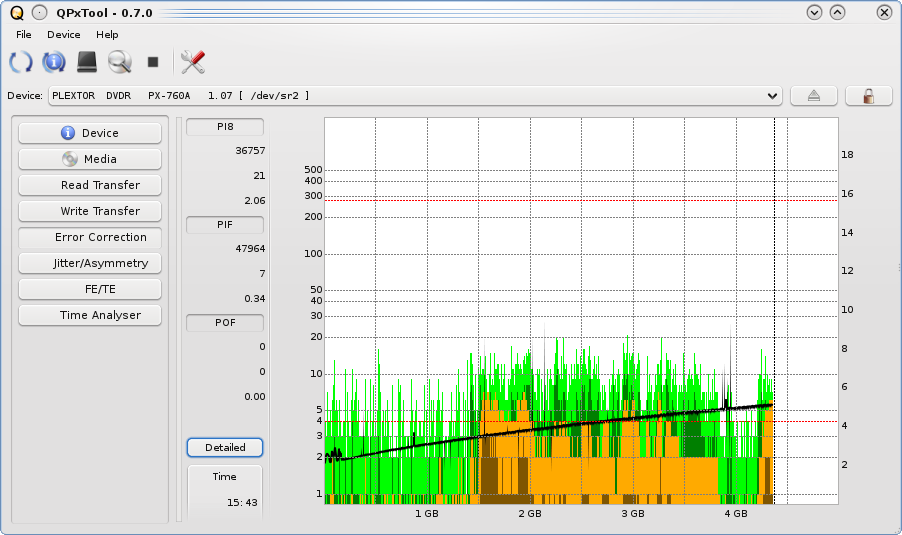
QPxTool is the Linux way to get full control over your CD/DVD drives. It is the Open Source Solution which intends to give you access to all available Quality Checks (Q-Checks) on written and blank media, that are available for your drive. This will help you to find the right media and the optimized writing speed for your hardware, which will increase the chance for a long data lifetime. See supported devices to get a list of the currently supported hardware.
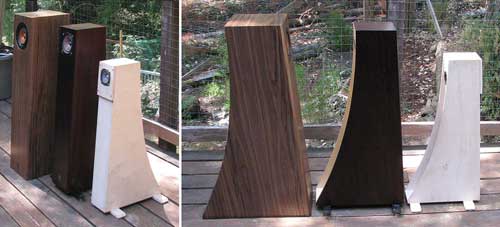
The Frugel-Horns (the name is a cross between flugelhorn & frugal) is a series of 3 sizes of tapped horns based on redesign of the original Frugel-Horn with goals of simpler, smoother, more versatile… all have been met, and driver versatility has proven to exceed hopes & expectation.
I had one of these trivial problems. Yesterday I wanted to create a new stroboscope disc for my Metzner rebuild (now with 50HZ 🙂 … After fiddling around with some graphic tools I decided to build a small Web-App (quick and dirty) to support me on this task. It might be of interest? You can use it offline or via the web site…
Main Features:
– Supports 33⅓, 45, 78 RPM + custom speeds – 50Hz, 60Hz, 300Hz lamp frequencies + custom frequency – Adjustable disk size, bar length, smoothing – Custom colors and logo upload – Drag/rotate/resize logo interactively – Export: SVG (print), STL/3MF (3D print), FreeCAD macro – Light/dark theme, EN/DE bilingual – Offline-capable (standalone download)
MIDITONES: Convert a MIDI file into a simple bytestream of notes.

MIDITONES compiles a MIDI music file into a much simplified compact time-ordered stream of commands, so that the music can easily be played on a small microcontroller-based synthesizer that has only simple tone generators. This is on github at www.github.com/LenShustek/miditones.

Volume ("velocity") and instrument information in the MIDI file can either be discarded or kept. All the tracks are processed and merged into a single time-ordered stream of "note on", "note off", "change instrument" and "delay" commands.

MIDITONES was written for the "Playtune" series of Arduino and Teensy microcontroller software synthesizers.
Sound Open Firmware (SOF) is an open source audio Digital Signal Processing (DSP) firmware infrastructure and SDK. SOF provides infrastructure, real-time control pieces, and audio drivers as a community project. The project is governed by the Sound Open Firmware Technical Steering Committee (TSC) that includes prominent and active developers from the community. SOF is developed in public and hosted on the GitHub platform.
The firmware and SDK are intended for developers who are interested in audio or signal processing on modern DSPs. SOF provides a framework where audio developers can create, test, and tune the following: