Windows-Audio-Output-Switcher ~ Audio Device Switch


A small, self-contained tray utility for Windows that lets you cycle through your audio playback devices with a single hotkey, and shows an on-screen overlay telling you which one is now active.

It’s a single ~4 MB .exe with no installation dependencies, no admin rights required, and nothing running except while you’re logged in.

What it does:

  • Cycles the default playback device. Press Win+A (the default hotkey, changeable), left-click the tray icon, or pick a device from the right-click menu, and Windows’ default audio output moves to the next active playback device in the list, wrapping back to the first one after the last. It takes effect for every application immediately — the same as changing it by hand in the Windows sound settings.
  • Win+A actually works for this, even though Windows normally reserves it for Quick Settings (same goes for any other reserved combo you configure it to instead). See how.
  • Shows an on-screen overlay on every switch — styled after Windows’ own volume/brightness OSD, not a toast notification — naming the device that is now active, so you get instant confirmation of what you just switched to. A burst of rapid switches only ever shows the latest one.
  • Lives in the system tray:
    • Left-click the tray icon to switch to the next output device.
    • Hovering it shows the app version and the currently active device.
    • Right-click opens a menu listing every currently active output device — click one to switch to it directly (the active one is checked) — followed by Configure and Exit.

github.com/SpikePy/Windows-Audio-Output-Switcher

Security note: The Win+A hotkey requires a Windows low-level keyboard hook, which can receive system-wide keyboard events. The author says the program only checks for the configured hotkey and does not record or transmit keystrokes. Because this technique can also be used by keyloggers, security software may flag the executable heuristically.

iamf-tools ~ Immersive Audio Model & Format Utilities


iamf-tools implements tools to help users process and work with the IAMF format. These tools can be used as a complement to the libiamf reference decoder and other tools such as ffmpeg and MP4Box.

github.com/AOMediaCodec/iamf-tools

References:

aomediacodec.github.io/iamf
en.wikipedia.org/wiki/Alliance_for_Open_Media

Resources:

chromestatus.com/feature/5113656292540416

lrcget ~ Lyrics Download Utility


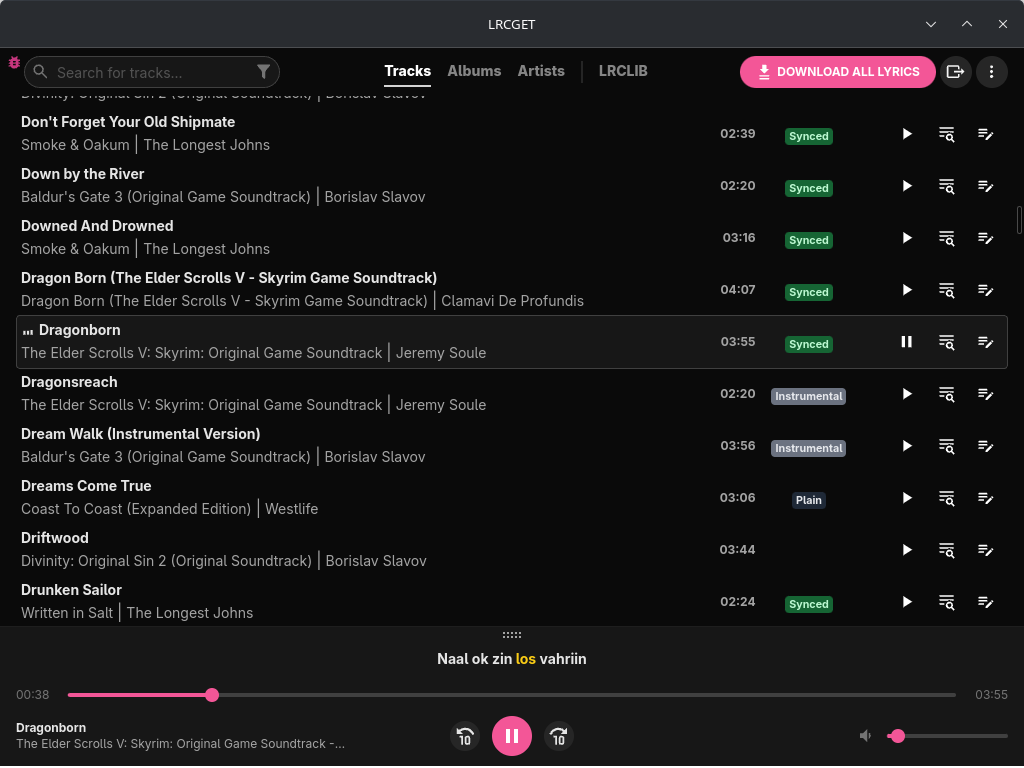
Utility for mass-downloading LRC synced lyrics for your offline music library.

LRCGET will scan every files in your chosen directory for music files, then and try to download lyrics to a LRC files having the same name and save them to the same directory as your music files.

LRCGET is the official client of LRCLIB service.

github.com/tranxuanthang/lrcget
flathub.org/en/apps/net.lrclib.lrcget

Resources:

lrclib.net
en.wikipedia.org/wiki/LRC_(file_format)

OmniPans ~ Panning & Volume Control


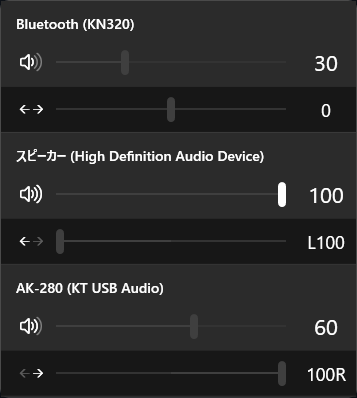
A utility to control volume / pan for all audio devices on Windows.

OmniPans controls

github.com/SatsukiAnakawa/OmniPans

Double File Scanner ~ WinXP Thru Win10 Scanning


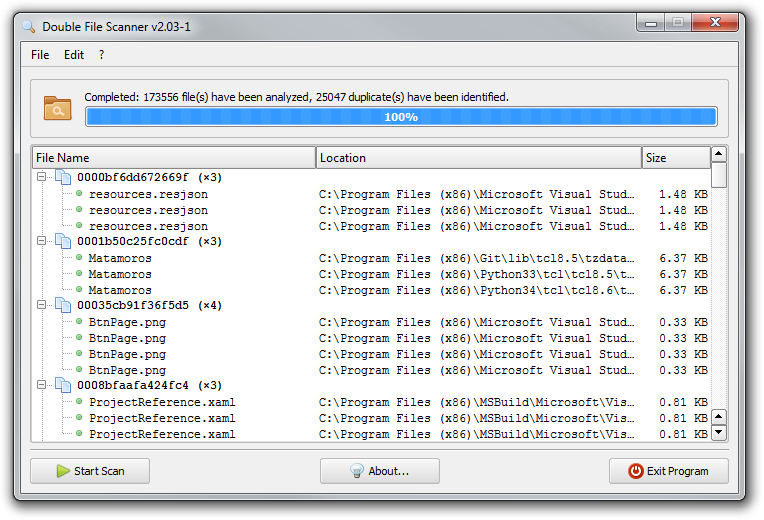
The purpose of this tool is scanning the selected directory or directories for duplicate files, i.e. files with identical content. Duplicate files are identified by first calculating the SHA-1 digest of each file and then looking for values that appear more than once. In particular, files with identical content are guaranteed to have the same SHA-1 digest, while files with differing content will have different SHA-1 values with very high certainty.

All computed SHA-1 values are stored in a hash table, so collisions are found quickly and we do NOT need to compare every digest to every other one. Also, the files are processed concurrently in multiple “worker” threads in order to parallelize and speed-up the SHA-1 computations on multi-core processors. On our test machine it took ~15 minutes to analyse all the ~260,000 files on the system drive (~63.5 GB). During this operation ~44,000 duplicates were found.

Once the scan is completed, the program provides commands to review, rename or delete the duplicate files manually. Alternatively, the “automatic clean-up” wizard may be invoked in order to remove ALL redundant files at a single blow. Optionally, the list of duplicates can be exported to the XML or INI format.

double file scanner interface

github.com/lordmulder/DoubleFilerScanner

Tutti ~ macOS Audio Controller


A macOS menu bar utility that plays the same audio through any number of output devices at once.

macOS gives you a volume slider, a device list, and a tiny speaker glyph — and that’s it. You can’t play to two speakers at once, can’t set a different volume per app, can’t EQ one app without touching the rest. Tutti is the control center that fills the gap: one panel for every output, every app, and every level — riding Apple’s own audio frameworks, with nothing installed into your system.

github.com/BarryBarrywu/tutti

PsalticTools ~ Byzantine Music Utilities


A set of utilities for working with Byzantine sheet music.

PsalticTools includes:

• a set of utilities (plugins) for typing of Byzantine notes in parallel double notation (Byzantine and Western), based on MuseScore free music editor;
• the PsalticHelper program for searching for formulas of Byzantine music in music books.
• the UniPsaltica2 font with the characters of the musical Byzantine notation in Unicode.

Features:

  • MuseScore-based editor for creating scores in parallel double notation
  • Simple input neumes from the keyboard
  • Check typed notes for errors
  • PsalticHelper: Search by accents pattern or by musical phrase
  • A small collection of classic psaltic books

sourceforge.net/projects/psaltichelper

References:

en.wikipedia.org/wiki/Byzantine_music
sourceforge.net/projects/byzorgan/

Ear Tag ~ Edit Audio File Tags


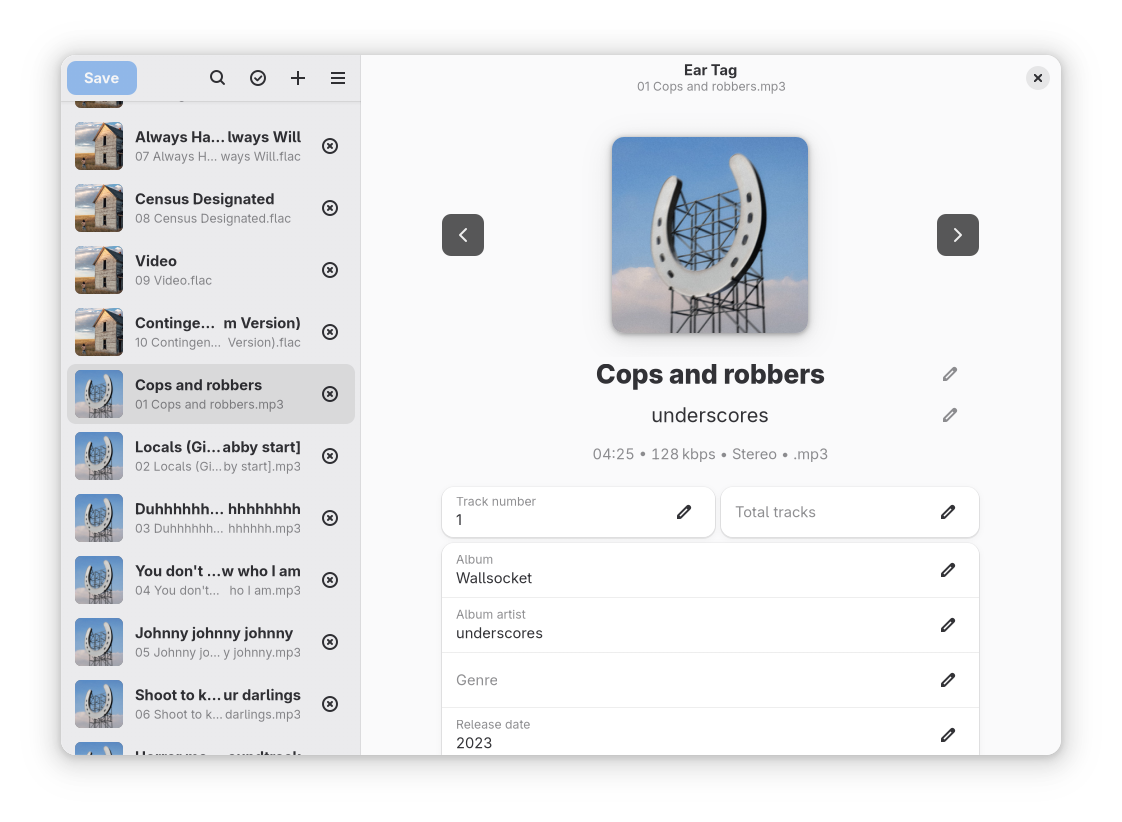
Ear Tag is a simple audio file tag editor. It is primarily geared towards making quick edits or bulk-editing tracks in albums/EPs. Unlike other tagging programs, Ear Tag does not require the user to set up a music library folder. It can:

  • Edit tags of MP3, WAV, M4A, FLAC, OGG and WMA files
  • Modify metadata of multiple files at once
  • Rename files using information from present tags
  • Identify files using AcoustID

Network access is only used for the “Identify selected files” option.

apps.gnome.org/EarTag
gitlab.gnome.org/World/eartag

Easy Audio Sync ~ Syncing & Conversion Utility


Audio library syncing and conversion utility

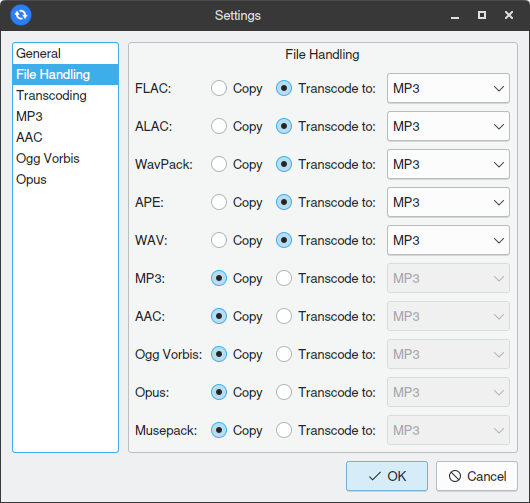
Easy Audio Sync is an audio library syncing and conversion utility. The intended use is syncing an audio library with many lossless files to a mobile device with limited storage.

The program’s design is inspired by the rsync utility. It supports folder-based source to destination syncing, with added audio transcoding capability, and is GUI-based instead of CLI-based.

Features:

  • Custom FFmpeg-based audio transcoding engine
    • Multithreaded operation for fast conversions
    • 4 lossy output codecs supported: MP3, AAC, Ogg Vorbis, and Opus
  • Robust metadata parser ensures tags and cover art are correctly transferred when converting between different formats
  • ReplayGain volume adjustments
  • Destination folder cleaning (deleting files that no longer exist in the source)
  • Cross-platform Windows/macOS/Linux

github.com/complexlogic/EasyAudioSync

MicToggle ~ Microphone Control Tool


MicToggle is a lightweight microphone control tool designed for focus and clarity. Instantly mute or unmute your mic using a custom hotkey — no matter what you’re doing. Stay aware of your mic status with a movable on-screen overlay, system tray icon, and optional audio cues. Choose your preferred microphone, set startup behavior, and enjoy a clean, unobtrusive interface. Whether you’re gaming, streaming, or in meetings, MicToggle keeps you in control.

Features:

  • Custom Hotkey — Instantly mute or unmute your mic using a hotkey you choose.
  • Microphone Selection — Pick which mic to control if multiple devices are connected.
  • On-Screen Overlay — Always know your mic’s status with a floating icon that you can reposition or disable.
  • Startup Options — Start minimized, run at Windows startup, or launch with mic muted.
  • Mic Status on Launch — Optionally hear a sound or get a notification showing your mic’s state when the app starts.
  • Visual Status Indicators — Colored icons clearly show your mic state both in the app and system tray.
  • Tray Controls — Toggle mute, open settings, or exit — all from the tray.
  • Clean Interface — Simple, responsive UI designed to stay out of your way.
  • Lightweight & Fast — Uses minimal resources, ideal for streamers, meetings, and gamers.

sourceforge.net/projects/mictoggle

shntool ~ WAVE Processing & Reporting Utility


shntool is a multi-purpose WAVE data processing and reporting utility. File formats are abstracted from its core, so it can process any file that contains WAVE data, compressed or not – provided there exists a format module to handle that particular file type.

shntool has native support for .wav files. If you want it to work with other lossless audio formats, you must have the appropriate helper program installed. The “Helper programs” section below contains links to helper programs for each format that shntool supports.

shnutils.freeshell.org/shntool
github.com/bayun/shntool