Ritmolux ~ Real-time Music Visualizer


A lightweight, real-time music visualizer built around one shared Rust core that turns a stream of PCM audio samples into GPU-rendered visuals. Two frontends consume that core:

  • Standalone app (Windows, macOS and Linux) — pure Rust (winit + wgpu), fed by the OS’s system-audio capture.
  • foobar2000 plugin (Windows-first) — a thin C++ shim over the core’s C ABI, fed by foobar’s own visualisation_stream (no loopback needed on that path).

The core is source-agnostic: it takes interleaved/mono PCM frames and does not care whether they came from loopback capture or foobar. That single abstraction is what lets one visual codebase serve both frontends.

ritmolux visualization

github.com/IgorKonovalov/Ritmolux
igorkonovalov.github.io/Ritmolux/gallery

myco ~ macOS Multi-output Device Control


Lightweight, ergonomic multi-output audio device for macOS.

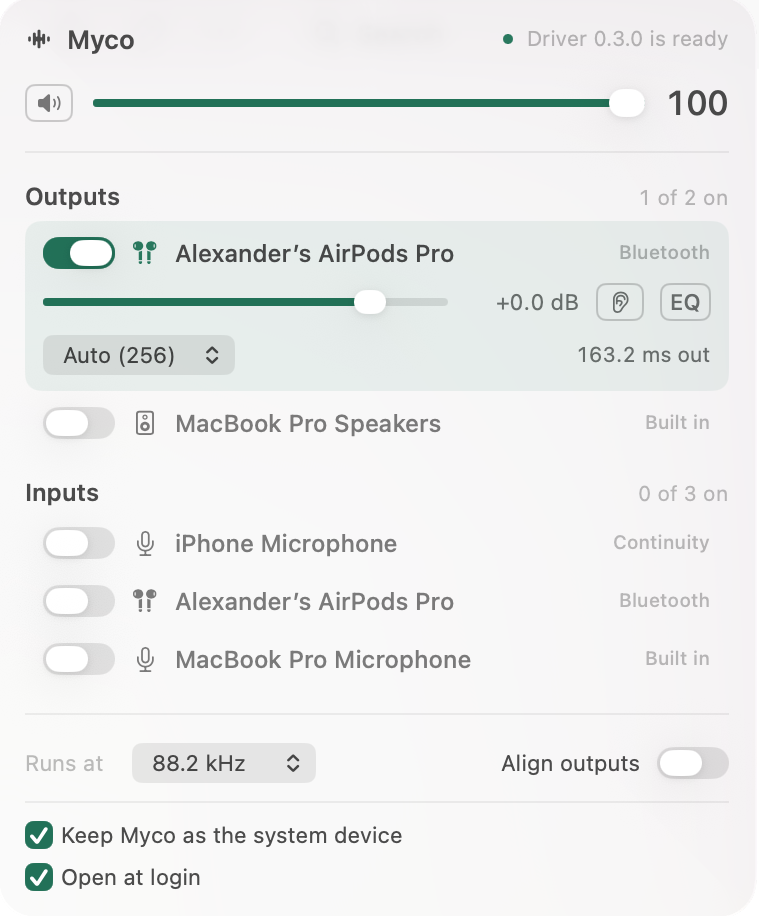
myco user interface

github.com/ssankko/myco

WrzDJ ~ Disc Jockey Song Requestor


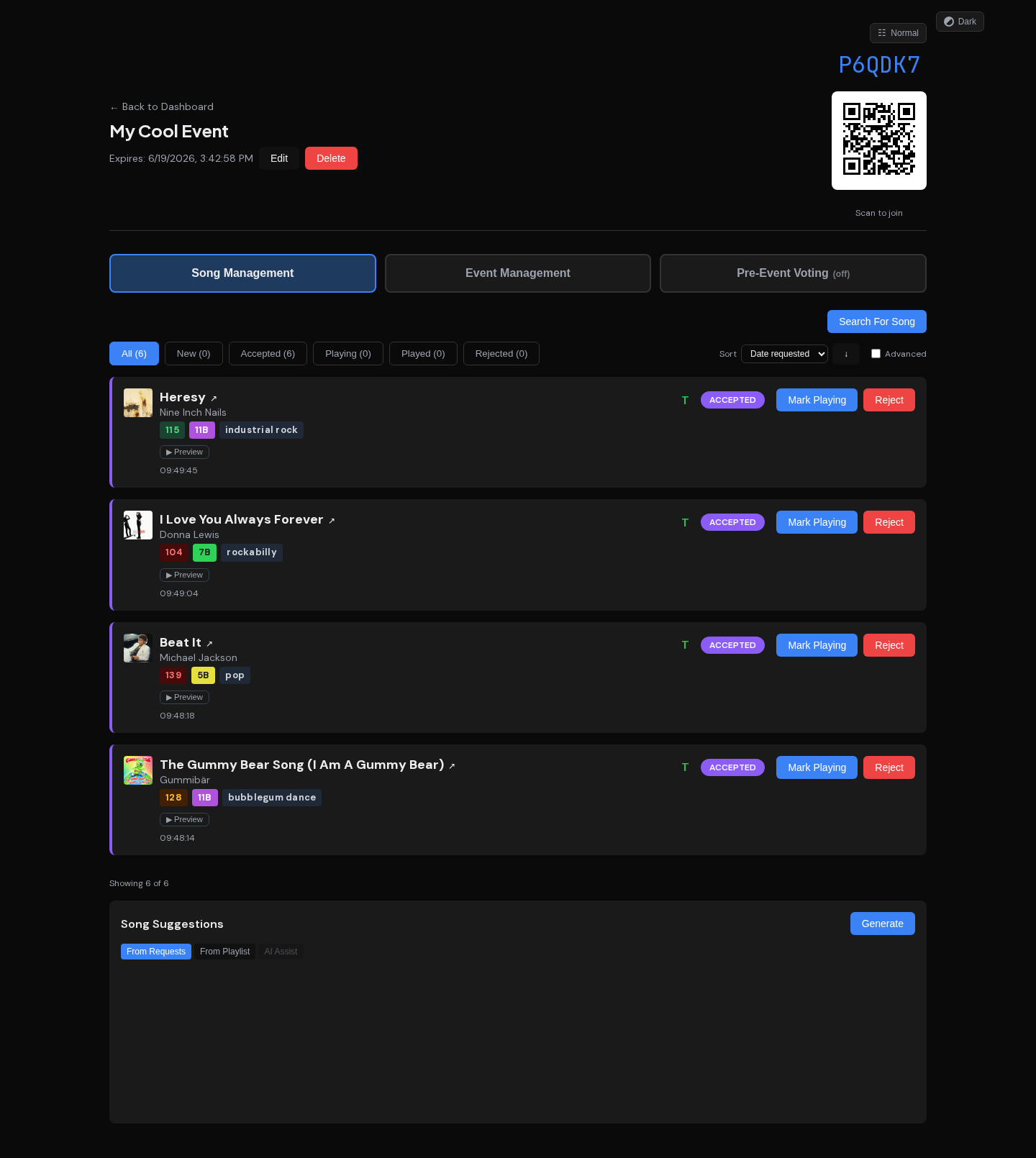
A real-time song request system for DJs. Guests scan a QR code to submit requests. DJs manage everything from a live dashboard with automatic track detection from their equipment via plugins for Denon, Pioneer, Serato, and Traktor.

wrzdj web interface

wrzdj.com
github.com/wrzonance/WrzDJ

thinksynth ~ Modular Synth & Algorthmic Composition


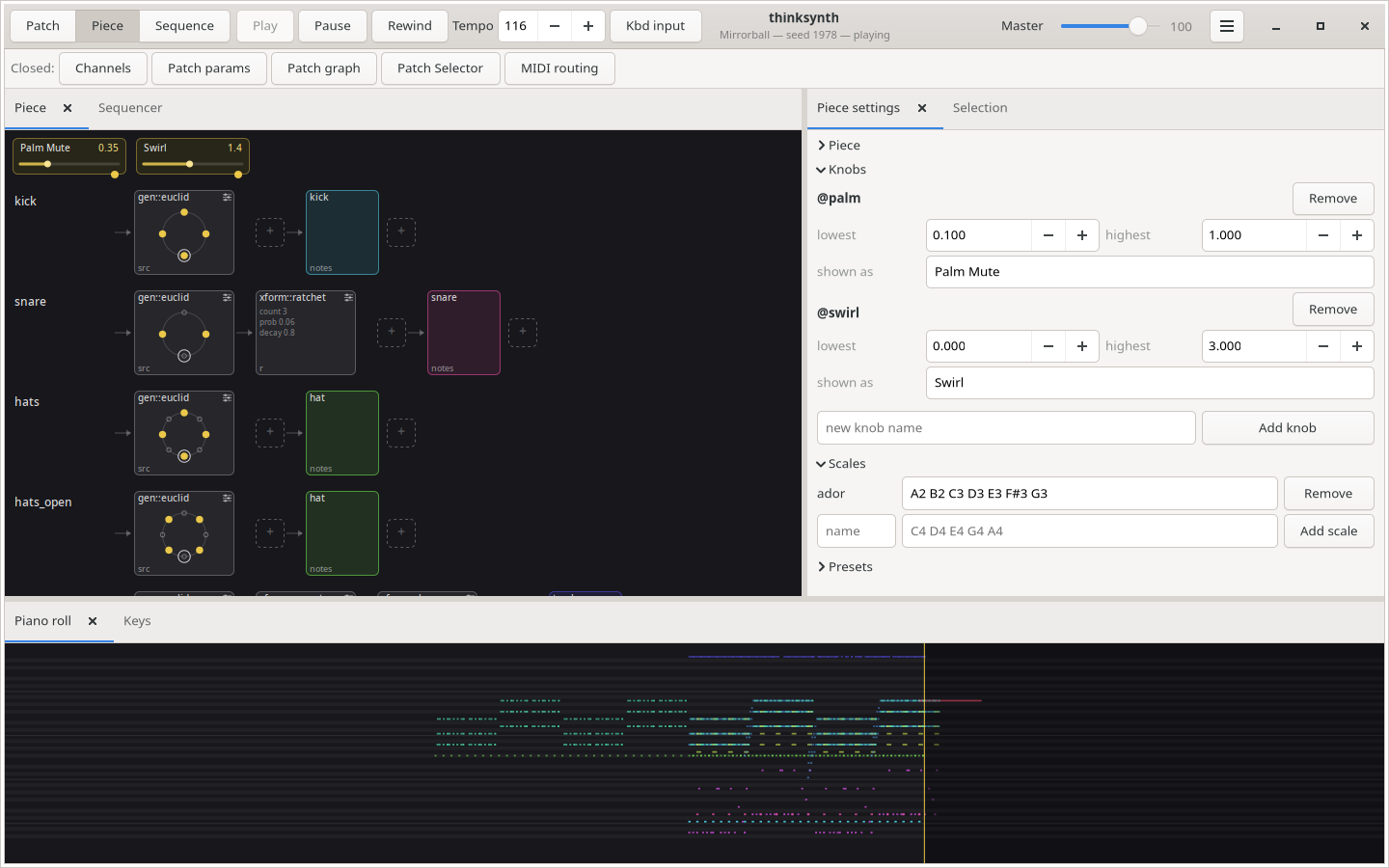
thinksynth builds sounds out of a graph of DSP nodes — oscillators, filters, envelopes, delays and arithmetic — described in a small language and rendered in real time. Patches assign those graphs to MIDI channels, so one instrument can layer several voices.

Every node is a plugin, and the set that ships covers subtractive and FM synthesis, resonators, waveshaping and a range of filters. New ones are ordinary shared libraries dropped into the plugin directory.

thinksynth user interface

github.com/mishan/thinksynth

PearTune ~ Peer-To-Peer Music Player


Play a music collection that lives on a computer at home, from anywhere. It can be your computer or a friend’s. No port forwarding, no VPN, no account and no cloud copy of your files.

peerloomllc.com/peartune
github.com/peerloomllc/peartune

Glacier EQ ~ USB DAC Parametric EQ


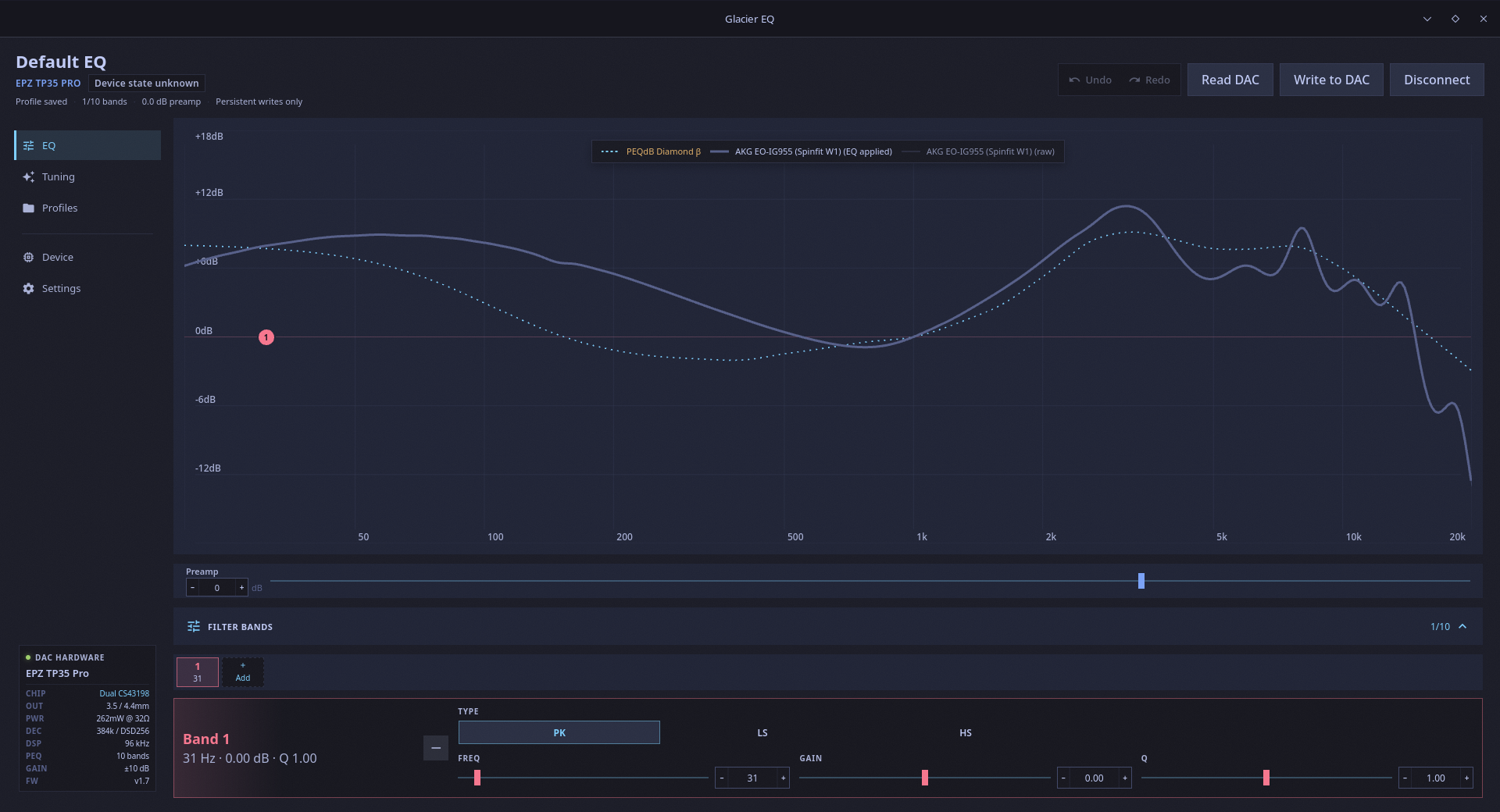
Cross-platform parametric EQ editor for USB DACs. Offline, direct Tauri+React app for desktop and Android.

glacier eq user interface

github.com/Bukutsu/glacier-eq

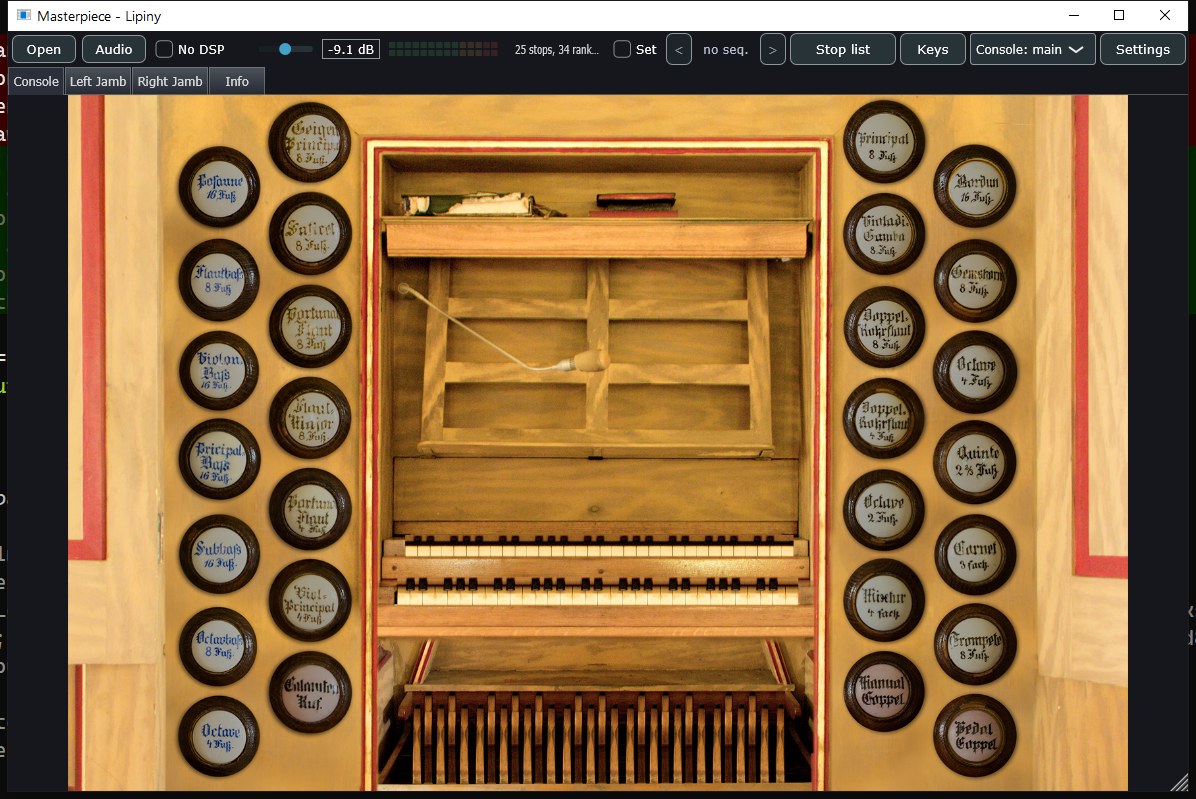
Masterpiece ~ Hauptwerk Sample Pipe Organ


An open-source pipe organ sample player compatible with Hauptwerk sample sets.

masterpeice lipiny interface

bonninr.github.io/masterpiece
github.com/bonninr/masterpiece

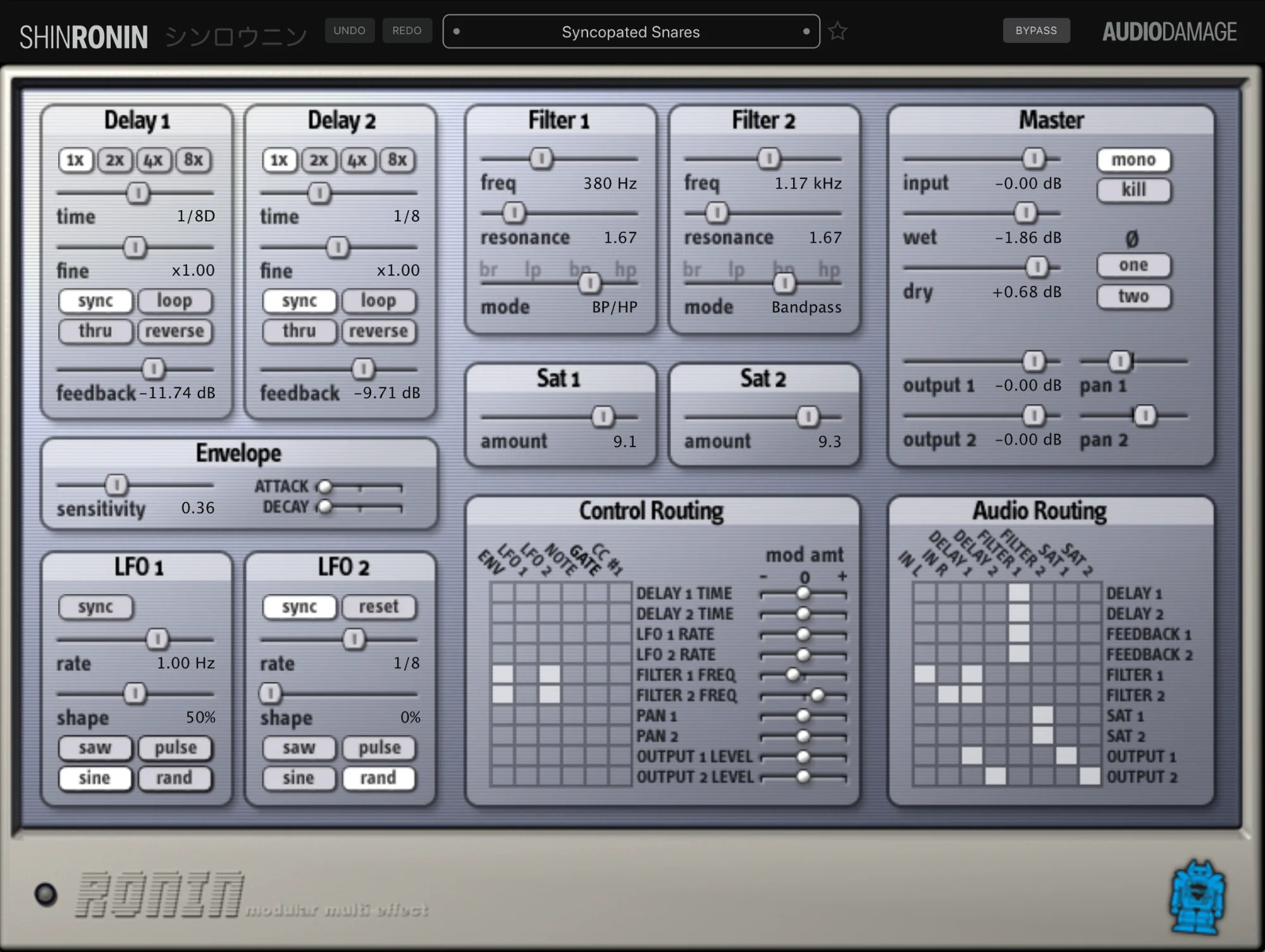
ShinRonin ~ Modular Filter & Delay


ShinRonin is a ground-up rebuild of Ronin, one of the earliest plugins we ever shipped, first released in 2003. The original paired two delay lines with a set of morphing filters and two fully patchable routing matrices, and it earned a cult following for the strange feedback networks and self-oscillating textures you could build inside it. Twenty years on, we have rebuilt it for modern systems, kept the architecture that made it worth remembering, and released it for free.

Two independent delay lines, each with tempo sync, reverse, looping, and feedback, feed a pair of morphing multimode filters that sweep continuously from notch through lowpass, bandpass, and highpass. There is saturation, two LFOs, and an envelope follower. Everything connects through two on-board matrices: a signal matrix that routes any audio source to any destination, and a modulation matrix that wires the LFOs, envelope, and incoming MIDI to nearly any parameter. It is happy doing clean stereo delays and gentle filtering, but the real fun starts when you patch a feedback loop and let it misbehave.

shinronin user interface

www.audiodamage.com/pages/shin-ronin

SC55-CLAP ~ Nuked SC-55 CLAP Plugin


Nuked SC-55 CLAP is a CLAP audio plug-in built upon J.C. Moyer’s fork of nukeykt’s Nuked-SC55, an emulation of the Roland SC-55 Sound Canvas MIDI module.

Unlike the original Nuked-SC55, this version has no graphical user interface. It reacts to MIDI messages like an external MIDI module and is intended for retro gaming, hobby music, and research.

The plug-in supports ROM versions from several original SC-55 models, including the SC-55 v1.00 through v2.00 and SC-55mk2 v1.01. It runs on Windows, macOS and Linux. The project is based on the original MAME license, which includes restrictions on commercial use, including commercial music production and inclusion in commercial software packages.

The project describes its purpose as helping preserve DOS gaming history while providing historically accurate SC-55 sound through a modern CLAP plug-in.

Note: The plug-in requires ROM dumps from the original hardware; the ROMs are not included with the project.

github.com/johnnovak/Nuked-SC55-CLAP

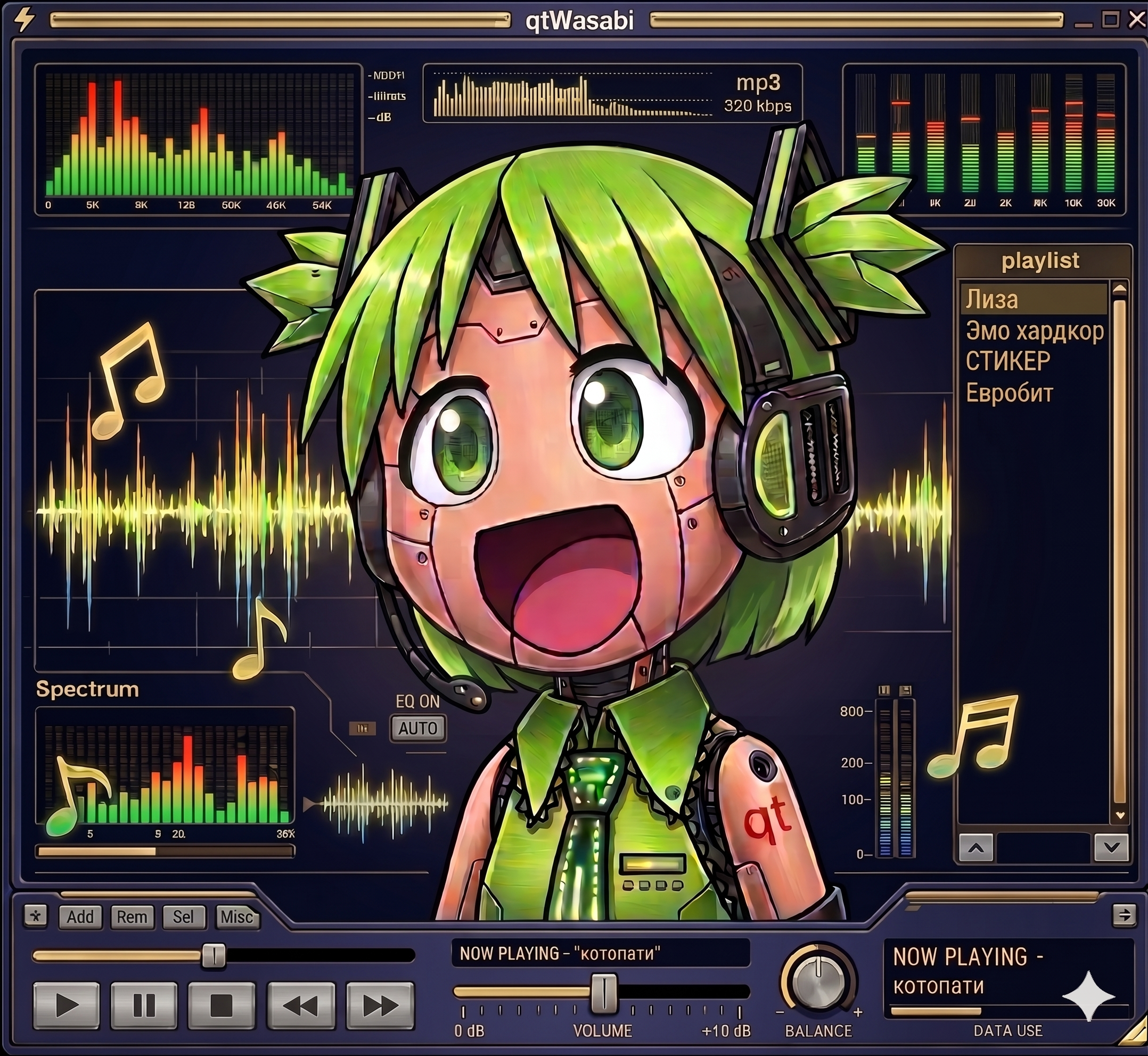
qtamp ~ qtWasabi Reference Player


I never wanted a player that looks like Winamp. I wanted one that actually runs Winamp skins. The difference is bigger than it sounds. A Modern Skin is not a bitmap theme, it is a program. XML declares the widget tree, compiled Maki bytecode drives the behavior. Drawers slide, tabs switch, windows change their shape, all of it scripted by the skin itself. Repaint that and you have a pretty poster. I wanted the original.

That is why qtamp runs skins as real programs. qtamp is my Qt6-native music player and the reference player for qtWasabi, my independent reimplementation of a Modern Skin engine. Skins ship their compiled Maki bytecode with them, and qtWasabi executes it in its own Maki VM. The skin’s logic drives the interface exactly the way it did in 2002.

The name is a play on words. “Qt” as in the framework, “qt” as in cute. A Qt-native amp, and hopefully a cute one.

qtamp qtWasabi mascot

qtamp.org
github.com/qtamp

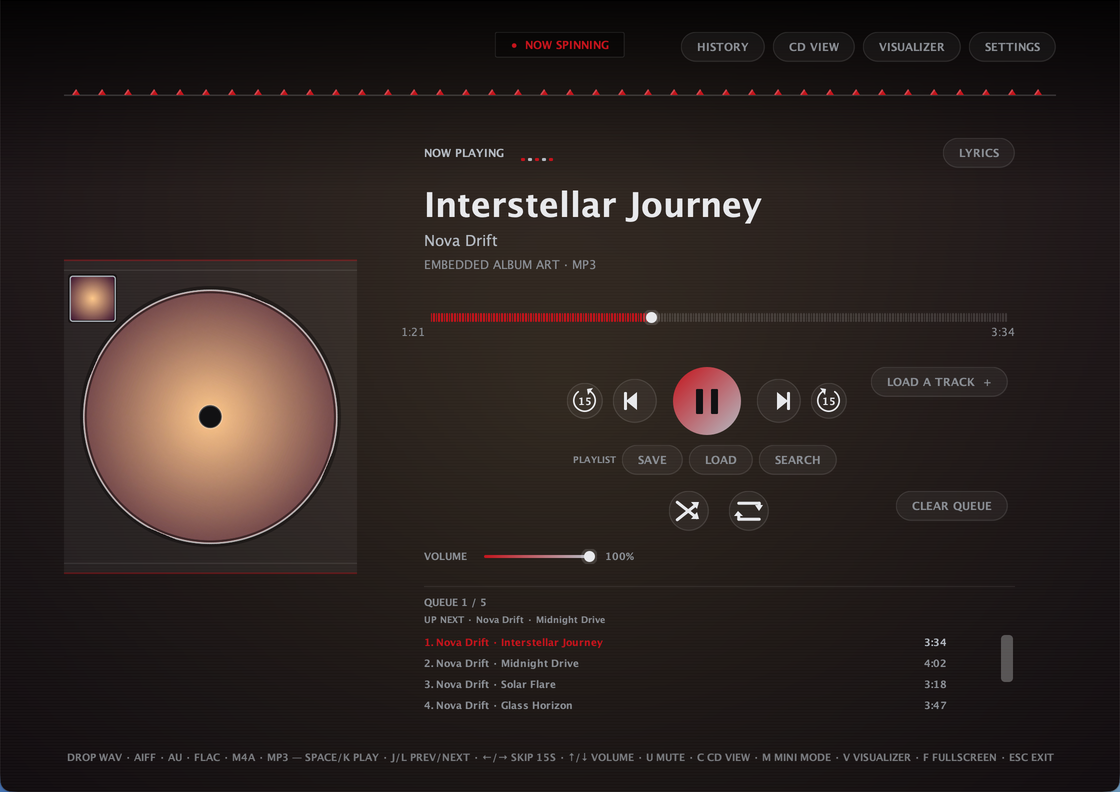
CDPlayer ~ CD Player App


CDPlayer is a Java desktop app that recreates the tactile feel of a physical CD player for local audio playback. Load a track, press play, and enjoy a simple, distraction-free music experience without relying on a browser or web app — no accounts, no streaming, no internet required to play a song. Built with plain Java and native Swing/AWT — no external UI framework, single self-contained app

Plays local audio files through a custom low-latency streaming engine, with FFmpeg handling the formats Java can’t decode natively

Full queue management: drag-and-drop, drag-to-reorder, shuffle, repeat, crossfade, volume, mono downmix, and per-track removal — queue is saved automatically and restored next launch

Ten built-in themes — nine animated ones plus AUTO, which derives its whole palette from the current track’s own album art

A sleep timer that pauses playback after a set time, with a live countdown in the header

A 10-band graphic equalizer with built-in and savable custom presets, and a beat-synced visualizer

True fullscreen, a distraction-free fullscreen Visualizer Mode, and a Mini Mode that shrinks the whole app down to a small always-on-top widget

A dedicated Settings dialog for theme, crossfade, mono, and an ambient blurred-cover-art background wash

Automatic metadata and album art, with an online lookup fallback when a file has none

Works on Windows, macOS, and Linux. ffmpeg required.

CDPlayer User Interface

github.com/Kizarov3/CDPlayer

Manifold ~ Audio Batch Processing Tool


Manifold is a desktop audio batch-processing tool built for inspecting, transforming, and exporting large collections of audio files with a visual workflow editor. Useful for checking and pre-processing audio for game-audio production, podcasts and broadcast, it is designed to make repetitive tasks more efficient and reproducible.

It combines a polished ImGui-based interface with a custom node-based audio pipeline, allowing you to build repeatable processing chains for tasks such as loudness normalization, peak limiting, DC offset cleanup, resampling, and format conversion.Why Manifold?

Manifold was designed to make audio batch work feel more structured and reproducible. Instead of manually running ad-hoc commands or scripting every step, you can:

  • import whole folders of audio files,
  • inspect their metadata and analysis results,
  • create reusable processing chains,
  • export processed files with consistent naming and format settings.

This makes it useful for workflows such as podcast preparation, mastering prep, broadcast delivery, and game-audio asset processing.

Key Features:

  • Batch import of files and folders
  • Drag-and-drop support from the file explorer
  • Built-in audio playback for quick previews
  • File table with metadata and analysis metrics
  • Configurable processing workflows using nodes
  • Output settings for folder, naming, format, and subtype
  • Background processing with task history and logs
  • Parallel analysis for loudness and DC offset metrics

Supported Processing Nodes:

Manifold includes a growing set of audio processing and analysis nodes, including:

  • Loudness analysis
  • Loudness normalization
  • True peak limiting
  • DC offset removal
  • Peak normalization
  • Channel mixing
  • Silence trimming
  • Fade in/out
  • Loudness compliance checks
  • Clipping detection
  • Dynamic range analysis

These nodes can be chained together to create custom pipelines for different production scenarios.

github.com/AnClark/Manifold