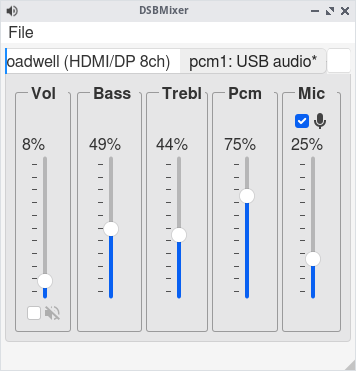
DSBMixer is a tabbed Qt mixer for FreeBSD. For each installed mixer device, DSBMixer opens a tab. It allows you to configure various sound settings, such as amplification, recording sources, or the default audio device. If built with devd support, tabs are created or removed automatically when a (USB) sound card was added to or removed from the system.
Sndio is a small audio and MIDI framework part of the OpenBSD project and ported to FreeBSD, Linux and NetBSD. It provides a lightweight audio & MIDI server and a fully documented user-space API to access either the server or the hardware directly in a uniform way. Sndio is designed to work for desktop applications, but pays special attention to synchronization mechanisms and reliability required by music applications. Reliability through simplicity is part of the project goals.
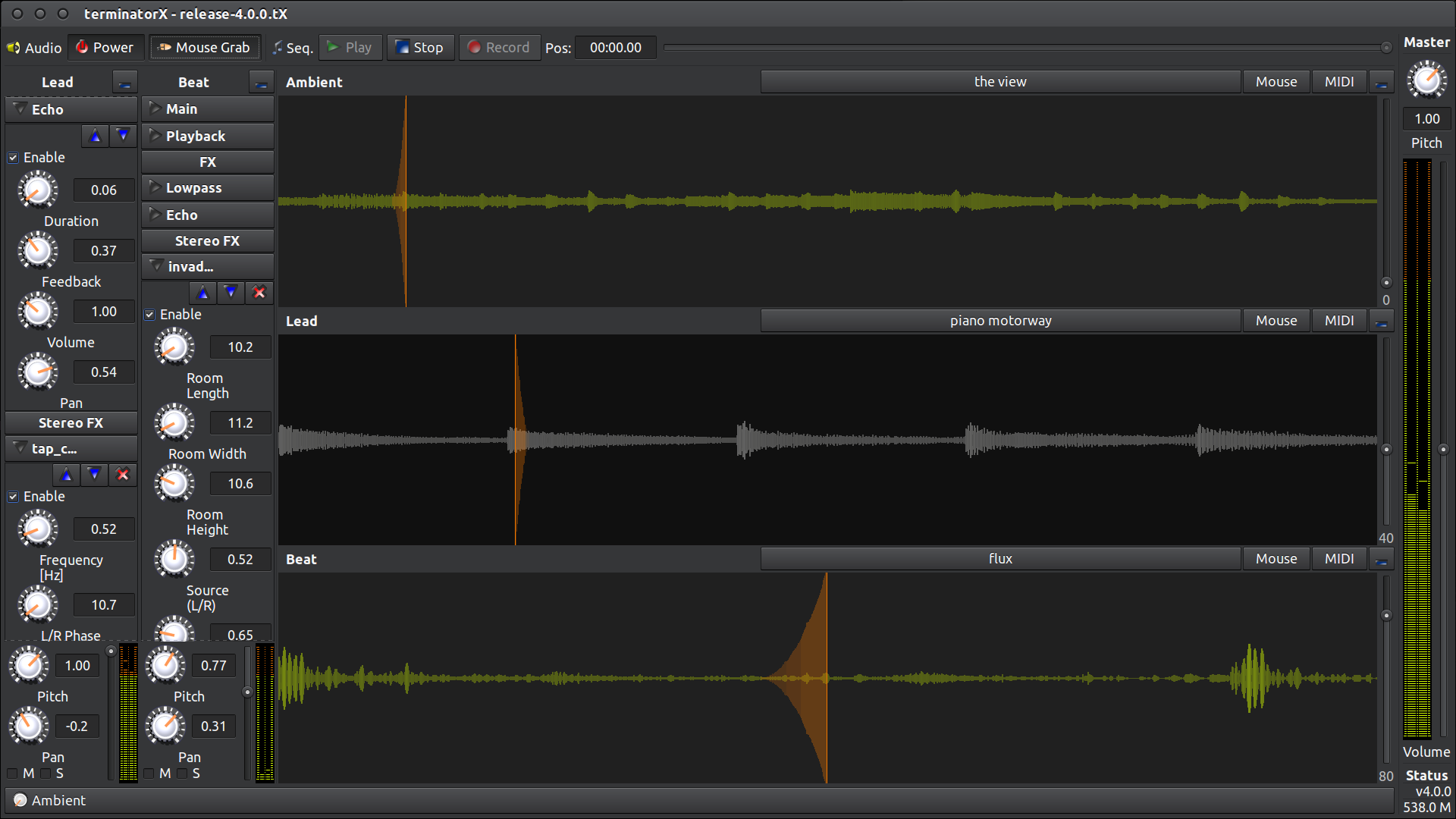
This software allows “scratching” on digitally sampled audio data (*.wav, *.au, *.ogg, *.mp3, etc.) the way hip hop DJs scratch on vinyl records. It features multiple turntables, realtime effects (built-in as well as LADSPA plugin effects), a sequencer and MIDI interface – all accessible through an easy-to-use gtk+ GUI. This software is designed to run under Linux, FreeBSD and the like.
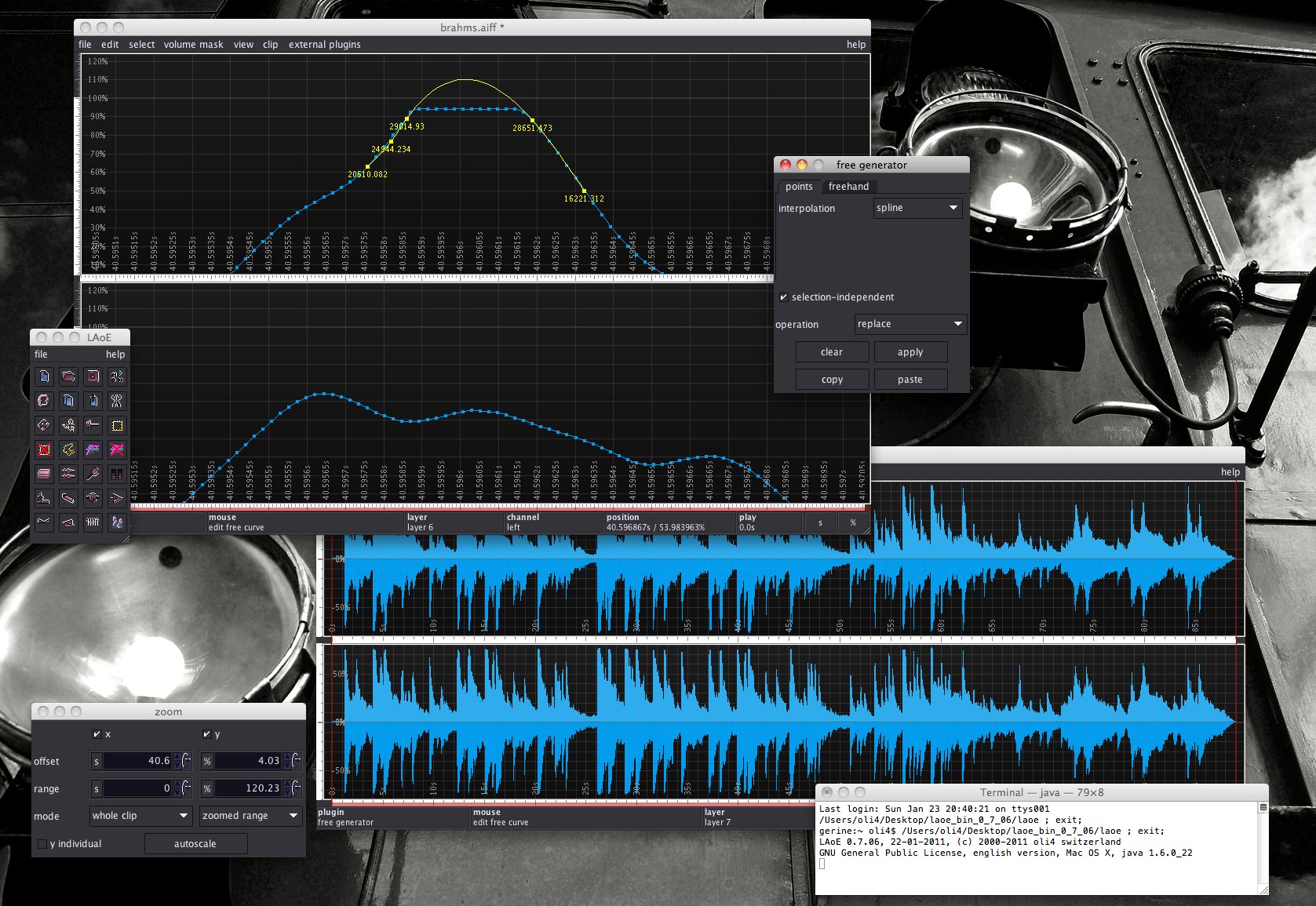
LAoE means Layer-based Audio Editor, and it is a rich featured graphical audio sample-editor, based on multi-layers, floating-point samples, volume-masks, variable selection-intensity, and many plugins suitable to manipulate sound, such as filtering, retouching, resampling, graphical spectrogram editing by brushes and rectangles, sample-curve editing by freehand-pen and spline and other interpolation curves, effects like reverb, echo, compress, expand, pitch-shift, time-stretch, and much more… And it is free of charge, under GPL license!
DGuitar is a Guitar Pro (*.GP4,*.GP3,GTP) viewer and player that works under Linux, MacOs, Solaris, BSD or Windows or any other Operational System that has Java Runtime Environment 1.4 or later installed.
Welcome to the wonderful world of GLAME, short for GNU/Linux Audio Mechanics! The project aims to present you with a powerful, fast, stable and easily extensible sound editor for Linux and compatible systems. And best of all, it’s GPLed!
A complete, cross-platform solution to record, convert and stream audio and video. FFmpeg is the leading multimedia framework, able to decode, encode, transcode, mux, demux, stream, filter and play pretty much anything that humans and machines have created. It supports the most obscure ancient formats up to the cutting edge. No matter if they were designed by some standards committee, the community or a corporation. It is also highly portable: FFmpeg compiles, runs, and passes our testing infrastructure FATE across Linux, Mac OS X, Microsoft Windows, the BSDs, Solaris, etc. under a wide variety of build environments, machine architectures, and configurations.
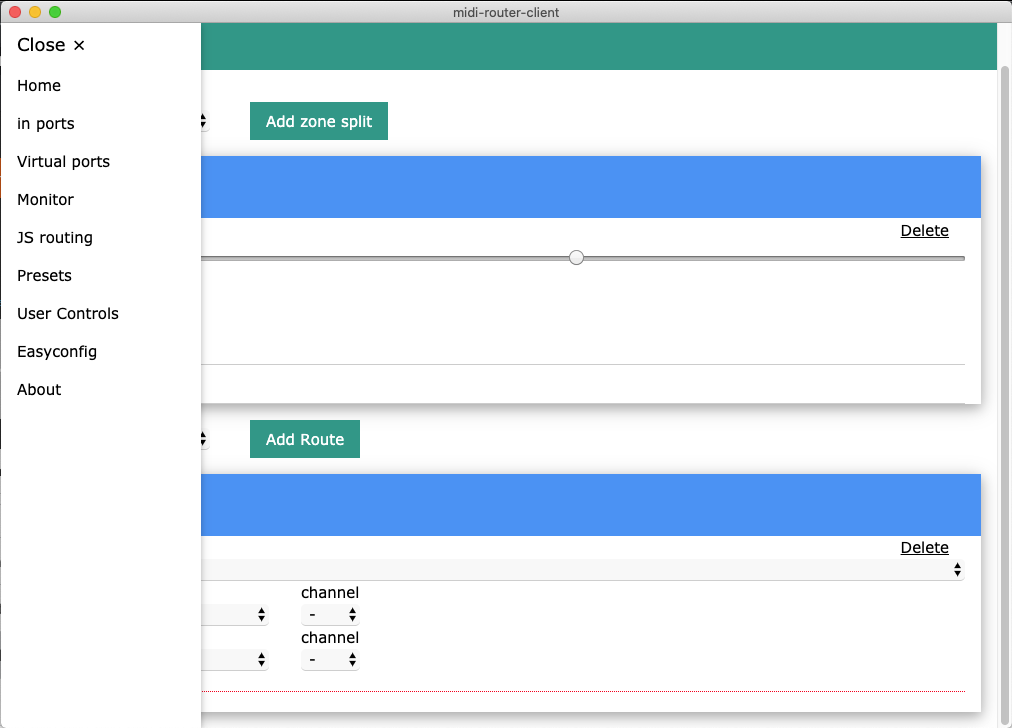
Midi Router Client is an advanced, cross-platform tool designed to route and manipulate MIDI signals in real time. It allows users to create virtual MIDI ports, map MIDI events (e.g., CC to pitch wheel), monitor inputs, and build custom controls like program change dropdowns — all with minimal latency.
Features:
Route anywhere to anywhere.
Create virtual port.
Route from WebMidiJs client to server and back.
Route from server to server.
All routing in Real Time with no latency.
Route from one event type to another. (cc to pitch wheel)
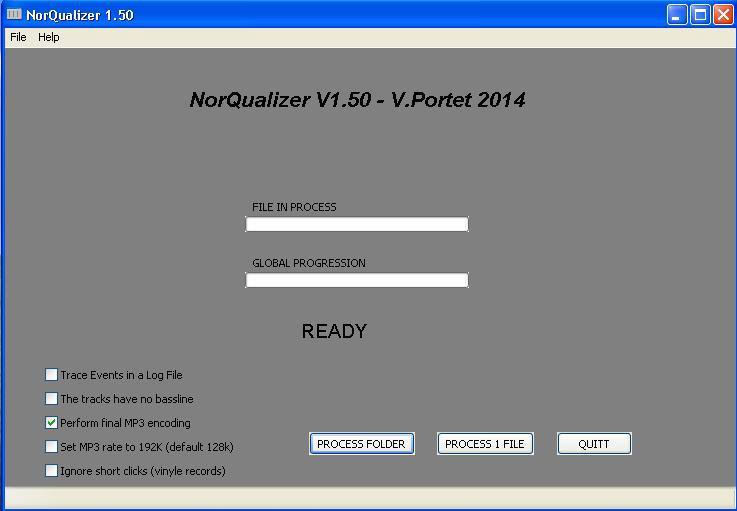
NorQualizer is a smart audio equalizer / normalizer which corrects audio files to get them all similar in terms of bandwidth and volume level. Especially useful for preparing audio CDs with files from different sources.
meterec works as a basic multitrack tape recorder. The aim of this software is to minimise the interactions of the users with the computer and allow them to focus on their instrumental performances. For this reason meterec’s features are minimal. If you screw one take, start it over again! Rather than learning how to use a specific software to correct what you screw up, meterec forces you to learn and master your instrument. The good news is that previous takes are kept in history and if in the end, the first one was the best you could play, you can choose it in your final mix.