
A reusable Win32 text input control for foobar2000 title-format expressions, built as footilla.lib. Ships a Footilla-maintained copy of the Scintilla editing engine used by SciTE, with Footilla’s own title-format container lexer, completion catalog and call tips. The engine’s object files are included in the library: no Scintilla DLL, Lexilla DLL, SciTE executable, WTL runtime or foobar2000 SDK is required.
Tag Archives: Library

tinytag ~ Python Tag Library
tinytag is a Python library for reading audio file metadata.
Features:
- Read tags, images and properties of audio files
- Supported formats:
- ID3 v1, v1.1, v2.2, v2.3, v2.4
- MP3 / MP2 / MP1
- MP4 (MPEG-4 Audio / AAC / ALAC)
- WAVE / WAV
- OGG (FLAC / Opus / Speex / Vorbis)
- FLAC
- ASF (WMA)
- AIFF / AIFF-C
- Same API for all formats
- Small, portable library
- High code coverage
- Pure Python, no dependencies
- Supports Python 3.7 or higher
Share this:

Music Assistant ~ Media Library Manager
Music Assistant is a free, opensource media library manager that connects to your streaming services and a wide range of connected speakers. The server is the beating heart, the core of Music Assistant and must run on an always-on device like a Raspberry Pi, a NAS or an Intel NUC or alike.
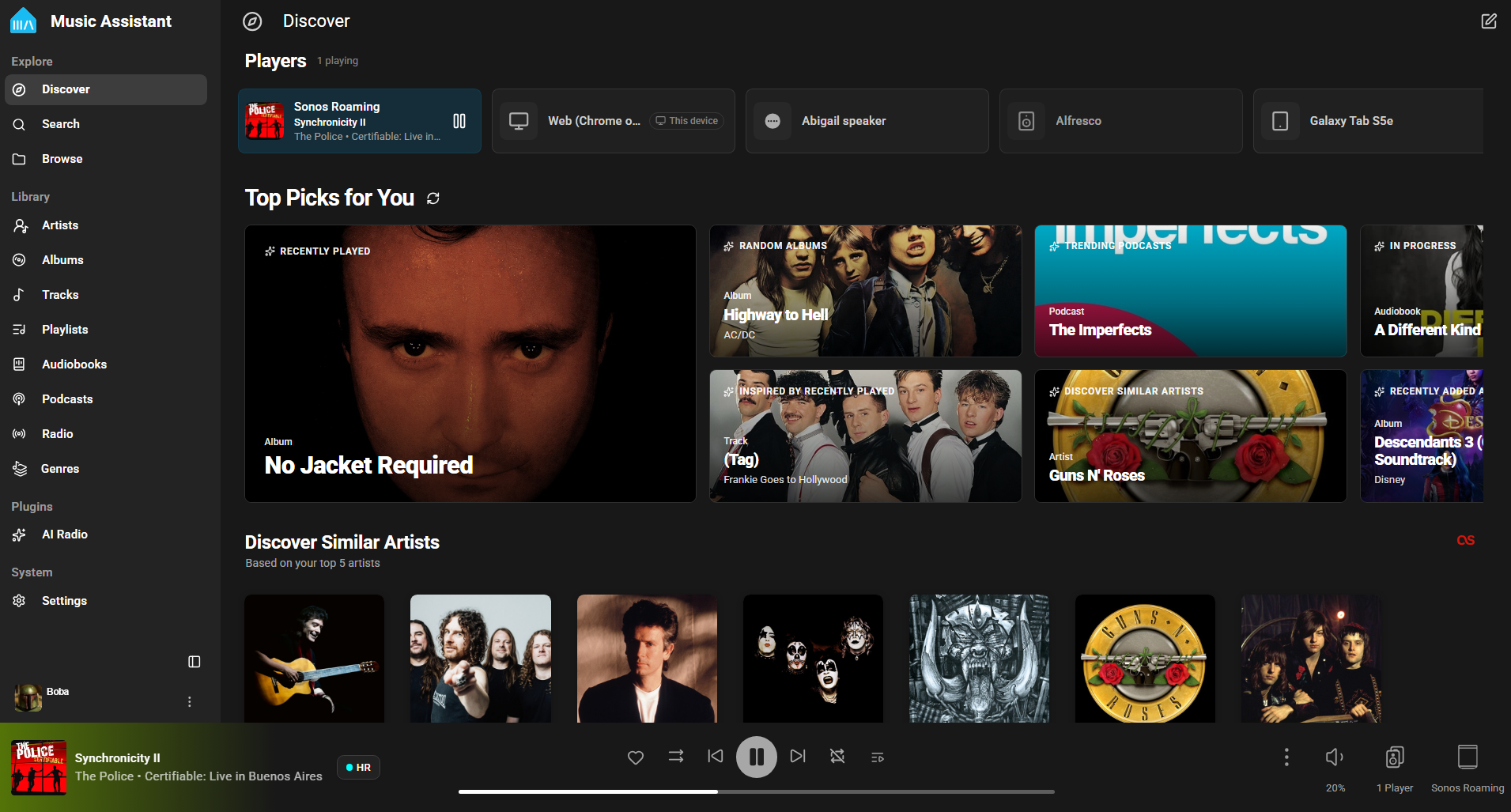
www.music-assistant.io
github.com/music-assistant
github.com/music-assistant/server
Share this:

DXD-e ~ Experimental DXD Audio Format
This is a library that implements a proposed digital audio intermediary format, called DXD-e, that allows audio player and workstation applications to handle DSD (Direct Stream Digital) audio with only minor modifications to their input and output plugins. This is accomplished by embedding the original 1-bit DSD audio stream, along with a digital pilot signal, into a conventional decimated 24-bit PCM version of the DSD stream (which is known otherwise as DXD). This embedding consumes the 9 LSBs of each 24-bit sample (8 for the DSD and 1 for the pilot) while noise-shaping filters are employed to completely bury the resulting noise underneath the existing high-frequency DSD quantization noise always found in a DXD stream. In short, the DXD stream is made to hold a lossless copy of the original DSD stream without any degradation.
github.com/dbry/DXD-e
hydrogenaudio.org/index.php/topic,129787.0
Share this:

Dynamic Audio Normalizer ~ Advanced Normalization
Dynamic Audio Normalizer is a library for advanced audio normalization purposes. It applies a certain amount of gain to the input audio in order to bring its peak magnitude to a target level (e.g. 0 dBFS). However, in contrast to more “simple” normalization algorithms, the Dynamic Audio Normalizer dynamically re-adjusts the gain factor to the input audio. This allows for applying extra gain to the “quiet” sections of the audio while avoiding distortions or clipping the “loud” sections. In other words: The Dynamic Audio Normalizer will “even out” the volume of quiet and loud sections, in the sense that the volume of each section is brought to the same target level. Note, however, that the Dynamic Audio Normalizer achieves this goal without applying “dynamic range compressing”. It will retain 100% of the dynamic range within each “local” region of the audio file.
The Dynamic Audio Normalizer is available as a small standalone command-line utility and also as an effect in the SoX audio processor as well as in the FFmpeg audio/video converter. Furthermore, it can be integrated into your favorite DAW (digital audio workstation), as a VST plug-in, or into your favorite media player, as a Winamp plug-in. Last but not least, the “core” library can be integrated into custom applications easily, thanks to a straightforward API (application programming interface).
github.com/lordmulder/DynamicAudioNormalizer
Share this:

SDIF ~ Sound Description Interchange Format
The Sound Description Interchange Format (SDIF) is an established standard for the interchange of sound descriptions and analysis data. This project provides libraries, SDIF (in C) and Easdif (in C++), tools, and wrappers to read and write SDIF files.
sourceforge.net/projects/sdif
cnmat.berkeley.edu/library/sdif
en.wikipedia.org/wiki/SDIF
groups.google.com/g/sdif-forum
Share this:

PedalBoard ~ Python Audio Library
pedalboard is a Python library for working with audio: reading, writing, rendering, adding effects, and more. It supports most popular audio file formats and a number of common audio effects out of the box, and also allows the use of VST3® and Audio Unit formats for loading third-party software instruments and effects.
Features:
- Built-in audio I/O utilities (pedalboard.io)
- Support for reading and writing AIFF, FLAC, MP3, OGG, and WAV files on all platforms with no dependencies
- Additional support for reading AAC, AC3, WMA, and other formats depending on platform
- Support for on-the-fly resampling of audio files and streams with
O(1)memory usage - Live audio effects via
AudioStream
- Built-in support for a number of basic audio transformations, including:
- Guitar-style effects:
Chorus,Distortion,Phaser,Clipping - Loudness and dynamic range effects:
Compressor,Gain,Limiter - Equalizers and filters:
HighpassFilter,LadderFilter,LowpassFilter - Spatial effects:
Convolution,Delay,Reverb - Pitch effects:
PitchShift - Lossy compression:
GSMFullRateCompressor,MP3Compressor - Quality reduction:
Resample,Bitcrush
- Guitar-style effects:
- Supports VST3® instrument and effect plugins on macOS, Windows, and Linux (
pedalboard.load_plugin) - Supports instrument and effect Audio Units on macOS
- Strong thread-safety, memory usage, and speed guarantees
- Releases Python’s Global Interpreter Lock (GIL) to allow use of multiple CPU cores
- No need to use
multiprocessing!
- No need to use
- Even when only using one thread:
- Processes audio up to 300x faster than pySoX for single transforms, and 2-5x faster than SoxBindings (via iCorv)
- Reads audio files up to 4x faster than librosa.load (in many cases)
- Releases Python’s Global Interpreter Lock (GIL) to allow use of multiple CPU cores
- Tested compatibility with TensorFlow – can be used in
tf.datapipelines!
Share this:

AFsp ~ Audio File I/O Routines
The AFsp package is a library of routines for reading and writing
audio files. The emphasis is on providing support for the type of
audio file used by the speech processing research community. The
routines have been designed to be easy to use, yet provide transparent
support the reading of several audio file formats. A secondary
purpose for distributing these routines is to encourage the use of a
standard audio file format for the header information in the output
files.
The following file formats are supported for reading.
- NIST SPHERE audio files
- Sun/NeXT audio files
- DEC audio files
- IRCAM SoundFiles
- INRS-Telecom audio files
- ESPS sampled data feature files
- Headerless audio files
The audio file open routine automatically senses the file type and
communicates it to the audio file reading routines. Formats are
converted on the fly as the file is read, so the user manipulates
floats and doesn’t need to worry about the underlying data format.
For writing, the routines produce a standard format file, though
options are available to produce headerless files if desired. This
standard format is a compatible with the Sun audio file format. There
is provision for storing extra information in the extensible part of
the header.
Several audio file utilities (for copying, comparing, and filtering
audio files) are included in the package.
www.cs.cmu.edu/afs/cs/project/ai-repository/ai/areas/speech/systems/afsp/0
Share this:

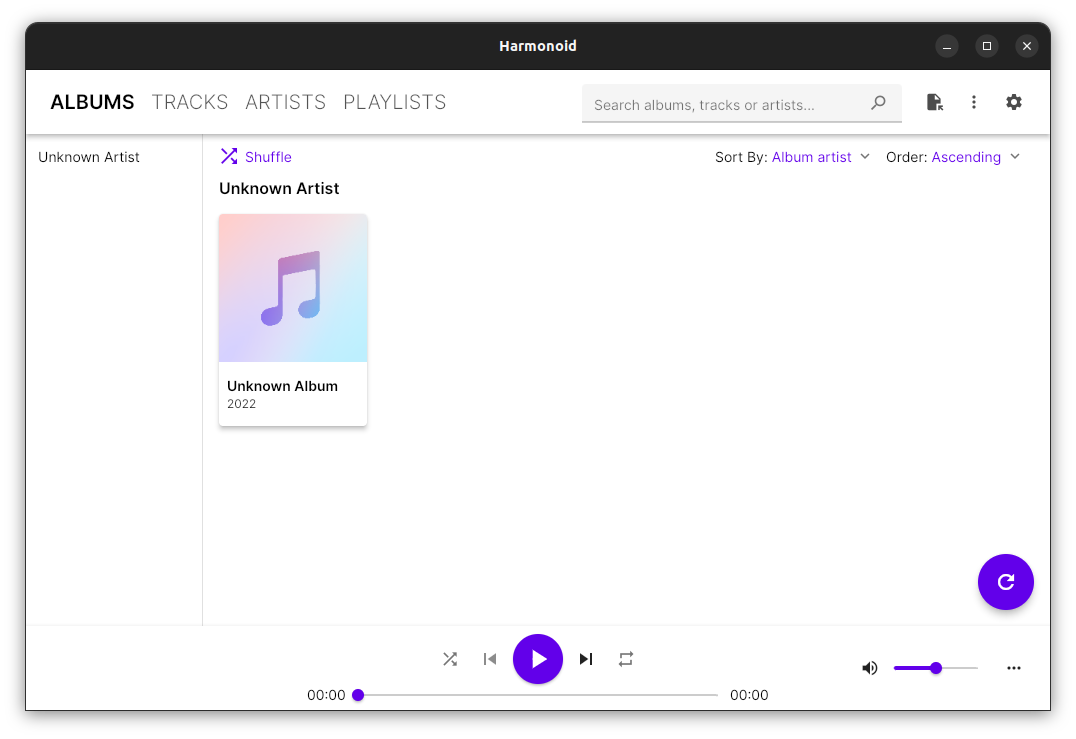
Harmonoid ~ Play & Manage Music Library
Plays & manages your music library. Looks beautiful & juicy.
Features:
- Fluid animations & beautiful design, everywhere you navigate
- It’ll find lyrics or give your own .LRC files
- Closely paired to work together. Windows & Linux
- Experience the consistent Material Design
- Music library management based on metadata tags
- Capable of indexing 30+ files/second & saves cache for future app start-ups
- Very strictly follows Material Design guidelines for UI & animations
- Taskbar & System Media Transport Controls for Windows
- Small installer (≈ 35 MB) & low RAM usage (≈ 150 MB)
- Discord RPC integration with album art support & “Find”/”Listen” buttons
harmonoid.com
github.com/harmonoid
sourceforge.net/projects/harmonoid.mirror
itsfoss.com/harmonoid
Share this:

aubio ~ Audio Labelling Library
aubio is a tool designed for the extraction of annotations from audio signals. Its features include segmenting a sound file before each of its attacks, performing pitch detection, tapping the beat and producing midi streams from live audio.
Because these tasks are difficult, we thought it was important to gather them in a dedicated library. To increase the fun, we have made these algorithms work in a causal way, so as to be used in real time applications with as low delay as possible. Functions can be used offline in sound editors and software samplers, or online in audio effects and virtual instruments.
Features:
aubio currently provides the following features:
- digital filters
- phase vocoder
- onset detection (several methods)
- pitch tracking (several methods)
- beat and tempo tracking
- mel frequency cepstrum coefficients (MFCC)
- transient / steady-state separation
aubio.org
github.com/aubio
aubio.org/documentation
aubio.readthedocs.io/en/latest/
Share this:

SF2Lib ~ SoundFont (SF2) Synthesizer In C++
This library can read SF2 SoundFont files and render audio samples from them in real-time. It properly reads in a compliant SF2 file and can be used to obtain meta data such as preset names. It also has an audio rendering engine that can generate audio samples for key events that come from (say) a MIDI keyboard. This library is currently being used by my SoundFonts and SoundFontsPlus applications for SF2 file parsing and, in the latter app, as the sample generating engine.
Although most of the library code is generic C++17/23, there are a few bits that expect an Apple platform that has the AudioToolbox and Accelerate frameworks available. The goal is to be a simple library for reading SF2 files as well as a competent SF2 audio renderer whose output can be fed to any sort of audio processing chain, but it would probably take some effort to remove it from the Apple ecosystem.
github.com/bradhowes/SF2Lib
swiftpackageindex.com/bradhowes/SF2Lib
Share this:

Discord Audio Stream ~ Stream Audio Via Discord
Designed for 24/7 audio playing on discord.
Discord has many unwanted rate limits, especially in the audio area. This package does all the work and ensures that your music never stops playing due to ffmpeg or Discord, with as little effort as possible.
github.com/FrauJulian/Discord-Audio-Stream
www.npmjs.com/package/discord-audio-stream


