rt_pvc ~ Realtime Phase Vocoder


rt_pvc is a:

  • real-time phase vocoder library for synthesis/analysis
  • vocoder application that allows the user to do time-expansion, frequency expansion, and cross-synthesis in real-time, from mic-input or from file.
  • real-time phase vocoder visualization
  • learning tool that teaches about the phase vocoder and its implementation
  • open source!

soundlab.cs.princeton.edu/software/rt_pvc
aur.archlinux.org/packages/rt_pvc

BassBoom ~ Music App & Library


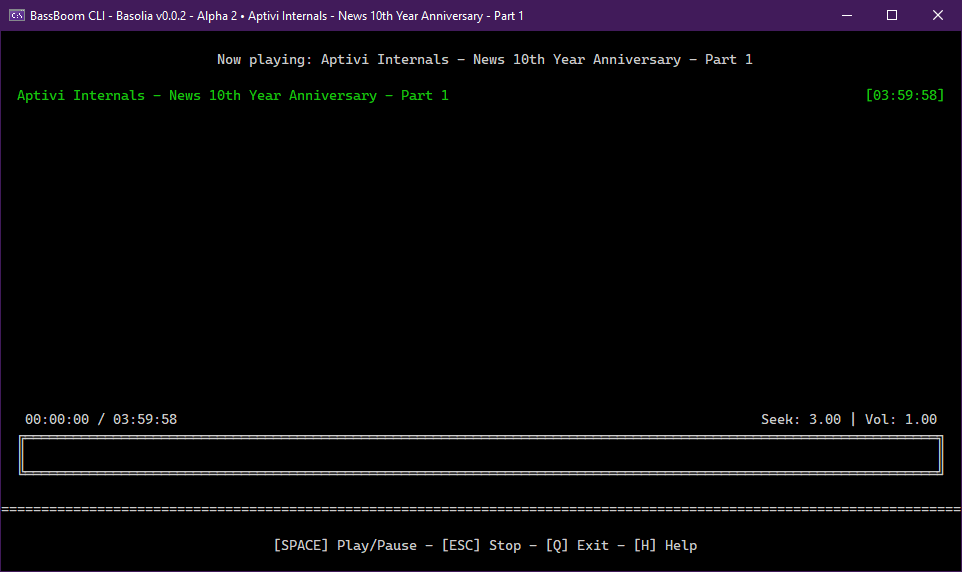
BassBoom is a music player made with C# using the fast mpg123 library as the native backend that handles the music playback and song information, including the playback device information.

This library is a viable library aimed for cross-platform music playing because we’ve selected mpg123 as the MP3 backend library for its ease of use and for its fast music playback. This library is frictionless as it aims for stability and cross-platform compatibility.

In addition to your regular music files, BassBoom also supports online MPEG radio stations that you can use to play your own favorite radio stations, as long as they don’t use AAC or any other codec that BassBoom doesn’t support.

github.com/Aptivi/BassBoom

Zoog ~ Zero Opus Output Gain


Zoog is a Rust library that consists of functionality that can be used to determine the loudness of an Ogg Opus file and also to rewrite that file with new internal gain information as well as loudness-related comment tags. It also has functionality for purely manipulating comment tags of both Ogg Opus and Ogg Vorbis files.

Zoog currently contains two tools, opusgain and zoogcomment. opusgain can be used to:

  • set the output gain value located in the Opus binary header inside Opus files so that the file plays at the loudness of the original encoded audio, or of that consistent with the ReplayGain or EBU R 128 standards.
  • write the Opus comment tags used by some music players to decide what volume to play an Opus-encoded audio file at.

It is intended to solve the “Opus plays too quietly” problem.

github.com/FrancisRussell/Zoog
hydrogenaud.io/index.php/topic,120387.0

ML_SynthTools ~ Arduino Synthesizer Library


This library is made to be used for synthesizer projects. It contains modules to create sound, to drive an audio codec and create some audio effects.

This library supports different platforms:

  • ESP32, ESP32S2, ESP32S3
  • ESP8266
  • Seeedstudio XIAO (samd21 – cortex-m0plus)
  • Teensy 4.1 (imxrt1062)
  • Daisy Seed (cortex-m7)
  • Raspberry Pi Pico (rp2040)
  • STM32F407 (cortex-m4)
github.com/marcel-licence/ML_SynthTools

Benihora ~ Voice Generation Library & VST3 Plugin


Benihora is a Rust library and VST Plugin that generates voice based on a vocal tract model. This is a Rust port of Pink Trombone developed by Neil Thapen with some customizations.

github.com/carrotflakes/benihora
github.com/carrotflakes/benihora/tree/main/benihora-vst

Adding Songs To Foobar2000’s Media Library


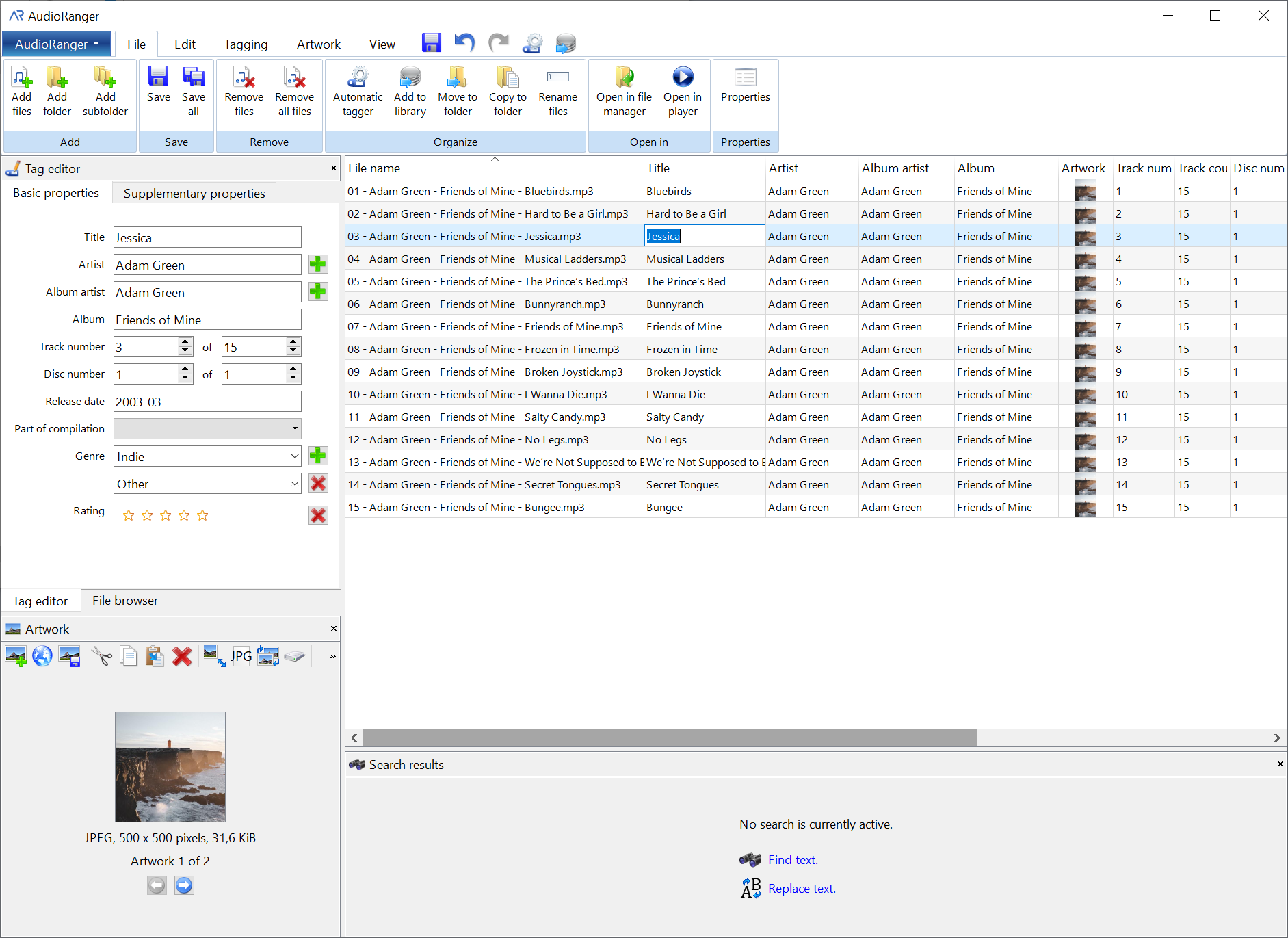
When you first install Foobar2000, you’ll need to set up the Media Library. The library function monitors your music folders and allows you to access and manage your audio files. The better the accuracy of the filenames and the metadata, the more accurate the library catalog functions will work. You only need to add the main top folder. You can also add additional main folders in other locations.

File > Preferences > Media Library > Music Folders > Add…


Adding audio files to your Music folder will automatically be included into your library. You can also directly point Foobar2000 to new folders or files via the Files menu.

WildMidi ~ Cross-Platform Software Synthesizer


WildMIDI is a simple software MIDI player which has a core software synthesizer (softsynth) library that can be used with other applications.

www.mindwerks.net/projects/wildmidi
github.com/Mindwerks/wildmidi

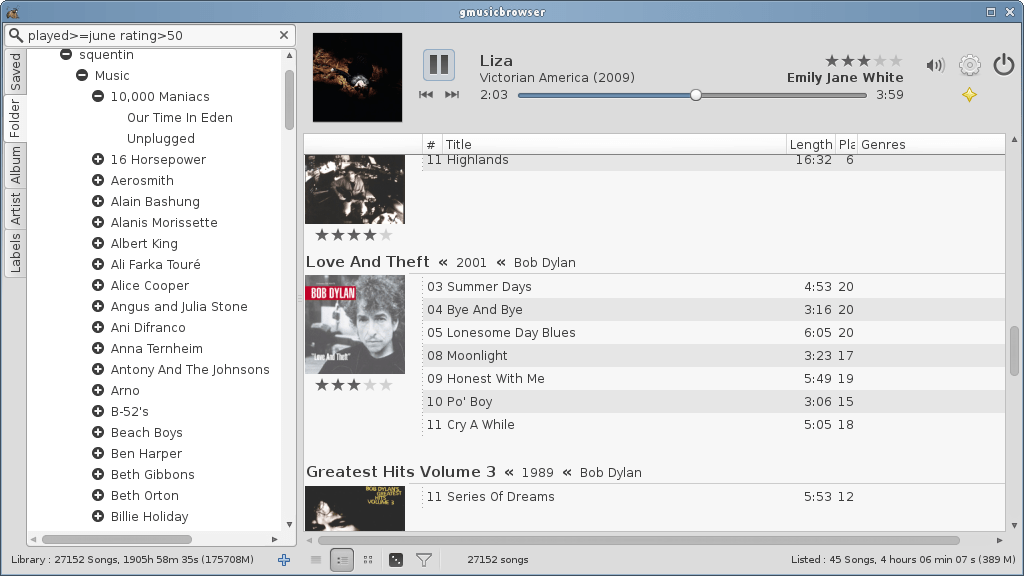
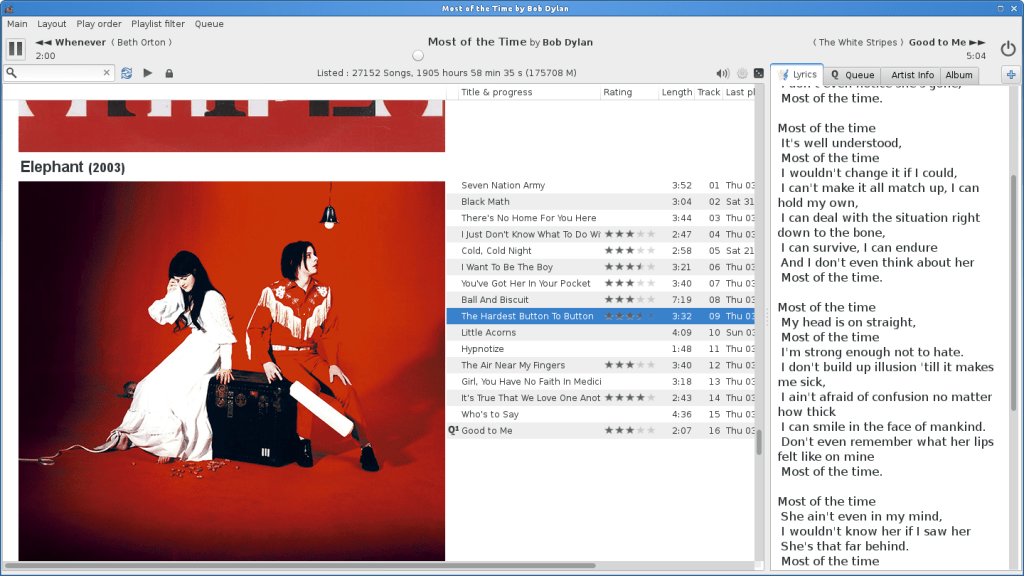
gmusicbrowser ~ Unix Audio Library App


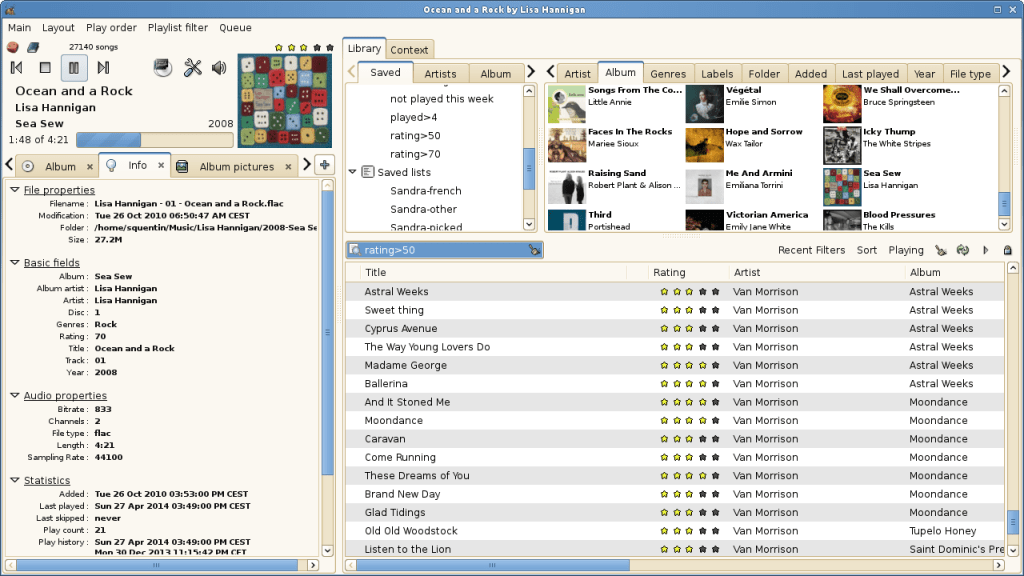
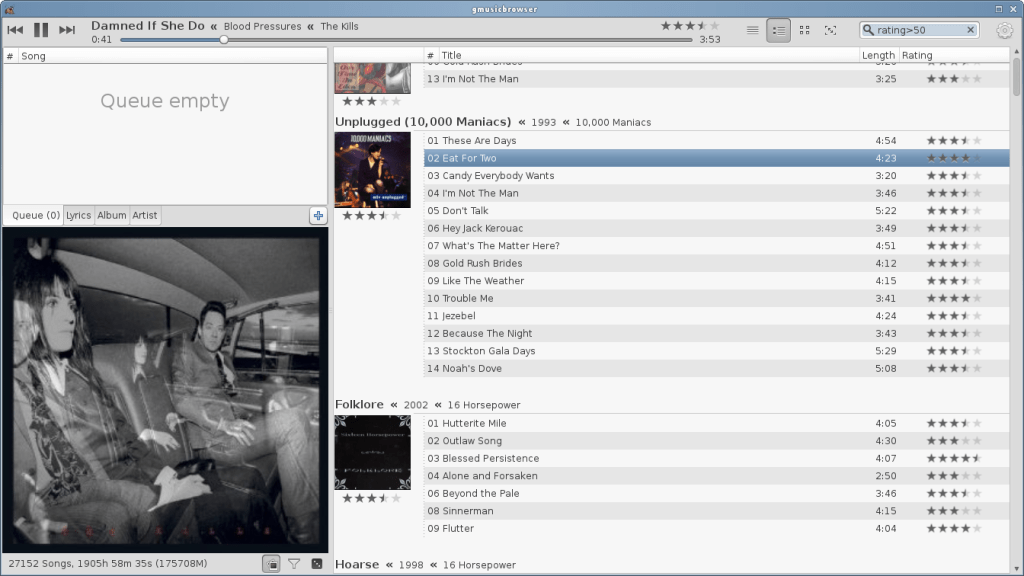
Jukebox for large collections of music files, written in perl. Uses gstreamer, mplayer or mpg321/ogg123/flac123 for playback.

https://gmusicbrowser.org/

https://sourceforge.net/projects/gmusicbrowser/

Matchering ~ Master Via Modeling


Matchering 2.0 is a novel Containerized Web Application and Python Library for audio matching and mastering. It follows a simple idea – you take TWO audio files and feed them into Matchering:

  • TARGET (the track you want to master, you want it to sound like the reference)
  • REFERENCE (another track, like some kind of “wet” popular song, you want your target to sound like it)

Our algorithm matches both of these tracks and provides you the mastered TARGET track with the same RMS, FR, peak amplitude and stereo width as the REFERENCE track has.

github.com/sergree/matchering