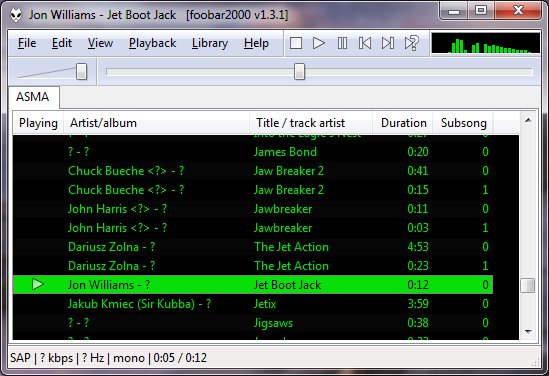
ASAP (Another Slight Atari Player) plays and converts 8-bit Atari music (*.sap, *.cmc, *.mpt, *.rmt, *.tmc, …) on modern computers and mobile devices.
asap.sourceforge.net
sourceforge.net/projects/asap
asap.sourceforge.net/web
github.com/epi/asap

ASAP (Another Slight Atari Player) plays and converts 8-bit Atari music (*.sap, *.cmc, *.mpt, *.rmt, *.tmc, …) on modern computers and mobile devices.
asap.sourceforge.net
sourceforge.net/projects/asap
asap.sourceforge.net/web
github.com/epi/asap

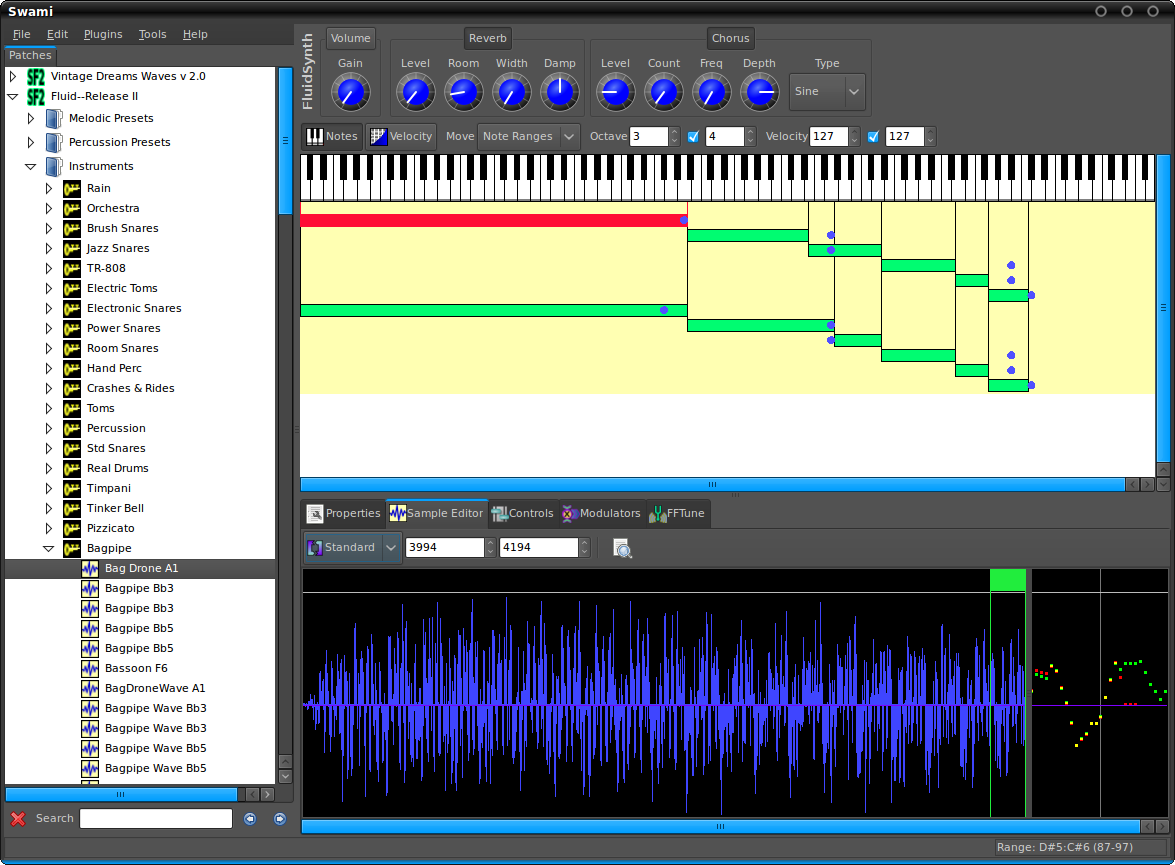
Project SWAMI, Sampled Waveforms And Musical Instruments, is a collection of free software for editing, managing and playing musical instruments for MIDI music composition. Current focus is primarily the SoundFont format, which is an open file format for digital audio “sample” based instruments.
www.swamiproject.org
sourceforge.net/projects/swami

Internet music dealers currently sell “CD-Quality” tracks, or even better (“Studio-Master”), thanks to lossless audio coding formats (FLAC, ALAC). However, a lossless format does not guarantee that the audio content is what it seems to be. The audio signal may have been upscaled (increasing the resolution), upsampled (increasing the sampling rate) or even transcoded from a lossy to a lossless format. Lossless Audio Checker analyzes lossless audio tracks and detects upscaling, upsampling and transcoding.

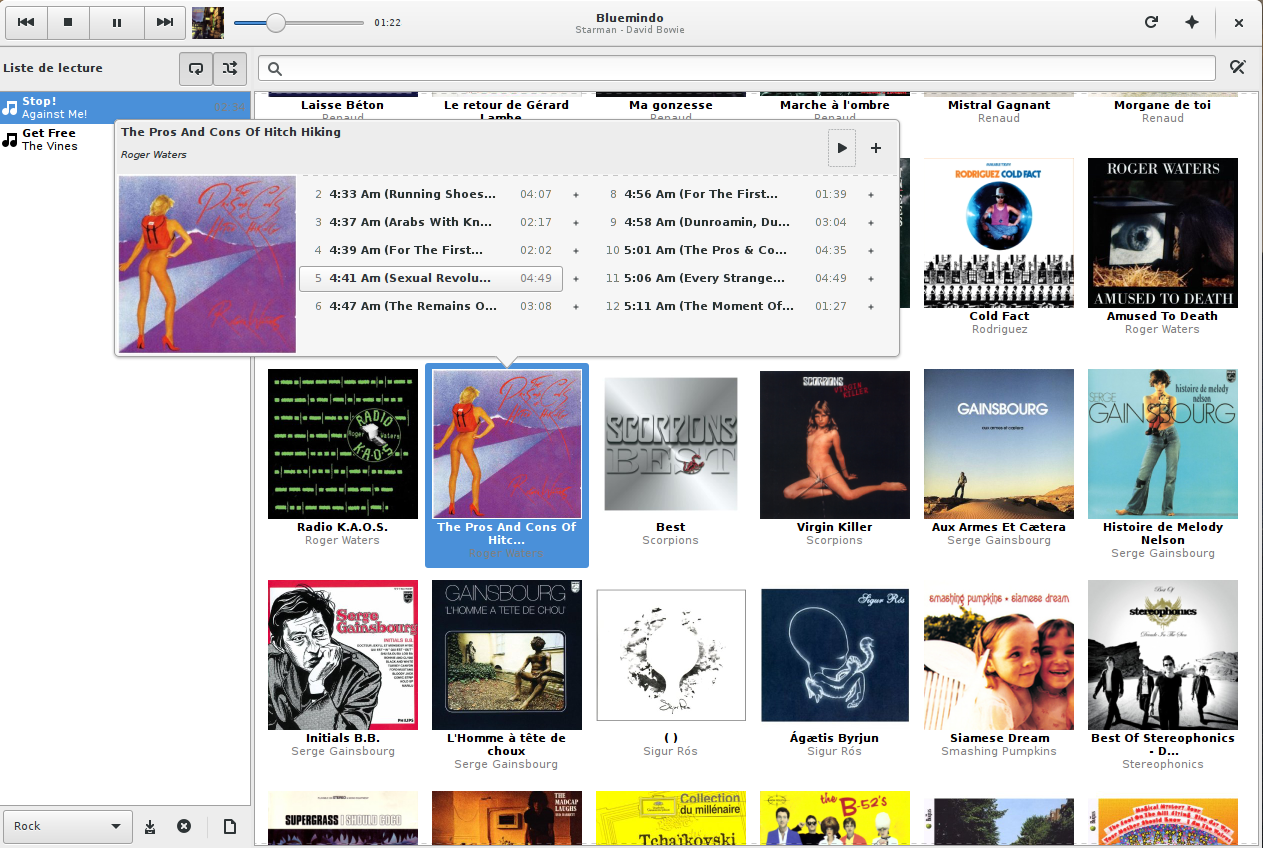
Bluemindo is a really simple yet powerful audio player in Python/PyGTK, using Gstreamer. It’s a free (as in freedom) software, released under GPLv3, only.
Bluemindo’s user interface consists of a main view of all your digitized album discs, which is searchable and filterable. The playback mode is gapless and support ReplayGain (it can also automatically choose to switch between Album and Track modes, depending on the kind of music that’s being played). Last but not least, it brings playlist (automatic and user-made), MPRIS/MediaPlayer2 support and lyrics/artwork downloading.
bluemindo.codingteam.net
http://codingteam.net/project/bluemindo

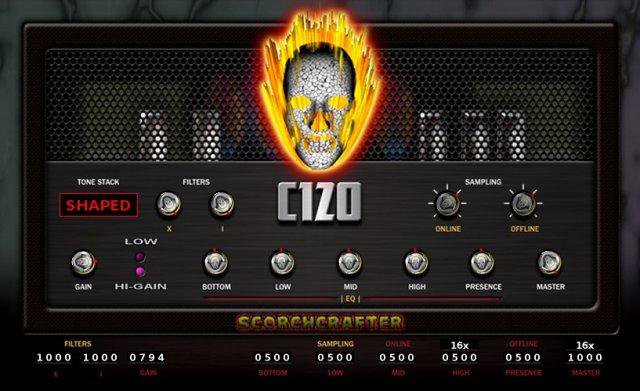
A group of audio DAW plug-ins targeting Windows (VST), Mac (VST/AU), and Linux, mostly for guitar amplifier simulation, with the C-120 being the flagship product (which started off long ago as a closed-source VST). Open source, mostly under GPL.
Features:
- Up to 128-bit (internal) Multi-Stage Guitar Amplifier Layered Distortion, also runs in 64 and 32 bit modes
- Native Mac and Linux ports coming soon
- Advanced maths for tube-like guitar amplifier distortion, doesn’t use cheap waveshaping
- Designed with dynamic response that changes according to the input level – Much more than just a basic “sample in, sample out”
- Up to 12x Internal Oversampling, separate controls for live/online and off-line render
- Multi-Band EQ – low, mid, high, contour, presence
- Built-in custom convolution-based cab-mic effect, works with almost any sample rate and/or audio buffer size
- New version of C120 has less clutter in GUI, separate page for advanced features
- No commercial bloat!
- GPL license, but just for the plug-in itself
- Any rendered/processed audio is YOURS (any license you want)!
- Hand-Coded in C++, pre-fab code or “wizards” were NOT used to build this!
- Primarily built with MinGW-w64 and Code::Blocks IDE
- NEW Jykwrakker plugin also features custom stereo reverb FX you won’t find elsewhere.
- NEW Source code available under zlib license (long overdue)

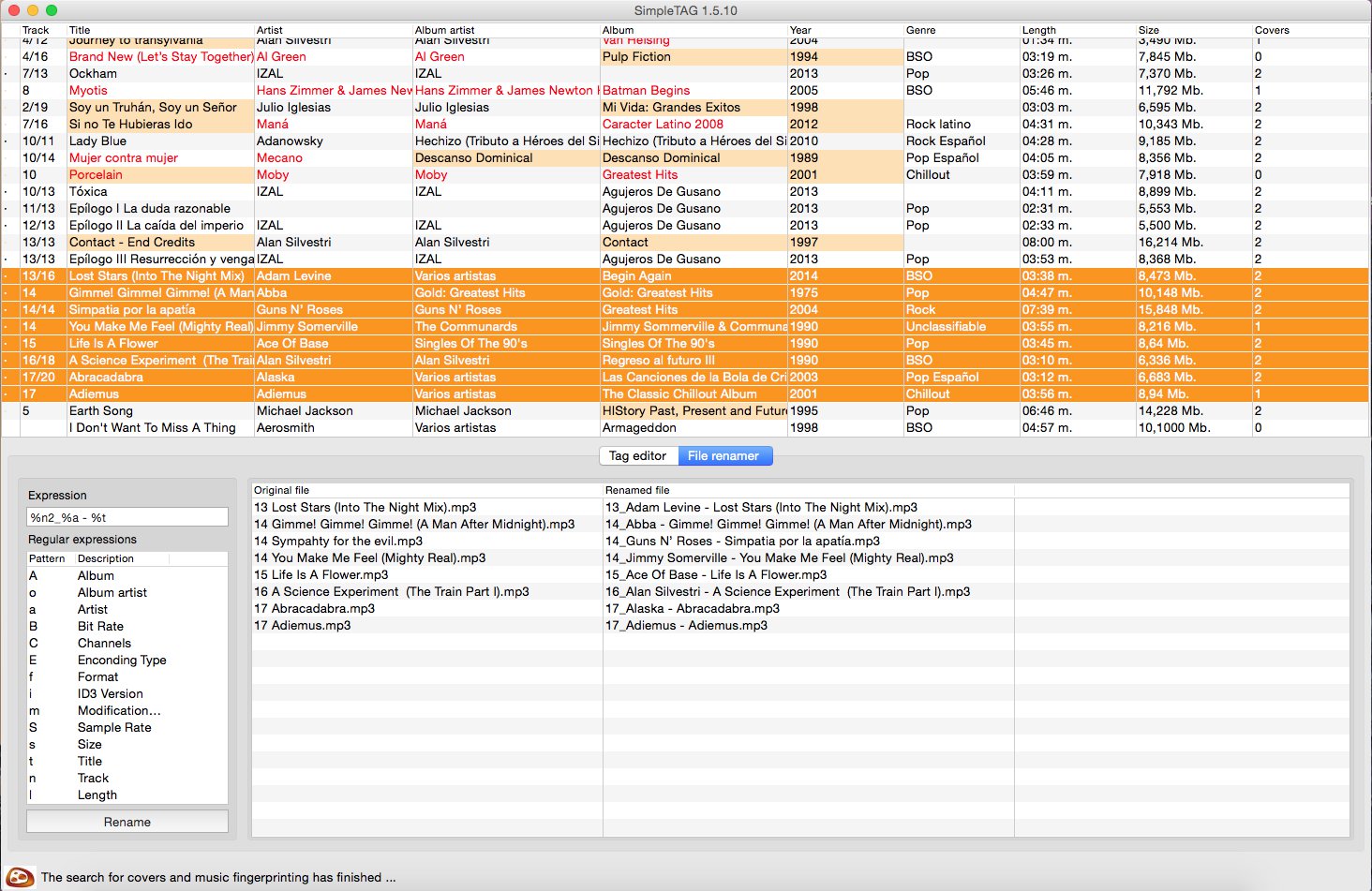
SimpleTag is a cross-platform desktop tool, which allows to update the labels of all your music before incorporating it into a musical library or cloud service.
Nowadays, the amount of music we have in our equipment is large, it is no longer possible to manage with the traditional system of filenames and directories. The most convenient way is to use the concept of libraries that handle the big market music players: iTunes, Amarok, Windows Media Player, Google Music, … etc.
The labels of music files contains all the information on artist, album, genre, title, lyrics … etc, associated with a song. This information is used by music players to manage their libraries. A good labeling enhances the user experience.
Do you want your music in the cloud? Then before, you have to check the tag information is correct before incorporating. If you do not, you will be unable to locate many of your songs.
Features:
- Complete file information from audio fingerprint (AcoustID database). This uses the service provided by AcoustId (http://acoustid.org). One colors simple system gives you information about your search results
- Locate the covers of your songs by the artist/album the song. The location of the cover image, uses Google image services. It also incorporates images that are in the directory you’re processing, treating them as potential cover images.
- Allows mass renaming music files on disk, based on the tag information. If in addition to either your tagged songs, you want the file names follow a pattern that identifies them, you can use this feature.
- Supports MP3, Ogg/Vorbis formats
- Mass-tagging of multiple files
- Auto enumerate the selected songs. In many cases, the songs do not have track numbers. With this feature, you can set the sequence numbers for all the songs on an album.
sourceforge.net/projects/simpletag

Create audio plugins on-the-fly with LuaJIT.
Protoplug is a VST/AU plugin that lets you load and edit Lua scripts as audio effects and instruments. The scripts can process audio and MIDI, display their own interface, and use external libraries. Transform any music software into a live coding environment!
Cross-platform: builds for Windows, Mac OS X and Linux. This means that all protoplug scripts are compatible with these platforms and can be loaded into a huge amount of audio software (glory to JUCE).
Fast: Use the speed of LuaJIT, and perform DSP tasks as efficiently as old school C implementations.
Free and open source: Want a new feature? Add it yourself. The source is MIT-licensed and available on Github.

www.osar.fr/protoplug
github.com/pac-dev/protoplug

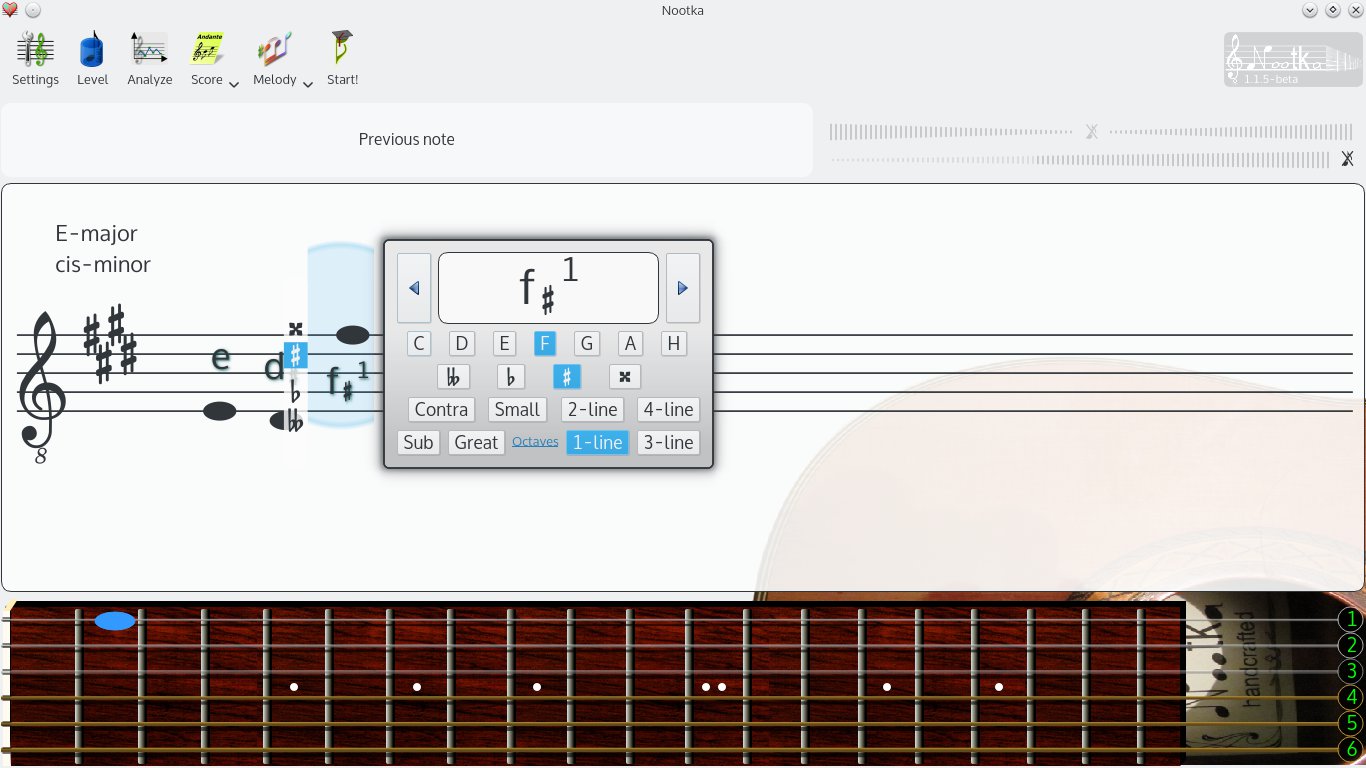
Nootka is an application to help learn classical score notation. It helps in understanding the rules of reading and writing scores and helps with developing skills of playing and singing notes.
Simply: users looks at piece of a score, plays it, while Nootka is listening to it, checks and shows was it played well. All in real time.
Features:
- interactive interface to discover the rules of musical notation
- exercises with possibility to create own sets
- accurate method for detecting sung and played sounds
- natural sound of guitars
- clefs (treble, bass and others) and grand staff
- analysis of results
- different kinds of guitars and their tuning
nootka.sourceforge.io
sourceforge.net/projects/nootka

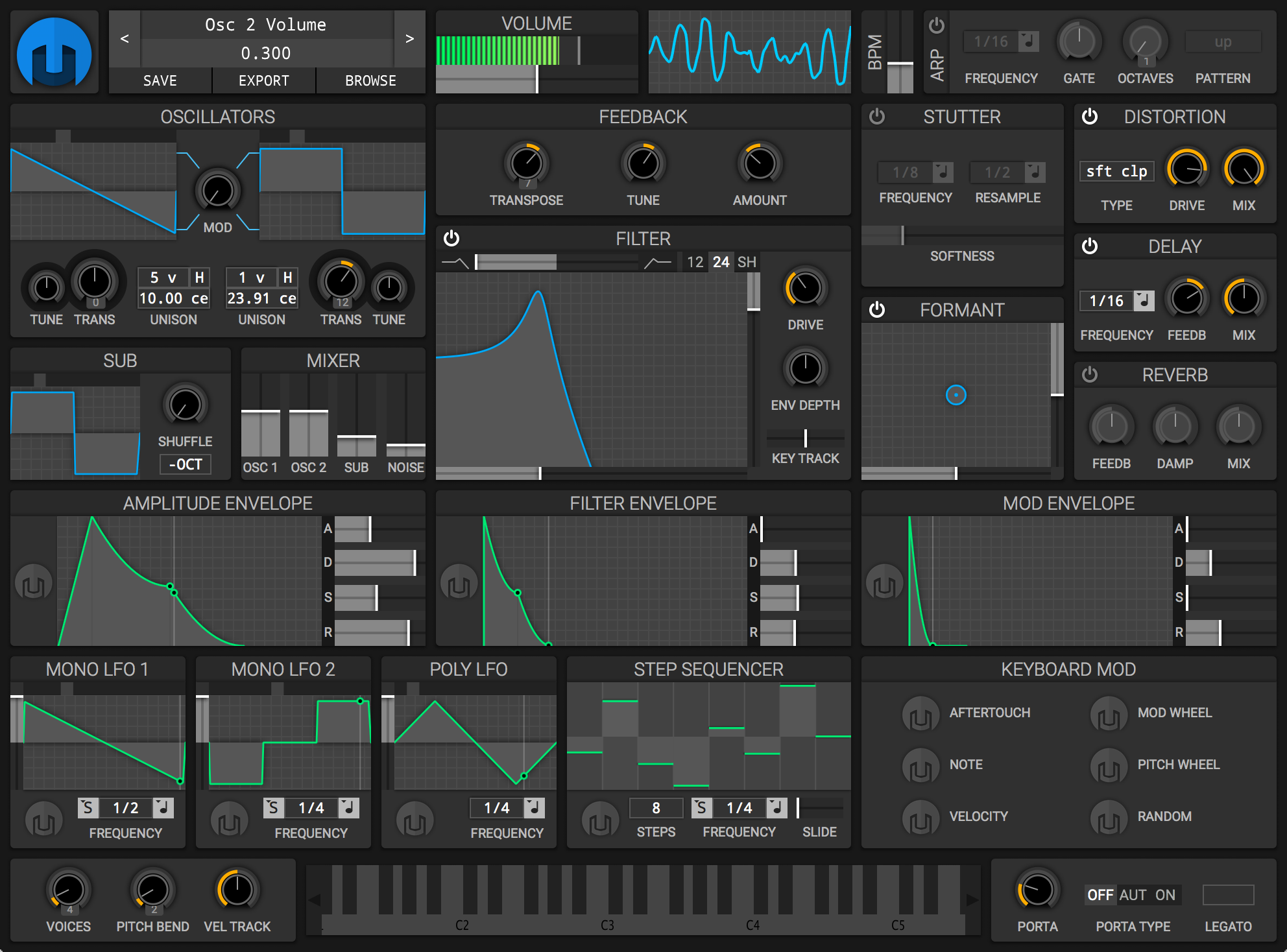
Helm runs in GNU/Linux, Mac OSX and Windows. Run Helm as a standalone synthesizer or as an LV2, VST, VST3 or AU plugin. Comes in both 32-bit and 64-bit versions.

These are audio plugins in the LV2 format, developed for Linux. Most are suitable for live use (exceptions are noted in the description).
- Cellular Automaton Synth
- Envelope Follower
- Hip2B
- Cheap Distortion
- Stuck
github.com/ssj71/infamousPlugins
ssj71.github.io/infamousPlugins/plugs

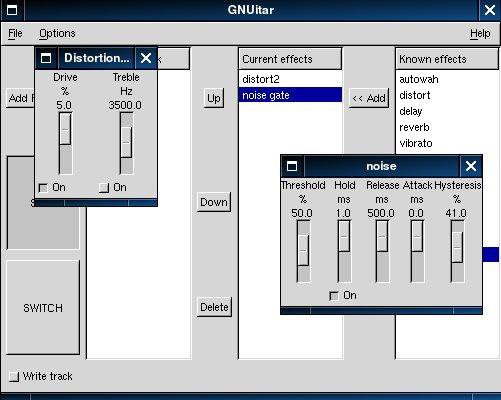
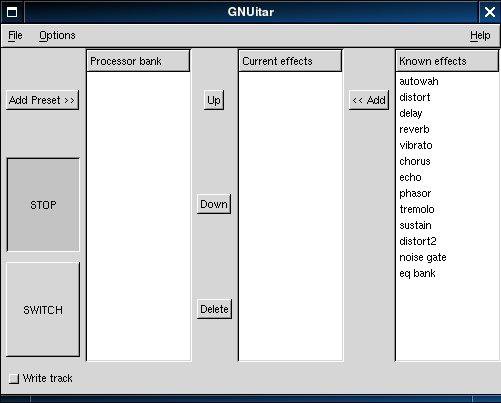
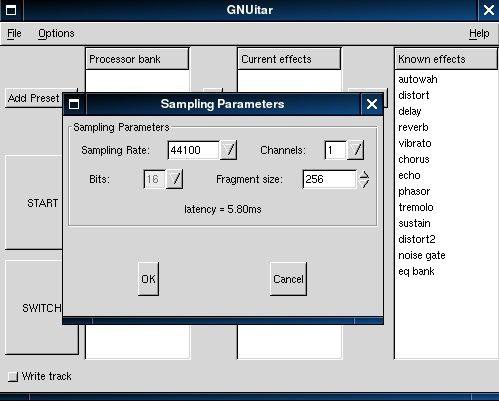
GNUitar is guitar effects software that allows you to use your PC as a guitar processor. It includes the following effects: wah-wah, sustain, distortion, reverberator, echo, delay, tremolo, vibrato, and a chorus / flanger.
sourceforge.net/projects/gnuitar

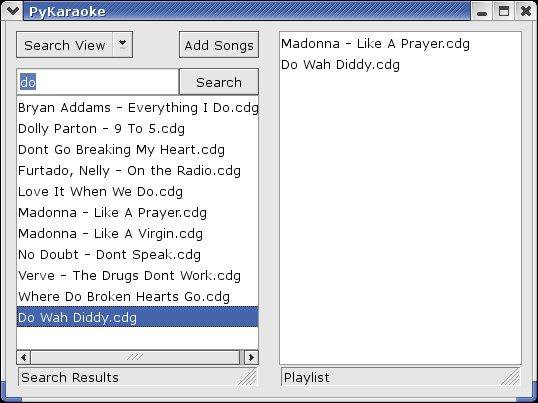
PyKaraoke is a free karaoke player for Linux, FreeBSD, NetBSD, Windows, OSX and GP2X.
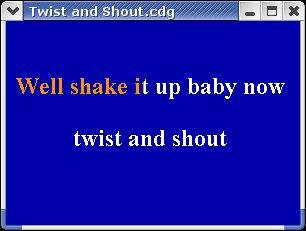
You can use this program to play your collection of CDG, MIDI and MPEG karaoke songs. No songs are provided, you must obtain these from elsewhere.
Visit here to find out more about what a CDG or MP3+G file is. In short, CDG is the format of professional karaoke CDs. These CDs can be ripped to your hard disk, and turned into a .mp3 file together with a .cdg file. This player gives you the ability to play those mp3+cdg files.
PyKaraoke Features:
- CDG (MP3+G, OGG+G, WAV+G) playback – Play standard CDG karaoke files
- MIDI (.MID/.KAR) playback – Play MIDI format karaoke files
- MPEG playback – Play karaoke songs and movies in MPEG format
- Other formats – Play any other video formats by launching an external media player
- Playlist – Queue up songs, sit back and enjoy
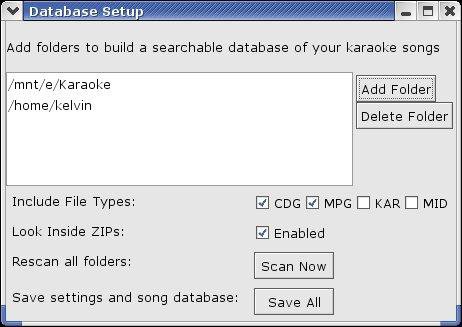
- Searchable song database – Easily find your songs from the main screen
- Search inside ZIP files – Play MP3+G/MIDI files wrapped in ZIP files
- Cross-platform – Runs on Windows, Linux, BSD, OSX and GP2X
- Mini Frontend – Additional mini-frontend for low res displays and handhelds
- Export to MPEG – Convert CDG and KAR files to MPG files (command line only)
www.kibosh.org/pykaraoke
sourceforge.net/projects/pykaraoke


