Dynamic Audio Normalizer ~ Advanced Normalization


Dynamic Audio Normalizer is a library for advanced audio normalization purposes. It applies a certain amount of gain to the input audio in order to bring its peak magnitude to a target level (e.g. 0 dBFS). However, in contrast to more “simple” normalization algorithms, the Dynamic Audio Normalizer dynamically re-adjusts the gain factor to the input audio. This allows for applying extra gain to the “quiet” sections of the audio while avoiding distortions or clipping the “loud” sections. In other words: The Dynamic Audio Normalizer will “even out” the volume of quiet and loud sections, in the sense that the volume of each section is brought to the same target level. Note, however, that the Dynamic Audio Normalizer achieves this goal without applying “dynamic range compression”. It will retain 100% of the dynamic range within each “local” region of the audio file.

The Dynamic Audio Normalizer is available as a small standalone command-line utility and also as an effect in the SoX audio processor as well as in the FFmpeg audio/video converter. Furthermore, it can be integrated into your favourite DAW (digital audio workstation), as a VST plug-in, or into your favourite media player, as a Winamp plug-in. Last but not least, the “core” library can be integrated into custom applications easily, thanks to a straightforward API (application programming interface). The “native” API is written in C++, but language bindings for C99 Microsoft.NET,  Java,  Python and Pascal are provided.

muldersoft.com/#dyauno
github.com/lordmulder/DynamicAudioNormalizer

Foobar2000 ~ foo_spider_monkey_panel


This is a x32 bit component for the foobar2000 audio player. It allows using JavaScript to create full-fledged CUI/DUI panels!

Base functionality includes:

  • Graphics functions: drawing (text, images, lines, rectangles and etc), image modification (resize, blur, inversion of colours and etc).
  • Access to font and colour settings from CUI/DUI preferences.
  • Capture of foobar2000 events with callbacks.
  • Capture of keystrokes and mouse movement/clicks.
  • Execution of main menu and context menu commands.
  • Creation of custom buttons and menus.
  • Playlist management: create, destroy, sort, change, rename and do anything that fb2k can do.
  • Media Library access with ability to sort and filter it’s content.
  • File tag management.
  • Per panel settings storage.
  • Built-in web and filesystem functionality.
  • foo_acfu integration.
  • And more!

theqwertiest.github.io/foo_spider_monkey_panel
github.com/TheQwertiest/foo_spider_monkey_panel
github.com/TheQwertiest/foo_spider_monkey_panel/releases/latest

foo_spider_monkey_panel – x64 bit

github.com/dima-lur/spider-monkey-panel-x64

References:

Discussion ~ hydrogenaud.io/index.php?topic=116669.0


GNU Solfege ~ Train Your Ears


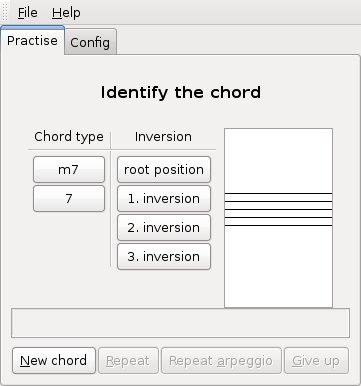
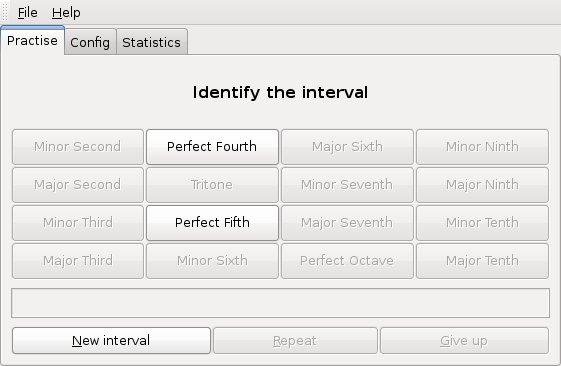
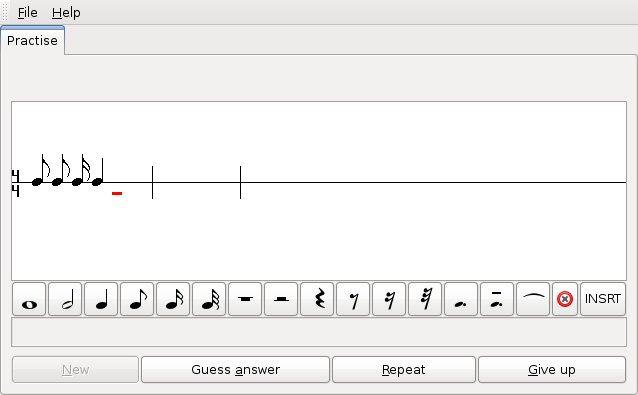
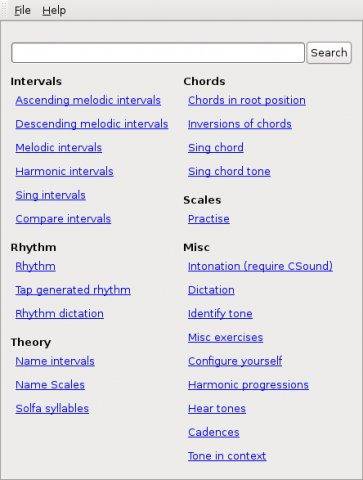
GNU Solfege is *free* ear training software written in Python 3.4 using the Gtk+ 3 toolkit. The program is designed to be easily extended with lesson files (data files), so the user can create new exercises.

www.gnu.org/software/solfege
sourceforge.net/projects/solfege

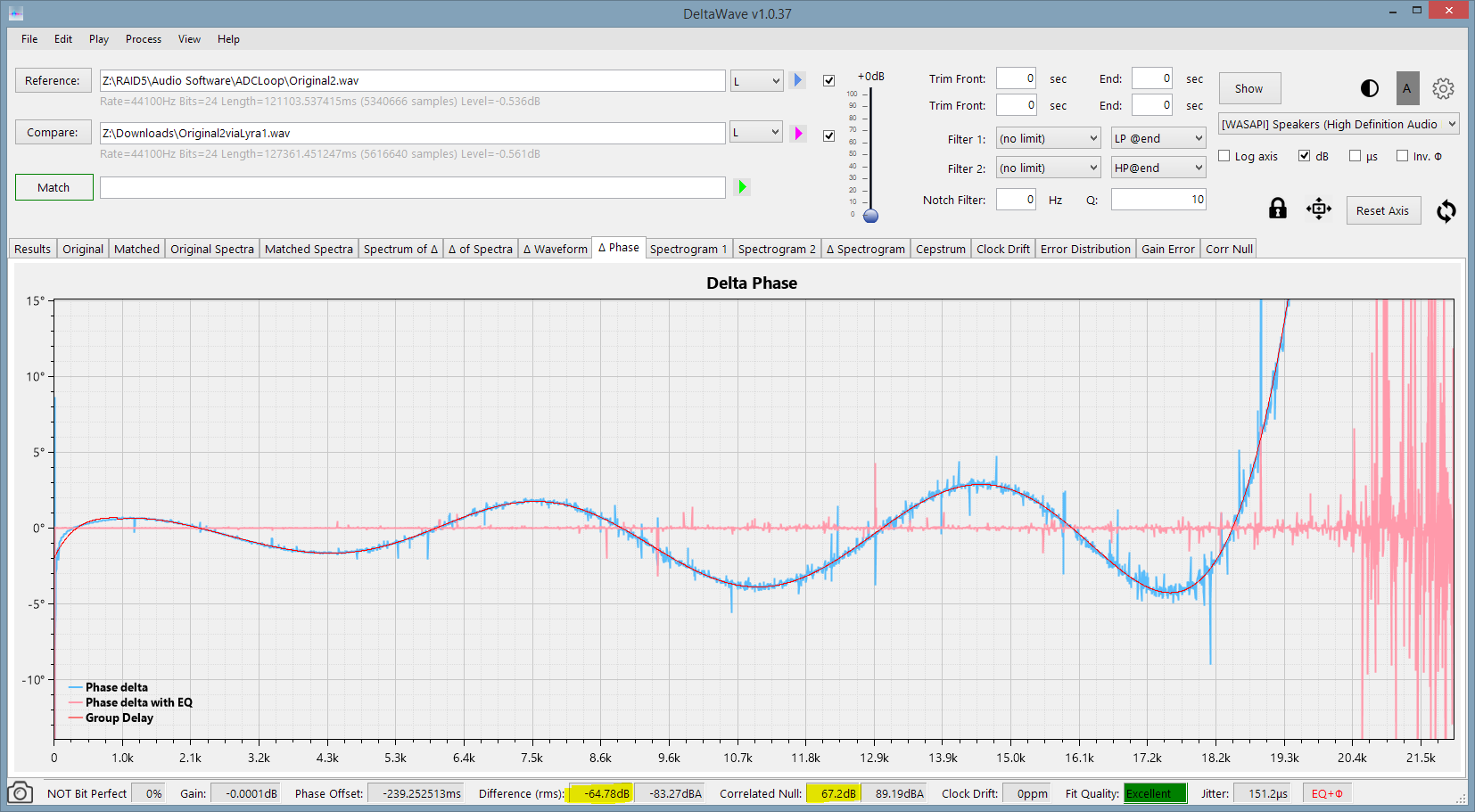
DeltaWave ~ Audio Null Comparator


Advanced audio file comparison software.

deltaw.org/index

QjackCtl ~ JACK Audio Qt GUI


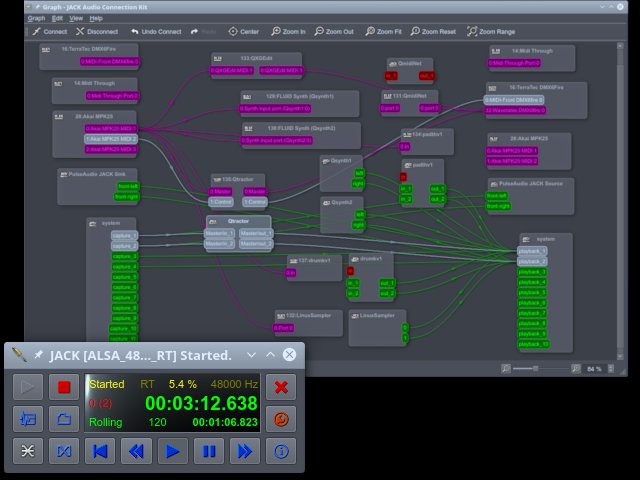
JACK Audio Connection Kit – Qt GUI Interface: A simple Qt application to control the JACK server daemon. Written in C++ around the Qt framework for X11, most exclusively using Qt Designer. Provides a simple GUI dialog for setting several JACK server parameters.

QjackCtl.jpeg

qjackctl.sourceforge.io
sourceforge.net/projects/qjackctl

Munt ~ Multi-platform Synthesizer


A multi-platform software synthesiser emulating (somewhat inaccurately) pre-GM MIDI devices such as the Roland MT-32, CM-32L, CM-64 and LAPC-I.

munt

munt.sourceforge.net/
sourceforge.net/projects/munt/

ANMP ~ Another Nameless Music Player


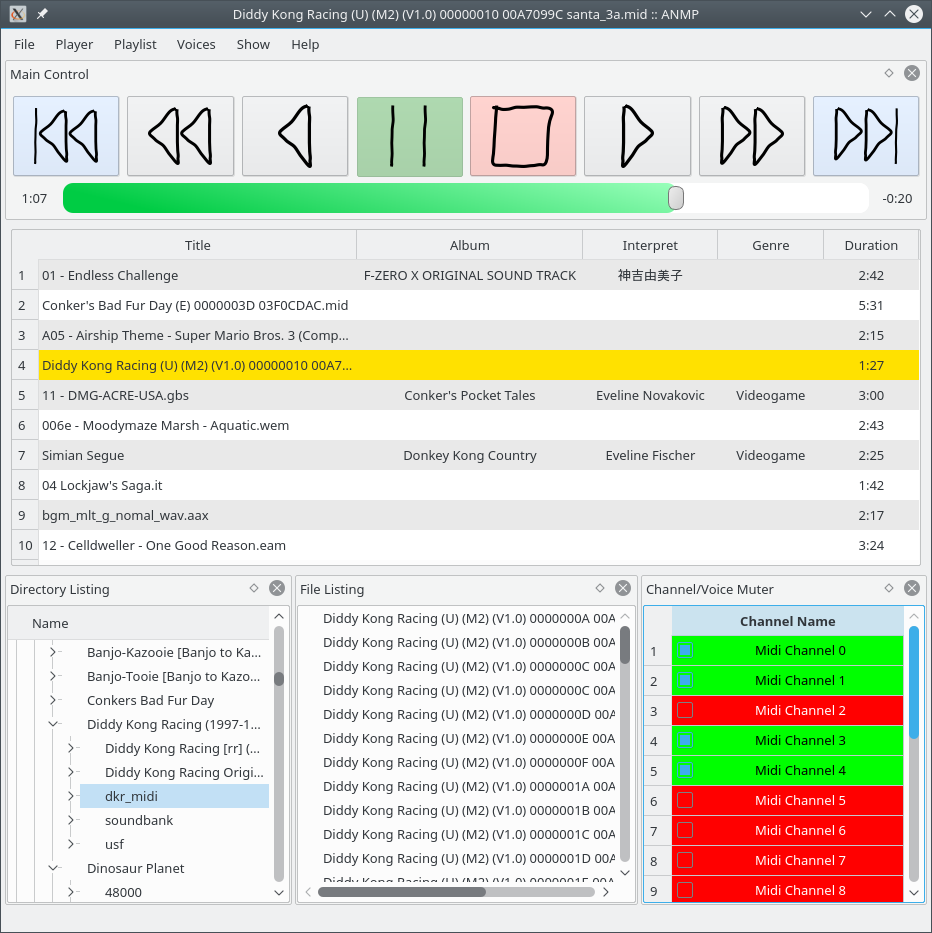
ANMP aims to be a versatile but lightweight audio player, just as the other hundred thousands out there. It is written in C++11. As being only a frontend, ANMP itself doesn’t know anything about audio formats and how to decode them. That’s why it uses 3rd party libraries to decode them. By using VgmStream, GameMusicEmu, LazyUSF and supporting looped songs natively, ANMP is esp. suited to play various audio formats from video games. Moreover it supports Looped Midi Tracks.

Main Features:

  • muting multichannel audio files
  • gapless playback (for most streamed audio formats)
  • arbitrary (forward) looping of songs (i.e. even nested loops)
  • synthesizing MIDI files using fluidsynth
  • multi-channel audio rendering
  • overlapping notes do not kill each other
  • unrolling looped MIDI tracks
  • volume response compatible to N64’s software synth
  • supports an IIR lowpass filter compatible to Rareware‘s N64 games (Conkers Bad Fur Day, Jet Force Gemini)
  • support for cue sheets
  • support for audio normalization based on EBU R 128
  • exposes basic commands via D-Bus

github.com/derselbst/ANMP

VoodooHDA ~ Mac Open IHDA Driver


VoodooHDA is an open source audio driver for devices compliant with the Intel High Definition Audio specification. It is intended as a replacement for AppleHDA on Mac OS X with support for a wide range of audio controllers and codecs.

Features:

  • automatic recognition of all HDA codecs
  • test jacks for autoswitch
  • control panel for fine tuning
  • sound treatment includes stereo enhancements
  • since v2.8 it works with two sound cards
  • v2.9 creates 5.1 channel as one device

This slideshow requires JavaScript.

sourceforge.net/projects/voodoohda/

Aconvert ~ Online File Cut, Convert & Merge


Website that cuts, converts or merges a file. Supports multiple audio formats.

https://www.aconvert.com/audio/

GrandOrgue ~ Virtual Pipe Organ


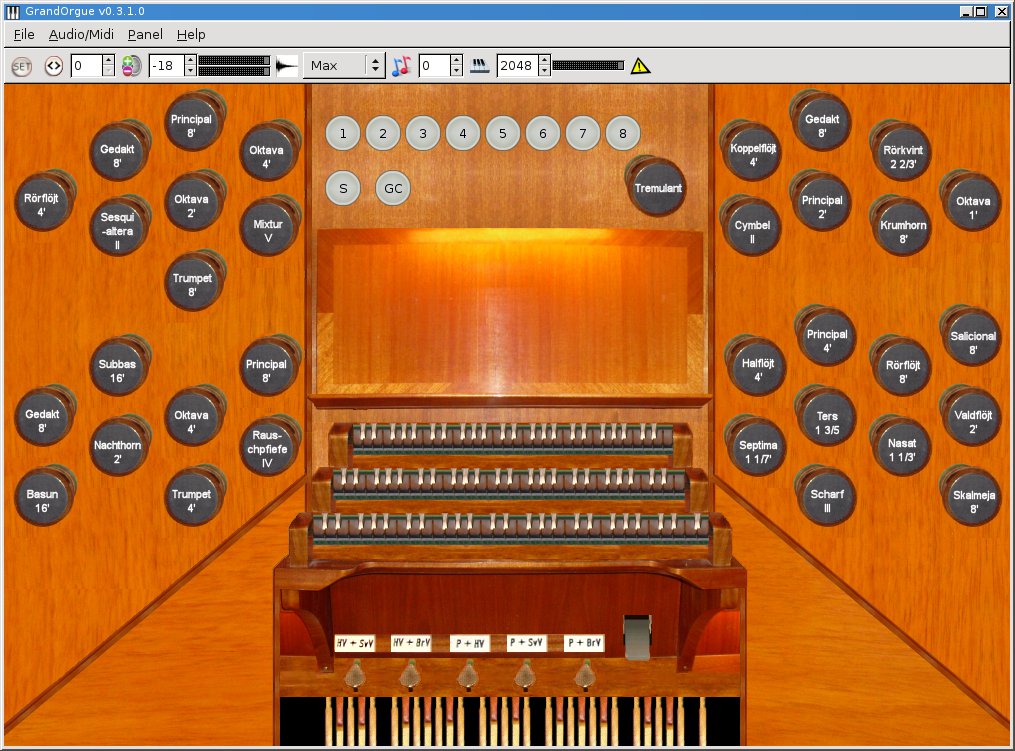
GrandOrgue is a sample based pipe organ simulator. When connected to MIDI keyboards and an audio system, it can accurately simulate the sound of a real pipe organ. This application has builds for Linux, Windows and OSX.

Features:

  • Play sample sets
  • GUI console
GrandOrgue

sourceforge.net/projects/ourorgan/
sourceforge.net/p/ourorgan/wiki/Home

HeSuVi ~ Headphone Surround Virtualizations


This tool imitates the 7.1 to binaural sound effect of many surround virtualizations by making use of Equalizer APO’s convolution filter. Available impulse response that were recorded with activated…

  • Dolby Atmos Headphone
  • CMSS-3D
  • SBX Pro Studio Surround (also found in BlasterX Acoustic Engine & THX TruStudio Pro)
  • Dolby Headphone
  • Sennheiser GSX Binaural 7.1
  • DTS Headphone:X
  • Windows Sonic Headphone
  • Dolby Home Theater v4 Headphone Surround Virtualizer
  • Razer Surround
  • Out Of Your Head
  • Flux HEar V3
  • OpenAL and DirectSound3D HRTFs
  • Waves Nx
  • and many more!

Features:

  • many different headphone surround impulse responses
  • powerful graphic equalizer
  • equalizer presets for over 1000 popular headphones
  • use multiple devices on one sound card
  • extensive control over different volume levels
  • apply and save the processing onto your audio files
  • fully configurable crossfeed
  • quickly save & load profiles, even through hotkeys
  • supports command line parameters for all options
  • rearrange the virtual speakers’ positions
  • intelligent stereo upmix
  • portable installation with easy one-click updater

sourceforge.net/projects/hesuvi
sourceforge.net/p/hesuvi/wiki/Help

HeSuVi Conversion Tool

This fairly simple tool converts all HeSuVi 14 channel presets into 7.0 formatted _L/_R stereo pairs, for use with the soon to be updated PulseAudio module-virtual-surround-sink, which I’ve updated with a faster FFT overlap-save convolver, eliminated the sample length limits for impulses, and added support for asymmetrical/dual impulse mode.

gist.github.com/kode54

MAD ~ MPEG Audio Decoder


MAD is a high-quality MPEG audio decoder. It currently supports MPEG-1 and the MPEG-2 extension to lower sampling frequencies, as well as the de facto MPEG 2.5 format. All three audio layers — Layer I, Layer II, and Layer III (i.e. MP3) — are fully implemented.

MAD does not yet support MPEG-2 multichannel audio (although it should be backward compatible with such streams) nor does it currently support AAC.

MAD has the following special features:

  • 24-bit PCM output
  • 100% fixed-point (integer) computation
  • completely new implementation based on the ISO/IEC standards
  • available under the terms of the GNU General Public License (GPL)

www.underbit.com/products/mad
sourceforge.net/projects/mad/files