A new cross-platform Apple Music experience based on Electron and Vue.js written from scratch with performance in mind. A new look into listening and enjoying Apple Music in style and performance. 🚀 (Work in progress, expect bugs.) an Apple Music subscription is required to use this application. This may change in the future when we add local file support.
github.com/ciderapp/Cider
Author Archives: tom2tec

AstroFox ~ Amazing Audio Videos
Astrofox is a free, open-source motion graphics program that lets you turn your audio into custom, shareable videos. Combine text, images, animations and effects to create stunning, unique visuals. Then generate high-definition videos to share with your fans on social media.

astrofox.io
github.com/astrofox-io/astrofox
Share this:

Jellyfin Audio Player ~ Stream Your Songs
This is a React Native-based audio streaming app for Jellyfin. Jellyfin is a community-based piece of software that allows you to stream your media library over the internet. By means of React Native, Jellyfin Audio Player allows you to stream your Jellyfin Music library, with full support for background audio and casting (ie. Airplay and Chromecast).
github.com/leinelissen/jellyfin-audio-player
Features:
- Sorting by recent albums
- Browsing through all available albums
- Searching based on album and artist names
- Queuing tracks and albums
- AirPlay and Chromecast support
- Background audio
- Native Dark Mode
Share this:

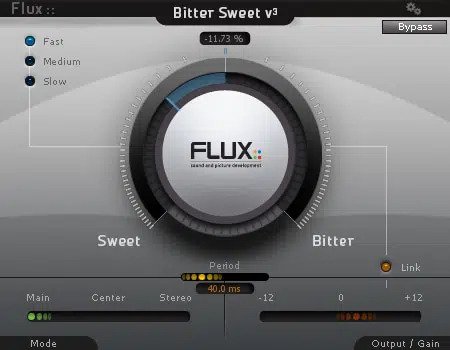
BitterSweet ~ Transient Designer
BitterSweet v3 is Flux:: acclaimed transient processor used by hundreds of thousands of users for audio transient management with the simple turn of a knob – Turning it to the Sweet side reduces the transients, and turning it to the Bitter side magnifies the transients – No dongle or license activation required – 100% Freeware!
Features:
- Up to 8 channels Input / Output
- Output Gain
- Controls the Output Gain at the end of the processing (-/+ 12 dB).
- Link to Output Gain – Compensates the Output Gain depending on the Transient Amount in order to achieve unity gain.
www.flux.audio/project/bittersweet-v3
Share this:

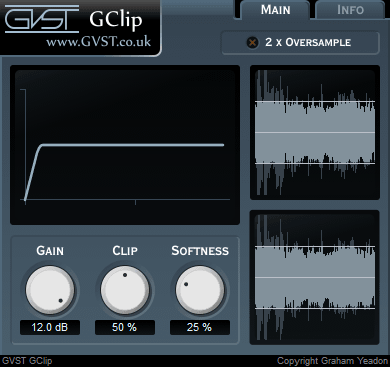
GClip ~ Wave-shaping Signal Clipper Plugin
Free VST audio effect plug-in download for music production, broadcasting and general audio editing.
- Clip peaks off audio with abrupt or smooth wave-shaping.
- Graph and waveform displays assist in setting the clip level according to the source material.
- Oversampling can be enabled to reduce aliasing.
Share this:

MKVToolNix ~ Matroska Tools For Linux / Unix & Windows
With these tools one can get information about (via mkvinfo) Matroska files, extract tracks/data from (via mkvextract) Matroska files and create (via mkvmerge) Matroska files from other media files. Matroska is a new multimedia file format aiming to become THE new container format for the future. You can find more information about it and its underlying technology, the Extensible Binary Meta Language (EBML), at www.matroska.org
Share this:

eac3to ~ Audio Conversion Tool
eac3to is able to convert E-AC3, TrueHD, PCM and DTS-HD audio tracks to AC3, DTS or FLAC. Converts E-AC3, TrueHD, PCM, DTS-HD and FLAC tracks to AC3 / DTS / FLAC. Removes Dialog Normalization from AC3, E-AC3, DTS and TrueHD tracks. Extracts AC3 frames from Blu-Ray AC3/TrueHD tracks. Extracts DTS core from DTS-HD tracks. Can remux the video track of a EVO / VOB source to Matroska (mkv). Command line tool but GUI (UsEac3to) also available. Requires external audio decoders.
forum.doom9.org/showthread.php?t=125966
Alternative Graphical User Interface (GUI):
References:
en.m.wikibooks.org/wiki/Eac3to
en.m.wikibooks.org/wiki/Eac3to/How_to_Use
Share this:

fdkaac ~ Command Line Frontend For libfdk-aac Encoder
dkaac reads linear PCM audio in either WAV, raw PCM, or CAF format,
and encodes it into either M4A / AAC file.

If the input file is "-", data is read from stdin. Likewise, if the
output file is "-", data is written to stdout if one of streamable AAC
transport formats are selected by **-f**.

When CAF input and M4A output is used, tags in CAF file are copied into
the resulting M4A.

github.com/nu774/fdkaac
github.com/mstorsjo/fdk-aac
launchpad.net/ubuntu/bionic/+package/fdkaac
packages.debian.org/stretch/fdkaac
Share this:

RaspyFi ~ Headless Audio Player
RaspyFi is an open source linux distribution. It will transform your Raspberry Pi into an audiophile source, in 10 minutes without hassles. It comes ready to play, and it’s compatible with almost every USB DAC available. You can consider it as a Voyage-MPD version for Raspberry Pi. But it’s simpler to use and it has several other functionalities!
With RaspyFi you’ll be able to play your music library directly from an USB Storage or from your NAS. You can also listen to your favourite web-radios and scrobble your favourite tunes from Spotify, Last.fm and Soundcloud. You will be amazed about the sound quality! RaspyFi’s core feature is this. We are trying to get every bit of your music to play as accurate as can be, optimizing every aspect of the system.
RaspyFi supports asynchronous playback to take advantage of the latest DACS, it features a nice webgui you can use to configure it without hassles and to play your library from your pc, your smartphone or your tablet.
You can connect your little Raspberry Pi to your Audio System, sit on your couch, use your favourite device (Win,Mac,Android,iOS) as a remote control and enjoy your music as it is. With RaspyFi your Pi never sounded so good!
Updated to: Volumio ~ Headless Audiophile Player
Share this:

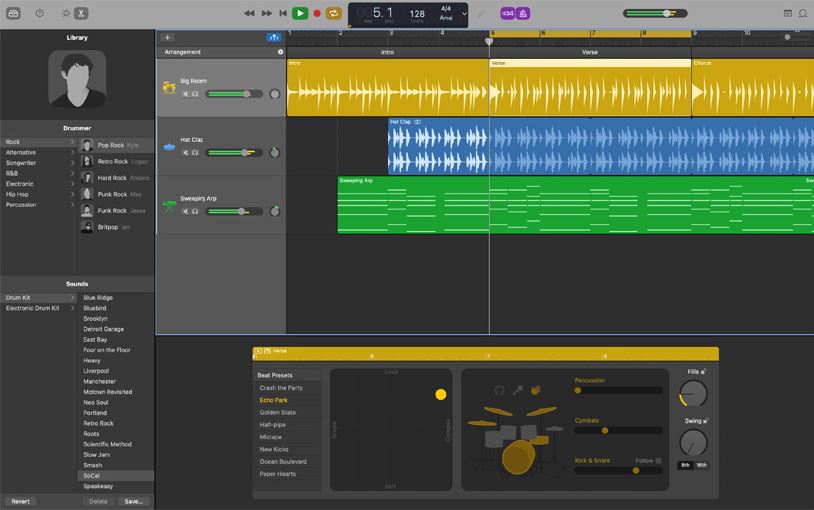
GarageBand ~ MacOS / IOS DAW
Looking for a great Apple IOS Digital Audio Workstatation? Get Garageband!
www.apple.com/lae/mac/garageband
Share this:

MSO ~ Multi-Sub Optimizer
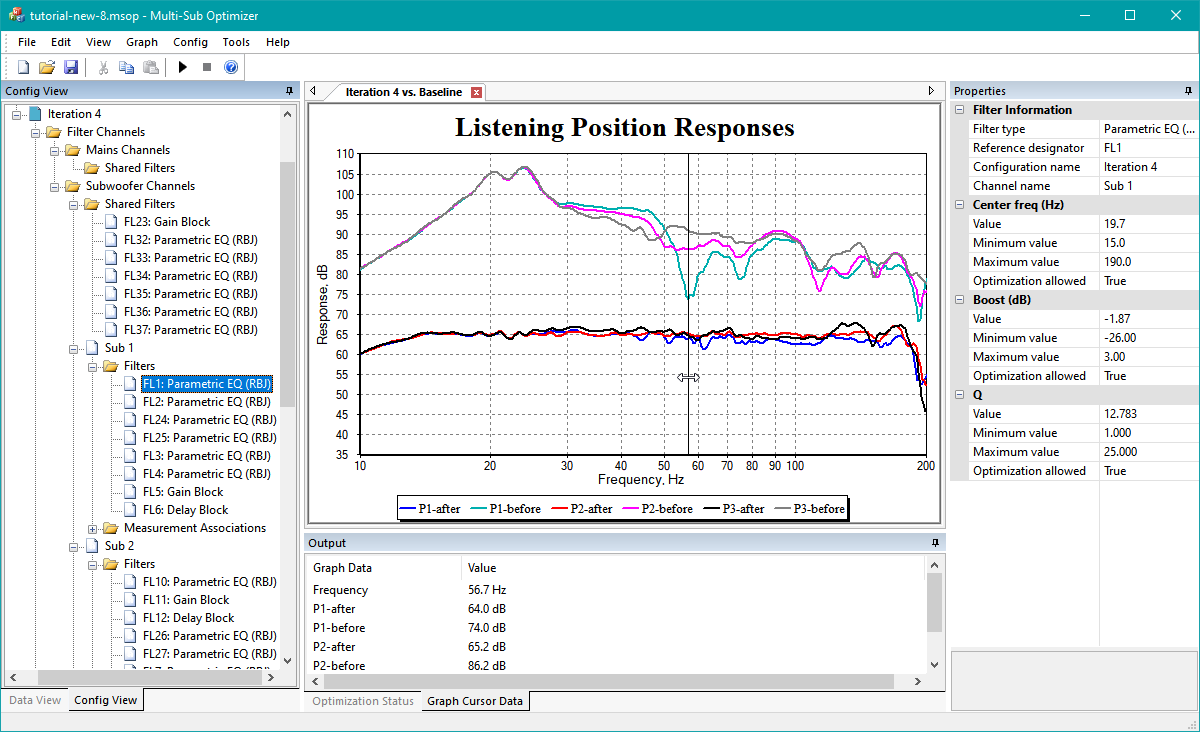
Multi-Sub Optimizer (MSO) is a free Windows-based software program for optimizing the bass response of audio and AV systems having multiple subwoofers. It minimizes the seat-to-seat frequency response variation in the bass region while simultaneously optimizing the response flatness at the main listening position. You can choose to have MSO perform this optimization on just the subs, or to include the main speakers in the optimization. In the latter case, it automates the process of integrating the subs with the main speakers, including delay / distance settings and EQ in the crossover region.
Although it’s possible to use it for identical equalization (EQ) of all subs at once, it does not depend on a global EQ approach like commercial room correction systems do. Such systems cannot reduce the seat-to-seat variation of the bass response. Instead, MSO performs optimization of EQ, gain and delay parameters individually for each subwoofer. This individual EQ optimization for each sub causes the variation of the bass response from seat to seat to be reduced, and the bass response at each listening position to be flattened.
MSO can be used to perform tasks that include:
- Optimizing subwoofer integration with main speakers through delay, gain and EQ adjustments
- Reducing seat-to-seat frequency response variation of the combined sub outputs through optimized EQ of each sub individually
- Achieving optimum subwoofer integration via individual sub delay adjustments
- Improving response flatness of the combined sub outputs at all listening positions
- Creating, specifying and achieving your desired target frequency response curve to shape the bass response to your preference
- Plotting your data in a variety of ways
- Obtaining filter parameters as text files containing biquad coefficients for import into miniDSP EQ hardware, or for manual data entry into hardware that doesn’t support filter file import.
Share this:

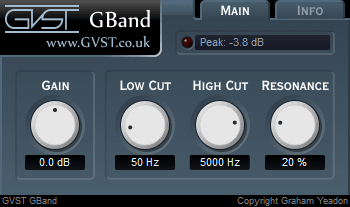
GBand ~ Band-Pass Filter
Free VST audio effect plug-in download for music production, broadcasting and general audio editing.
- Set lower and upper cut-off frequencies.
- Create filter sweeps by automating the cut-off frequencies.
- Add resonant boosts at the selected frequencies to accentuate sweeps.