An internet repository for permanent storage of quality music modules from the tracking and demo scene. The Mod Archive began collecting music modules back in 1996. Since then, it has grown and become one of the largest and oldest collections online, thanks to the artists that contributed to The Mod Archive and the Public Domain in general.
Tag Archives: music

Musicalgorithms ~ Create Your Own Music
Algorithms and Interactive Tools for Exploring Music Composition, Analysis, and Interdisciplinary Learning.
This web site has interactive tools that provide a unique learning experience for users, regardless of their musical training. Students of music composition can explore algorithmic composition, while others can create musical representations of models for the purpose of aural interpretation and analysis. Here, the algorithmic process is used in a creative context so that users can convert sequences of numbers into sounds.
http://musicalgorithms.ewu.edu/
Share this:

MuseNet ~ Artificial Intelligence Musical Compositions
We’ve created MuseNet, a deep neural network that can generate 4-minute musical compositions with 10 different instruments, and can combine styles from country to Mozart to the Beatles. MuseNet was not explicitly programmed with our understanding of music, but instead discovered patterns of harmony, rhythm, and style by learning to predict the next token in hundreds of thousands of MIDI files. MuseNet uses the same general-purpose unsupervised technology as GPT-2, a large-scale transformer model trained to predict the next token in a sequence, whether audio or text.
https://openai.com/blog/musenet/
Share this:

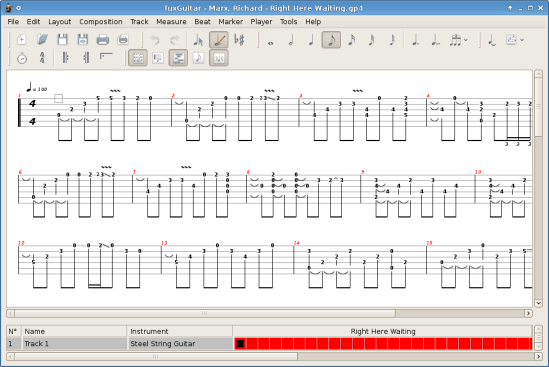
TuxGuitar ~ Multitrack Tablature Editor & Player
With TuxGuitar, you will be able to compose music using the following features:
- Tablature editor
- Score Viewer
- Multitrack display
- Auto Scroll while playing
- Note duration management
- Various effects (bend, slide, vibrato, hammer-on/pull-off)
- Support for triplets (5,6,7,9,10,11,12)
- Repeat open and close
- Time signature management
- Tempo management
- Imports and exports gp3,gp4 and gp5 files
Share this:

Public Domain Music Portal

Canorus ~ Music Score Editor
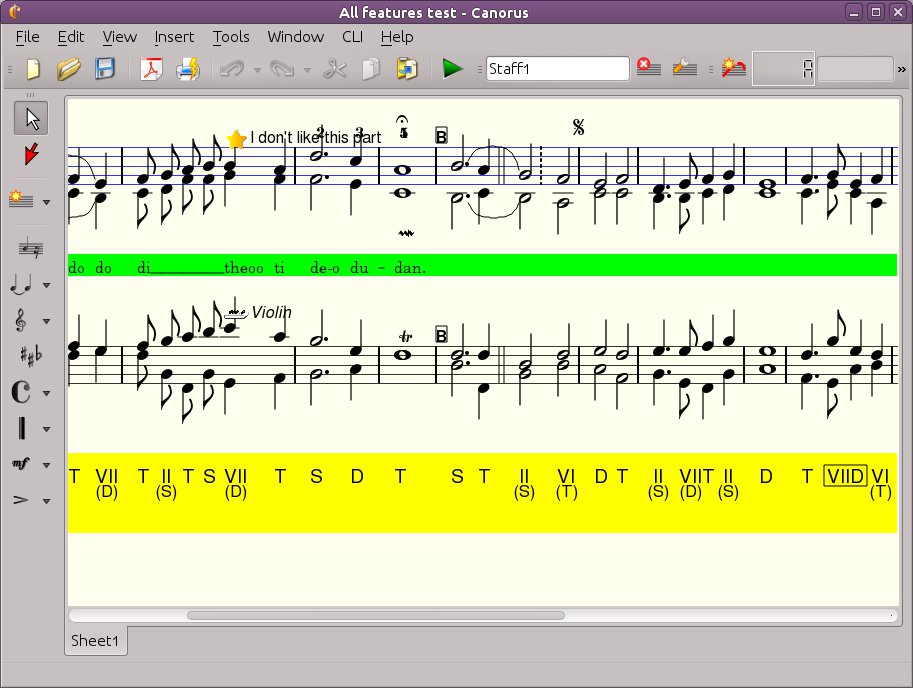
Canorus is a free cross-platform music score editor. It supports an unlimited number and length of staffs, polyphony, a MIDI playback of notes, chord markings, lyrics and import/export filters to formats like MIDI, MusicXML, ABC Music, MusiXTeX and LilyPond.
sourceforge.net/projects/canorus
github.com/canorusmusic/canorus
Share this:

orDrumbox ~ Cross-platform Drum Machine
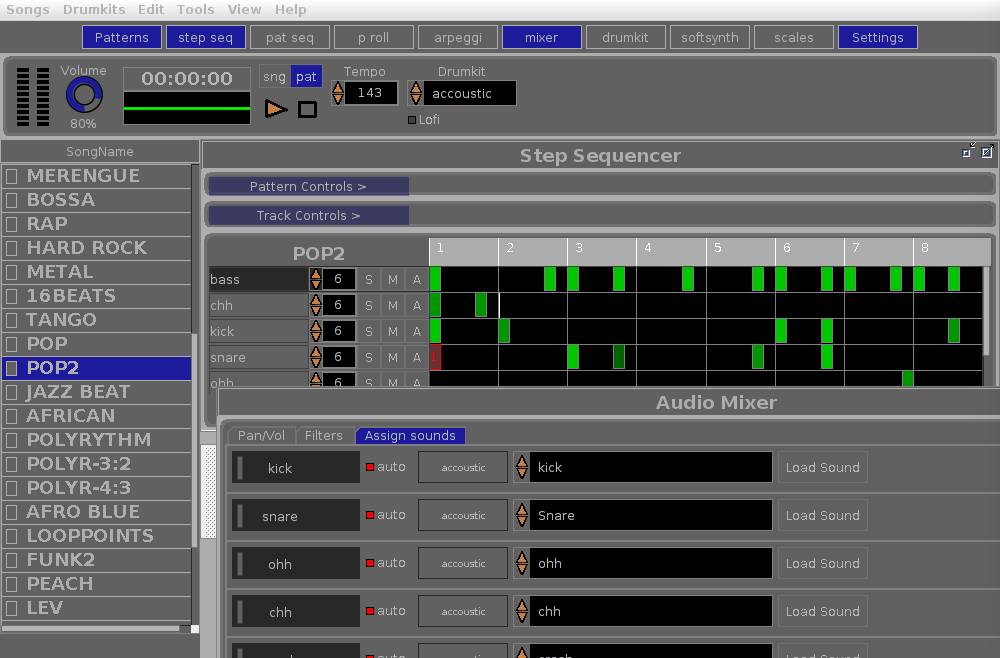
The orDrumbox is free drum machine software, designed to be as creative as possible with some unusual features: auto-composition, polyrhythms, custom arpeggiator, automatic sounds/track matching, custom soft synths, lo fi rendering and more … Ideal for experimentation and fast results.
- This software can automatically compose bass lines, melodic patterns and complete songs.
- It comes with a rhythms database and sounds database including musical items which can be fully edited.
- … and a fully customizable soft synth section adds many synthetics sounds as presets to the sounds library.
www.ordrumbox.com
sourceforge.net/projects/ordrumbox
www.facebook.com/ordrumbox
Share this:

mlYou ~ Music Library Utilities Suite
This is a collection of tools to help you manage, maintain, and optimize your own music library for a better experience.
It makes growing and maintaining a music collection of any size easier by automating necessary (but tedious) processes.
The tools currently aim to assist with music organizing and tagging, and playlist management.
Cross-Platform Compatible – Works and tested under Linux (Ubuntu) and Windows. Mac untested but expected to work similar to linux.
github.com/nwrobel/mlYou#playlist-root-path-fixing
Share this:

Sonic Pi ~ Live Coding Music Synthesizer
Sonic Pi is a new kind of musical instrument. Instead of strumming strings or whacking things with sticks – you write code – live.
Sonic Pi has been designed with the aim to find a harmonious balance between three core principles:
- Simple enough for the 10 year old within you
- Joyful enough for you to lose yourself through play
- Powerful enough for your own expressions
Sonic Pi is a complete open source programming environment originally designed to explore and teach programming concepts within schools through the process of creating new sounds.
In addition to being an engaging education resource it has evolved into an extremely powerful and performance-ready live coding instrument suitable for professional artists and DJs.
sonic-pi.net
github.com/samaaron/sonic-pi
Share this:

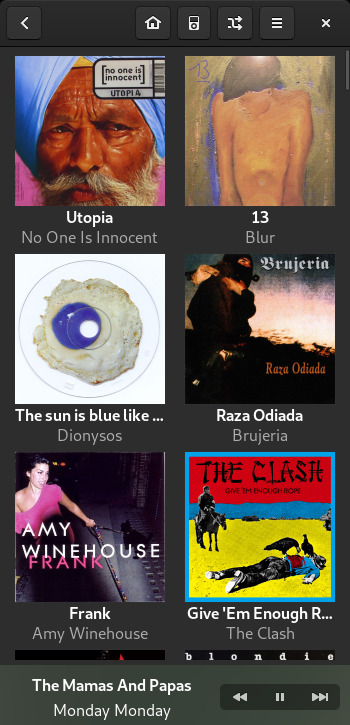
Lollypop ~ GNOME Audio Player
Lollypop is a modern music player for GNOME
- Artist bio, lyrics Artist bio, lyrics: Get artists and tracks information from the web.
- Intuitive browsing: Walk through your collection by genres/artists and through albums artwork.
- Play many audio formats: mp3, mp4, ogg, and flac
- Cover art downloader: Automatic artwork downloader from Last.fm, Itunes and Spotify.
- MTP devices: Sync your music with Android phones and any mtp devices…
- Fullscreen view: Visual access from your couch
- Party mode: Let Lollypop choose music for you.
- Native replaygain support.
- Search in your collection by artist, album and title.
Share this:

loudgain ~ Linux Loudness Normalizer
loudgain is a versatile ReplayGain 2.0 loudness normalizer, based on the EBU R128 / ITU BS.1770 standard (-18 LUFS) and supports FLAC / Ogg / MP2 / MP3 / MP4 / M4A / ALAC & Opus audio files. It uses the well-known mp3gain command line syntax but will never modify the actual audio data.
Just what you ever wanted: the best of mp3gain, ReplayGain 2.0 and Linux combined. Spread the word!
github.com/Moonbase59/loudgain
Share this:

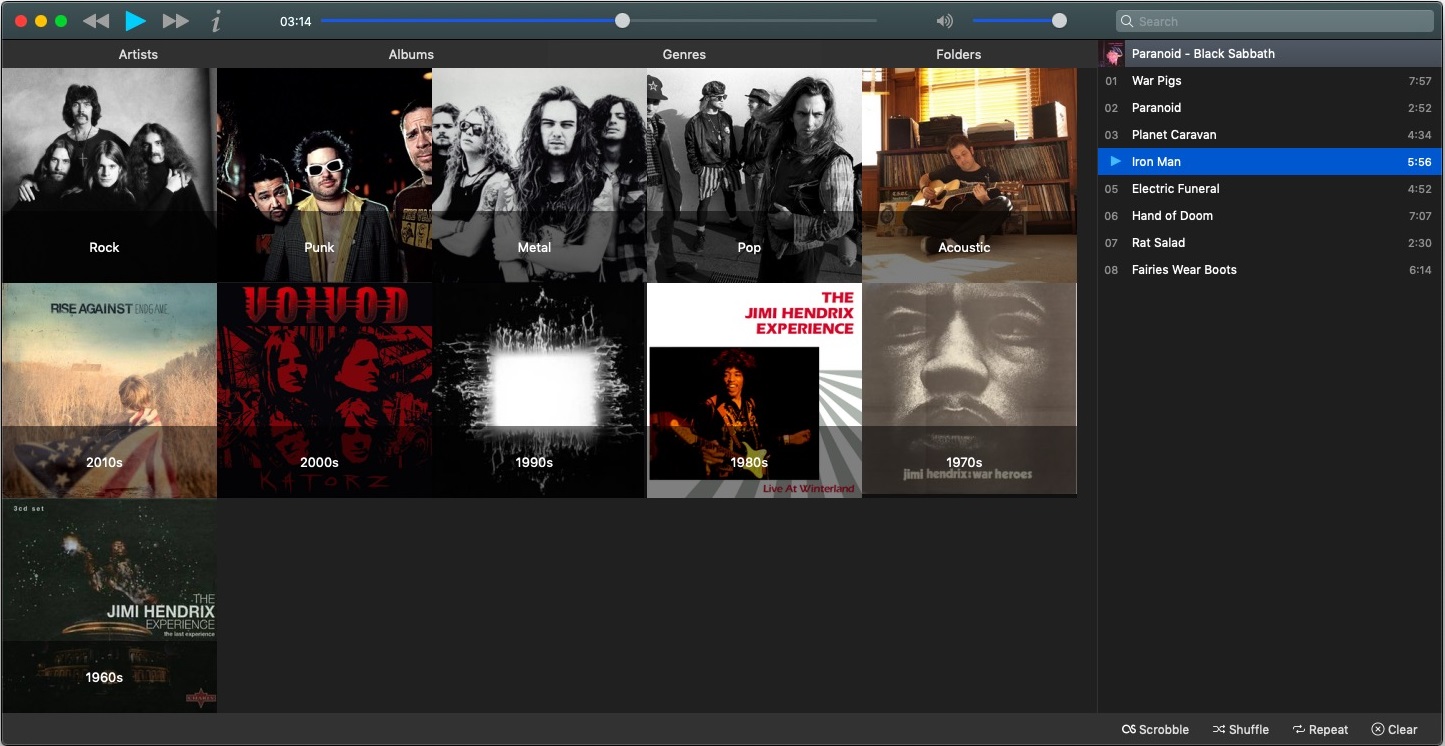
Musique ~ Finely Crafted Music Player
Musique “unclutters” your music listening experience with a clean and innovative interface.