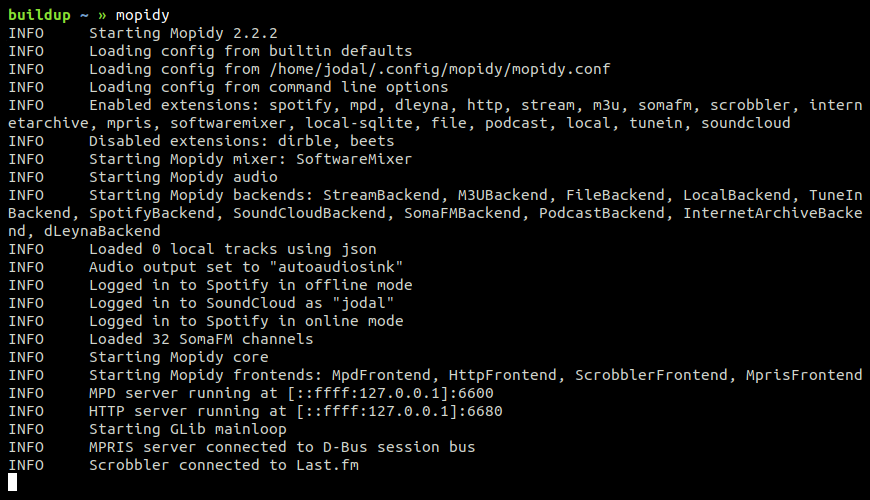
Make hardware instruments behave like plugins. A Raspberry Pi 4B plays as an instrument track in Ableton Live today — Git-style total recall through the project’s own save/reopen, knobs as sample-accurate automation lanes, and offline bounce through the physical box.
Hardware synths, drum machines, and effects have connected to computers for forty years, and the connection is still fragile in one specific way: recall. Audio mostly works, MIDI mostly works — but reopen last month’s project and the hardware is not in the state you saved, and nothing will tell you. The deep integrations that fix this (multichannel USB audio, plugin-shell control, total recall) have existed only inside closed single-vendor ecosystems, because every vendor has to rebuild drivers, state sync, and DAW compatibility from scratch.
HARP is a complete, working implementation of that integration — with an open spec underneath, if you want to build a device on it. The reference device is a Raspberry Pi running a 16-part multitimbral, 8-voice-polyphonic synth (13 params per part); anything that speaks the protocol gets the same treatment from any conforming host:
- Total recall, Git-style — device state is content-addressed and hash-verified; a saved project reopens with the hardware provably in the saved state, every overwrite preceded by a free snapshot, every mismatch resolved through explicit safe actions — never silently. The archive doubles as patch time-travel: every state the box has ever been pushed over is one click away.
- Audio as a plugin — a dedicated stream into the plugin shell that bypasses the OS audio stack (no aggregate-device hacks), including a host-paced mode where the hardware renders deterministically, byte- identical, faster than real time: offline bounce through a physical box at ~25× real time, with 16 ms of reported latency at DAW buffers ≤ 256 — in the neighborhood of a good audio interface.
- Multitimbral, addressed like plugins — one physical device is one session, and several shell instances can share it: drop the plugin on a handful of DAW tracks and each instance drives its own part — its own channel, params, recall state, and stereo output (16 parts, with a summed main mix alongside the per-part outputs). A recall-safe Part knob persists each track’s part in the project, and that per-part state moves intact between the VST3 and AU formats (the CLAP shell writes the same recall bundle).
- Polyphonic, with per-voice modulation — each part is an 8-voice pool with deterministic voice allocation, so overlapping notes ring out on their own voices instead of stealing one. Modulation is non-destructive and per voice: a VST3 Note Expression or a CLAP per-note parameter modulation bends a single sounding note’s filter cutoff without touching the stored patch — and the two formats render byte-identically (the device applies the §9.5 mod the same regardless of which shell sent it).
- Sample-accurate everything — DAW automation becomes device-interpolated ramps applied within ±1 sample; notes travel as UMP; an event fence makes “applied late” structurally impossible rather than statistically rare. Turn a knob on the hardware and the DAW records the automation (echo).
- Musical time — devices follow the DAW’s transport: tempo, position, loops. The reference device’s arpeggiator locks to Live’s grid sample-exactly, survives loop wraps, and renders a byte-identical groove — determinism extended to musical time.
- Identity, timing, diagnostics — engine versioning and parameter-map hashing protect old songs from new firmware, latency is measured (never guessed), and error counters at every layer end “it glitched” support threads with evidence.
- Roadie-proof sessions — unplug the cable mid-song and plug it back: the shell reconnects, re-asserts the project’s state, and audio resumes. Hostile or corrupt wire input ends in a clean session reset, never a crash (every parser is fuzzed; a live abuse test is part of CI).
Tag Archives: Rasberry

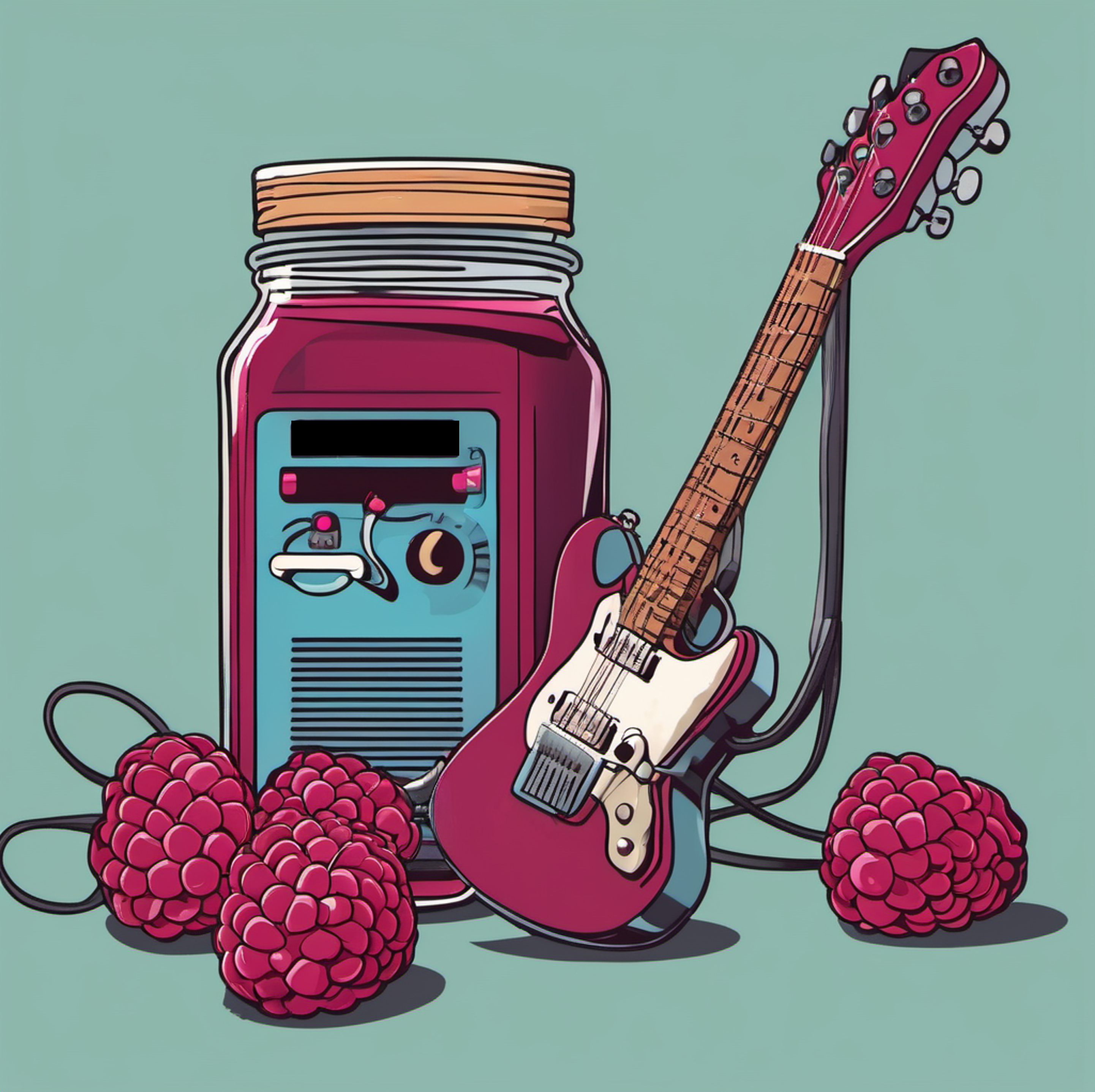
The Raspberry Jam ~ Raspberry Pi Guitar Effects Pedal
The realtime Raspberry PI powered digital guitar effects pedal.
Key Features:github.com/Jscott44/RTEP5-the-raspberry-jam
- Realtime audio loop
- Cutsomisable effects
- User profiles
- Low cost
- Simple effect creation
- Specialized audio electronics design
Share this:

piCorePlayer ~ Raspberry Pi Audio System
Free software that plays local music as well as online music streaming services on a Raspberry Pi.
www.picoreplayer.org
github.com/piCorePlayer
sourceforge.net/projects/picoreplayer
lyrion.org/players-and-controllers/picoreplayer
Share this:

zxtune ~ Cross-platform Chiptunes Player
Plays audio files from many systems including the ZX Spectrum, Acorn, Amstrad, Amiga, Atari, Commodore 64, GameBoy, MSX, Nes, PC, Phillips, SNES, Sam Coupe, Sega, TurboGrafX, etc.
zxtune.bitbucket.io
github.com/vitamin-caig/zxtune
Share this:

Sonic Pi ~ Live Coding Music Synthesizer
Sonic Pi is a new kind of musical instrument. Instead of strumming strings or whacking things with sticks – you write code – live.
Sonic Pi has been designed with the aim to find a harmonious balance between three core principles:
- Simple enough for the 10 year old within you
- Joyful enough for you to lose yourself through play
- Powerful enough for your own expressions
Sonic Pi is a complete open source programming environment originally designed to explore and teach programming concepts within schools through the process of creating new sounds.
In addition to being an engaging education resource it has evolved into an extremely powerful and performance-ready live coding instrument suitable for professional artists and DJs.
sonic-pi.net
github.com/samaaron/sonic-pi
Share this:

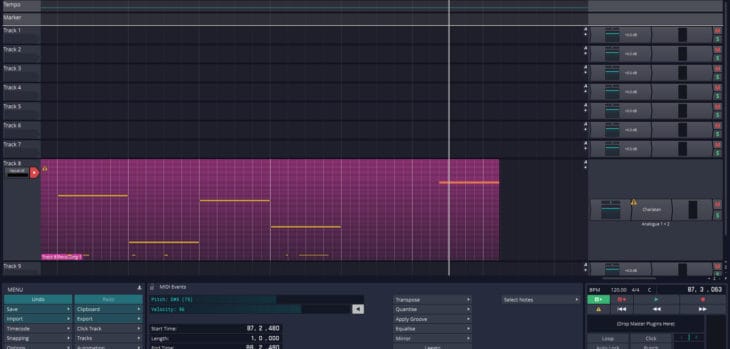
Tracktion Waveform Free ~ Digital Audio Workstation
The world’s best, fully featured, completely unlimited free DAW for all music creators. This is no ‘Lite’ version, we do not impose track limits, plugin limitations or other such constraints commonly found in other low cost offerings. Why? – we think you will enjoy using the app so much, you will discover the value in investing in our latest versions and the expanded features we are voraciously adding. Innovation and creativity is what drives us – join the ride today and download Waveform Free for Mac, Windows, or Linux operating systems.
www.tracktion.com/products/waveform-free
en.wikipedia.org/wiki/Tracktion_Waveform
github.com/Tracktion
Share this:

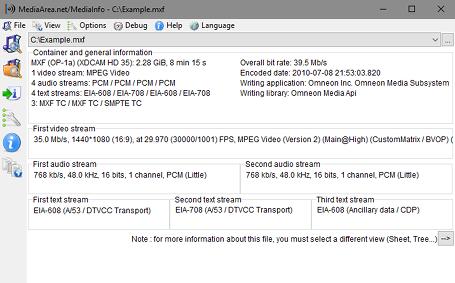
MediaInfo ~ Media Metadata Tool
MediaInfo is a convenient unified display of the most relevant technical and tag data for video and audio files.
Share this:

MinimServer ~ UPnP AV Network Server
MinimServer is a new UPnP AV music server with a number of innovative features that make it easier to organize and explore your music collection. If you have a network music player that supports the UPnP AV standards (see this page), you’ll get much more from your music collection if you’re using MinimServer as your music server software.
Share this:

mopidy ~ Extensible Music Server
Written in Python, Mopidy plays music from a local disk, Spotify, SoundCloud, Google Play Music, and more. You edit the playlist from any phone, tablet, or computer using a range of MPD and web clients.