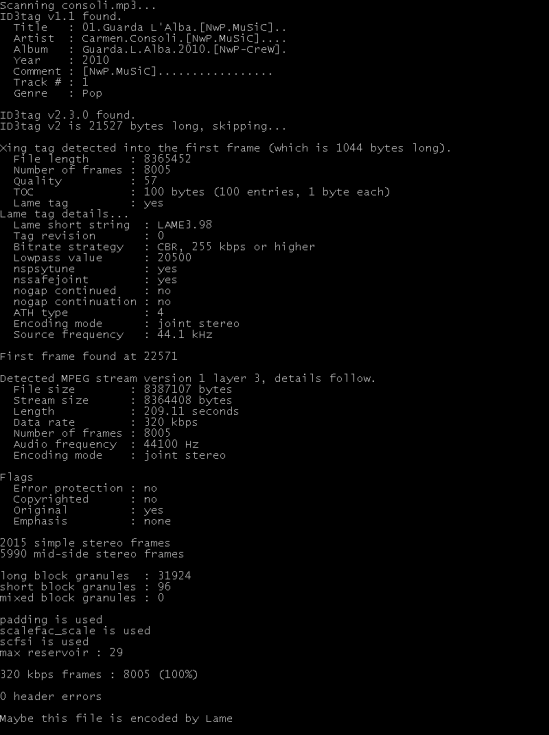
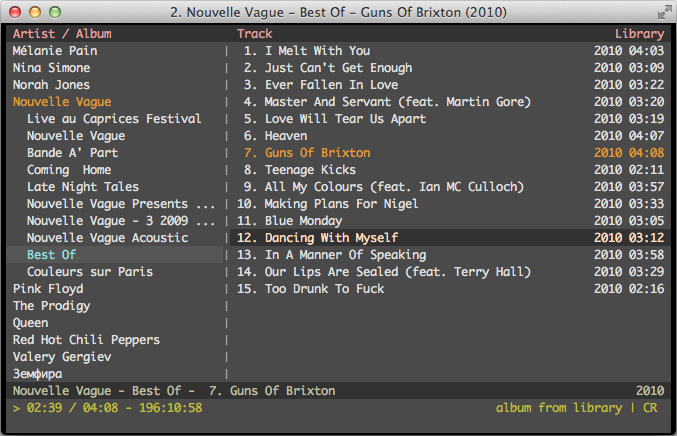
cmus is a small, fast and powerful console music player for Unix-like operating systems.

cmus is a small, fast and powerful console music player for Unix-like operating systems.

Pulseaudio Parametric Equalizer is a python GUI to insert a fully parametric three band equalizer with high and low shelves into the pulseaudio audio server.

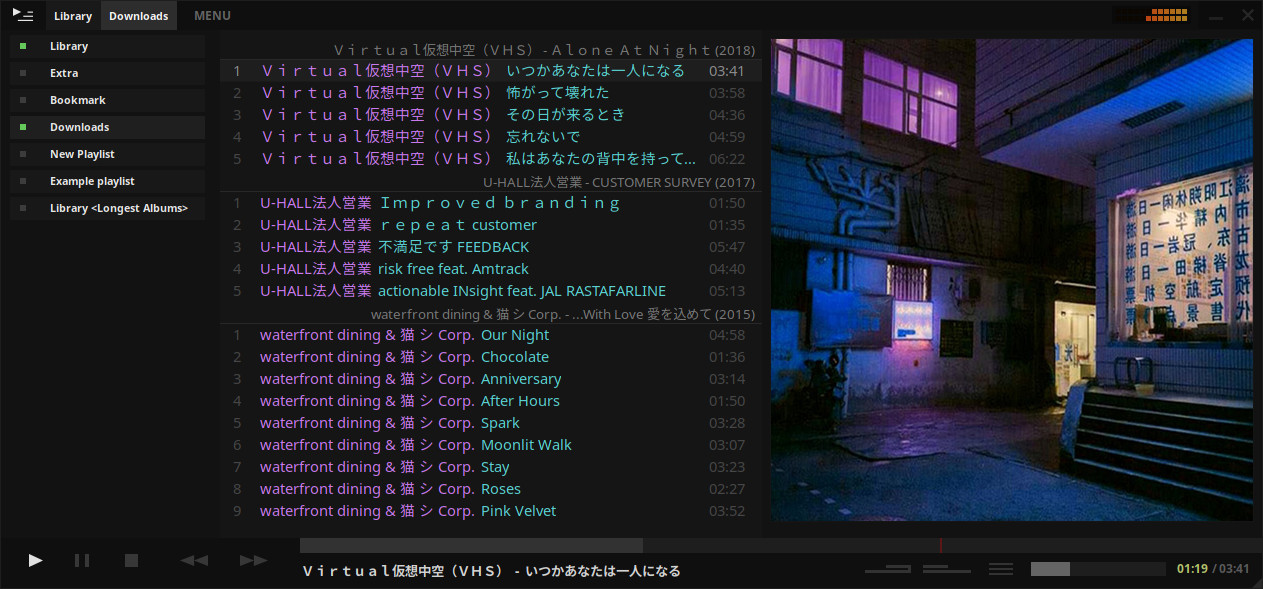
A music player for the desktop. Designed to be powerful, simple and streamlined, putting the user in control of their music collection. Uses the proprietary BASS audio library for playback.

Music Player Daemon (MPD) is a flexible, powerful, server-side application for playing music. Through plugins and libraries it can play a variety of sound files while being controlled by its network protocol.
MPD can broadcast via Snapcast.
Rivendell is a complete radio broadcast automation solution, with facilities for the acquisition, management, scheduling and playout of audio content. It has all of the features one would expect in a modern, fully-fledged radio automation system, including support for both PCM and MPEG audio encoding, full voice-tracking and log customization as well as support for a wide variety of third party software and hardware. As a robust, functionally complete digital audio system for broadcast radio applications, Rivendell uses industry standard components like the GNU/Linux Operating System, the AudioScience HPI Driver Architecture and the MySQL Database Engine. Rivendell is available under the GNU Public License.
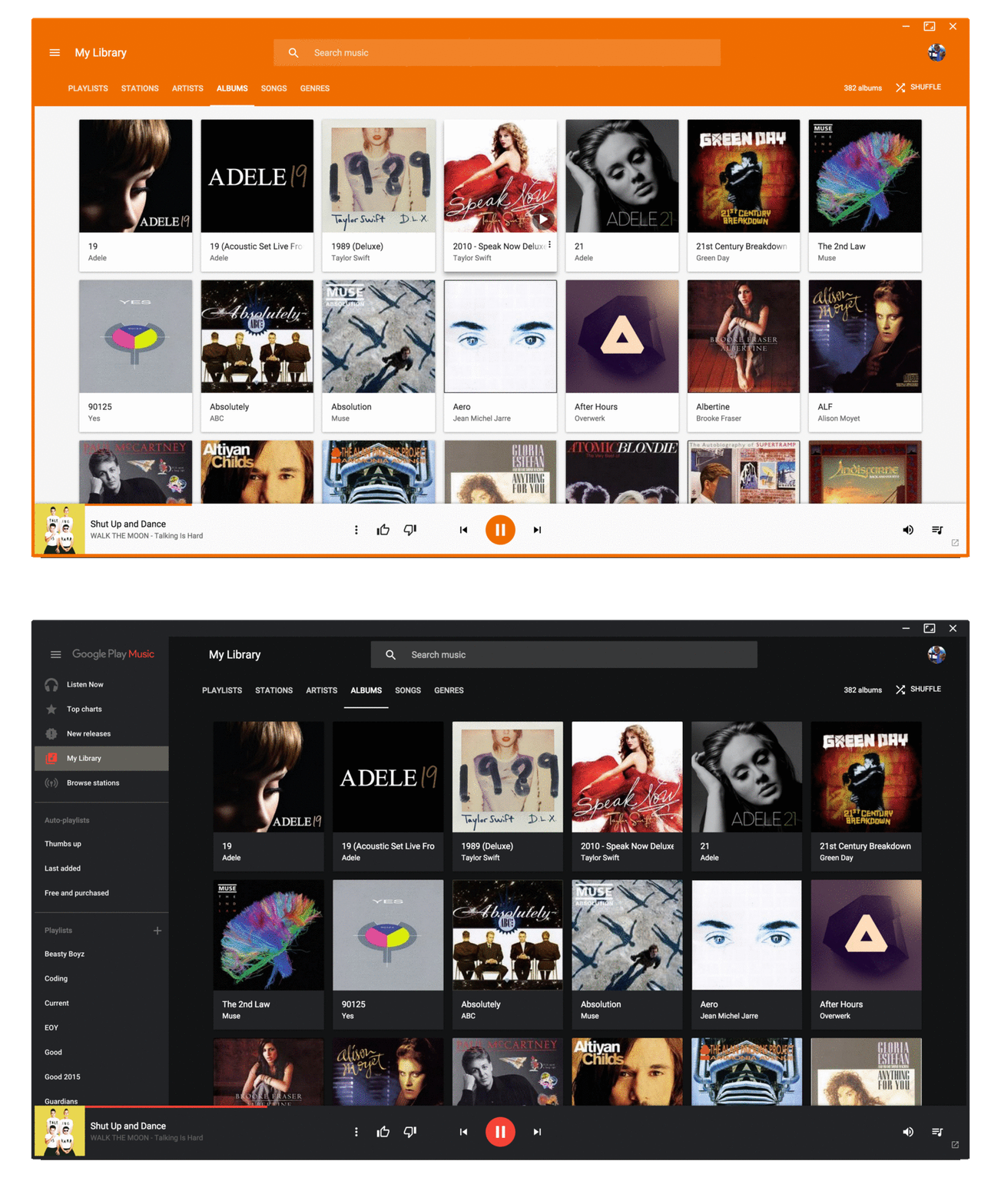
The same beautiful Material Design experience you love on the browser, just as a dedicated desktop player.

aveX is a free software for running and monitoring ABX listening tests. It works as a Jack (Jack Audio Connection Kit) client and is able to send test-status messages over a network for monitoring purposes. ‘A’ and ‘B’ audio files are read in pairs from a list and played in randomized order, the ‘X’ audio file is also randomized and is either ‘A’ or ‘B’ (double-blind test).
The listening test results are written after every choice in a file in text format.
The program is configured by filling in a very simple XML file.
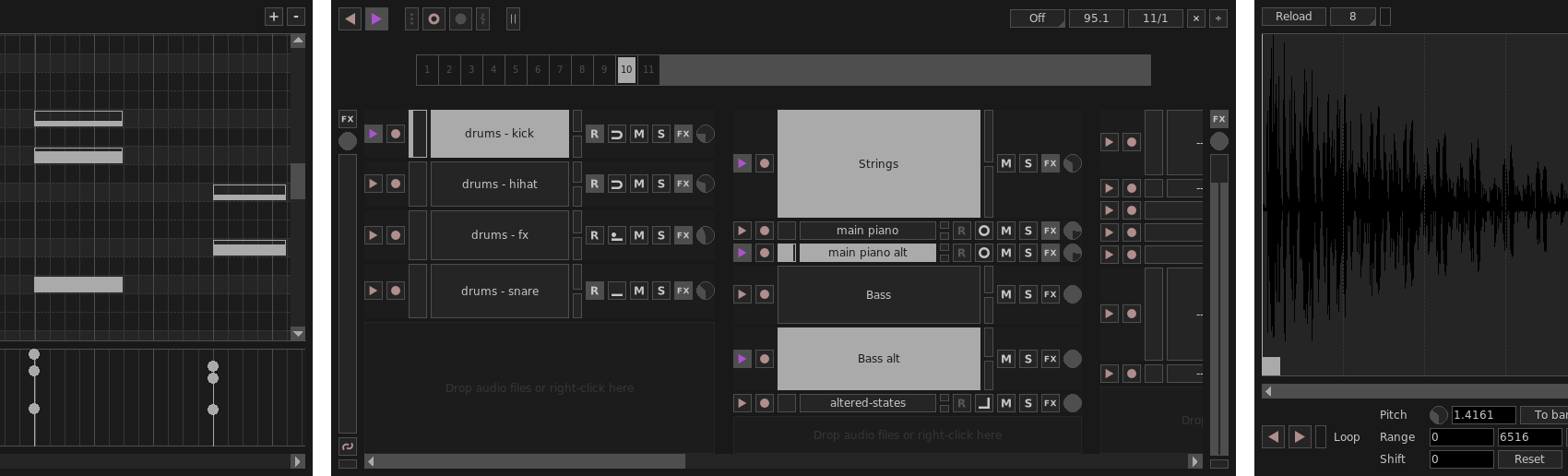
Giada is a free, minimal, hardcore audio tool for DJs, live performers and electronic musicians. How does it work? Just pick up your channel, fill it with samples or MIDI events and start the show by using this tiny piece of software as a loop machine, drum machine, sequencer, live sampler or yet as a plugin/effect host. Giada aims to be a compact and portable virtual device for Linux, Mac and Windows for production use and live sets.

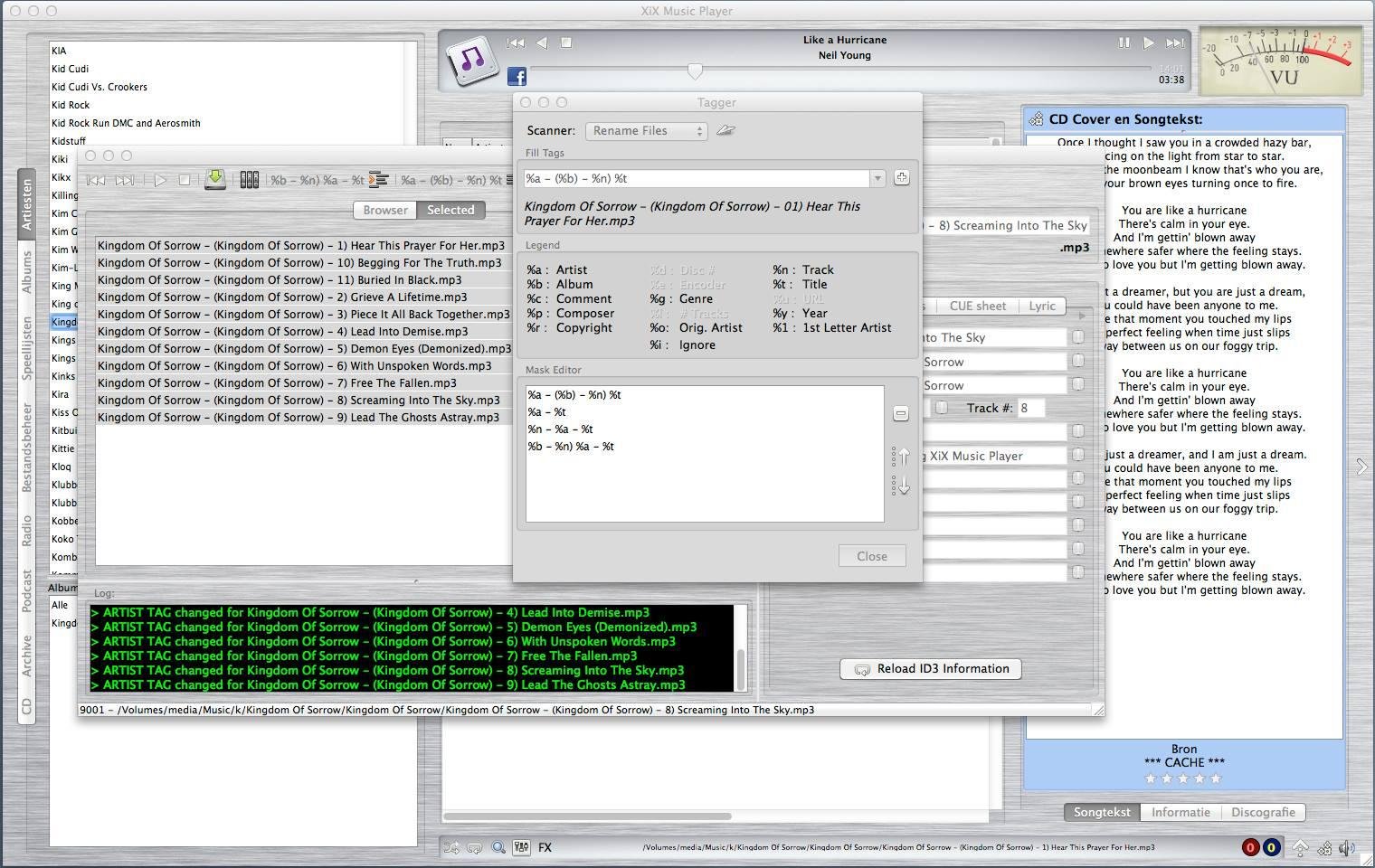
XiX Player is a free, easy to use, multi-platform music player that currently runs in Linux, Linux ARM (Raspberry Pi), Windows & MacOS Intel
Features:
- Supports the following file formats: MP3, OGG, M4A (non-DRM), AAC, FLAC, OPUS, APE, DFF, WAV
- Play & rip your CDs to MP3 or FLAC with CD-Text and CDDB support.
- Rip CD/DVD tracks to MP3 or FLAC. Needs mplayer.
- See albums the chosen artist is on and vice versa.
- Create and use playlists.
- Online radio stations + presets.
- Record online radio stations.
- Schedule Radio station recordings.
- Listen to & download podcasts.
- Play license free audio from the Internet Archive.
- Show the lyrics and CD covers of the song being played.
- Shuffle and repeat.
- Reverse play.
- Crossfading & trimming.
- Search.
- Rate your songs.
- EQ + FXs (Flanger, Echo & Reverb).
- Set EQ & trim for individual songs.
- Copy, delete or rename files.
- Change ID3 tag (only for MP3/OGG/FLAC/APE).
- Multiple tagging / renaming.
- Theme support (Basic).

Planet CCRMA at Home is a (large) collection of free, open source software packages that you can add to a computer running Fedora 22, 23 or 24 or CentOS 5 to transform it into an audio/video oriented workstation. Here at Stanford University CCRMA we use a consistent and well defined Linux environment for our daily work in audio and computer music and research. With the Planet CCRMA at Home package collection, you can easily install most of that environment on your own Linux system. Planet CCRMA is easy to install and maintain, it can also be installed and upgraded over the network from the Planet CCRMA repositories or its mirrors.
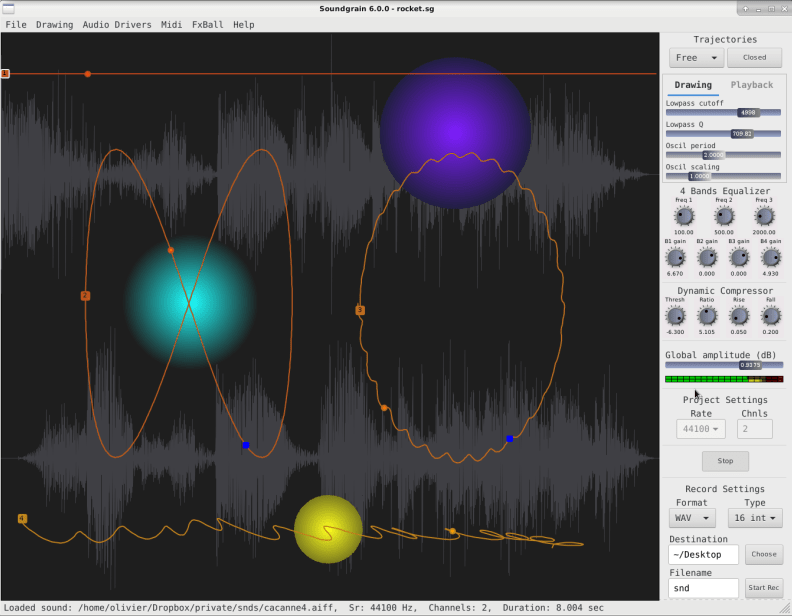
Soundgrain is a graphical interface where users can draw and edit trajectories to control granular sound synthesis. Soundgrain is written with Python/WxPython and uses Pyo as its audio engine.

FluidSynth is a real-time software synthesizer based on the SoundFont 2 specifications and has reached widespread distribution. FluidSynth itself does not have a graphical user interface, but due to its powerful API several applications utilize it and it has even found its way onto embedded systems and is used in some mobile apps.
Features:
- Cross platform support (Linux, macOS and Windows to name a few)
- SoundFont 2 support
- SoundFont 3 support (vorbis-compressed SF2)
- Realtime effect control using SoundFont 2.01 modulators
- Playback of MIDI files
- Shared library which can be used in other programs
- Built in command line shell

QSynth is a fluidsynth GUI front-end application written in C++ around the Qt framework using Qt Designer.

FluidPatcher is a performance-oriented interface for FluidSynth built using wxpython to create a simple GUI that allows live editing, selecting, and playing of patches. A patch is a collection of settings such as soundfont presets for each MIDI channel, control-change/sysex messages to send when the patch is selected, and midi router or effects settings. Groups of patches are stored in banks, which are saved as human-readable and -editable YAML files. This allows a musician to easily create complex combinations of synthesizer settings ahead of time and switch between them on the fly during a performance.