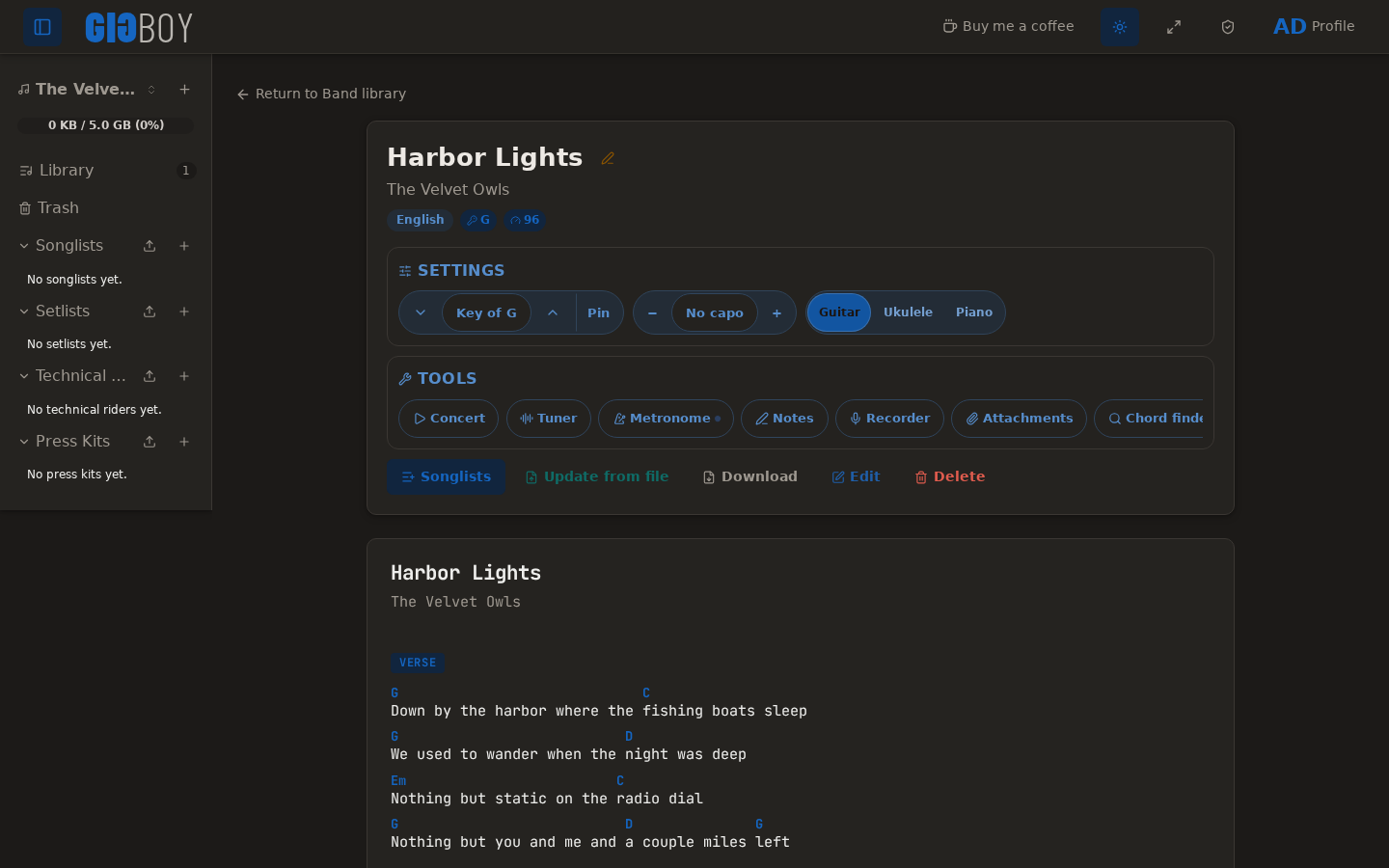
Gigboy is a web app for musicians and bands to write, organize, and rehearse songs from — built on the open ChordPro format, so nothing you write is ever locked into a proprietary format or someone else’s server. It’s self-hosted only: you run it on your own machine, NAS, or VPS with one Docker Compose command, and your band’s setlists, recordings, and press kit live in your own database, not a startup’s.
No subscriptions, no per-seat pricing, no feature paywalls — every account gets full access.
Bandcamp Desktop is a crossplatform desktop application which allows you to use bandcamp.com in an easy and quick way.
Note that Bandcamp Desktop is not affiliated with Bandcamp, it is only a fan-made, free and Open-Source project.
Features:
Simple as the website
Header menu
Mini Player
Directly download Music from Bandcamp
Mini Player
Keep listening to the music while you explore the website! That’s the killer feature of this web application.
It’s very simple to use: just go to the album (or song, ep…) and click File > Mini Player (or press Ctrl + Space).
Directly download Music from Bandcamp
Bandcamp Desktop is able to directly download music from Bandcamp. Your albums and songs will be automatically unzipped and stored in the bandcamp-desktop folder which is located in your default download folder (Library Folder can be changed from App Preferences).
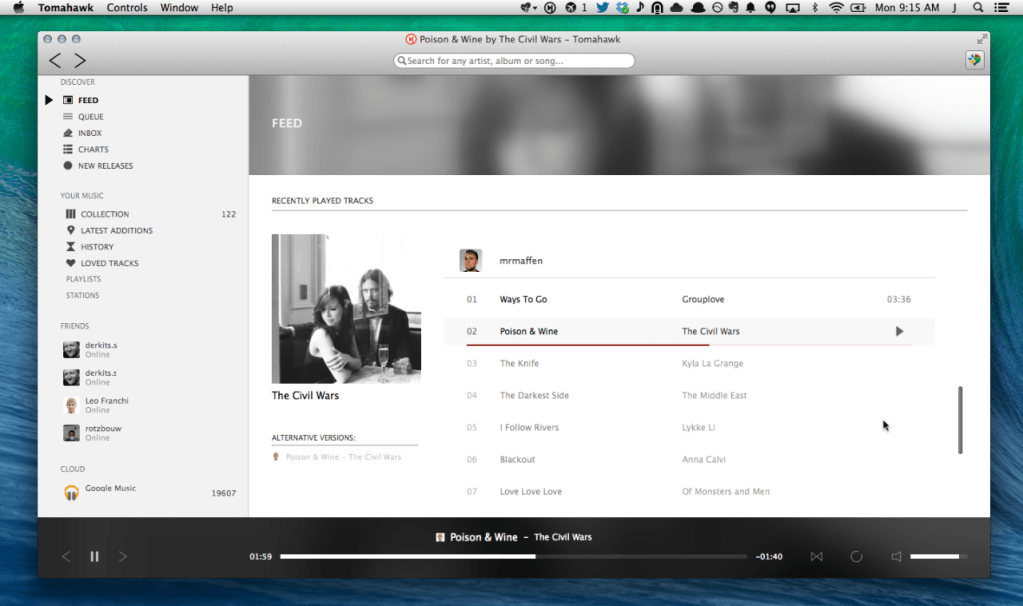
Tomahawk is a free multi-source and cross-platform music player. An application that can play not only your local files, but also stream from services like Spotify, Beats, SoundCloud, Google Music, YouTube and many others. You can even connect with your friends’ Tomahawks, share your musical gems or listen along with them. Let the music play!
Tomahawk is basically a player for music metadata. At its core it decouples the metadata about a song from the source and reassembles it for each user based on their individual music accessibility and rights. In short, given the name of a song and artist, Tomahawk will find the right source, for the right user at the right time. This fundamentally different approach to music enables a range of new music consumption and sharing experiences previously not possible.
Music Sources:
Local music library (MP3, Ogg, FLAC and many other formats)
Networked music libraries (other connected computers)
Third party-developed resolvers have also been written for services like YouTube, Qobuz and others. We’ve also heard of digital music distributors writing their own for their internal CMSes to help them navigate and preview their content. That’s cool.
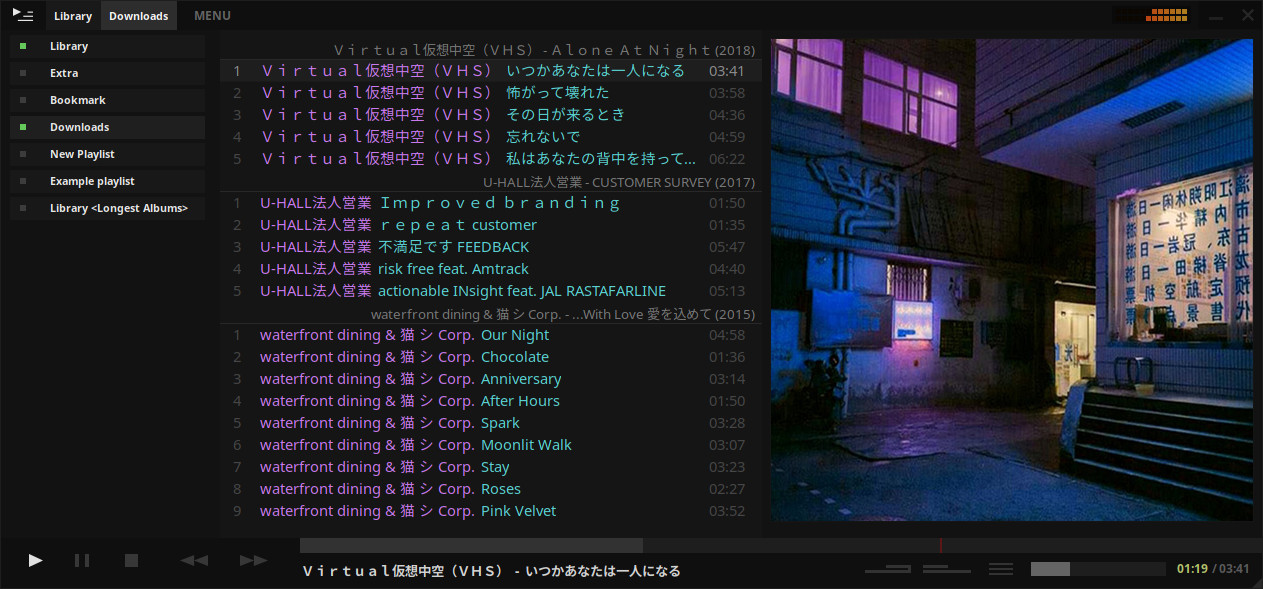
A music player for the desktop. Designed to be powerful, simple and streamlined, putting the user in control of their music collection. Uses the proprietary BASS audio library for playback.