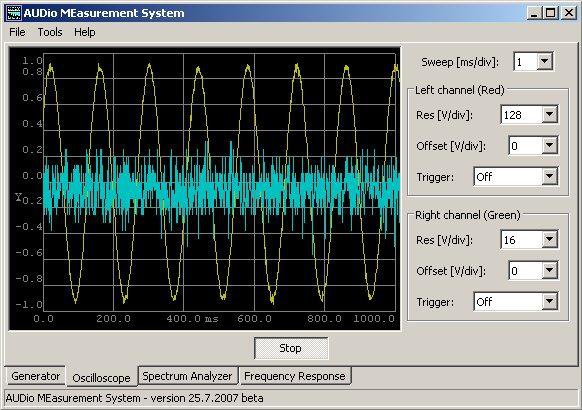
AUDio MEasurement System – multi-platfrom system for audio measurement through a PC sound card. Incorporates generator, oscilloscope, audio spectrum analyzer (FFT) and frequency sweep characteristic. Can be compiled and works under Linux, Windows and MacOS.
Polymeter is a MIDI sequencer for music that’s in multiple prime meters (1, 2, 3, 5, 7, 11, etc.) simultaneously. Each track has its own loop length, and when the lengths differ, the tracks “slip” (or shift phase) relative to each other. The resulting interference pattern is sufficiently intricate that variations similar to the embellishments of a live performer can be generated algorithmically.
Features:
Multitrack step sequencer for polymeter
Each track has its own loop length
Any number of tracks, of any length
Full clipboard support (copy/cut/paste)
Unlimited undo and redo for all edits
Multiple tracks can be edited at once
Optionally shows current position within each track
Drag reordering of tracks
Exports a MIDI file
Join adjacent steps to make tied notes
Velocity editing
Controller tracks
Recording of live arrangement
Editing of arrangement on timeline
Inter-track modulation of mute, note, velocity, duration, position, and more
Live performance view with full screen mode
Recursive modulation (modulation of modulation) for mute and position
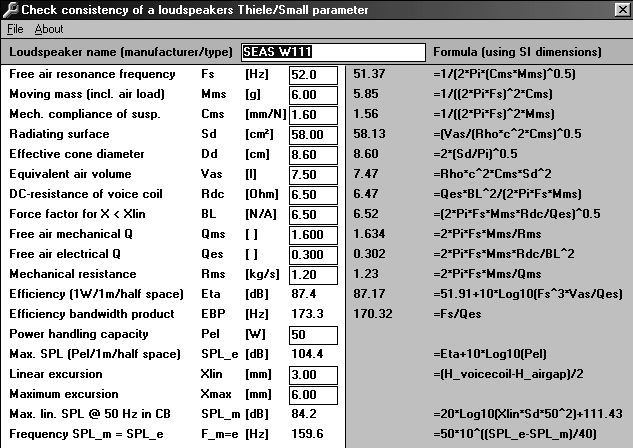
As the program name suggests, TspCheck is a program that checks whether the determined or specified TS parameters of a loudspeaker match. Often you can then find out, for example, that the efficiency has been rounded up a bit too benevolently, or you can estimate the membrane mass, the resilience of the restraint, etc. by cleverly combining the information available.
In addition, the following is determined:
Max. Lin. SPL @ 50 Hz in CB – the maximum sound pressure that can be achieved in a closed housing at 50 Hz using the maximum linear stroke
SPL_m = SPL_e – the frequency from which the maximum achievable sound pressure at full input power is stroke limited.
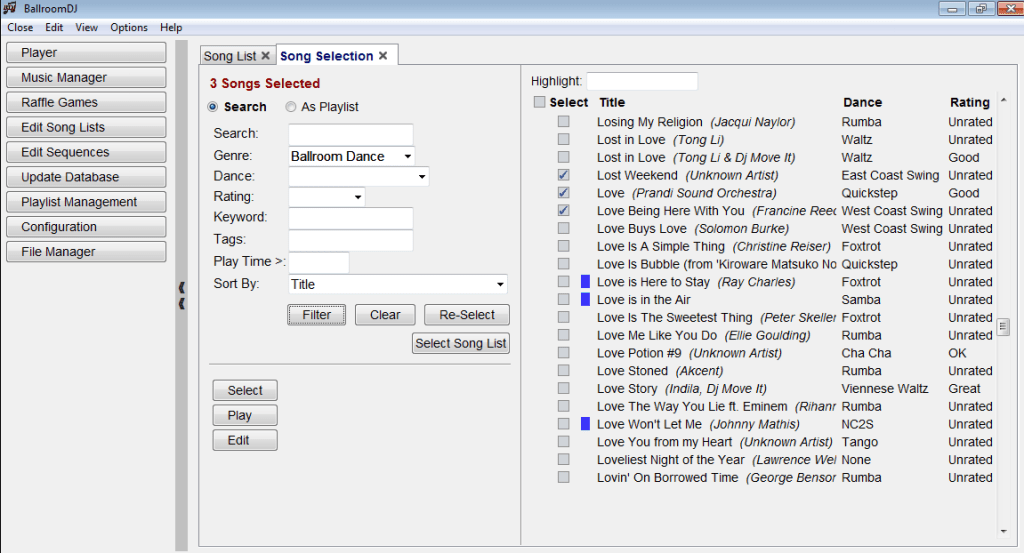
BallroomDJ is a ballroom music player. It is designed to be able to play music the entire evening without intervention. Use for your personal training, dance studio, and ballroom, dancesport, Argentine tango, country western, or west coast swing events.
Looking for a social platform to enjoy and share music? Funkwhale is a community-driven project that lets you listen and share music and audio within a decentralised, open network.
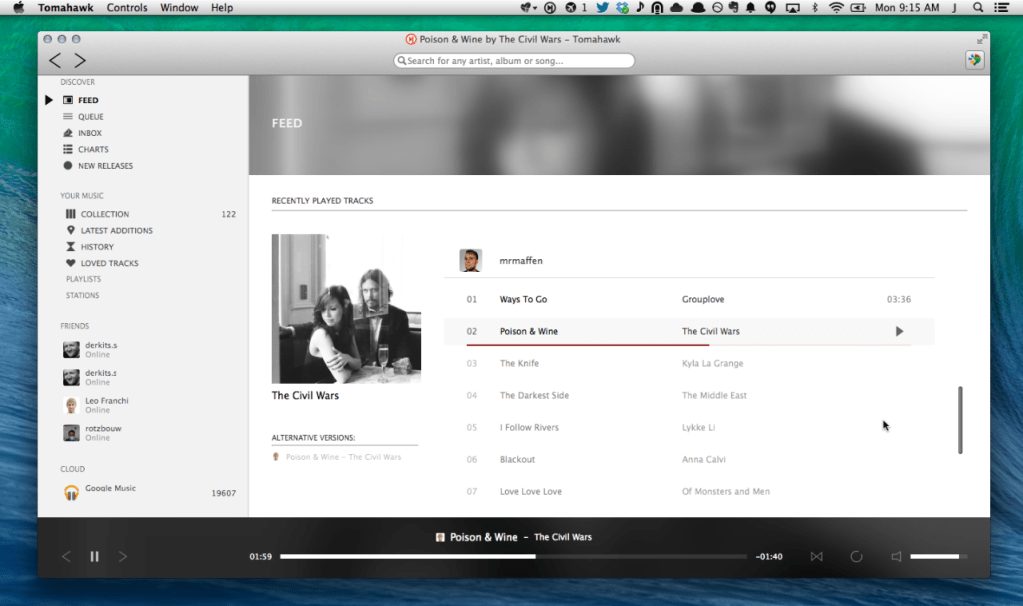
Tomahawk is a free multi-source and cross-platform music player. An application that can play not only your local files, but also stream from services like Spotify, Beats, SoundCloud, Google Music, YouTube and many others. You can even connect with your friends’ Tomahawks, share your musical gems or listen along with them. Let the music play!
Tomahawk is basically a player for music metadata. At its core it decouples the metadata about a song from the source and reassembles it for each user based on their individual music accessibility and rights. In short, given the name of a song and artist, Tomahawk will find the right source, for the right user at the right time. This fundamentally different approach to music enables a range of new music consumption and sharing experiences previously not possible.
Music Sources:
Local music library (MP3, Ogg, FLAC and many other formats)
Networked music libraries (other connected computers)
Third party-developed resolvers have also been written for services like YouTube, Qobuz and others. We’ve also heard of digital music distributors writing their own for their internal CMSes to help them navigate and preview their content. That’s cool.
GXLame is an MP3 encoder based off of LAME v3.98.4 and v3.99b0 which has been heavily optimized for high-quality, low-bitrate VBR encoding. It is similar in concept to other popular encoders at these bitrates such as some AAC codecs, Vorbis mods, and so forth at bitrates down to 56kbps. This codec does not rely on aggressive lowpassing or resampling to achieve these low bitrates, and the quality aims to be acceptable at much lower bitrates than have come to be expected of the standard.
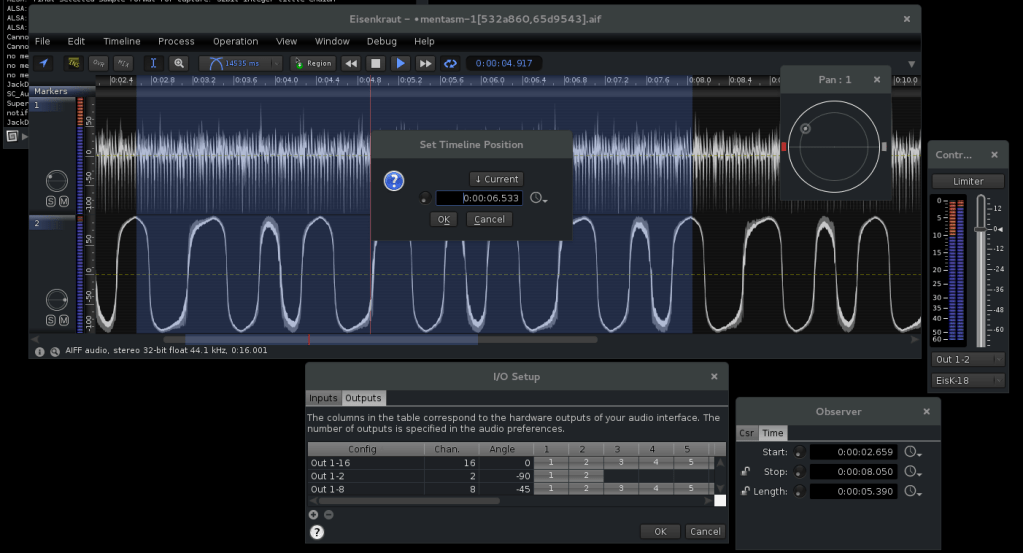
The audio file editor, baptised ‘Eisenkraut’, came into existence (as a scaffold) during a project class on audio programming in Java at the SeaM in Weimar. It is distinguished by a number of traits which makes it particularly interesting in the field of computer music: There are no restrictions with regard to the number of channels in a file, and there is an OSC interface via which the functionality can be extended, for example using the SuperCollider language. Possible applications of such extensions are the transfer of marker information or the maintenance of meta data for segmented files, the algorithmic editing (cut/copy/paste) of files, or the addition of your own sound transformations or special decoders (e.g. an MS matrix).
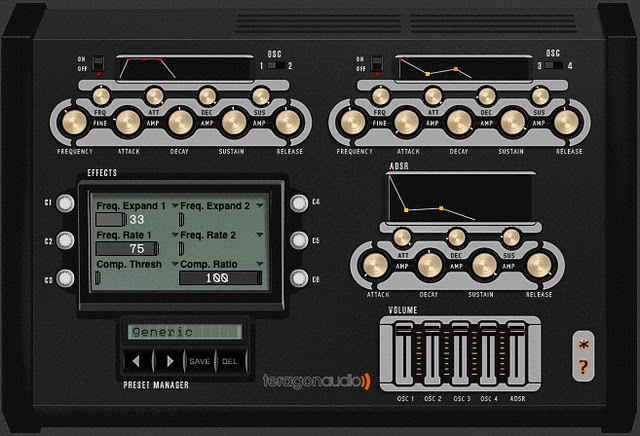
KickMaker is a synthesizer designed specifically to create good kick drum sounds. It uses four independent oscillators and a wide range of effects, allowing one to create perfectly customized beats.