SPPAS ~ Speech Annotation & Analysis


SPPAS is a scientific computer software package written and maintained by Brigitte Bigi of the Laboratoire Parole et Langage, in Aix-en-Provence, France. Available for free, with open source code, there is simply no other package for linguists to simple use in the automatic annotations of speech, the analyses of any kind of annotated data and the conversion of annotated files.

SPPAS is able to produce automatically speech annotations from a recorded speech sound and its orthographic transcription. SPPAS is helpful for the analysis of any annotated data: estimate statistical distributions, make requests, manage files, visualize annotations. SPPAS offers a file converter from & to a wide range of formats: xra, TextGrid, eaf, trs …

sppas.org
sourceforge.net/projects/sppas

mineradio ~ Immersive Music Player


Mineradio is a Windows desktop immersive music player that combines search and play, lyrics stage, particle vision, 3D playlist rack, and full desktop mode into a private music space that is closer to a live experience.

github.com/XxHuberrr/Mineradio
sourceforge.net/projects/mineradio.mirror

Sunamu ~ Stylish Onscreen Display


Show your currently playing song in a stylish way!

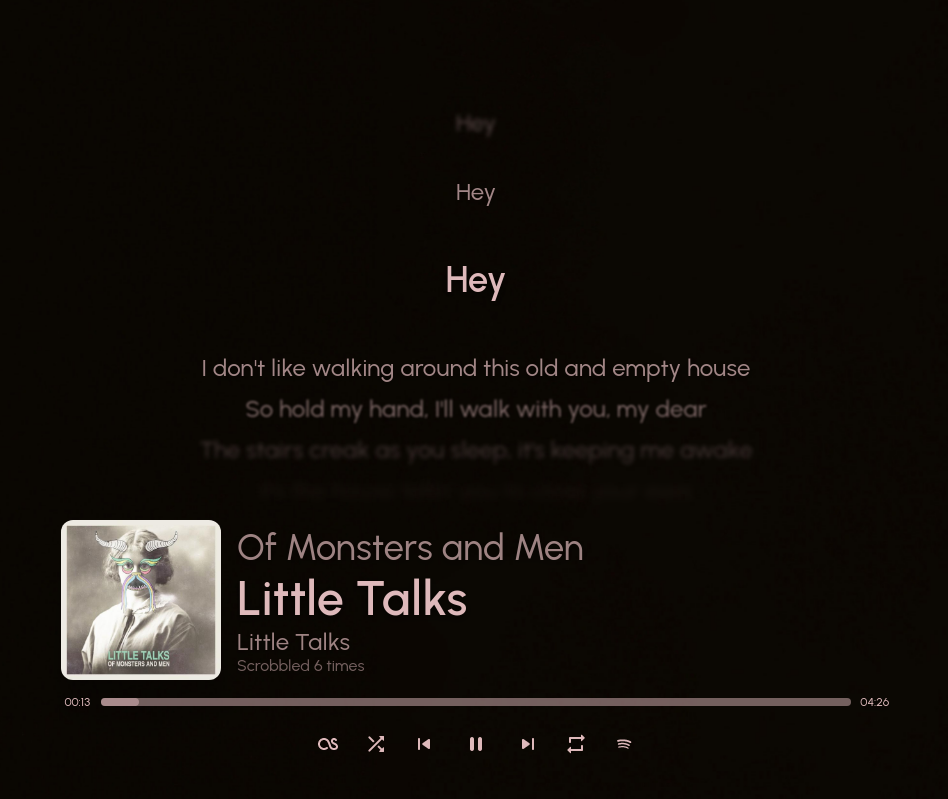
Sunamu Interface

github.com/Vistaus/Sunamu

References:

itsfoss.com/sunamu-music-widget

optiscan ~ Advanced CD Reader & Writer


A Windows GUI application for high-quality audio CD ripping, writing, and advanced disc diagnostics, written in C++.

OptiScan reads and writes audio CDs at the raw sector level using SCSI/MMC commands and provides multiple quality scanning modes to assess disc health before, during, or after extraction.

github.com/dhucul/OptiScan

JellyBox ~ Jellyfin Music Player


This is unofficial audio client for app. Currently it supports macOS, iOS and android via APK file. I’m also working on adding Linux(deb) support and windows.

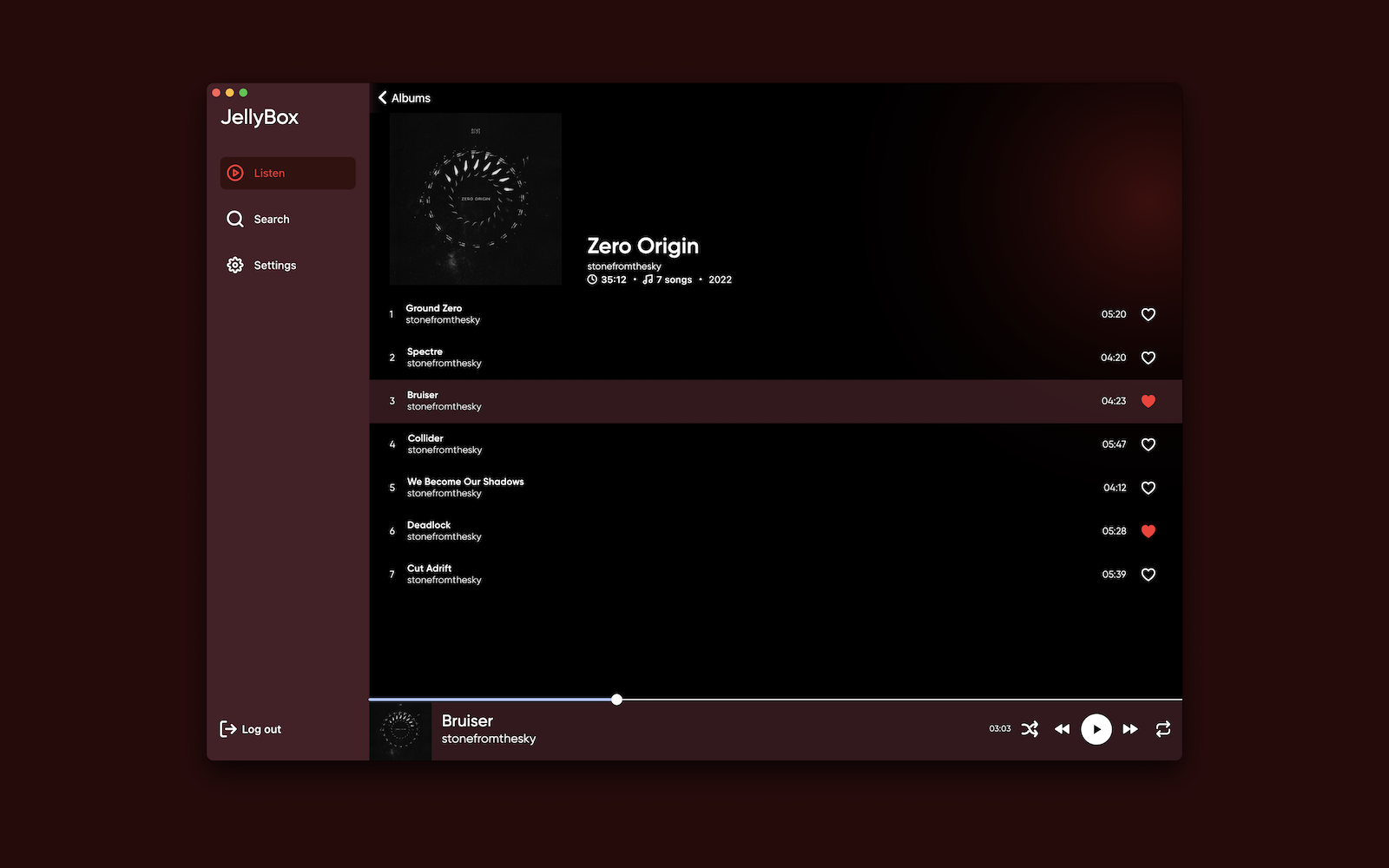
jellybox interface

github.com/avdept/JellyBoxPlayer
sourceforge.net/projects/jellybox.mirror

Resources:

jellyfin.org

Shortwave ~ Gnome Radio Player


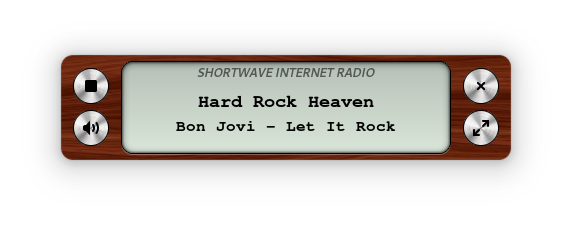
Listen to internet radio. Gnome style.

apps.gnome.org/Shortwave
gitlab.gnome.org/World/Shortwave

tonepose ~ Pitch Shift Mac Audio


Pitch-shift audio from Spotify, Apple Music, browsers, and more, from the menu bar. No BlackHole or virtual cables. Free and open-source.

github.com/metezem/tonepose

OmniPans ~ Panning & Volume Control


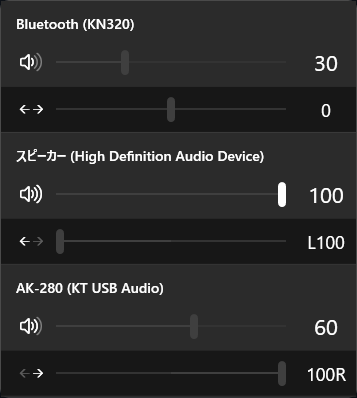
A utility to control volume / pan for all audio devices on Windows.

OmniPans controls

github.com/SatsukiAnakawa/OmniPans

foobar2000 ~ Duration & Subsong Manager


A foobar2000 component that lets you override the length of any track, hide individual subsongs from the Media Library, and read playback time at millisecond precision.

Language: English | 中文

Features:

Duration Manager — custom track length
  • Set a custom length for any track via the context menu “Set custom duration”.
  • Manage all overrides in Preferences → Tools → Duration & Subsong Manager → Duration Manager (search, edit, delete).
  • Overrides are matched by file content hash + subsong index, so they survive file moves/renames.
  • During playback the track is automatically truncated to the custom length (jumps to the next track when reached).
Subsong Manager — hide subsongs
  • For multi-subsong files, choose exactly which subsongs are visible in the autoplaylists.
  • Configure include/exclude ranges (e.g. 1-3,5,7) or checkbox in Preferences → Tools → Duration & Subsong Manager → Subsong Manager.
  • Note: this filters the Media Library query at runtime, so changes take effect after a restart.
High-Precision Timer (UI element)
  • An auxiliary UI element for the Duration Manager that shows playback position and track length in millisecond precision: [HH:]MM:SS.mmm.
  • Add it via the layout editor like any other UI element (“High-Precision Timer”).
Compatibility
  • foobar2000 v2.0 or newer, Windows, 32-bit and 64-bit.
  • Built against the foobar2000 SDK (2025-03-07).

github.com/M3MEMonster/Duration_and_Subsong_Manager

24seven.fm Covers ~ Radio Cover Art


Cover-art for the 24seven.fm family of internet radio stations — Streaming Soundtracks, 1980s.FM, Adagio.FM, Death.FM, and Entranced.FM. A shared, host-agnostic C++ engine drives three Windows front-ends plus a cross-platform core library:

ComponentDirectoryOutputBuild system
Desktop viewerdesktop/24sevenfm_covers.exe
(x64, self-contained)
MSBuild (.vcxproj / .sln)
Winamp pluginwinamp/gen_24sevenfm_covers.dll
(x86 / 32-bit)
CMake
foobar2000 componentfoobar2000/foo_24sevenfm_covers/foo_24sevenfm_covers.dll
(x64)
MSBuild
(.vcxproj)
Core librarylib/coverfetch static lib (cross-platform)CMake

All three front-ends share the same Direct2D renderer (shared/d2d_*.cpp), the cover engine (shared/cover_engine.* — cover preload, crossfade/flip transitions, remaining-time countdown), the options page (shared/options_*), and the networking/parse library (lib/). The library alone (lib/) is portable C++11 and already cross-compiles for Android/iOS.

github.com/pke/24sevenfm_covers

Dynamic Audio Normalizer ~ Advanced Normalization


Dynamic Audio Normalizer is a library for advanced audio normalization purposes. It applies a certain amount of gain to the input audio in order to bring its peak magnitude to a target level (e.g. 0 dBFS). However, in contrast to more “simple” normalization algorithms, the Dynamic Audio Normalizer dynamically re-adjusts the gain factor to the input audio. This allows for applying extra gain to the “quiet” sections of the audio while avoiding distortions or clipping the “loud” sections. In other words: The Dynamic Audio Normalizer will “even out” the volume of quiet and loud sections, in the sense that the volume of each section is brought to the same target level. Note, however, that the Dynamic Audio Normalizer achieves this goal without applying “dynamic range compressing”. It will retain 100% of the dynamic range within each “local” region of the audio file.

The Dynamic Audio Normalizer is available as a small standalone command-line utility and also as an effect in the SoX audio processor as well as in the FFmpeg audio/video converter. Furthermore, it can be integrated into your favorite DAW (digital audio workstation), as a VST plug-in, or into your favorite media player, as a Winamp plug-in. Last but not least, the “core” library can be integrated into custom applications easily, thanks to a straightforward API (application programming interface).

github.com/lordmulder/DynamicAudioNormalizer