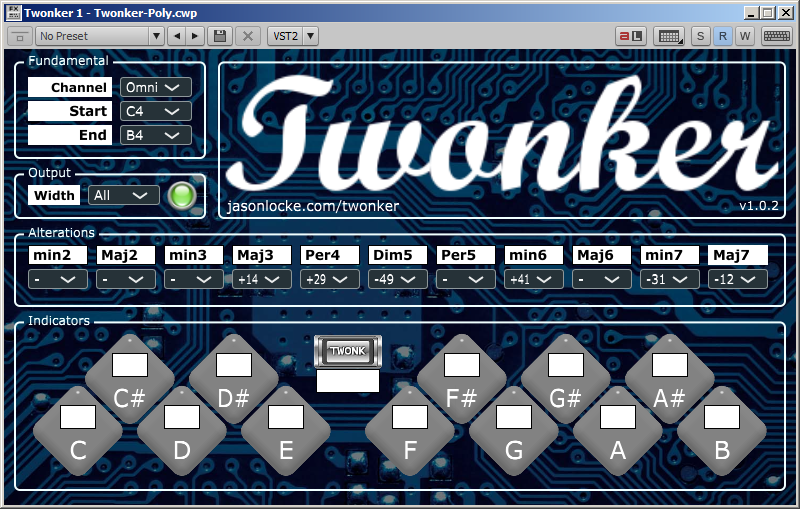
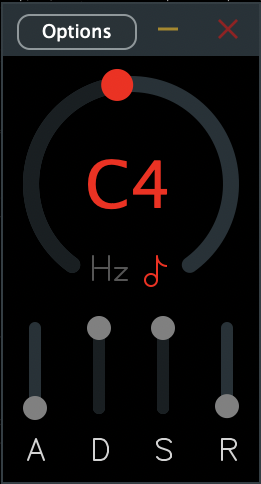
The Twonker is a free VST MIDI Plugin that allows a digital piano (or any MIDI instrument) to play tones from the Overtone Series. It is designed to run within most Digital Audio Workstations as a Synth Plugin on MacOS, Windows, and Linux.
The Twonker allows a musician to play overtones in a predictable and flexible manner, using a regular MIDI-based keyboard. In essence, it behaves like twelve different pianos tuned to twelve different “Overtone Scales”.
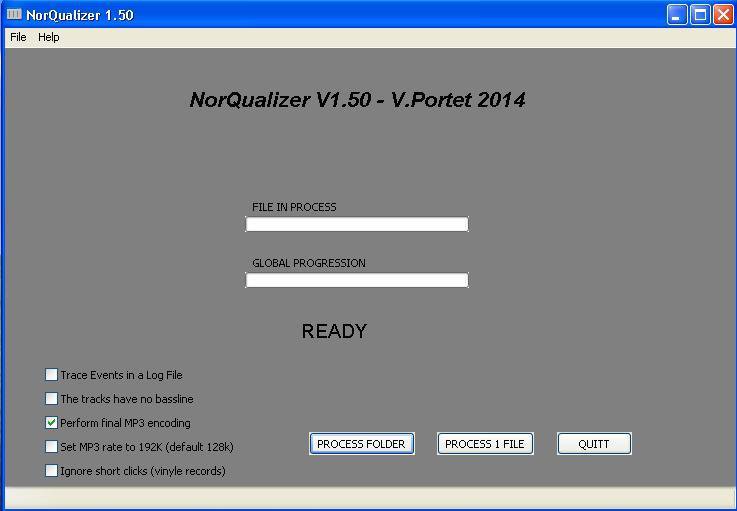
NorQualizer is a smart audio equalizer / normalizer which corrects audio files to get them all similar in terms of bandwidth and volume level. Especially useful for preparing audio CDs with files from different sources.
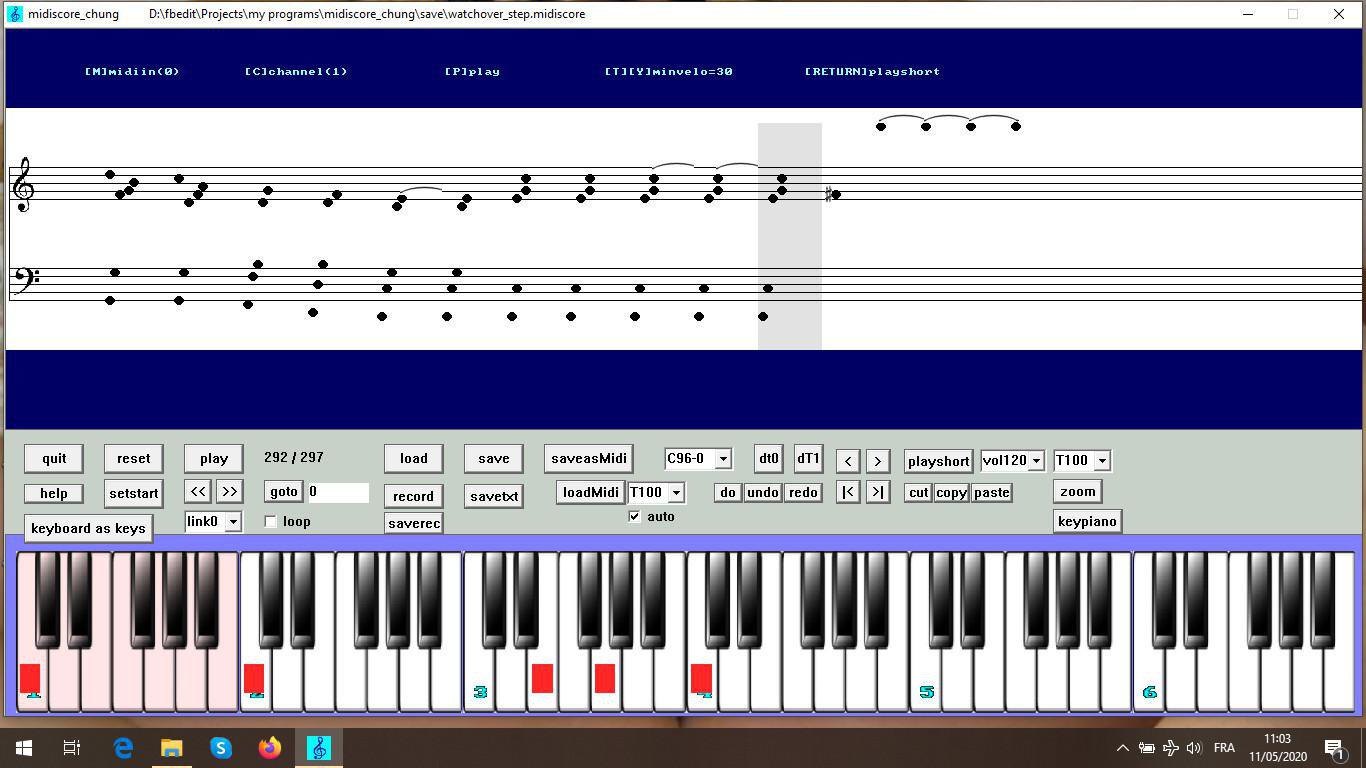
midiscore chung is a small program for easy step by step compose record edit midi music song with optional quantize using a midi keyboard entering play chord and control with some piano keys and save / load from pc or export / import as midifile . a standalone freebasic program . enhanced realtime record adds sustain delay and velocity variation effect according to number of played notes (resonance) and can also enter notes with the pc keyboard . can load and even enhance existing midifiles . record autopause when nothing is played .
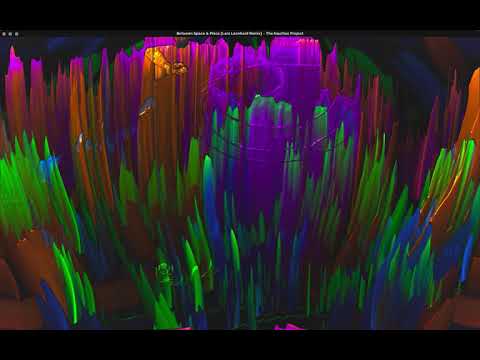
projectM is an open-source, cross-platform reimplementation of Winamp MilkDrop, the music visualizer created by Ryan Geiss. What began as a way to bring MilkDrop-style graphics to more platforms has grown into an ecosystem of visualization libraries, desktop frontends, audio plug-ins, media-player integrations and large community preset collections.
The projectM engine
The central project is libprojectM, a reusable C++ library rather than a complete desktop application. It accepts audio samples (PCM), analyses the signal using FFT and beat detection, interprets MilkDrop-style preset equations and shaders, and renders the resulting animation with OpenGL. It can render into an OpenGL context or a texture so that another application can display the output.
This separation matters: the library does not provide a complete audio player or desktop audio-capture interface. A frontend or host application supplies audio, provides the user interface and graphics context, and makes presets and textures available. The core library is licensed under LGPL-2.1; individual frontends, plug-ins and integrations may use different licenses.
These projects provide a desktop interface around the visualization engine:
projectMSDL (SDL/C++) — the official cross-platform standalone frontend. It captures desktop audio and displays projectM visualizations on platforms supported by SDL and libprojectM. The current 2.0 application is a development preview; the project documentation cautions that it is not yet feature-complete and may contain bugs.
Qt frontend — a Linux desktop application supporting PulseAudio, PipeWire and JACK. It adds a preset playlist editor, saved preset ratings and a graphical settings dialog.
SDL/Rust frontend — a Rust and SDL3 standalone application under development.
Audio plug-ins and player integrations
One of projectM’s strengths is that it can be embedded in other audio software instead of running as a separate visualizer window.
DISTRHO ProM — an audio plug-in implementation of projectM using the DISTRHO Plugin Framework. It provides CLAP, LV2, VST2 and VST3 formats, allowing a compatible DAW or plug-in host to display MilkDrop-style visualizations. ProM is a separate downstream project, not an official projectM frontend.
foobar2000: foo_vis_projectM — a Windows visualization component by djdron. Its source is at GitHub. It bundles the Cream of the Crop presets and textures. The component repository lists version 0.0.5, released in August 2022, for 32-bit and 64-bit Windows and foobar2000 1.5 or newer.
foo_uie_vis_projectM — an older foobar2000 visualization-panel component. This is a separate, historical implementation; do not confuse it with foo_vis_projectM.
Apple Music plug-in — an official projectM front-end plug-in for Apple Music on macOS. The project documentation currently describes it as a development preview.
libvisual plug-in — exposes projectM visualizations to applications that support the libvisual plug-in interface.
Media players and processing pipelines
Kodi visualization.projectm — a Kodi visualization add-on with its own source repository. Build branches need to match the Kodi version being used.
gst-projectm — a GStreamer plug-in that inserts projectM visualization into an audio/video pipeline. It can be used for offline rendering and audio-to-video conversion as well as pipeline-based playback.
pmstream — an unusual Linux implementation that renders projectM frames as ASCII or Sixel graphics in a terminal. It can work with the kew terminal music player.
The projectM developers also document integrations in Kodi, VLC and Silverjuke.
Presets and textures
MilkDrop-style presets are the creative heart of projectM. A preset describes a visualization through equations, parameters and shaders.
Cream of the Crop — a curated collection of approximately 9,795 MilkDrop presets assembled by Jason Fletcher. It became the default preset pack for projectM releases beginning in 2022.
MilkDrop texture pack — the original MilkDrop textures plus additional images used by many presets. The texture pack is recommended alongside preset collections.
The main projectM repository has hundreds of GitHub forks, but most are ordinary copies or development branches:
Project-M by ford442 — a fork of the official C++ projectM library that adds a browser/WebAssembly host and related web functionality. It is an independent extension of the engine, not the official desktop frontend.
foo_vis_projectM — a downstream foobar2000 implementation using a modified projectM source tree, including support for reading preset resources from ZIP archives.
projectm-frontend-sdl-py — a Python/SDL2 frontend that wraps projectM and routes captured audio to the engine.
Lactea belongs in the wider MilkDrop-compatible ecosystem, but it is not a projectM fork or a frontend using libprojectM. It is an independent Rust implementation supporting MilkDrop 2/3 and projectM-compatible presets, with its own standalone application, library, Kodi add-on and web demo.
Other distributions
projectM Music Visualizer on Steam provides an end-user distribution of the visualizer. The official project documentation currently identifies the modern desktop version as a development preview. The Android projectM app is maintained by an independent app author; the projectM developers explicitly state that they do not develop or support the Android apps.
Project status and links checked November 2026. projectM is an evolving ecosystem: the core library, frontends and third-party integrations have separate release schedules, licenses and support arrangements.
Music Blocks is a programming language and collection of manipulative tools for exploring musical and mathematical concepts in an integrative and fun way.
Adcd is a CD player for GNU/Linux with a ncurses (text mode) interface.
Adcd can play all the tracks from a disc in order (linear mode), or in the order specified by the user (playlist mode), and includes all the functions expected in a stand-alone cd player, including random play and loop mode.
Adcd also features a non-interactive mode for those who want to play their CDs while using the console for something else.
Most probably the CD drive needs to be connected to the audio card through an analog audio cable for adcd to be able to play the CD. You may also need a mixer program like rexima or aumix to activate the audio card.
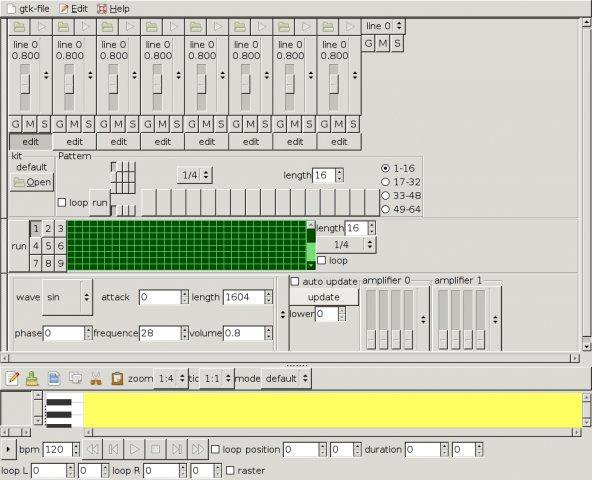
Advanced GTK+ Sequencer is intended to use for music composition. It features a piano roll, as well a synth, matrix editor, drum machine, soundfont2 player, mixer and an output panel.
It’s designed to be highly configurable, you may add effects to its effect chain, add or remove audio channels/pads.
You may set up a fully functional network of engines, therefore exists a link editor for linking audio lines.
In conjunction with AGS you need a realtime kernel and alsa support. `ags` uses conditional locks to keep several threads in sync that’s why you need at least a preemptible kernel.
Features:
save or open Advanced Gtk+ Sequencer XML files with XPath support
add or remove audio engines with adjustable audio channels and pads
link channels with property dialog
output panel, mixer, drum and matrix sequencer, soft synth and audio file player
piano roll with basic notation editing supporting copy & paste
adjustable BPM
LADSPA, DSSI and Lv2 support
export to WAV, FLAC, OGG and others
multiple sinks like Pulseaudio, JACK, ALSA and OSS
KXStudio is a collection of applications and plugins for Linux, Mac and Windows audio production. KXStudio also provides Debian and Ubuntu compatible repositories.
“Fluajho” (with jh as in pleasure) means fluid in Esperanto. It is a simple sf2 soundfont host/player for Linux. Behind the scenes the Fluidsynth library is at work, hence the name. .sf2 is an old file format for making MIDI signals audible through virtual instruments, although it is still in moderate use today.
Why does Fluajho exist? There are many soundfont players for Linux, most of them even based on Fluidsynth. Fluajho was written for a clearly defined use case: Load an .sf2 in the New Session Manager (Agordejo) and save the soundfont in the session directory. This makes it possible to archive the session, for example as a backup or to share it. You can load one soundfont file per Fluajho instance. Each instance holds 16 of the soundfonts instruments that can be assigned to 16 MIDI channels. Finally connect external sequencers, such as Laborejo, Patroneo or Vico, through JACK-Midi to play the instruments.
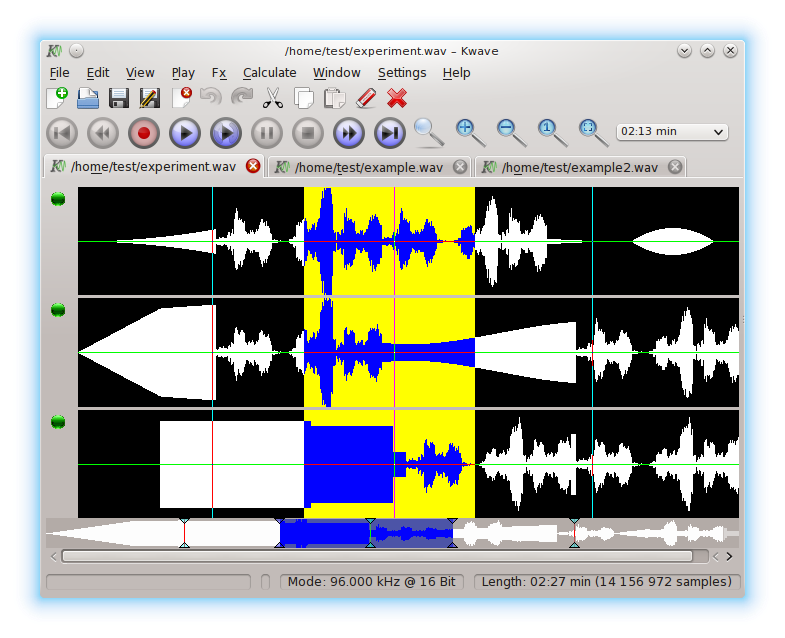
Kwave is a sound editor for the KDE environment. It is written with KDE/QT and is extendable through a powerful plugin interface. For the moment it supports .wav files and many other formats, recording/playback via PulseAudio, Qt Multimedia, OSS and ALSA and some simple effects.