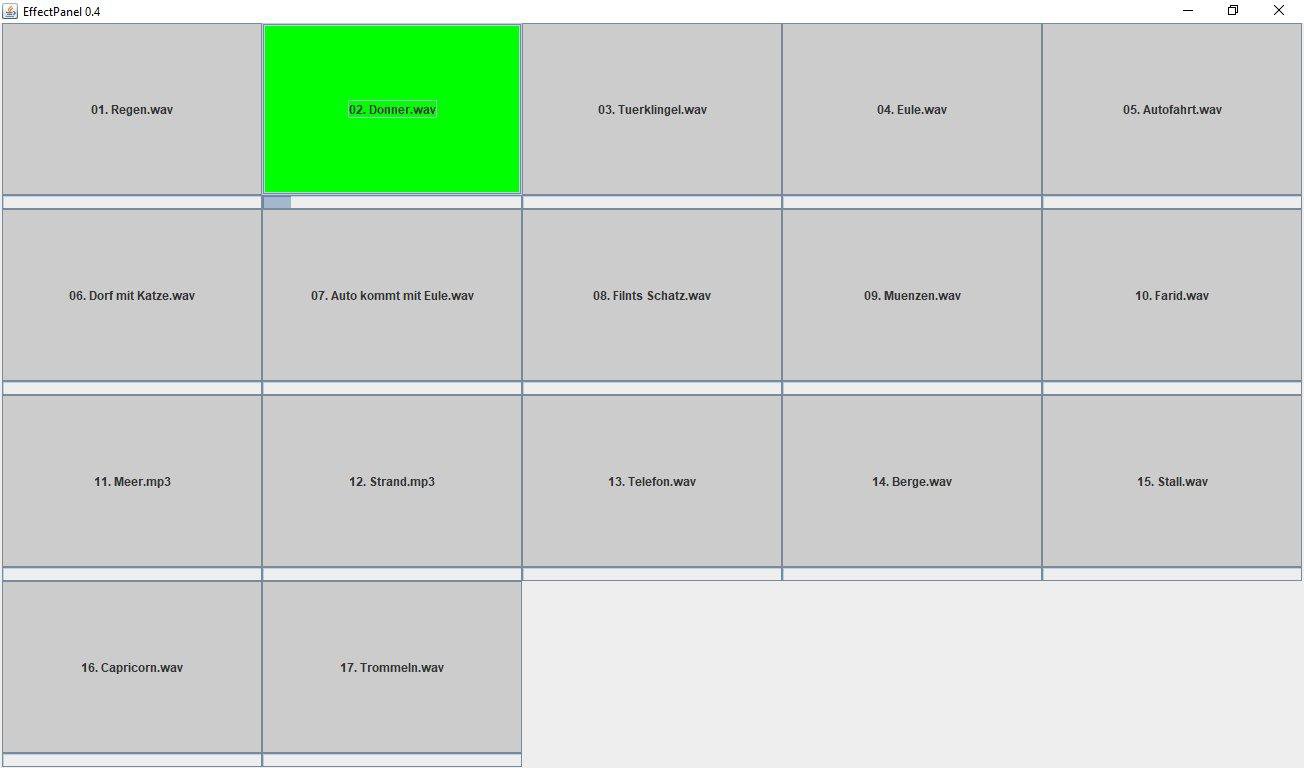
Theater Effect Panel (EffectPanel) is small open source software used to play sounds during live performances. You can use this program for free and it can be used with a mouse, a touch panel or over a midi interface with a keyboard or a button pad.

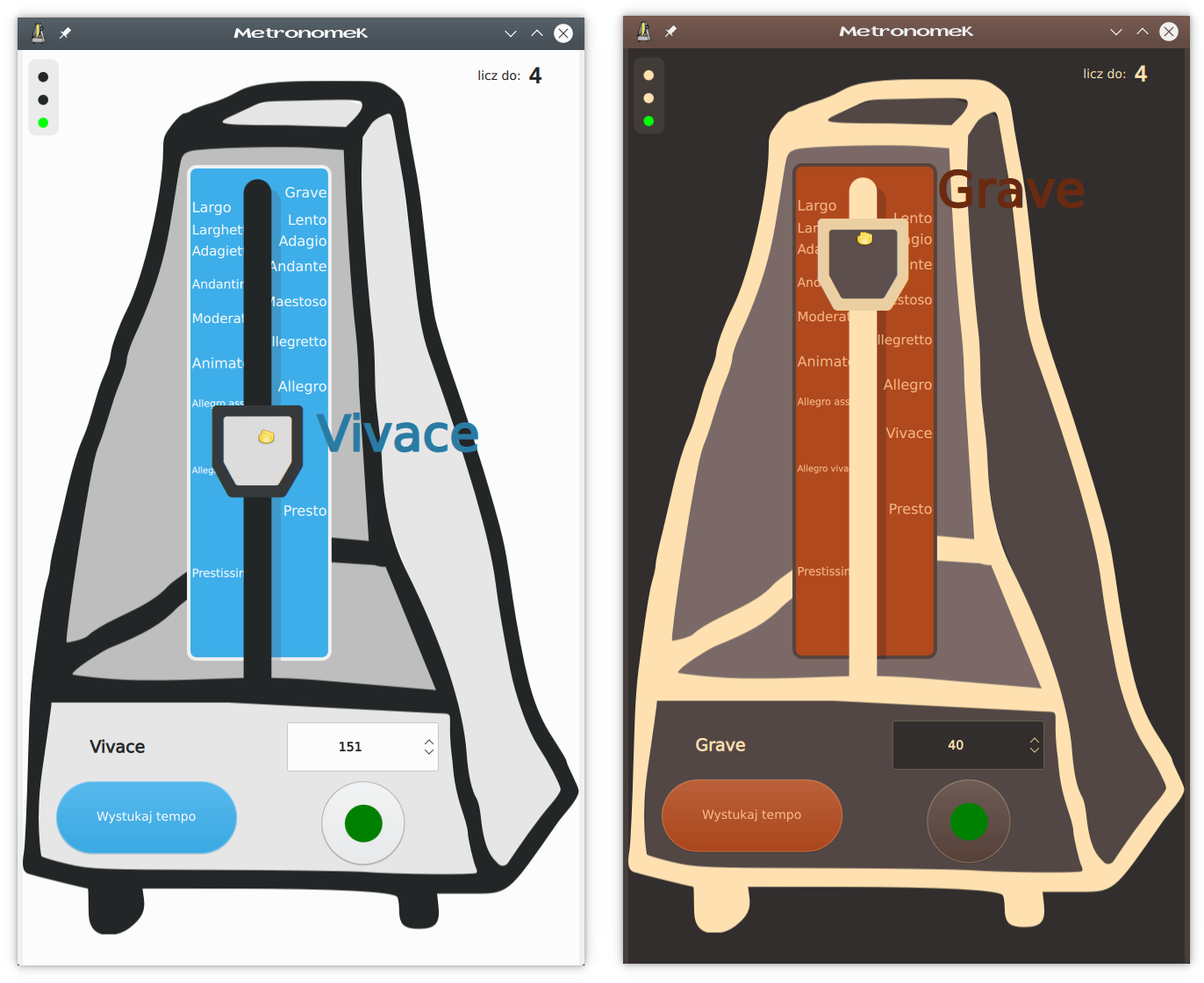
Trivial looking metronome with natural sounds and ‘classical’ approach.

metronomek.sourceforge.io
sourceforge.net/projects/metronomek
github.com/SeeLook/metronomek
flathub.org/en/apps/net.sf.metronomek
This tool forwards audio from an Android 10 device to the computer. It does not require any root access. It works on GNU/Linux, Windows and macOS.
The purpose is to enable audio forwarding while mirroring with scrcpy. However, it can be used independently.
Moosic is a music player for Unix systems. It focuses on convenient and powerful playlist management. It consists of a server process that maintains a queue of songs to be played and one or more client programs which sends commands to the server. The server continually runs through its song queue, popping songs off the top of the list and playing each with an external program. The client is a simple command-line utility which allows you to easily perform powerful operations upon the server’s queue, including the addition of whole directory trees, automatic shuffling, and song removal according to regular expressions. The server comes configured to play MP3, Ogg, MIDI, MOD, and WAV files, but can be configured to also play any other file format you want.
An open-source lyrics plugin for foobar2000 that includes its own UI panel for displaying and sources for downloading lyrics that are not available locally. It is intended to be a replacement for LyricShowPanel3 so it is fully-featured and supports lyric searching, saving and editing directly from within foobar2000.
github.com/jacquesh/foo_openlyrics
www.foobar2000.org/components/view/foo_openlyrics
hydrogenaud.io/index.php?topic=120812.0
www.reddit.com/r/foobar2000/…/i_made_an_opensource_alternative_to
A GTK2/GTK3 interface to MPlayer. The power of MPlayer combined with a friendly interface for your desktop; You can play all your multimedia (audio, video, CD, DVDs, and VCDs, streams etc.), organize, sort and create playlists, take screenshots while playing videos, be notified about media changes. Full DVD and MKV chapter support, when supported by Mplayer. Subtitle support with the ability to specify preferred audio and subtitle languages if the media supports it. Support for cover art retrieval from Amazon.com for audio media files with artist and/or album information contained in the file.
AudioMass lets you record, or use your existing audio tracks, and modify them by trimming, cutting, pasting or applying a plethora of effects, from compression and paragraphic equalizers to reverb, delay and distortion effects. AudioMass also supports more than 20 hotkeys combinations and a dynamic responsive interface to ensure ease of use and that your productivity remains high. it is written solely in plain old-school javascript, weights approximately 65kb and has no backend or framework dependencies.
flactag is a tagger for whole-album FLAC files with embedded CUE sheets, that retrieves data from the MusicBrainz service.
https://sourceforge.net/projects/flactag/

Chrome Music Lab is a website that makes learning music more accessible through fun, hands-on experiments.
Many teachers have been using Chrome Music Lab as a tool in their classrooms to explore music and its connections to science, math, art, and more. They’ve been combining it with dance and live instruments. Here’s a collection of some uses we’ve found on Twitter.
Yes. Check out the Song Maker experiment, which lets you make and share your own songs.
Nope. Just open any experiment and start playing.
All our experiments are all built with freely accessible web technology such as Web Audio API, WebMIDI, Tone.js, and more. These tools make it easier for coders to build new interactive music experiences. You can get the open-source code to lots of these experiments here on Github.
You can play with these experiments across devices – phones, tablets, laptops – just by opening the site on a web browser such as Chrome.
mypiano_jukebox is a mypiano_chung bass.dll based MIDI jukebox, MIDI files & folder player with a virtual acoustic piano recorded on Isabelle’s upright piano, with a smartphone. The sounds, reverb, chorus and volume are variable with the number of played notes and the sustain switch, just like a real piano.
What sets this frontend for ffmpeg apart from other stereo simulators is it creates an illusion of actual stereo separation. More importantly, it produces none of the weird phasing, and/or time delay artifacts. And very little, if any of the tone discoloration, when those others aren’t meticulously set up just right. All this is accomplished by using the ffmpeg crossover audio filter to split the sound into 8 frequency bands. The split points are based on center frequencies of a typical 1/3 octave equalizer. Those 8 bands are then panned in varying degrees to left and right. The varying width of each band is set to achieve the best balance between the left and right channels.