Protoplug ~ Scriptable Audio Plugins


Create audio plugins on-the-fly with LuaJIT.

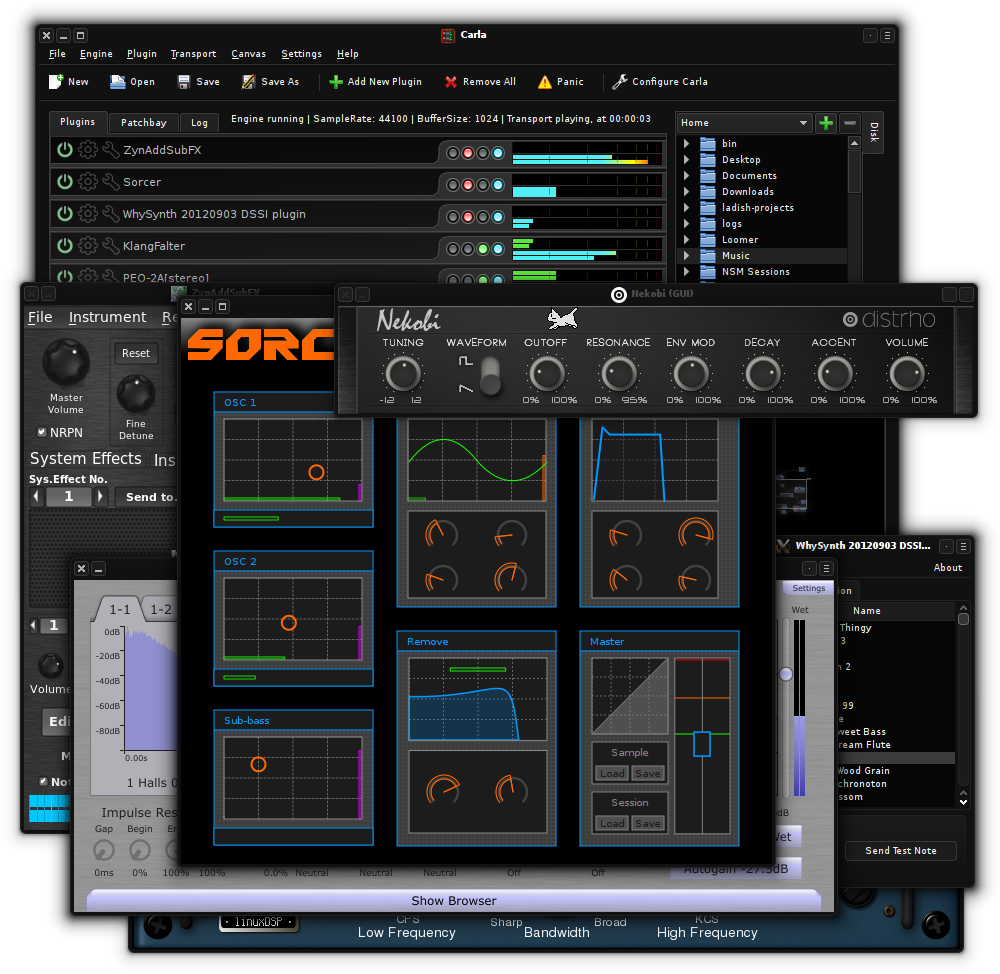
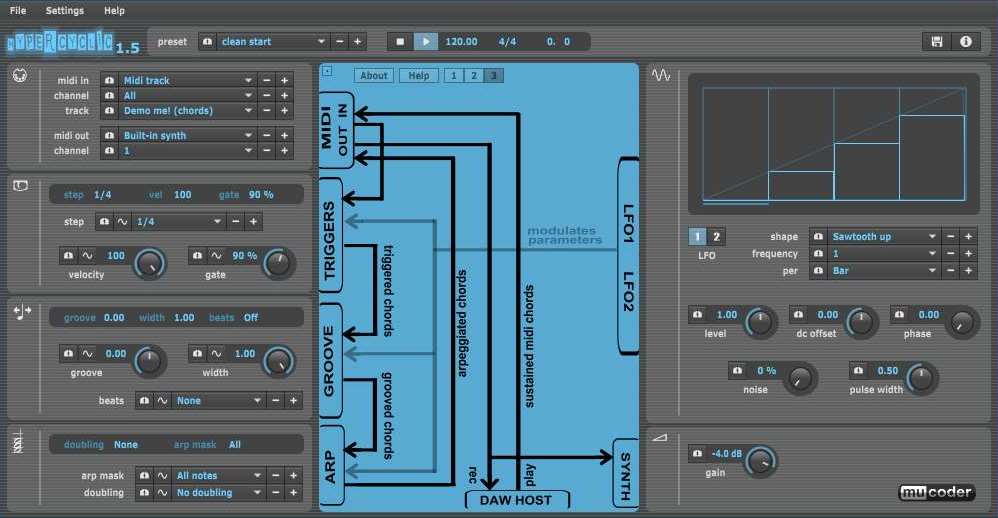
Protoplug is a VST/AU plugin that lets you load and edit Lua scripts as audio effects and instruments. The scripts can process audio and MIDI, display their own interface, and use external libraries. Transform any music software into a live coding environment!

Cross-platform: builds for Windows, Mac OS X and Linux. This means that all protoplug scripts are compatible with these platforms and can be loaded into a huge amount of audio software (glory to JUCE).

Fast: Use the speed of LuaJIT, and perform DSP tasks as efficiently as old school C implementations.

Free and open source: Want a new feature? Add it yourself. The source is MIT-licensed and available on Github.

protoplug_example_5-6

www.osar.fr/protoplug
github.com/pac-dev/protoplug

Open Metronome ~ Customizable Windows BPM


Free open source GPL metronome (a “branch” of “Weird Metronome“) for Windows, Windows Mobile, & Pocket PC. Uses user-definable multi-voice WAV or MIDI (PC only) sounds for the beats. Has a blinker & allows user defined bpm & fine measure control.

Features:

  • Accurate metronome sound! No skips or variation in audio output!
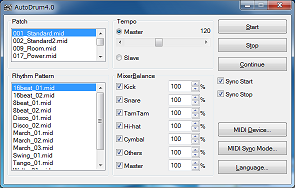
  • Custom rhythm patterns: use it as a (very basic) drum machine
  • User definable beats per minute
  • Set measure to any length, with emphasis on any beat(s)
  • Over 40 MIDI voices, optionally available as WAV samples
  • Up to nine simultaneous voices per beat
  • Add your own WAV samples to use whatever sounds you like
  • Highly customizable parameters
  • Define HotKeys to perform functions such as increase tempo
  • Set the Maximum & minimum tempo available via the tempo slider
open metronome

openmetronome.sourceforge.net
sourceforge.net/projects/openmetronome

PyKaraoke ~ Cross-platform Karaoke Player


PyKaraoke is a free karaoke player for Linux, FreeBSD, NetBSD, Windows, OSX and GP2X.

You can use this program to play your collection of CDG, MIDI and MPEG karaoke songs. No songs are provided, you must obtain these from elsewhere.

Visit here to find out more about what a CDG or MP3+G file is. In short, CDG is the format of professional karaoke CDs. These CDs can be ripped to your hard disk, and turned into a .mp3 file together with a .cdg file. This player gives you the ability to play those mp3+cdg files.

PyKaraoke Features:

  • CDG (MP3+G, OGG+G, WAV+G) playback – Play standard CDG karaoke files
  • MIDI (.MID/.KAR) playback – Play MIDI format karaoke files
  • MPEG playback – Play karaoke songs and movies in MPEG format
  • Other formats – Play any other video formats by launching an external media player
  • Playlist – Queue up songs, sit back and enjoy
  • Searchable song database – Easily find your songs from the main screen
  • Search inside ZIP files – Play MP3+G/MIDI files wrapped in ZIP files
  • Cross-platform – Runs on Windows, Linux, BSD, OSX and GP2X
  • Mini Frontend – Additional mini-frontend for low res displays and handhelds
  • Export to MPEG – Convert CDG and KAR files to MPG files (command line only)

www.kibosh.org/pykaraoke
sourceforge.net/projects/pykaraoke

Common Music ~ Algorithmic Music Composition


Common Music (CM) is a real-time music composition system implemented in JUCE/C++ and Scheme. It generates musical output via MIDI, OSC, CLM, FOMUS and CSOUND. Its user application is called GRACE (Graphical Real-time Algorithmic Composition Environment)

Features:

  • Algorithmic music composition environment
  • Runs on Mac, Windows and Linux
  • Real time scheduling of musical algorithms
  • Two coding languages for designing algorithms: S7 Scheme and SAL (an easy-to-learn alternate)
  • MIDI input/output
  • CLM/Sndlib audio system built in (Scottstaedt)
  • CCRMA digital audio instrument definitions built in (Scottstaedt)
  • Open Sound Control input/output
  • Metronomes and running algorithm redefinition for live coding
  • Data visualization
  • Music pattern definitions
  • Fomus system built in for computing music notations (Psenicka)

commonmusic.sourceforge.net
sourceforge.net/projects/commonmusic

PianoBooster ~ Boost Your Playing Skills


A MIDI file player that teaches you how to play the piano. PianoBooster is a fun way of playing along with a musical accompaniment and at the same time learning the basics of reading musical notation.

Features:

  • Piano Booster follows your playing when playing along to a musical accompaniment. (If you stop then so does the music).
  • Play a single hand and Piano Booster will play the other hand in time with you (and will also play the violins, the bass, the drums etc. in time with you).
  • Change the speed of playback to match your playing ability.
  • Transpose +/- 12 semitones without stopping the play back.
  • Change the Key Signature of the piece.
  • Plays any standard midi or kar file.
  • Play along to any instrument in the midi file.
  • Adjust the volume of the current part or the volume your piano part.
  • See the accuracy of you playing.
  • Change the start bar to start playing from any bar in the music. The repeat bars allows you to practice just a few difficult bars continuously.
  • Timing markers are white crosses that are drawn over each note and show if you are playing ahead or behind the beat.
  • A different instrument sound is used for the right and wrong notes that you play.
pianobooster

pianobooster.sourceforge.net
sourceforge.net/projects/pianobooster

Munt ~ Multi-platform Synthesizer


A multi-platform software synthesiser emulating (somewhat inaccurately) pre-GM MIDI devices such as the Roland MT-32, CM-32L, CM-64 and LAPC-I.

munt

munt.sourceforge.net/
sourceforge.net/projects/munt/

ANMP ~ Another Nameless Music Player


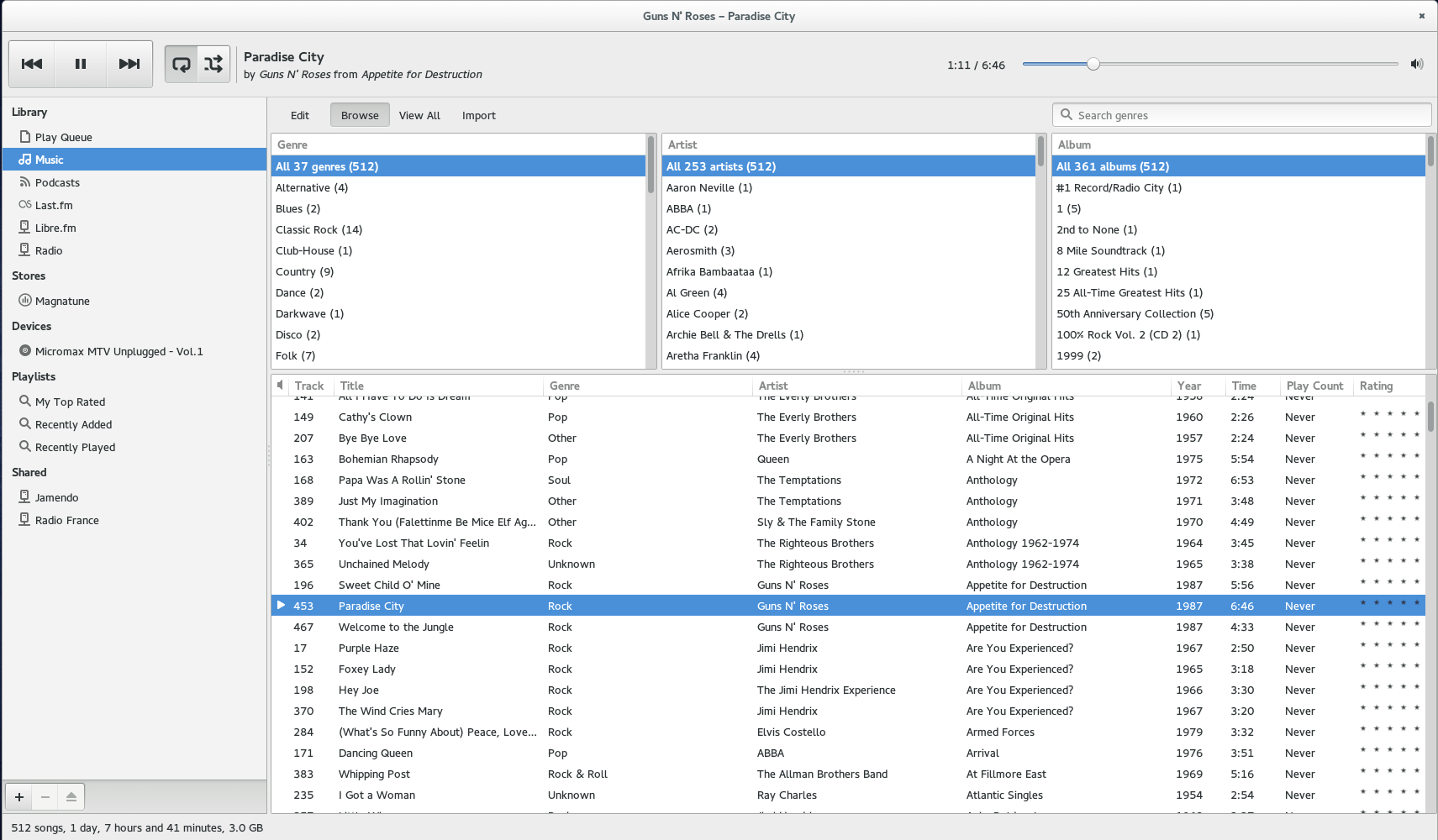
ANMP aims to be a versatile but lightweight audio player, just as the other hundred thousands out there. It is written in C++11. As being only a frontend, ANMP itself doesn’t know anything about audio formats and how to decode them. That’s why it uses 3rd party libraries to decode them. By using VgmStream, GameMusicEmu, LazyUSF and supporting looped songs natively, ANMP is esp. suited to play various audio formats from video games. Moreover it supports Looped Midi Tracks.

Main Features:

  • muting multichannel audio files
  • gapless playback (for most streamed audio formats)
  • arbitrary (forward) looping of songs (i.e. even nested loops)
  • synthesizing MIDI files using fluidsynth
  • multi-channel audio rendering
  • overlapping notes do not kill each other
  • unrolling looped MIDI tracks
  • volume response compatible to N64’s software synth
  • supports an IIR lowpass filter compatible to Rareware‘s N64 games (Conkers Bad Fur Day, Jet Force Gemini)
  • support for cue sheets
  • support for audio normalization based on EBU R 128
  • exposes basic commands via D-Bus
aimp

github.com/derselbst/ANMP

GrandOrgue ~ Virtual Pipe Organ


GrandOrgue is a sample based pipe organ simulator. When connected to MIDI keyboards and an audio system, it can accurately simulate the sound of a real pipe organ. This application has builds for Linux, Windows and OSX.

Features:

  • Play sample sets
  • GUI console
GrandOrgue

sourceforge.net/projects/ourorgan/
sourceforge.net/p/ourorgan/wiki/Home

Speedy MIDI ~ Easy MIDI Editor


Speedy MIDI is an editor designed for choirs and singers to quickly generate MIDI files for rehearsal.

Focus is on fast and easy note entry

If the quality of the sheet music is too low for scanning, Speedy MIDI is an interesting alternative to other MIDI or notation editors. Use the mouse piano for input, or an external MIDI keyboard.

Cell raster technique

Note lengths are entered in multiples of the current cell length.
Thus entering dotted notes or ties is not needed any more!
Tuplets are fully supported.

Simultaneous entry in multiple tracks

Speedy MIDI automatically distributes multiple pressed notes to multiple tracks. This helps when entering music with same rhythmic patterns in multiple voices, e.g. chorale music.

Features:

  • unlimited undo/redo
  • part extraction
  • rehearsal markers (verse, chorus etc.)
  • transpose
  • adjustable playback speed
  • swing playback
  • shortcuts for all commands
  • compatible file format: Standard MIDI File (.mid)
speedymidi

speedymidi.sourceforge.net
sourceforge.net/projects/speedymidi

Frescobaldi ~ LilyPond Sheet Music Editor


Frescobaldi is a free and open source LilyPond sheet music text editor. Designed to be powerful yet lightweight and easy-to-use, Frescobaldi offers great functionality and a host of useful features such as music view with advanced two-way Point & Click, Midi capturing to enter music, a Snippet Manager and many more.

Frescobaldi is named after Girolamo Frescobaldi (1583-1643), an Italian composer of keyboard music in the late Renaissance and early Baroque period.

Features

  • Powerful text editor with syntax highlighting and automatic completion
  • Music view with advanced two-way Point & Click
  • Midi player to proof-listen LilyPond-generated MIDI files
  • Midi capturing to enter music
  • Powerful Score Wizard to quickly setup a music score
  • Snippet Manager to store and apply text snippets, templates or scripts
  • Use multiple versions of LilyPond, automatically selects the correct version
  • Built-in LilyPond documentation browser and built-in help
  • Configurable document outline view to navigate large LilyPond scores easily
  • Smart layout-control functions like coloring specific objects in the PDF
  • Import ABC, Midi and MusicXML using the LilyPond-provided tools
  • Experimental export to MusicXML
  • Modern user interface with configurable colors, fonts and keyboard shortcuts
  • Translated into: Dutch, English, French, German, Italian, Czech, Russian, Spanish, Galician, Turkish, Polish, Brazilian and Ukrainian.
Frescobaldi

sourceforge.net/projects/frescobaldi.mirror
www.frescobaldi.org

Jniz ~ Compose With Harmonies


Jniz is a free proprietary piece of software designed for musicians as a support tool to the musical composition. It allows you to build and to harmonize several voices according to the rules of classical harmony.

To be convinced of the limitations observed and of the work done by the great classical masters such as Bach, Mozart or Beethoven, please refer to Wikipedia, the Walter Piston Harmony book or the Schonberg theory.

The perfect knowledge and the good practice of these rules are not required but you will undoubtedly save time and it will help you greatly in using and understanding the mechanism of Jniz.

  • interface of musical notation which allows you to create, edit, save a score
  • number of voices up to 16 (256 with layers).
  • possibility to change of Key at any time.
  • Jnz, MusicXml, LillyPond, Midi, PDF export.
  • listen to the available Midi ports.
  • scale
  • redo / undo
  • Non harmonic tones (appoggiatura, echappee, suspension, passing, pedal, cambiata, anticipation)
  • Minor melodic keys
  • Chords notation recognition
  • harmonic correction of your work following the set of predefined rules
  • to give one or several solutions in case of fault if one or more rules are circumvented (Solver module).
  • Empty staves filled up by Solver (Auto Harmonizing)
  • Keys / modulations simulation tool
  • Cadences
  • Solvers serialization
  • multi-cores support
  • Input with Midi keyboards or microphones / input lines
  • Audio / sound to midi converter (monophonic)
  • Windows, Linux, OS X compatible (32/64 bits)
  • multi-languages support
jniz

www.jniz.org

MidiQuickFix ~ MIDI Editor & Player


MidiQuickFix allows you to directly edit the events in a Midi file. It is intended to make it easy to find and fix problems, such as setting volume and pan values for a track, without the need for a complex Midi sequencing program.

midiquickfix

midiquickfix.sourceforge.net