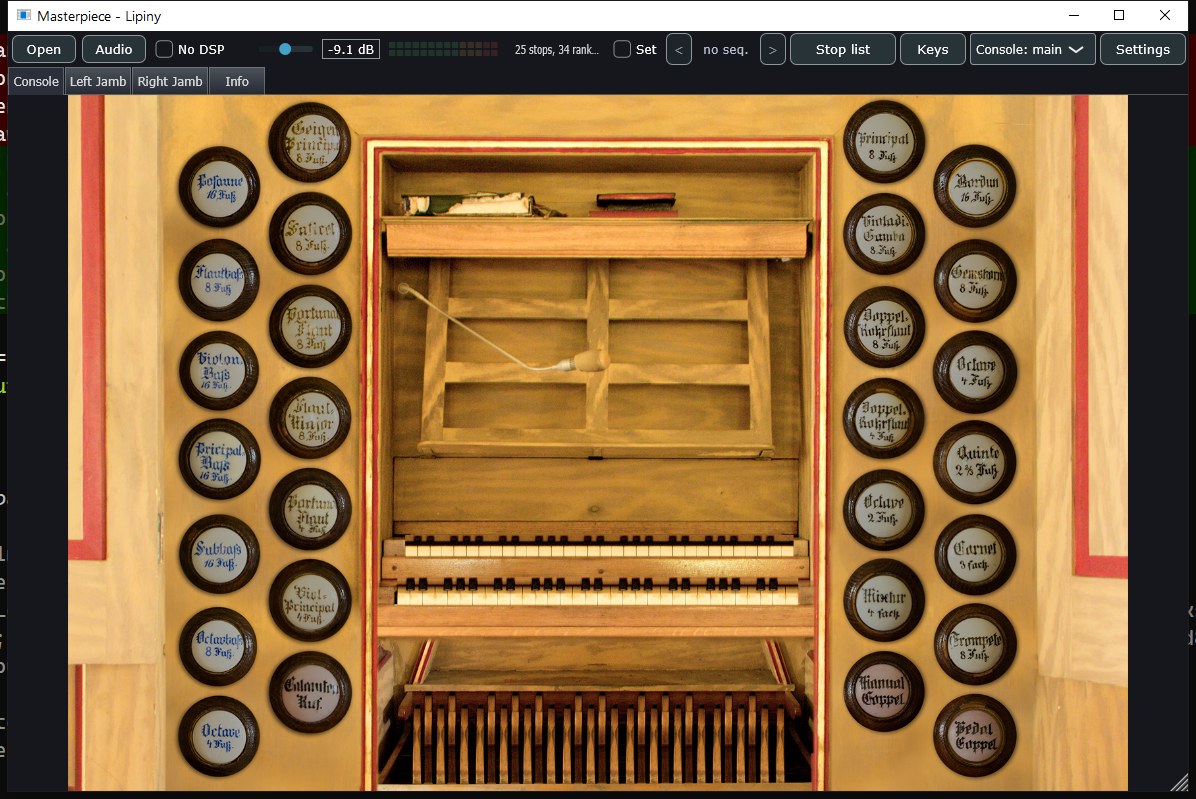
An open-source pipe organ sample player compatible with Hauptwerk sample sets.
bonninr.github.io/masterpiece
github.com/bonninr/masterpiece

An open-source pipe organ sample player compatible with Hauptwerk sample sets.
bonninr.github.io/masterpiece
github.com/bonninr/masterpiece

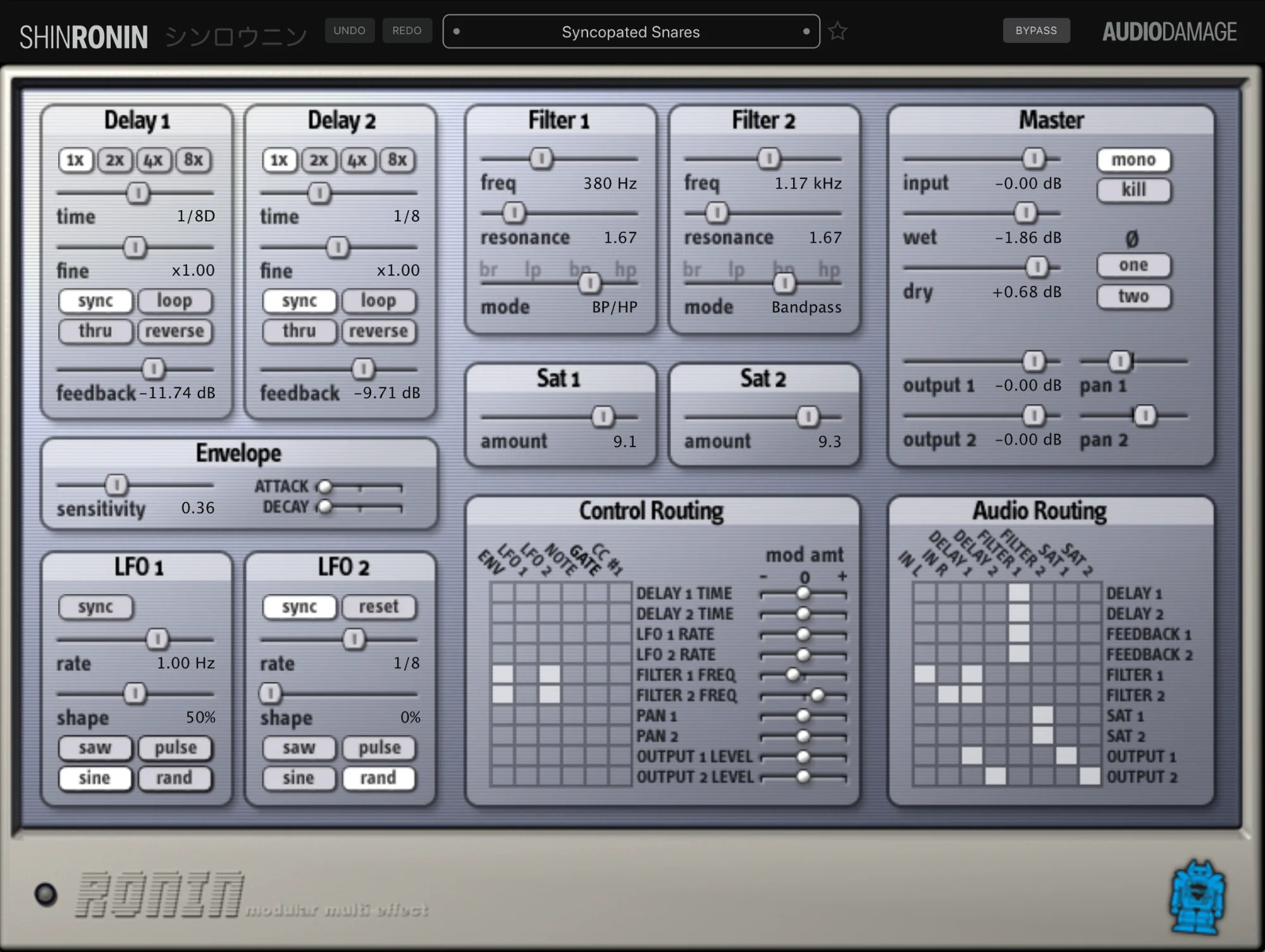
ShinRonin is a ground-up rebuild of Ronin, one of the earliest plugins we ever shipped, first released in 2003. The original paired two delay lines with a set of morphing filters and two fully patchable routing matrices, and it earned a cult following for the strange feedback networks and self-oscillating textures you could build inside it. Twenty years on, we have rebuilt it for modern systems, kept the architecture that made it worth remembering, and released it for free.
Two independent delay lines, each with tempo sync, reverse, looping, and feedback, feed a pair of morphing multimode filters that sweep continuously from notch through lowpass, bandpass, and highpass. There is saturation, two LFOs, and an envelope follower. Everything connects through two on-board matrices: a signal matrix that routes any audio source to any destination, and a modulation matrix that wires the LFOs, envelope, and incoming MIDI to nearly any parameter. It is happy doing clean stereo delays and gentle filtering, but the real fun starts when you patch a feedback loop and let it misbehave.
www.audiodamage.com/pages/shin-ronin

Native VST3 audio effects for OBS Studio on Windows — isolated plug-in hosting, vendor GUIs, automatic discovery, state restore and dry fail-open recovery.
Why this project exists
OBS Studio’s built-in VST filter does not provide VST3 hosting. Many current studio EQs, compressors, restoration tools, reverbs, saturators, limiters and mastering processors are distributed primarily, or only, as VST3s.
OBS Safe VST3 Host adds two OBS-native workflows on Windows:
- VST 3.x Plug-in — a simple one-effect filter for the common case.
- VST3 Rack — a separate isolated serial multi-effect chain with a dedicated graphical Rack Editor and broadcast-oriented master console.
Third-party VST3 runtime code, vendor editors and plug-in scanning are deliberately kept outside the OBS process.

The EAR Production Suite (EPS) is a set of VST® plugins for digital audio workstations (DAWs) that enable sound engineers to produce immersive and personalizable content using the Audio Definition Model (ADM) format and to monitor it for any ITU-R BS.2051 loudspeaker configuration using the ITU ADM Renderer. ADM is the only format available for codec-agnostic Next Generation Audio (NGA) productions. Moreover, the EAR Production Suite enables professionals to import and export ADM files, compliant to the EBU ADM Production profile. The VST® plugins are currently optimized for the Reaper DAW, which features an extension interface that is used to import and export ADM files within a BW64 container. The EAR Production Suite was designed to demonstrate the intended use of the ADM in audio production workflows, so that the standards can be adopted in other professional tools in a consistent manner.
ear-production-suite.ebu.io
github.com/ebu/ear-production-suite
adm.ebu.io
www.loc.gov/preservation/digital/formats/fdd/fdd000607
www.w3.org/2013/10/tv-workshop/papers/webtv4_submission_4
aes.org/publications/elibrary-page/?id=18430
github.com/ebu/ebu_adm_renderer
github.com/immersive-audio-live/ADM-OSC

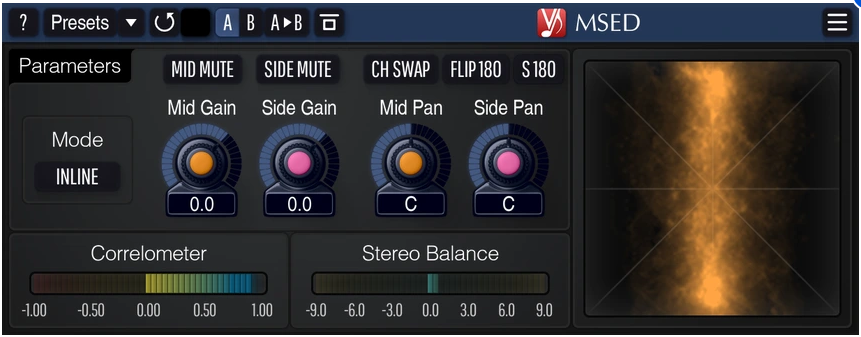
- Mid-side encoder/decoder
- Mid-side stereo widener
- Stereo imaging
- Stereo channels swapper
- 180-degree channel phase flipper
- Stereo correlation and balance meter
- Unique “plasma” vector scope
Step into a new dimension of stereo control with Voxengo MSED – a professional, no-compromise free audio mid-side encoder-decoder AudioUnit, AAX and VST plugin designed for audio engineers and creative producers alike. Whether you’re tightening a mix, widening a synth pad, or repairing phase issues, MSED gives you surgical command over the heart and soul of your stereo image.
At its core, MSED effortlessly splits any stereo track into its Mid (center) and Side (ambient) components – and seamlessly reconstructs them back. But it doesn’t stop there. With the “Inline” mode, you can adjust gain, panning, and mute status for Mid and Side channels independently without needing multiple plugin instances. That means faster workflow, cleaner routing, and zero clutter.
Need to flip phase by 180°, swap channels, or extract only the Mid or Side signal? MSED handles it instantly. And with its stunning Plasma Vector Scope, you don’t just hear the stereo field – you see it. This unique, frequency-aware visualizer places low frequencies at the outer edge and high frequencies toward the center, helping you spot phase issues, balance problems, and correlation irregularities at a glance.
Add to that stereo correlation and balance meters, zero processing latency, and 64-bit floating-point precision, and you have a lightweight yet powerful tool that fits seamlessly into any session.
Voxengo MSED isn’t just a utility – it’s your stereo scalpel. Clean. Fast. Visual. Essential.

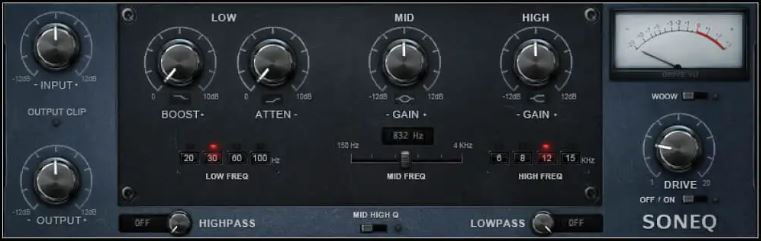
SonEQ is the ultimate analog-style equalizer for both mixing and mastering sessions. Inspired by the warmth and character of classic analog EQ units, SonEQ provides a remarkably tasteful character to the audio source.
Provides Vintage Analog Charm.
Has A User-Friendly Interface.
Offers Versatile Applications.
It’s Completely Free.Sonimus SonEQ seamlessly integrates with all major DAWs, available in VST, AU, and AAX formats.
sonimus.com/products/soneq
www.youtube.com/watch?v=_YNMrTWl0Bg
sonimus.com/music-artists-program

Dynamic Audio Normalizer is a library for advanced audio normalization purposes. It applies a certain amount of gain to the input audio in order to bring its peak magnitude to a target level (e.g. 0 dBFS). However, in contrast to more “simple” normalization algorithms, the Dynamic Audio Normalizer dynamically re-adjusts the gain factor to the input audio. This allows for applying extra gain to the “quiet” sections of the audio while avoiding distortions or clipping the “loud” sections. In other words: The Dynamic Audio Normalizer will “even out” the volume of quiet and loud sections, in the sense that the volume of each section is brought to the same target level. Note, however, that the Dynamic Audio Normalizer achieves this goal without applying “dynamic range compressing”. It will retain 100% of the dynamic range within each “local” region of the audio file.
The Dynamic Audio Normalizer is available as a small standalone command-line utility and also as an effect in the SoX audio processor as well as in the FFmpeg audio/video converter. Furthermore, it can be integrated into your favorite DAW (digital audio workstation), as a VST plug-in, or into your favorite media player, as a Winamp plug-in. Last but not least, the “core” library can be integrated into custom applications easily, thanks to a straightforward API (application programming interface).
github.com/lordmulder/DynamicAudioNormalizer

Dive into DelaySon, a meticulously crafted plugin that captures the soulful warmth and organic character of vintage tape delay units. Its carefully designed emulation delivers an authentic analog sound, inspired by the timeless charm of classic echo machines.
Its intuitive interface and versatile controls make it simple to achieve stunning results, from subtle tape warmth to intricate rhythmic echoes, with unmatched precision and musicality.

A monorepo for Casio CZ-101 phase distortion synthesis — including a preset manager web/desktop app, an in-browser phase distortion synthesizer, and a VST3/CLAP/AUv2 plugin.

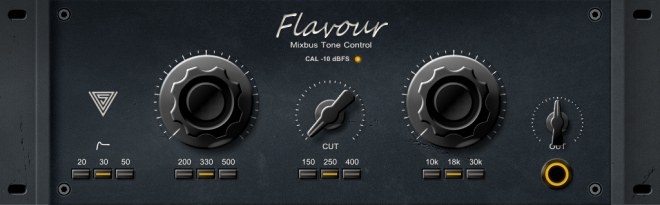
FlavourMTC follows classic “passive” equalizer designs where the EQ circuits itself are not able to amplify signals but a dedicated amplifier stage takes care of it. Those EQ designs are well known for allowing very transparent frequency changes while their amplifier designs do add some icing on the cake quite often.
FlavourMTC implements this by utilizing 1st order shelving filter designs avoiding unwanted resonances and takes advantage of “zero delay” implementations for most accurate higher order filtering and w/o introducing curve warping near Nyquist frequency. The output amplifier stage of the plugin can be calibrated according specific mixing levels, provides a distinct “box tone” and glues everything together. Parts of the plugin are oversampled internally for maximum transparency and sound quality.
varietyofsound.wordpress.com/downloads

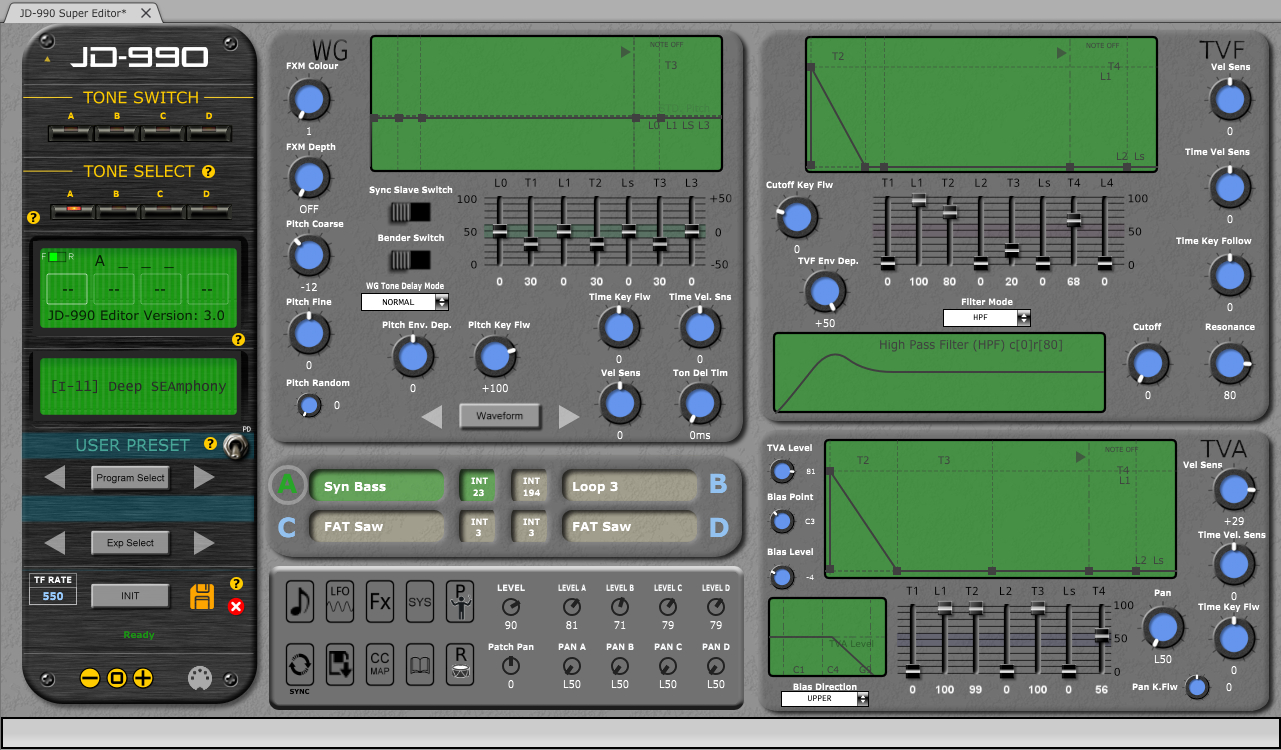
CtrlrX based editor for Roland SUPER JD SYNTHESIZER MODULE JD-990
sourceforge.net/projects/jd990-super-editor
github.com/RomanKubiak/ctrlr

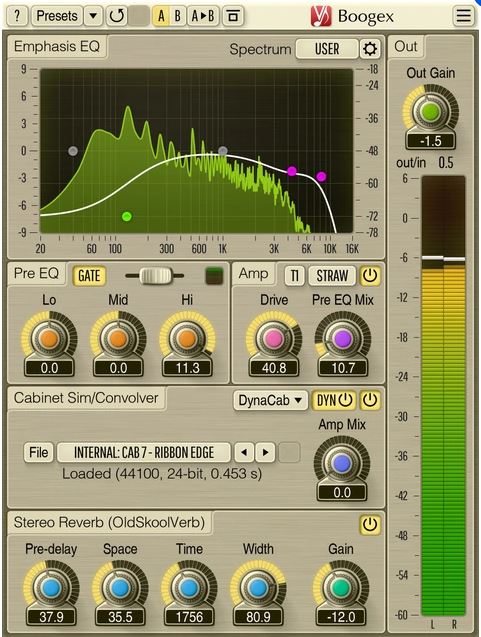
Boogex is a free guitar amplifier AudioUnit, AAX, and VST plugin with a variety of sound shaping features, for professional sound and music production applications. With Boogex it is possible to get a heavy distorted sound as well as slight “jazzy” saturation sound. Boogex is able to apply convolution with any speaker cabinet impulse response (selection of built-in impulses is available). The processing latency is close to zero making it possible to use Boogex for real-time guitar processing.
Boogex can be used as a plain stereo convolution processor when its “Amp” stage is turned off. The convolver module has zero latency and is not CPU-demanding. Boogex also includes the input gate module, and reverberation module derived from Voxengo OldSkoolVerb reverb plugin.
Boogex produces a nice “minimalist” rock music-geared sound which may be a bit noisy at higher overdrive settings; higher frequencies can be easily suppressed with its built-in Emphasis EQ. With the amp modes Boogex currently provides, it is not particularly well-suited for metal music, but can still be used as a cabinet impulse response processor for metal music.
www.voxengo.com/product/boogex


