This library can read SF2 SoundFont files and render audio samples from them in real-time. It properly reads in a compliant SF2 file and can be used to obtain meta data such as preset names. It also has an audio rendering engine that can generate audio samples for key events that come from (say) a MIDI keyboard. This library is currently being used by my SoundFonts and SoundFontsPlus applications for SF2 file parsing and, in the latter app, as the sample generating engine.
Although most of the library code is generic C++17/23, there are a few bits that expect an Apple platform that has the AudioToolbox and Accelerate frameworks available. The goal is to be a simple library for reading SF2 files as well as a competent SF2 audio renderer whose output can be fed to any sort of audio processing chain, but it would probably take some effort to remove it from the Apple ecosystem.
Discord has many unwanted rate limits, especially in the audio area. This package does all the work and ensures that your music never stops playing due to ffmpeg or Discord, with as little effort as possible.
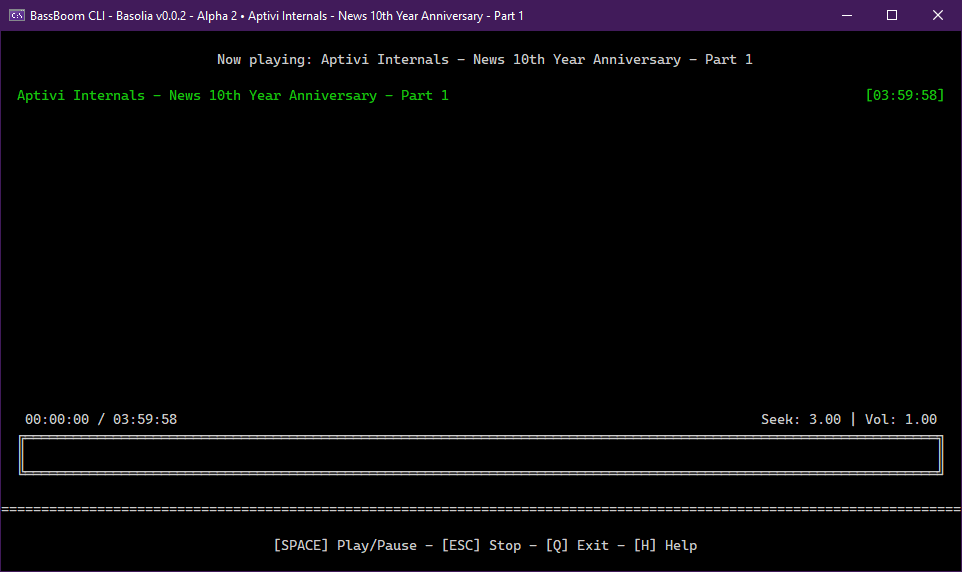
BassBoom is a music player made with C# using the fast mpg123 library as the native backend that handles the music playback and song information, including the playback device information.
This library is a viable library aimed for cross-platform music playing because we’ve selected mpg123 as the MP3 backend library for its ease of use and for its fast music playback. This library is frictionless as it aims for stability and cross-platform compatibility.
In addition to your regular music files, BassBoom also supports online MPEG radio stations that you can use to play your own favorite radio stations, as long as they don’t use AAC or any other codec that BassBoom doesn’t support.
Zoog is a Rust library that consists of functionality that can be used to determine the loudness of an Ogg Opus file and also to rewrite that file with new internal gain information as well as loudness-related comment tags. It also has functionality for purely manipulating comment tags of both Ogg Opus and Ogg Vorbis files.
Zoog currently contains two tools, opusgain and zoogcomment. opusgain can be used to:
set the output gain value located in the Opus binary header inside Opus files so that the file plays at the loudness of the original encoded audio, or of that consistent with the ReplayGain or EBU R 128 standards.
write the Opus comment tags used by some music players to decide what volume to play an Opus-encoded audio file at.
It is intended to solve the “Opus plays too quietly” problem.
Benihora is a Rust library and VST Plugin that generates voice based on a vocal tract model. This is a Rust port of Pink Trombone developed by Neil Thapen with some customizations.
When you first install Foobar2000, you’ll need to set up the Media Library. The library function monitors your music folders and allows you to access and manage your audio files. The better the accuracy of the filenames and the metadata, the more accurate the library catalog functions will work. You only need to add the main top folder. You can also add additional main folders in other locations.
File > Preferences > Media Library > Music Folders > Add…
Adding audio files to your Music folder will automatically be included into your library. You can also directly point Foobar2000 to new folders or files via the Files menu.
TagLib is a library for reading and editing the meta-data of several popular audio formats. Currently it supports both ID3v1 and ID3v2 for MP3 files, Ogg Vorbis comments and ID3 tags and Vorbis comments in FLAC, MPC, Speex, WavPack, TrueAudio, WAV, AIFF, MP4 and ASF files.
AudioRanger is a powerful and versatile music tagger designed to automatically identify and organize your digital music collection.Runs on Windows and Mac. Feature-rich free version available. (Has limits)