Protoplug ~ Scriptable Audio Plugins


Create audio plugins on-the-fly with LuaJIT.

Protoplug is a VST/AU plugin that lets you load and edit Lua scripts as audio effects and instruments. The scripts can process audio and MIDI, display their own interface, and use external libraries. Transform any music software into a live coding environment!

Cross-platform: builds for Windows, Mac OS X and Linux. This means that all protoplug scripts are compatible with these platforms and can be loaded into a huge amount of audio software (glory to JUCE).

Fast: Use the speed of LuaJIT, and perform DSP tasks as efficiently as old school C implementations.

Free and open source: Want a new feature? Add it yourself. The source is MIT-licensed and available on Github.

protoplug_example_5-6

www.osar.fr/protoplug
github.com/pac-dev/protoplug

ISSE ~ Interactive Source Separation Editor


In applications such as audio denoising, music transcription, music remixing, and audio-based forensics, it is desirable to decompose a single-channel recording into its respective sources. To perform such tasks, we present a new software tool to perform source separation by painting on time-frequency visualizations of sound. Initial results shows the software can achieve state-of-the-art separation results compared to prior work.

Features:

  • Source separation
  • Denoising
  • Painting
  • Interaction

http://sourceforge.net/projects/isse

Balabolka ~ Text To Speech


Balabolka is a Text-To-Speech (TTS) program. All computer voices installed on your system are available to Balabolka. The on-screen text can be saved as a WAV, MP3, MP4, OGG or WMA file. The program can read the clipboard content, view text from documents, customize font and background colour, control reading from the system tray or by the global hotkeys.

www.cross-plus-a.com/balabolka

Cover Retriever ~ Album Artwork Downloader


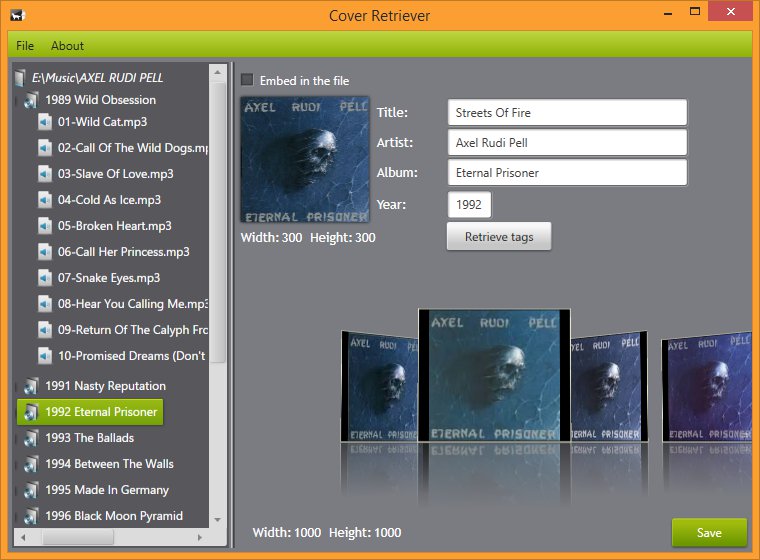
Cover Retriever is free software for Windows that makes it easy to add album cover art to mp3 and flac audio files on the computer.

Album cover finder

The search is based on data obtained from the file tags and processing through Google’s search engine. The drill is as easy as can be: you just have to select the folder that contains your audio files and let this app take care of the rest. You’ll have your covers in just seconds.

Tag finder

The tags search allows you to fill out audio file tags and find appropriate covers. The tags can be easily saved to the file by clicking one button. The search is based on the AcoustId service in order to get the best results.

cover retriever

dimkov.org
github.com/adimkov/coverretriever
sourceforge.net/projects/coverretriever

Jalmus ~ Improve Music Reading


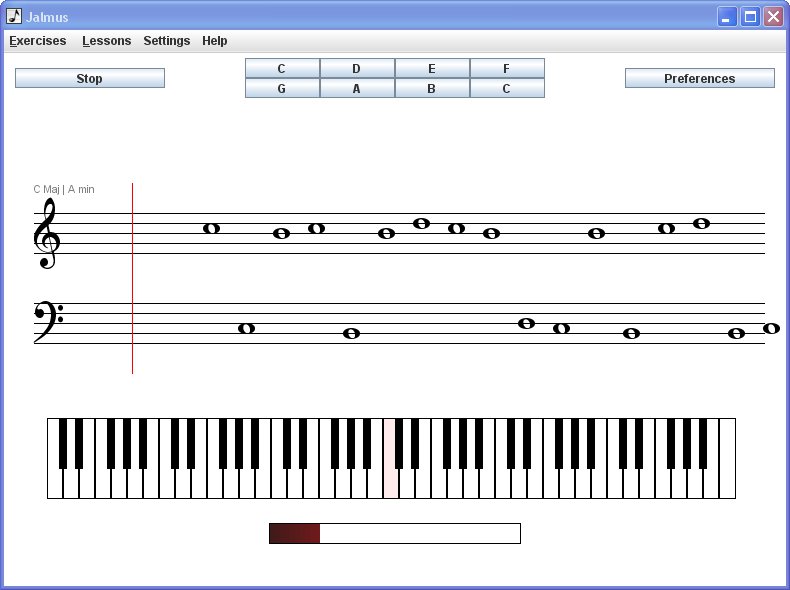
Jalmus is a free, open source music education software helping musicians, especially pianists, to improve their sight-reading. You can train to read music with both exercises on notes or rhythms.

jalmus

sourceforge.net/projects/jalmus

Nootka ~ Learn Classical Score Notation


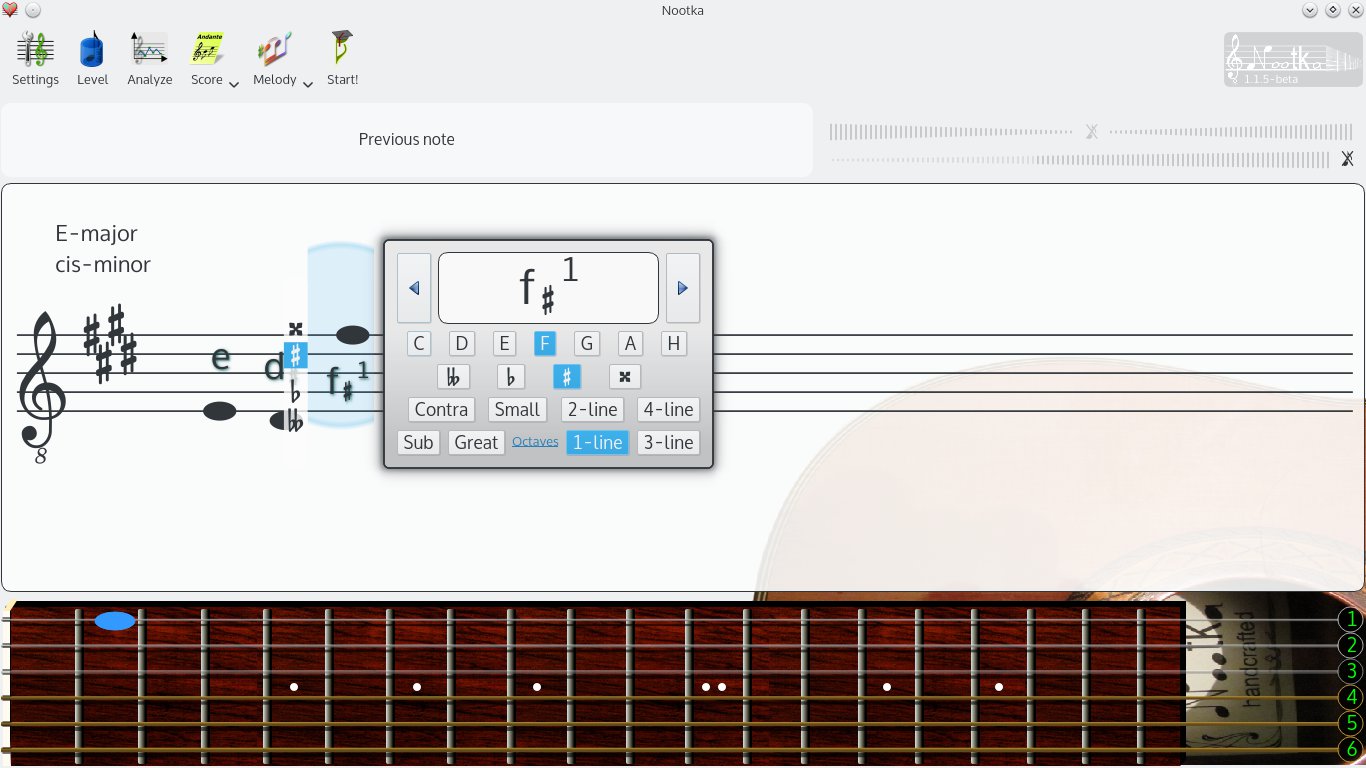
Nootka is an application to help learn classical score notation. It helps in understanding the rules of reading and writing scores and helps with developing skills of playing and singing notes.

Simply: users looks at piece of a score, plays it, while Nootka is listening to it, checks and shows was it played well. All in real time.

Features:

  • interactive interface to discover the rules of musical notation
  • exercises with possibility to create own sets
  • accurate method for detecting sung and played sounds
  • natural sound of guitars
  • clefs (treble, bass and others) and grand staff
  • analysis of results
  • different kinds of guitars and their tuning
Nootka

nootka.sourceforge.io
sourceforge.net/projects/nootka

Free CODECS ~ Online Repository


http://www.free-codecs.com
http://www.free-codecs.com/audio_codecs

foo_dsp_delta ~ Foobar2000 Noise Sharpening


A digital signal processor that makes dull songs sound sharper, as in brighter.

Strictly speaking, nobody really needs this DSP. It’s just that some people like the effect. If you want to compensate deficiencies in your playback equipment or listening environment, the convolver or the equalizer are more appropriate tools. ~ HA post

There are four interrelated DSPs enclosed, only use the last one, Noise Sharpening.

Noise sharpening can/should be used alone. ~ HA post

http://foosion.foobar2000.org/components/?id=delta

foo_dsp_xover ~ Foobar2000 Digital Crossover


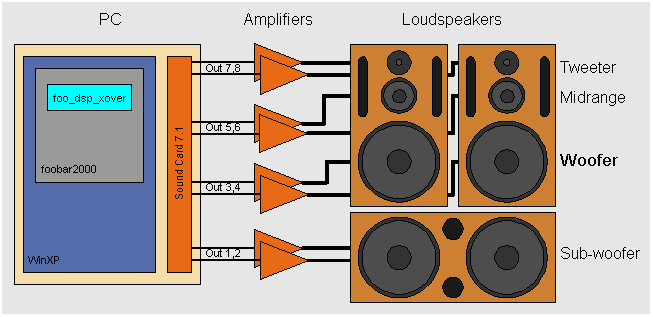
foo_dsp_xover is a software digital crossover implementation that I have been working on for a while in my spare time as a hobby. It is a Foobar2000 audio player plugin that implements this digital crossover to achieve active multi-amplification.

This software needs to run on a WinXP PC equipped with a multi-channel sound card (e.g. 5.1 or 7.1 surround sound card) feeding the various voices of a multi-amplifier and loudspeaker active configuration set-up.

foo_dsp_xover

xover.sourceforge.net
sourceforge.net/projects/xover

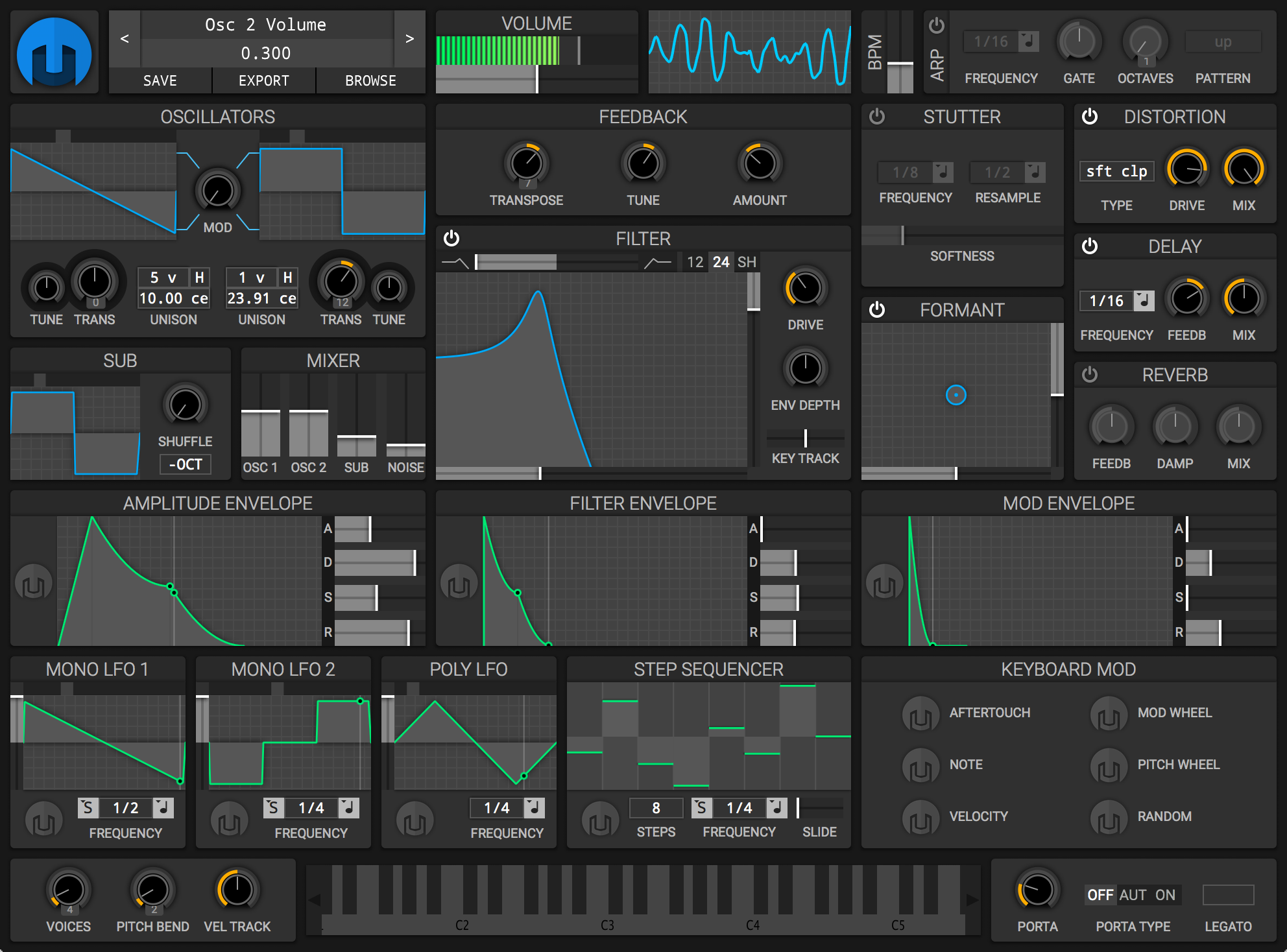
Helm ~ Open Source Synthesizer


Helm runs in GNU/Linux, Mac OSX and Windows. Run Helm as a standalone synthesizer or as an LV2, VST, VST3 or AU plugin. Comes in both 32-bit and 64-bit versions.

helm_screenshot

tytel.org/helm

CAPS ~ C* Audio Plugin Suite


CAPS is a collection of audio plugins comprising basic virtual guitar amplification and a small range of classic effects, signal processors and generators of mostly elementary and occasionally exotic nature.

The plugins aim to combine the highest sound quality with computational efficiency and zero latency*.

quitte.de/dsp/caps

lossyWAV ~ Lossy PCM In WAV File Format


lossyWAV is a freelossy pre-processor for PCM audio contained in the WAV file format. Proposed by David Robinson, it reduces bit depth of the input signal, which, when used in conjunction with certain lossless codecs, reduces the bitrate of the encoded file significantly compared to unpreprocessed compression. lossyWAV’s primary goal is to maintain transparency with a high degree of confidence when processing any audio data. ~ wiki.hydrogenaud.io/index.php?title=LossyWAV

lossyWAV is a near lossless audio processor which dynamically reduces the bit depth of the signal on a block-by-block basis. Bit Depth reduction adds noise to the processed output. The added noise is adaptively shaped by default and can alternatively be fixed noise shaped or white noise depending on command line parameters. When lossyWAV processed output is compressed with certain lossless codecs (FLAC, Wavpack, Tak, LPAC, MPEG-4 ALS and WMA-Lossless) the bitrate of the output file is significantly[1] reduced compared to the lossless original.

[1]: on average, depending on content.

hydrogenaud.io/index.php/topic,112649
wiki.hydrogenaud.io/index.php?title=LossyWAV#lossyWAV_and_foobar2000
github.com/corrideat/lossywav
github.com/MoSal/lossywav-for-posix