Bitfake2 ~ Audio Tool Handler & Manipulator


Bitfake was originally created to detect fake .FLAC files through spectral analysis. It has since grown into a multipurpose CLI tool for handling music more easily and efficiently.

One common problem was that getting a track’s metadata required long ffprobe commands with messy output. Converting music with ffmpeg was also repetitive. The command itself is easy to remember, but writing scripts to convert entire directories felt inefficient and slow. This project now performs metadata and conversion tasks directly through linked libraries (TagLib/libsndfile/libav*).

Features:

  • Get metadata
  • Get ReplayGain info (useful for music players)
  • Spectral analysis on 44.1 kHz .FLAC files (higher sample rates may be misrepresented, so be careful)
  • Lossy diagnosis (banding score)
  • File Conversion + VBR Support (Works for outputs like .wav, .flac, .ogg, .mp3, .aac, .opus)
  • Tagging metadata (Works for single files, but not directories yet)
  • Calculating ReplayGain and applying it to files (Works for track replay gain iterating through directories, album replay gain is a bit funky?)
  • Directory Conversion (works for all previously mentioned formats!)
  • CoverArt+ (Brings along cover art among all conversions!)
  • Organizing Files by album! (Give a dir of random music, and bitfake will organize it – ty to uncognic)
  • Directory Tagging (YAY!)
  • Album folder renaming from tags (Artist – Album (Year))
  • Spectrogram generation (in .png)
  • Version info (WOW! BEST YET!)
  • MusicBrainz Syncing data.

github.com/Ray17x/bitfake2
gpo.zugaina.org/app-misc/bitfake2
repology.org/maintainer/ray%40atl.tools/feed-for-repo/gentoo_ovl_guru

RxFFmpeg ~ Android Development Framewok


RxFFmpeg is a high-performance multimedia processing framework built on top of FFmpeg and optimized specifically for Android environments, enabling developers to perform complex audio and video editing operations programmatically. It integrates widely used encoding libraries such as x264, mp3lame, and fdk-aac, allowing it to support a broad range of media formats and transformations. The framework provides a wrapper around FFmpeg commands, making it easier to execute advanced media operations without directly handling low-level command syntax. It supports both synchronous and asynchronous execution, enabling developers to manage long-running media tasks efficiently within mobile applications. The system also includes features like hardware acceleration through MediaCodec, significantly improving performance on supported devices. Its design focuses on flexibility, allowing users to perform tasks such as transcoding, clipping, filtering, and compositing media with minimal overhead.

Features:

  • Callback system for tracking execution progress
  • Execution of FFmpeg commands through a simplified interface
  • Support for synchronous and asynchronous media processing
  • Hardware acceleration using MediaCodec
  • Wide range of video and audio editing capabilities
  • Integration with multiple encoding libraries

github-com.translate.goog/microshow/RxFFmpeg
sourceforge.net/projects/rxffmpeg.mirror

Winamp ASIO ~ ASIO & SRD Resampler


Further development of the ASIO output module by otachan (2006) for the Winamp player, including:

  • problem with setting the sample rate fixed
  • gapless mode completed
  • added individual channel assignment
  • added upsampling to a non-fractional multiple of base-frequency
  • added high quality resampler: sample rate doubler for best audio playback

winamp-asio-plugin.sourceforge.io
sourceforge.net/projects/winamp-asio-plugin
forums.winamp.com/forum/winamp/winamp-technical-support/4647216-asio-output-plugin

discogs-cli ~ Discogs Terminal Access


discogs-cli bring the Discogs.com database to your terminal. Perform the following actions from your terminal:

  • Search artists, releases, labels
  • View artist information and their releases
  • View label details and its associated releases
  • View a release in detail

github.com/jesseward/discogs-cli

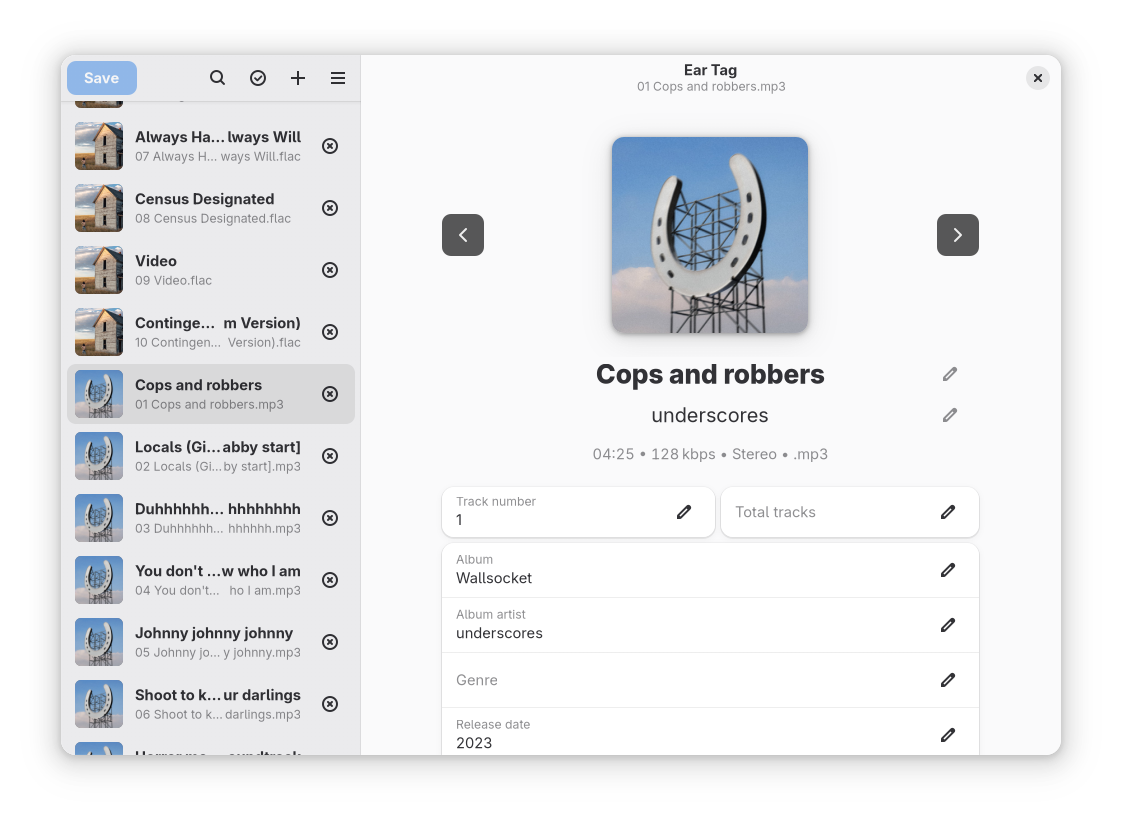
Ear Tag ~ Edit Audio File Tags


Ear Tag is a simple audio file tag editor. It is primarily geared towards making quick edits or bulk-editing tracks in albums/EPs. Unlike other tagging programs, Ear Tag does not require the user to set up a music library folder. It can:

  • Edit tags of MP3, WAV, M4A, FLAC, OGG and WMA files
  • Modify metadata of multiple files at once
  • Rename files using information from present tags
  • Identify files using AcoustID

Network access is only used for the “Identify selected files” option.

apps.gnome.org/EarTag
gitlab.gnome.org/World/eartag

foo_timesleep ~ Foobar2000 Sleep Timer


foo_timesleep is a sleep timer component for foobar2000. It provides both:

  • Sleep timer commands under Playback > Sleep Timer
  • An always-visible Sleep Timer toolbar item for Columns UI (Toolbars)

Features:

  • Start a sleep timer in minutes (preset values)
  • Stop playback when the timer reaches zero
  • Show remaining time
  • Cancel an active timer

github.com/shirafukayayoi/foo_timesleep

OpenVoiceOS ~ Voice AI Platform


OpenVoiceOS is a community-driven, open-source voice AI platform for creating custom voice-controlled ​interfaces across devices with NLP, a customizable UI, and a focus on privacy and security.

www.openvoiceos.org
github.com/OpenVoiceOS
github.com/OpenVoiceOS/ovos-installer

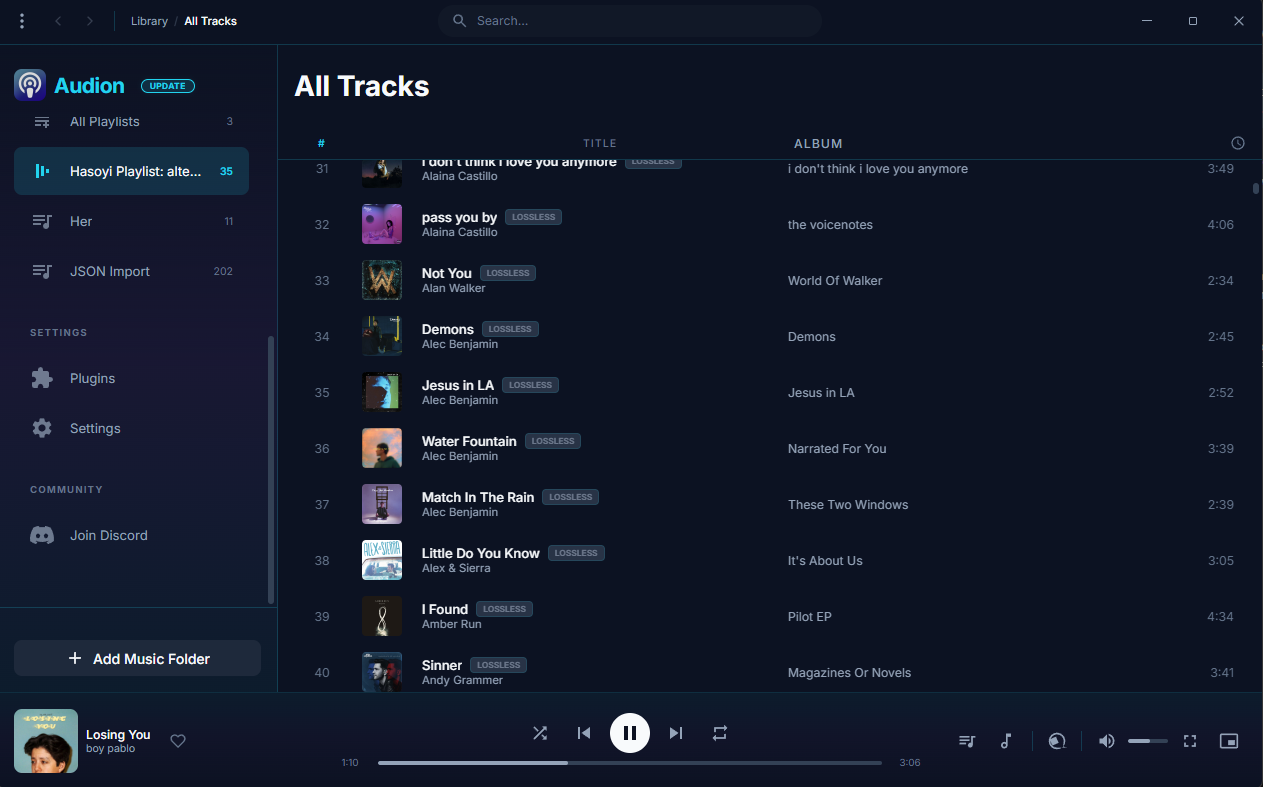
Audion ~ Community Driven Music Player


Audion is a privacy-focused music player that brings the Spotify experience to your local music library. No internet required, no tracking, just your music, beautifully organized.

Key highlights:

  • Synced lyrics with karaoke-style word highlighting
  • Extensible plugin system
  • Gorgeous, customizable interface
  • Fully offline

www.audionplayer.com
github.com/dupitydumb/Audion

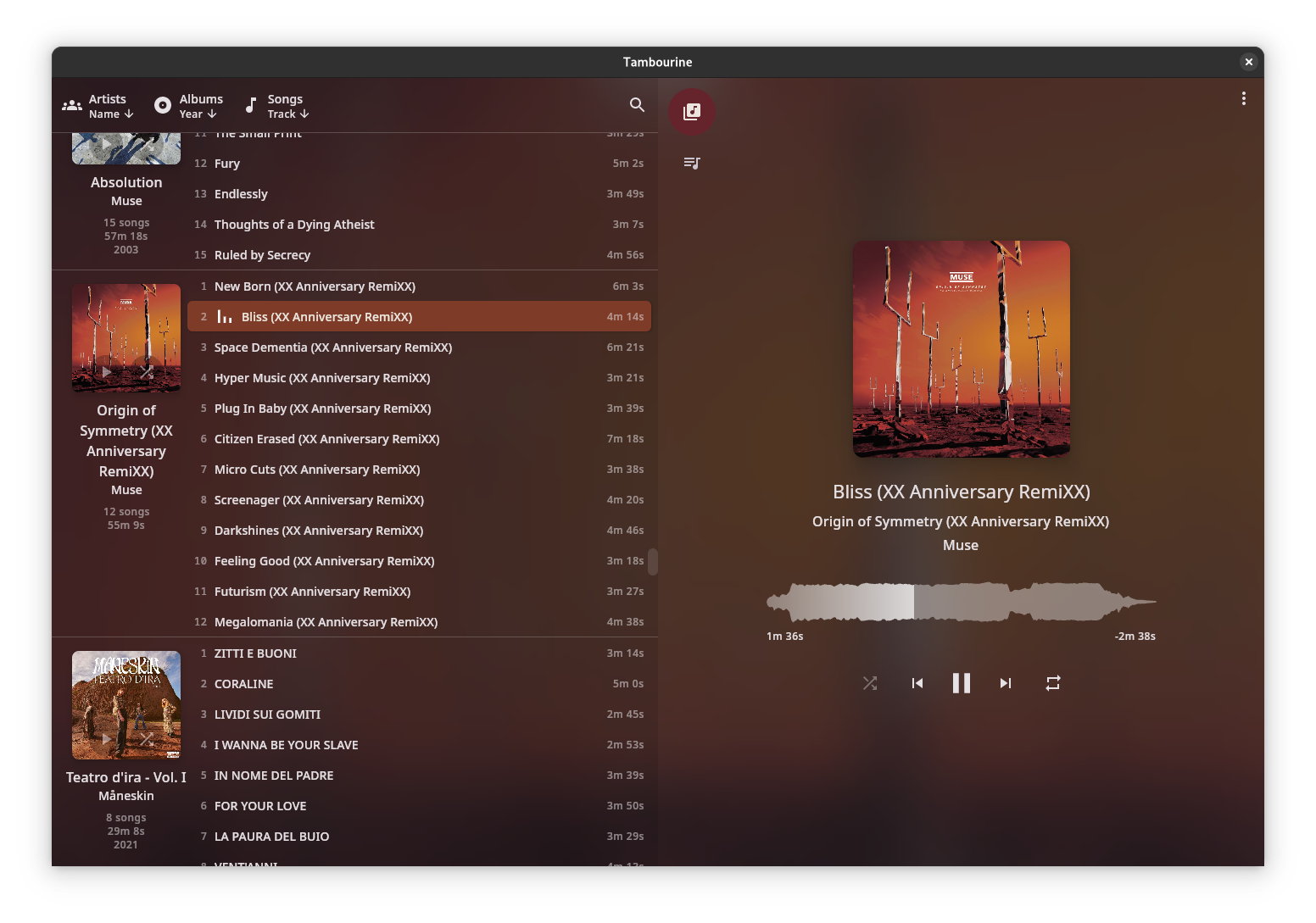
Tambourine ~ Linux Music Player


A music player for your local music library.

  • Linux first
  • Local only: no internet connection will ever be established.
  • Read only: your music will be accessed only in read mode.
  • Stateless: no cache/database/whatever will be created. The metadata in your songs are the database.
  • Imperfect: there will be use-cases that are not solved by this software, and that’s fine.

github.com/MMarco94/tambourine-music-player

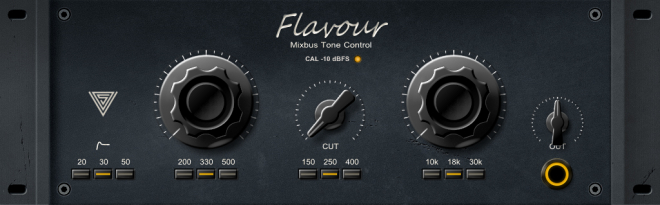
FlavourMTC ~ Mixbus Tone Control


FlavourMTC follows classic “passive” equalizer designs where the EQ circuits itself are not able to amplify signals but a dedicated amplifier stage takes care of it. Those EQ designs are well known for allowing very transparent frequency changes while their amplifier designs do add some icing on the cake quite often.

FlavourMTC implements this by utilizing 1st order shelving filter designs avoiding unwanted resonances and takes advantage of “zero delay” implementations for most accurate higher order filtering and w/o introducing curve warping near Nyquist frequency. The output amplifier stage of the plugin can be calibrated according specific mixing levels, provides a distinct “box tone” and glues everything together. Parts of the plugin are oversampled internally for maximum transparency and sound quality.

varietyofsound.wordpress.com/downloads

Amberol ~ Plays music and nothing else


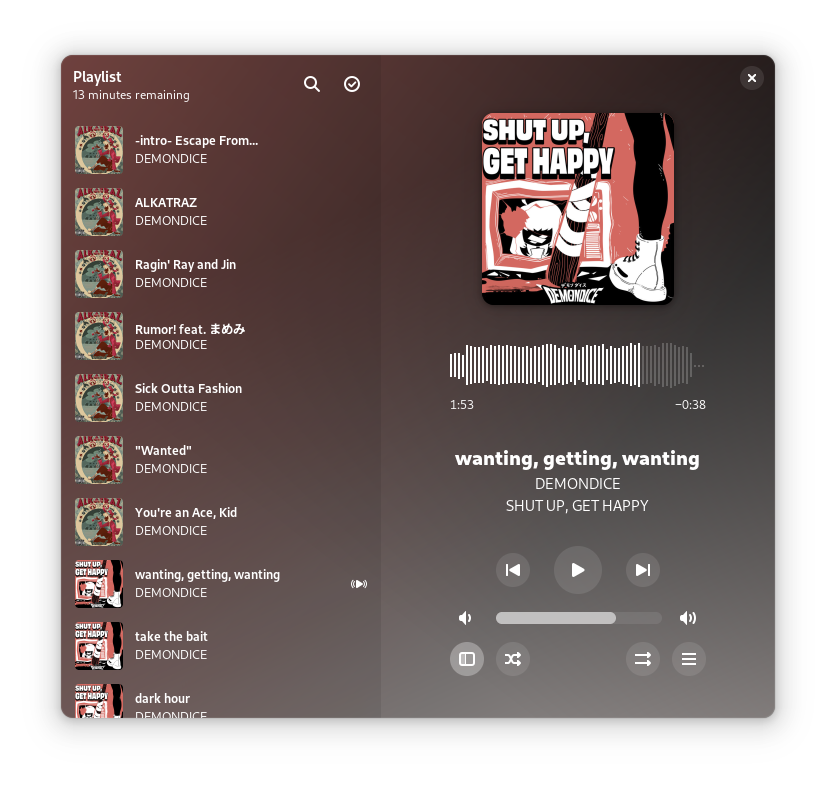
Amberol is a music player with no delusions of grandeur. If you just want to play music available on your local system then Amberol is the music player you are looking for.

Current features:

  • adaptive UI
  • UI recoloring using the album art
  • drag and drop support to queue songs
  • shuffle and repeat
  • MPRIS integration

gitlab.gnome.org/World/amberol
apps.gnome.org/en/Amberol
flathub.org/en/apps/io.bassi.Amberol

k-synth ~ Pocket Calculator Synthesizer


/synth is a minimalist, array-oriented synthesis environment. Heavily inspired by the K/Simple lineage and the work of Arthur Whitney, it treats sound not as a stream, but as a holistic mathematical vector.

📐 The Philosophy

This isn’t a DAW; it’s a vector-processing engine designed for “Base Camp” signal processing.

It uses:

  • One-Letter Variables: A-Z globals only.
  • Right-Associativity: Expressions evaluate from right to left.
  • Vectorized Verbs: Math applied to entire buffers at once.

Sound is a vector. A kick drum is a vector. A two-second bell tone is a vector. You do math on vectors and the result is audio. There are no tracks, no timelines, no patch cables — only expressions.

octetta.github.io/k-synth
github.com/octetta/k-synth