LosslessSwitcher switches your current audio device’s sample rate to match the currently playing lossless song on your Apple Music app, automatically.
Let’s say if the next song that you are playing, is a Hi-Res Lossless track with a sample rate of 192kHz, LosslessSwitcher will switch your device to that sample rate as soon as possible.
The opposite happens, when the next track happens to have a lower sample rate.
github.com/vincentneo/LosslessSwitcher

foo_listenbrainz2 ~ Foobar2000 & ListenBrainz
ListenBrainz 2
A foobar2000 component to submit the music you listened to to ListenBrainz or another ListenBrainz compatible scrobble server (for example Maloja).
This component was originally written by marc2k3. This repository is an attempt to preserve the source code of this excellent component and hopefully to revive the development.
github.com/phw/foo_listenbrainz2
What is ListenBrainz? ListenBrainz keeps track of music you listen to and provides you with insights into your listening habits. For details see:
listenbrainz.org
References:
en.wikipedia.org/wiki/ListenBrainz
Share this:

musicScraper ~ Scrape RYM & Metallum
CLI tool for scraping information from musical website (Rateyourmusic, Metal Archives), with nice album ASCII art.
Features:
github.com/mBaratta96/musicScraper
- Search for your favorite artists on Metallum and RateYourMusic (so far)
- Show discography and album tracklist
- Show album credits
- Show user reviews.
- RYM: Login and rate an album.
- Metallum: Check similar artists
Share this:

piCorePlayer ~ Raspberry Pi Audio System
Free software that plays local music as well as online music streaming services on a Raspberry Pi.
www.picoreplayer.org
github.com/piCorePlayer
sourceforge.net/projects/picoreplayer
lyrion.org/players-and-controllers/picoreplayer
Share this:

AcidBox ~ DIY Hardware Synthesizer
ESP32 headless acid combo of tb303 + tb303 + tr808 like synths. Filter cutoff, reso, env mod, accent, wavefolder, overdrive within each 303, per-instrument tunings, hi-pass/lo-pass filter and bitcrusher in drums, send to reverb, delay and master compression. All MIDI driven. 44100, 16bit stereo I2S output to the external DAC or 8bit to the built-in DAC. No indication. Uses both cores of ESP32. Cheap ~$10. Consult with midi_config.h to find out and to set up MIDI continuous control messages.
github.com/copych/AcidBox
Share this:

Align ~ DRC Speaker Alignment Utility
In 5 clicks, DRC for (almost) dummies
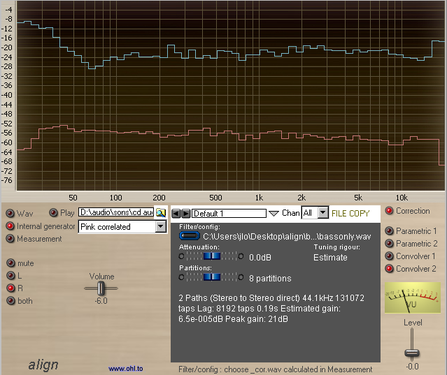
Simple, fast and effective software to measure and calculate the amplitude and phase correction and “align” speakers. This software also allows you to measure speakers to adjust them and/or to find the best placement in the room.
Note: DRC stands for Digital Room Correction
www.ohl.to/about-audio/audio-softwares/align
www.ohl.to/about-audio/audio-softwares/align2
Share this:

MusicIP ~ Analyse Songs & Generate Playlists
MusicIP is much more than a conventional Playlist Generator. MusicIP is a clever piece of software written in the 2000s that analyses and fingerprints your local music library to try to understand the makeup of each music track. So instead of endlessly scrolling through your library, trying to find something to listen to, you can simply select a track (the seed track) then based on MusicIPs understanding of your library, generate a playlist of tracks that blend together. This is far more than a genre based mix, as it will select tracks that are similar in composition.
www.spicefly.com/article.php?page=what-is-musicip
Share this:

Festival ~ Album Centered Music Player
Festival is a cross-platform music player for local album collections, with a client server architecture and multiple frontends
github.com/hinto-janai/festival
Share this:

LMS ~ Lightweight Linux Music Server
LMS is a self-hosted music streaming software: access your music collection from anywhere using a web interface!
Main features:
github.com/epoupon/lms
- Recommendation engine
- Audio transcoding for maximum interoperability and reduced bandwith requirements
- Multi-value tags:
genre,albumgenre,mood,albummood,albumgrouping, …- Artist relationships:
composer,conductor,lyricist,mixer,performer,producer,remixer- Release types:
album,single,EP,compilation,live, …- MusicBrainz Identifier support to handle duplicated artist and release names
- ListenBrainz support for:
- Scrobbling and synchronizing listens
- Synchronizing ‘love’ feedbacks
- ReplayGain support
- User management, with several authentication backends
- Subsonic/OpenSubsonic API support
Share this:

FinalCD ~ Double Precision Downsampler
FinalCD is a double precision downsampler designed to convert high sampling rate audio to 16/44.1 for writing to a CD. There are two filter curves available – a gentle one for material with very little ultrasonic content, and a sharp one to handle other cases.
www.sonicillusions.co.uk/finalcd
Share this:

Wolf Shaper ~ Waveshaper Plugin
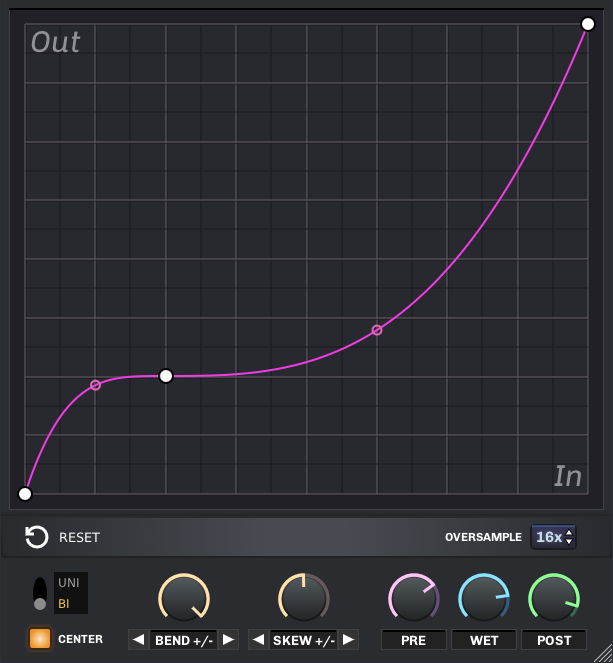
Wolf Shaper is a waveshaper plugin with a graph editor. It can be built as an LV2, VST or CLAP plugin and as a standalone Jack application.
github.com/wolf-plugins/wolf-shaper
Share this:

EArt Audio Editor ~ Free Audio Editor
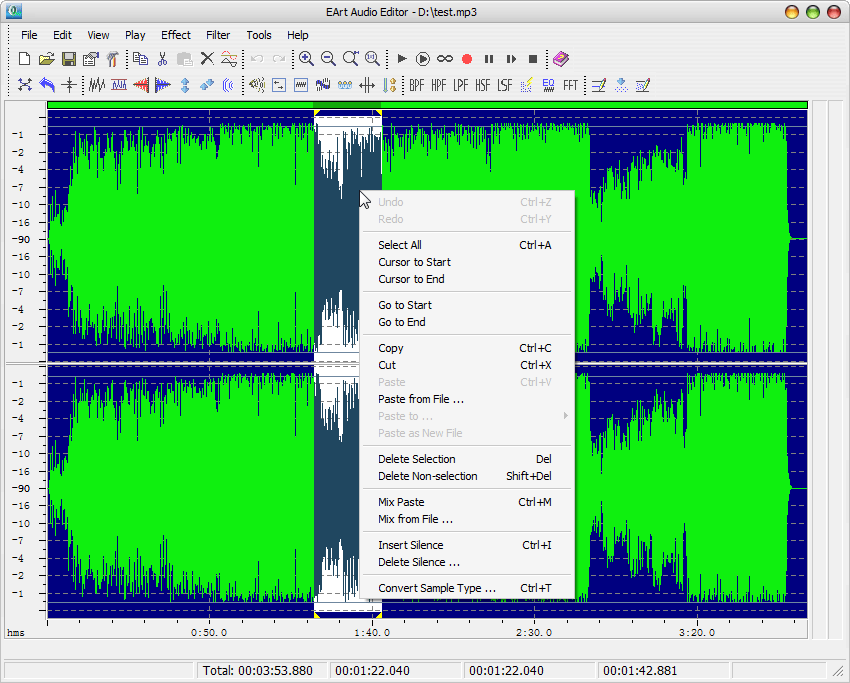
EArt Audio Editor is a all-in-one audio editor, recorder, converter, splitter, joiner and player. A full set of effects and editing features are included for professional sound production. When editing audio files you can copy, cut, paste and mix any portion of audio files. If required, you may add effects like Amplify, Fade In, Fade Out, Delay, Reverse, Noise Reduction, etc. MP3, WMA, WAV, OGG, VOX, RAW and many more audio formats are all supported for direct audio editing.
eartmedia.com/audio-editor/index