Lollypop ~ GNOME Audio Player


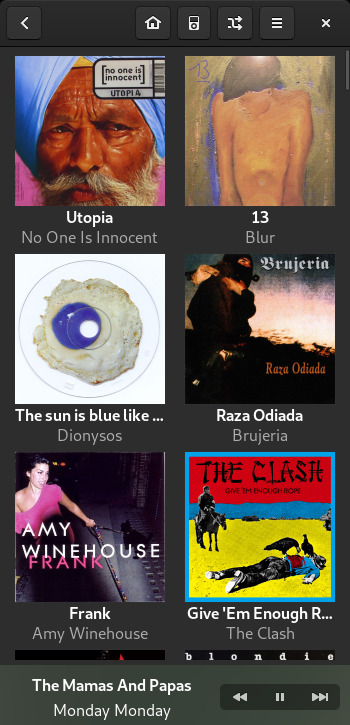
Lollypop is a modern music player for GNOME

  • Artist bio, lyrics Artist bio, lyrics: Get artists and tracks information from the web.
  • Intuitive browsing: Walk through your collection by genres/artists and through albums artwork.
  • Play many audio formats: mp3, mp4, ogg, and flac
  • Cover art downloader: Automatic artwork downloader from Last.fm, Itunes and Spotify.
  • MTP devices: Sync your music with Android phones and any mtp devices…
  • Fullscreen view: Visual access from your couch
  • Party mode: Let Lollypop choose music for you.
  • Native replaygain support.
  • Search in your collection by artist, album and title.

lollypop

wiki.gnome.org/Apps/Lollypop

loudgain ~ Linux Loudness Normalizer


loudgain is a versatile ReplayGain 2.0 loudness normalizer, based on the EBU R128 / ITU BS.1770 standard (-18 LUFS) and supports FLAC / Ogg / MP2 / MP3 / MP4 / M4A / ALAC & Opus audio files. It uses the well-known mp3gain command line syntax but will never modify the actual audio data.

Just what you ever wanted: the best of mp3gain, ReplayGain 2.0 and Linux combined. Spread the word!

github.com/Moonbase59/loudgain

Musique ~ Finely Crafted Music Player


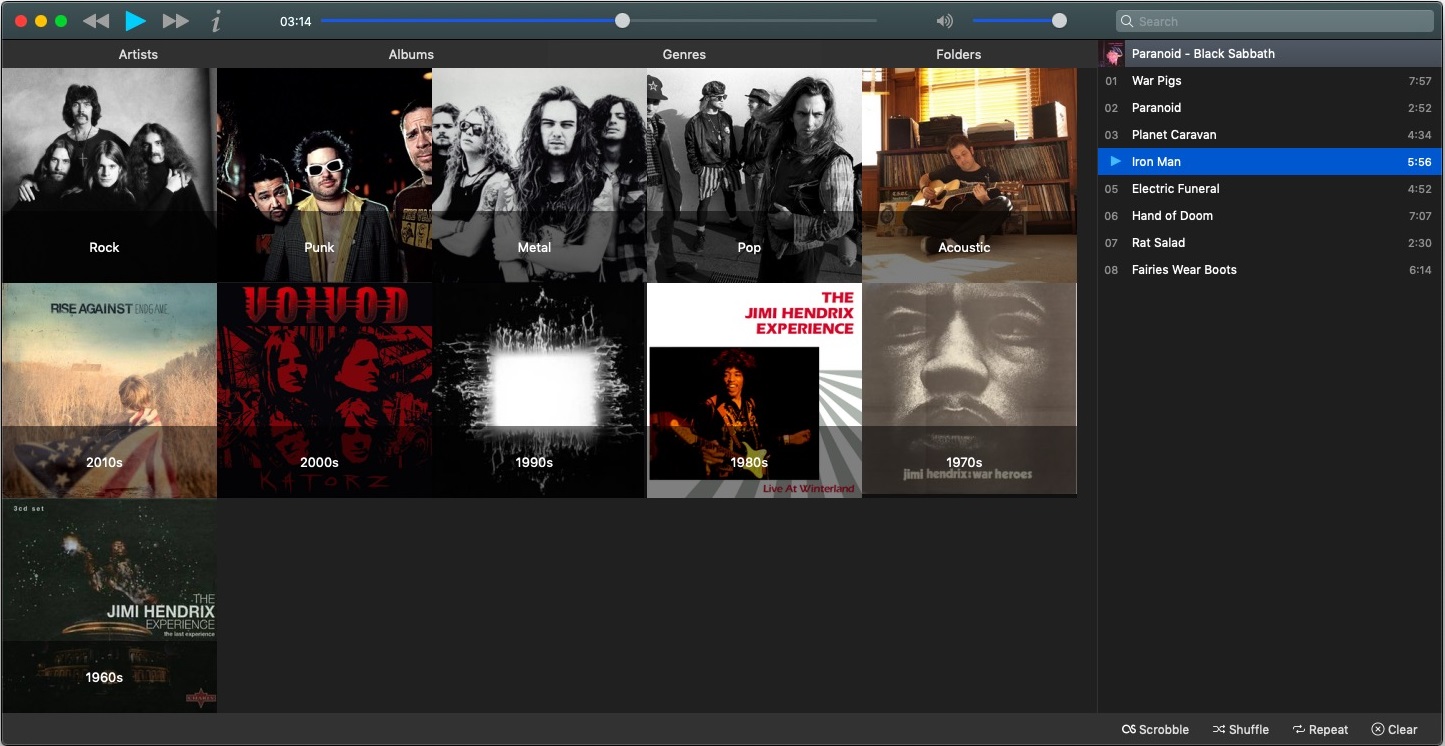
Musique “unclutters” your music listening experience with a clean and innovative interface.

musique-03

flavio.tordini.org/musique

Cabbage ~ Audio Instrument Development


Cabbage is a software for prototyping and developing audio instruments with the Csound audio synthesis language. Instrument development and prototyping is carried out with the main Cabbage IDE. Users write and compile Csound code in a code editor. If one wishes one can also create a graphical frontend, although this is no longer a requirement for Cabbage. Any Csound file can be run with Cabbage, regardless of whether or not it has a graphical interface. Cabbage is designed for realtime processing in mind. It is possible to use Cabbage to run Csound in the more traditional score-driven way, but your success may vary.

Cabbage is a ‘host’ application. It treats each and every Csound instrument as a unique audio plugin, which gets added to a digital audio graph (DAG) once it is compiled. The graph can be opened and edited at any point during a performance. If one wishes to use one of their Csound instruments in another audio plugin host, such as Reaper, Live, Bitwig, Ardour, QTractor, etc, they can export the instrument through the ‘Export instrument’ option.

cabbageaudio.com/
csound.com/

ChucK ~ Music Programming Language


ChucK is a programming language for real-time sound synthesis and music creation. It is open-source and freely available on MacOS X, Windows, and Linux. ChucK presents a unique time-based, concurrent programming model that’s precise and expressive (we call this strongly-timed), dynamic control rates, and the ability to add and modify code on-the-fly. In addition, ChucK supports MIDI, OpenSoundControl, HID device, and multi-channel audio. It’s fun and easy to learn, and offers composers, researchers, and performers a powerful programming tool for building and experimenting with complex audio synthesis / analysis programs, and real-time interactive music.

chuck.cs.princeton.edu

BestPractice ~ Audio Time-Stretching Tool


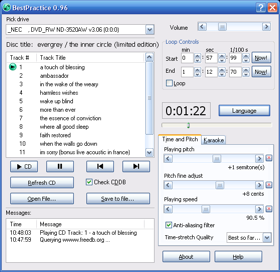
BestPractice is a musician’s practice tool, to slow down or speed up music, either from an MP3 file or directly from a CD. Ordinarily the sound is distorted when slowed down our sped up – you get the effect like when playing a 33 rpm record on 45 rpm speed (remember the Chipmunks?). BestPractice tries to correct this, so you can slow down and speed up music, while keeping the original pitch. It is also possible to change the pitch of the music without affecting its tempo. Play along with for instance Eb tuned guitars without retuning your own, or slow down that high-speed guitar solo on a CD that you like to learn.

BestPractice

bestpractice.sourceforge.net

projectM ~ MilkDrop Compatible Music Visualizer


projectM is an OpenGL based advanced music visualization program for Linux, Mac OSX, and Windows. It is backward compatible with all the features of Milkdrop 1.x (and now 2.x), but has many new toys and enhancements.

projectM

sourceforge.net/projects/projectm

Audio Overload ~ Video Game Music Player


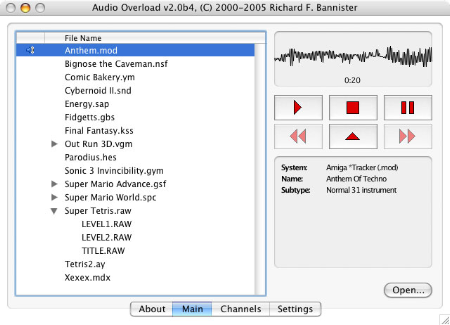
Audio Overload emulates the sound hardware of vintage consoles and computers, allowing you to listen to completely authentic renditions of classic video game tunes. Audio Overload does not play music from arcade games; for that you should use M1.

Audio Overload

www.bannister.org

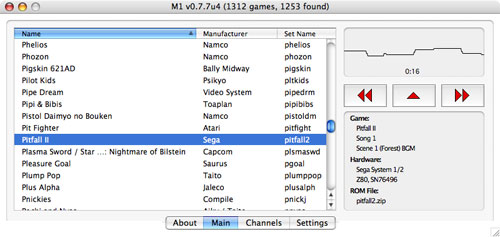
M1 ~ Mac Arcade Music Player


M1 plays the music from arcade games by running the code in the original ROMs (not supplied). This allows entirely authentic playback of classic video game tunes while you work. M1 does not play music from console and computer games; for that you should use Audio Overload.

m1

www.bannister.org

Csound ~ Open Source Sound Compiler


… Although Csound has a strong tradition as a tool for composing electro-acoustic pieces, it is used by composers and musicians for any kind of music that can be made with the help of the computer. Csound has traditionally been used in a non-interactive score driven context, but nowadays it is mostly used in in a real-time context. Csound can run on a host of different platforms including all major operating systems as well as Android and iOS. Csound can also be called through other programming languages such as Python, Lua, C/C++, Java, etc.

csound.com

Opsound ~ Free Open Music


Opsound was a gift economy in action, an experiment in applying the model of free software to music. Musicians and sound artists were invited to add their work to the Opsound pool using a copyleft license developed by Creative Commons. Listeners were invited to download, share, remix, and reimagine.

o̶p̶s̶o̶u̶n̶d̶.̶o̶r̶g̶ now defunct
en.wikipedia.org/wiki/Opsound

if2ktool ~ Migrate Data From iTunes™ To Foobar2000


This tool is aimed at people migrating a music library from iTunes™ to Foobar2000, and allows you to keep the various statistics and dates that are saved by iTunes. It reads these fields from your iTunes Library XML, and writes them to the file tags that are expected by the import function of foo_playcount. You can transfer playlists too.

github.com/macklinb/if2ktool