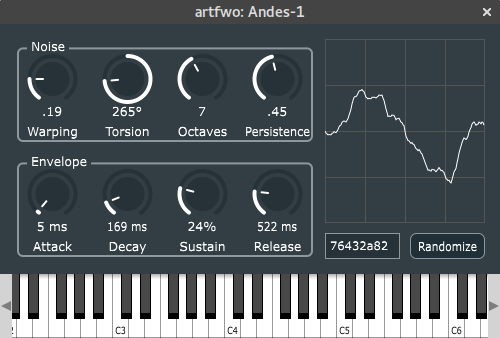
Andes is a standalone software synthesiser, or plugin, in early stages of development. The core of Andes is an original oscillator which uses a pseudo-3D version of Perlin Noise to produce distinctively digital sound.
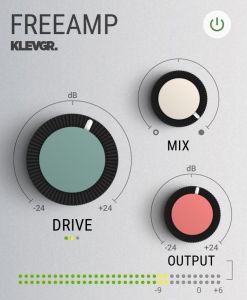
Sounding good has never been this cheap. Even though FreeAMP may look simple, all the algorithms from our amplifying modeler plugin REAMP are still in there. In this free version, we’ve combined our favourite profiles from REAMP into one universal profile. When processing audio through FreeAMP you’ll get the sound of tape and tube saturation at the same time. It can be used on anything that needs to be vitalized, from single tracks, stems or full mixes. And the best thing is that it is Totally free! (requires an account)
Requires macOS 10.9 or later, Windows 7 (SP1) or later, running a AU, VST or AAX compatible 64-bit host.
Zrythm is a cross-platform digital audio workstation designed to be featureful and easy to use. Automate almost anything with automation events using straight lines, ramps and curves, or with LFOs and envelopes. Featuring a chord pad for quickly trying out chords in a scale and a chord track to help with chord progressions.
Complete support for LV2 and VST2, with experimental support for VST3, AU, SFZ and SF2. Fully JACK aware, including support for JACK transport, ALSA, WASAPI, Windows MME, CoreMidi and CoreAudio.
Zrythm (Basic) is free software. Use, study, share and improve it freely. Available in multiple languages including English, French, Galician, Portuguese, Japanese and German.
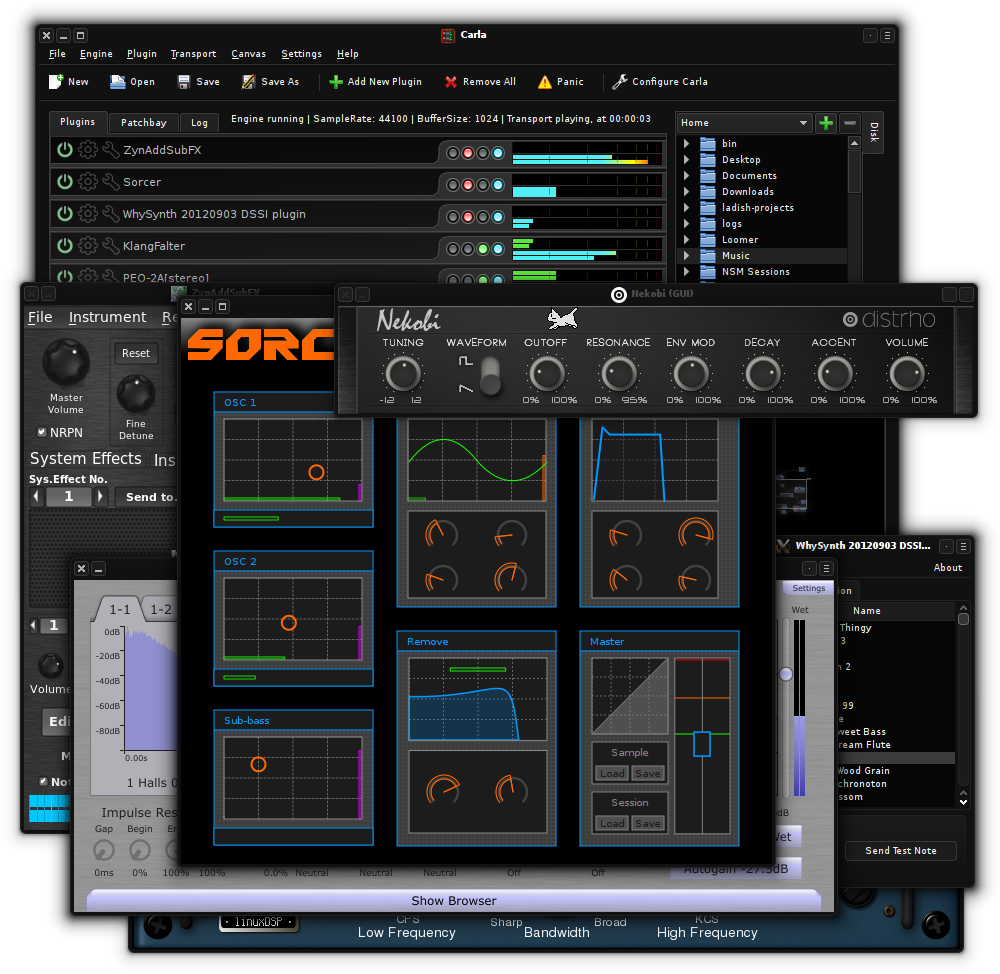
Carla is a fully-featured modular audio plugin host, with support for many audio drivers and plugin formats. It has some nice features like transport control, automation of parameters via MIDI CC and remote control over OSC.
Carla currently supports LADSPA (including LRDF), DSSI, LV2, VST2, VST3 and AU plugin formats, plus SF2 and SFZ file support. It uses JACK as the default and preferred audio driver but also supports native drivers like ALSA, DirectSound or CoreAudio.
There are 4 types of engine processing:
Single-client: (JACK driver only) Same as Multi-client, except that all JACK ports belong to a single master client. This is needed when a setup doesn’t support multi-client JACK apps, such as LADISH.
Multi-client: (JACK driver only) Every single plugin is exposed as a new JACK client. Audio and MIDI ports are registered as needed.
Rack: Plugins are processed in order, from top to bottom. Plugins with non-stereo audio channels are not supported, but a forced-stereo option is available for Mono ones.
Patchbay: Modular patchbay mode, just like in JACK Multi-client and many other modular applications. Every plugin gets its own canvas group and ports allowing you to interconnect plugin audio and MIDI.
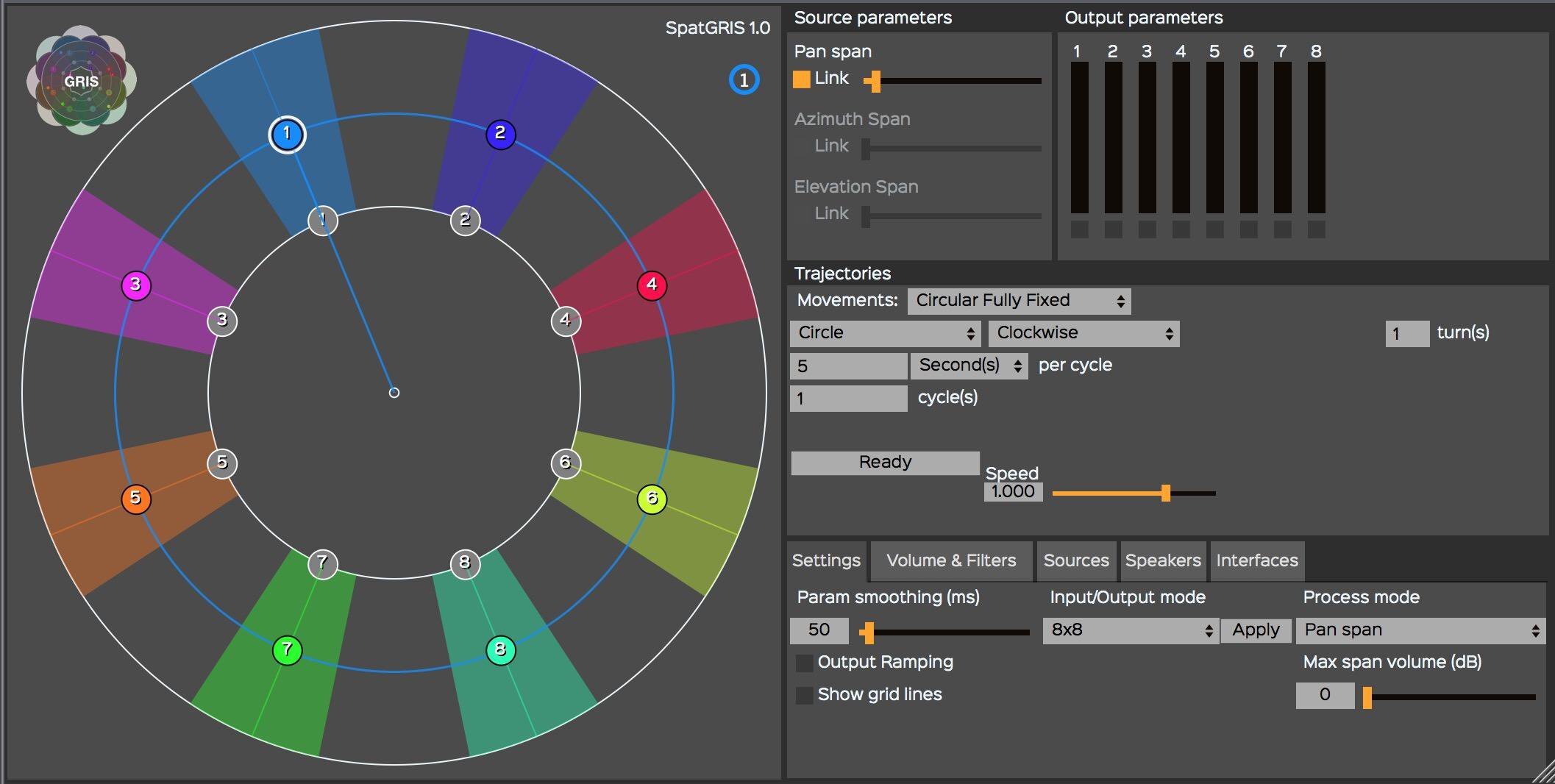
The SpatGRIS is a plugin (Mac AU/VST and VST Windows format) designed to compose multichannel space. It allows the user to spatialize the sound in 2D (up to 16 speakers) or in 3D (up to 128 speakers) under a dome of speakers (with the ServerGRIS, available also on SourceForge). It includes two audio modes, — Free Volume and PanSpan — and one OSC mode. SpatGRIS is a fusion of two former plugins by the GRIS: OctoGRIS and ZirkOSC with a lot of new features. Automated Trajectories are included. It is possible to control it from external controllers such as Joystick, iPad or Leap Motion.
Features:
Three modes: Free Volume, Pan Span, OSC Spatialization
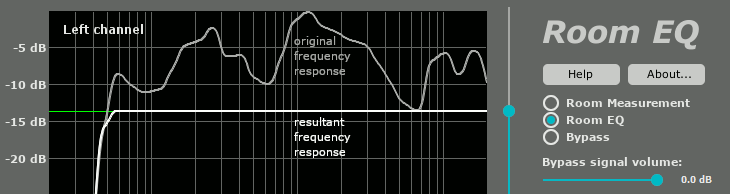
The frequency response of your room is very different in every point of the room. “Good” equalization in one point can worsen the sound in the neighboring point. Single-point equalization is not reliable and cannot be used in a professional room correction system. On the other hand, multipoint equalization is not simple; both the volume and the phase of the testing signal are very different in different points of the room. Simple averaging is not applicable. MathAudio Room EQ applies a state-of-the-art multipoint correction algorithm which ensures the best possible improvement in every point of the listening area.
Corrects deficiencies of room acoustics (multipoint compensation).
Corrects acoustic imperfections of speakers.
Avoids the pre-echo (pre-ringing) problem of conventional convolver-based room correction systems. The absence of pre-echo ensures the neutrality of the sound.
Works in rooms, halls and outdoor venues of any size.
Works with zero latency. Perfect for live performances and studio monitoring.
Doesn’t delay the audio track when playing video.
Corrects both amplitude and phase components of frequency response.
Quells resonance peaks of frequency response while leaving the deep notches.
Avoids the overcompensation which happens in conventional linearizing room correction systems.
Manually adjustable level of compensation allows one to reach the maximum transparency of the sound.
Supports full range of sample rates from 44,056 kHz up to 384 kHz. All sample rates are supported without resampling to avoid any possible loss in quality.
Includes a custom target curve feature.
Applies 64-bit signal path throughout.
Works with USB measurement microphones (e.g. MiniDSP UMIK-1 or Dayton Audio UMM-6) or standard measurement microphones (e.g. NADY CM100 or Dayton Audio EMM-6).
Supports microphone calibration files.
Applies a patented method of frequency response correction.
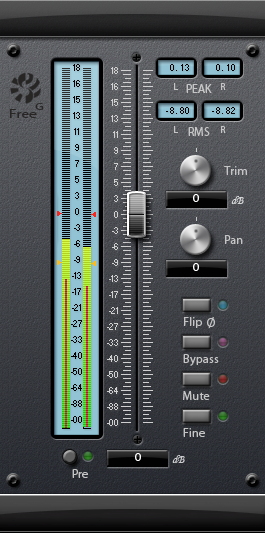
The Sonalksis FreeG is everything you need in a master fader. A simple, but absolutely indispensable plug-in, FreeG extends the functionality of a typical audio host by providing a large-format style fader, along with ultra accurate metering. FreeG helps to maximise workflow with extended, customizable metering, and multiple control features and settings.
When working with digital audio, a lack of fine metering and extended signal flow control in the host is a common issue. FreeG helps to improve workflow in the host by providing these features in the insert chain. By delivering enhanced control of amplitude, phase and pan (stereo version) in the insert chain as well as fine metering, with user configurable industry standard ballistic options, the freeG is the perfect master control.
Features:
Long-throw fader
Ultra accurate metering
Multiple metering ballistic types
Peak and RMS readouts
Pre/Post metering options
Selectable Pan-Law
‘Fine’ mode for sensitive calibration of the master fader
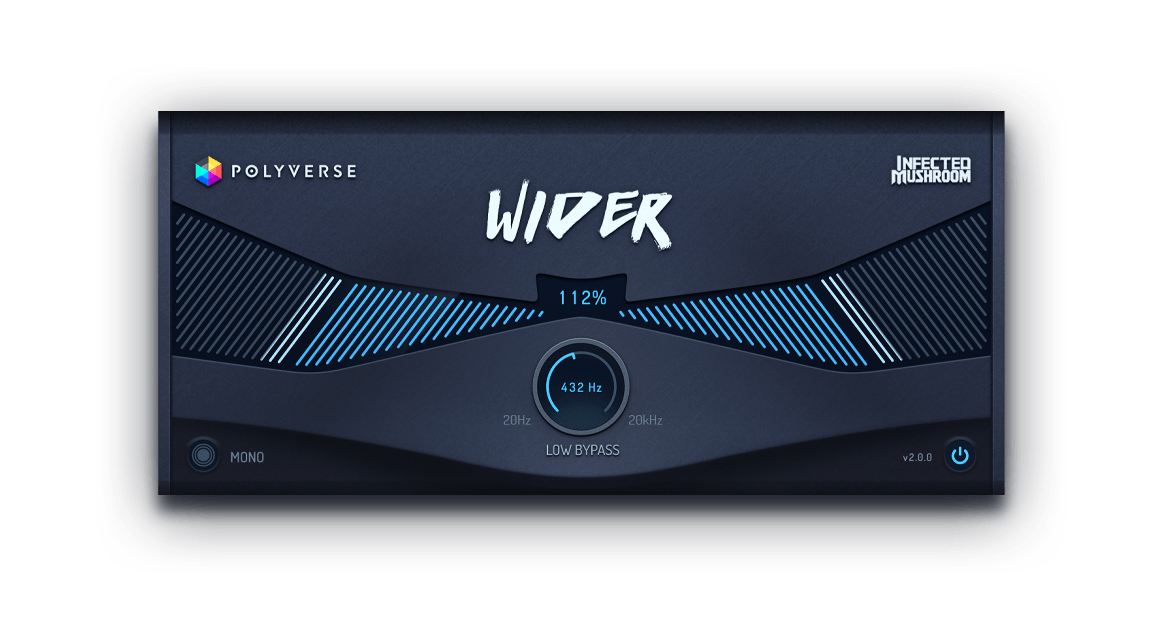
Pseudo stereo without phase issues. Wider takes the massively popular stereo section from its sibling, Manipulator, and creates the illusion of an expanded stereo image of a mono signal to an awe-inspiring amount of width. However, Wider is a unique stereo plugin in the sense that it is completely “mono-compatible”, meaning that any signal that has been extended will always remain in phase with itself, even if summed to mono.
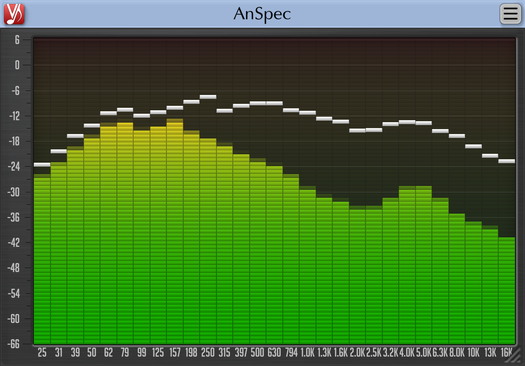
AnSpec is an analog-style one/third-octave spectrum analyzer AAX, AudioUnit and VST plugin for professional sound and music production applications. It was designed to be a handy visual feedback tool for those who like visual smoothness and easiness of use of analog analyzers. AnSpec also provides peak level indication.
While there are no adjustable parameters available in this plugin, you can still change level meter ballistics and resize plugin’s window.
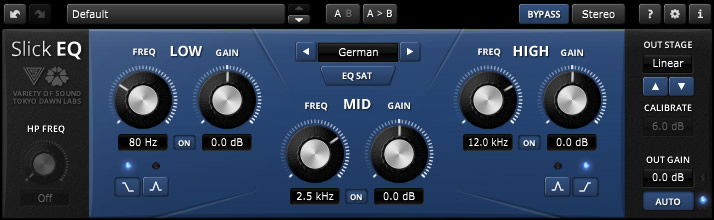
TDR VOS SlickEQ is a mixing / mastering equalizer designed for ease of use, musical flexibility and impeccable sound.
Three (and a half) filter-bands arranged in a classic Low/Mid/High semi-parametric layout offer fast and intuitive access to four distinct EQ modes, each representing a set of distinct EQ curves and behaviors. An elaborate auto gain option automatically compensates for changes of perceived loudness during EQ operation. Optionally, SlickEQ allows to exclusively process either the stereo sum or stereo difference (i.e. “stereo width”) without additional sum/difference encoding.
In order to warm up the material with additional harmonic content, SlickEQ offers a switchable EQ non-linearity and an output stage with 4 different saturation models. These options are meant to offer subtle and interesting textures, rather than obvious distortion. The effect is made to add the typical “mojo” often associated with classy audio gear.
An advanced 64bit multirate processing structure practically eliminates typical problems of digital EQ implementations such as frequency warping, quantization distortion and aliasing.
Beside the primary controls, the plug-in comes with an array of additional helpers: Advanced preset management, undo/redo, quick A/B comparison, copy & paste, an online help, editable labels, mouse-wheel support and much more.
Key specs and features:
Intuitive, yet flexible semi parametric EQ layout
Modern user interface with outstanding usability and ergonomics
Carefully designed 64bit “delta” multi-rate structure
Three EQ bands with additional 18dB/Oct high-pass filter
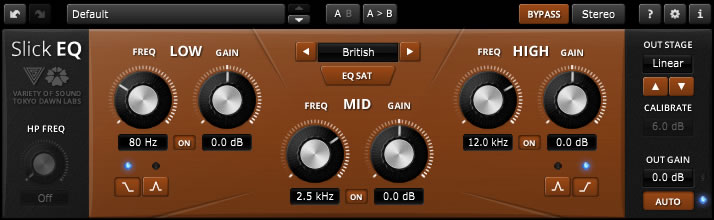
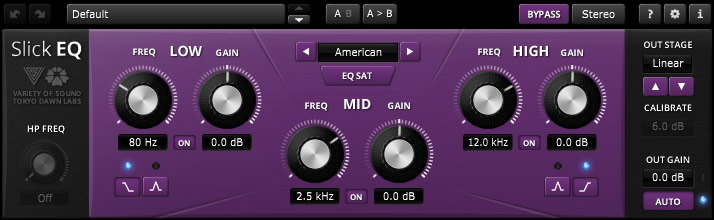
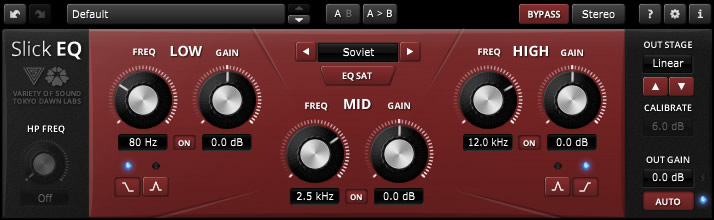
Four distinct EQ models: “American”, “British”, “German” and “Soviet” with optional non-linearity
Five output stages: “Linear”, “Silky”, “Mellow”, “Deep” and “Toasted”
Advanced saturation algorithms by VoS (“Stateful saturation”)
Highly effective and musically pleasing loudness compensated auto gain control
Stereo and sum/difference processing options
Toolbar with undo/redo, A/B, advanced preset management and more
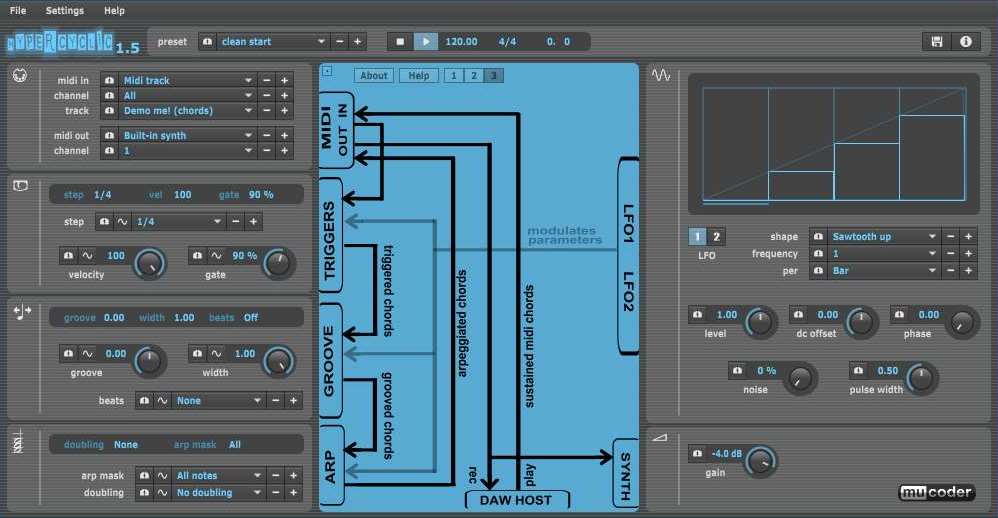
an LFO-driven MIDI arpeggiator, gate effect and step sequencer
for mangling sustained MIDI input chords
the output of which can then drive other MIDI instruments
acts either as a VST or Audio Unit plugin for your DAW, or as a standalone application
the original hypercyclic won 2nd place in the KVRAudio.com Developer Challenge ‘07
the sweet spot for hypercyclic is the narrow border between chaos and regularity. Or, in other words, how to induce a certain pleasant randomness and syncopation, yet forcing everything to align again on the bar or beat boundaries
How do you use it?
the main use for hypercyclic is to generate midi that can be recorded and/or sent to other plugins. However it also features a simple built-in synth for testing purposes
you can use two tempo-synced LFOs to modulate various parameters for creating interesting rhythmic effects and chord variations
a unique feature is the possibility to modulate the sequencer step size itself, which is useful for creating glitchy stuttering effects
another thing you can use is a groove function for playing slightly off the beat. The groove parameters can also be modulated over time by the LFOs, adding to the rhythmic variation
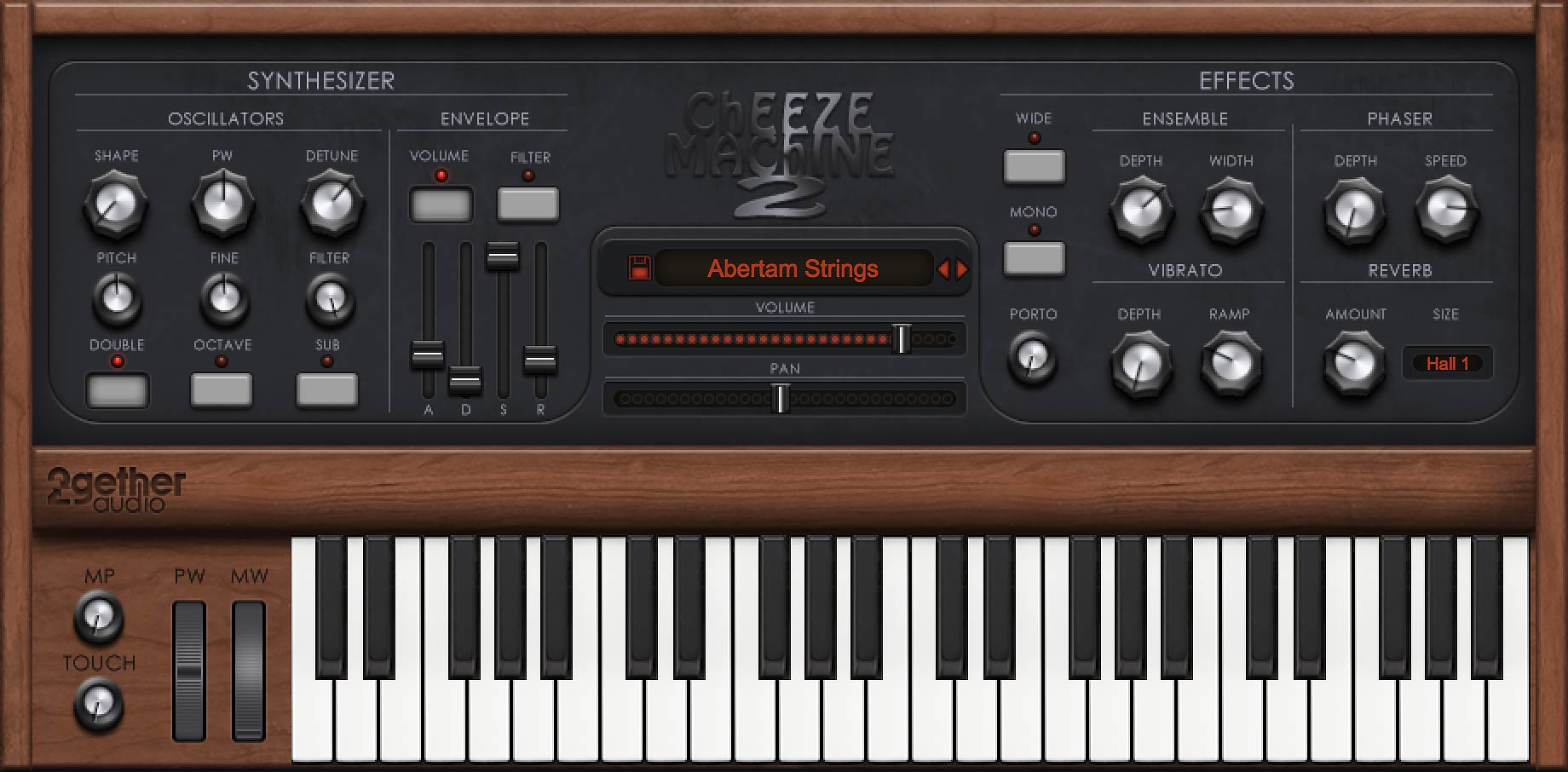
Back by popular demand comes a remastered version of the extremely popular Cheeze Machine virtual instrument by Big Tick Audio. An extra cheesy, extra saucy string box in the style of the original vintage string machines. Cheeze Machine 2 includes an expanded oscillator section, convolution reverb, a vintage ensemble chorus, and 64 bit compatibility for VST, AU, AAX and standalone applications.













 The Audio File