Clamps, short for “Common Lisp Aided Music Production System”, is a software system for realtime and non-realtime music production written in Common Lisp. It enables a seamless workflow between high-level structures to define musical processes all the way down to low level DSP definitions for sound creation including browser based interfaces for interactive work and control useable for live performances. In that respect it combines features of systems like OpenMusic, SuperCollider or the Pure Data/Max family of software.
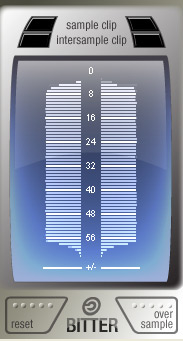
Bitter shows how many of the available bits are being used by the audio signal, reports clipping samples, and estimates when digital-to-analog conversion would cause inter-sample clips. Typical uses for a bitscope include: verifying that a render dither is working properly; verifying that a particular plugin is not reducing the signal bit depth; testing for faulty audio source data.
Features:
Check for Intersample Clipping that may appear during digital-to-analog conversion
Detailed display of the usage density of each bit
Reveal the bitrate of the digital signal, which may well differ from that of the file’s bitrate or your DAW’s audio engine bitrate
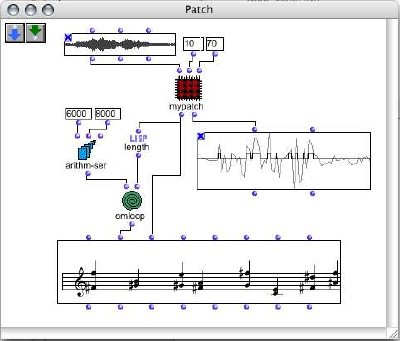
OpenMusic (OM) is a visual programming language based on Common Lisp. Visual programs are created by assembling and connecting icons representing functions and data structures. Most programming and operations are performed by dragging an icon from a particular place and dropping it to an other place. Built-in visual control structures (e.g. loops) are provided, that interface with Lisp ones. Existing CommonLisp/CLOS code can easily be used in OM, and new code can be developed in a visual way.
OM may be used as a general purpose functional/object/visual programming language. At a more specialized level, a set of provided classes and libraries make it a very convenient environment for music composition. Above the OpenMusic kernel, live the OpenMusic Projects. A project is a specialized set of classes and methods written in Lisp, accessible and visualisable in the OM environment. Various classes implementing musical data / behaviour are provided. They are associated with graphical editors and may be extended by the user to meet specific needs. Different representations of a musical process are handled, among which common notation, midi piano-roll, sound signal. High level in-time organisation of the music material is proposed through the concept of “maquette”.
OM-SoX is a library for multichannel audio manipulation and functional batch processing for OpenMusic, a visual programming environment based on CommonLisp / CLOS.
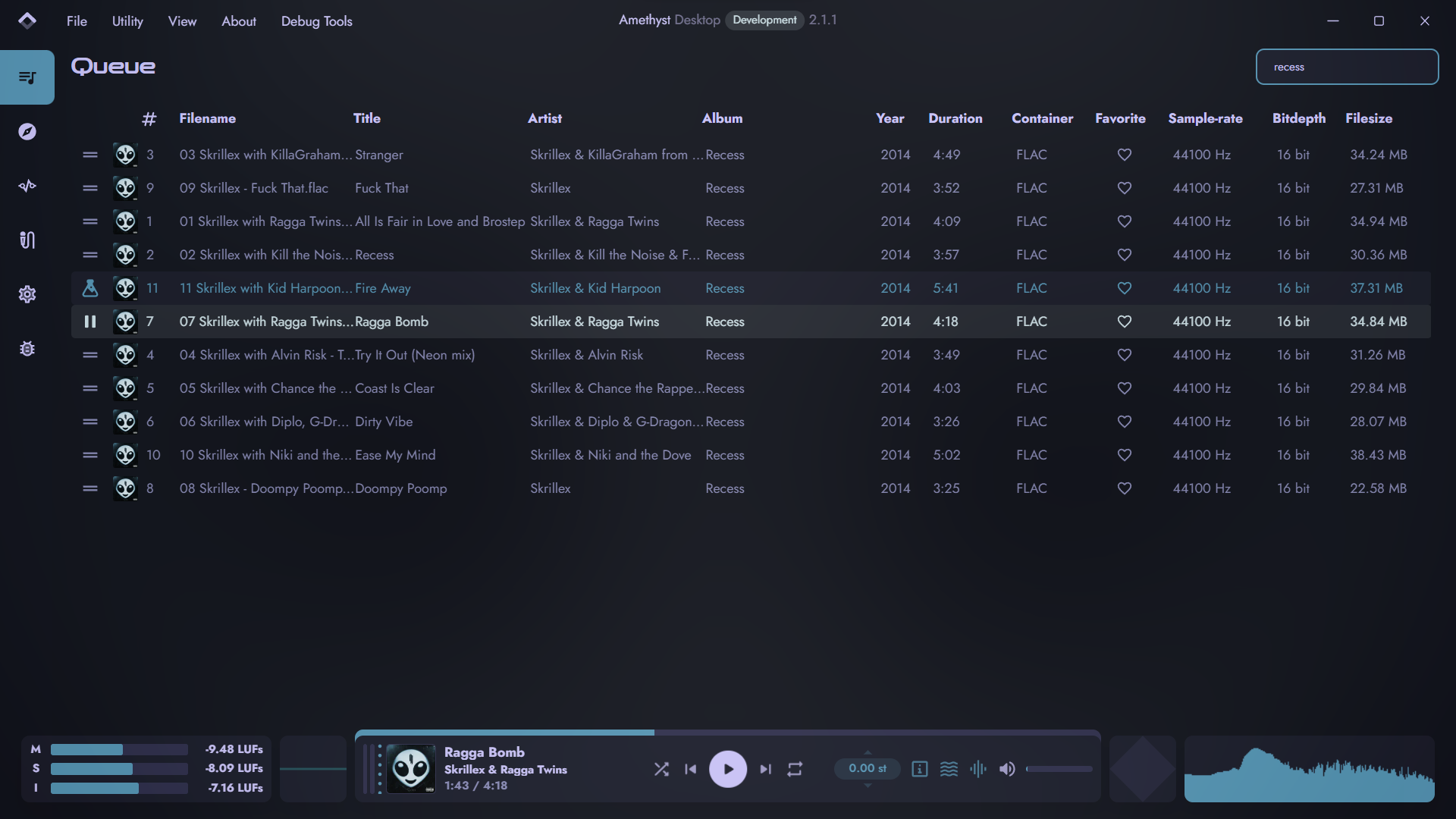
Amethyst is an cross-platform audio player with a node-basedaudio routing system, the main goal of this project is to make a music player in TypeScript to see how far the language can be stretched to prove it’s possible to provide pro-level features as most DAWs / DAEs, while also providing useful tools and customizability to the end-user.
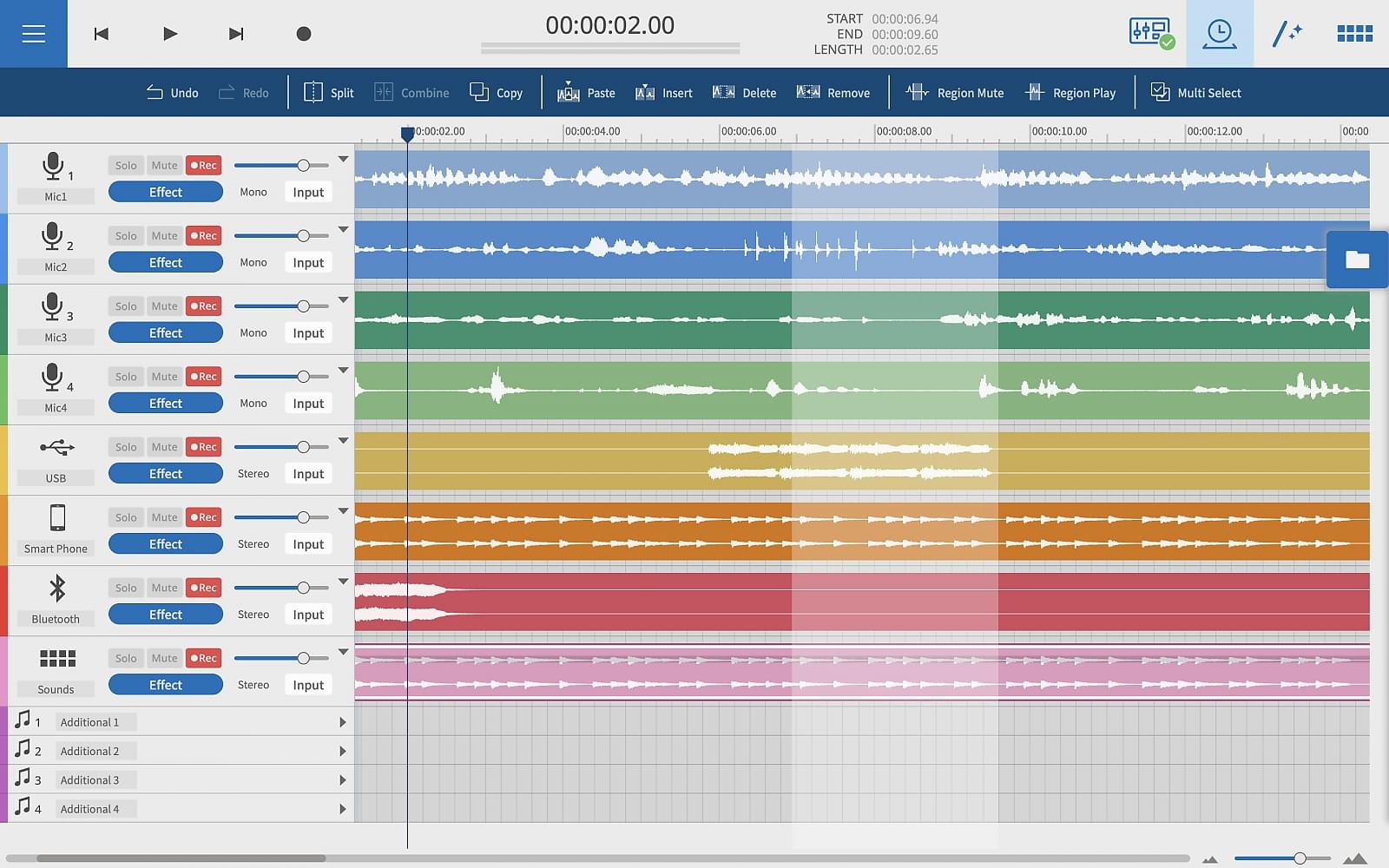
Tascam Podcast Editor is a software application specialising in the production of voice content such as podcasts, Internet radio, audio books, and voice logs.
From recording to editing and file output, the Tascam Podcast Editor provides all the functions necessary to publish a programme with intuitive, easy operation.
Tascam Podcast Editor | Simple Audio Editor for Podcast Creation
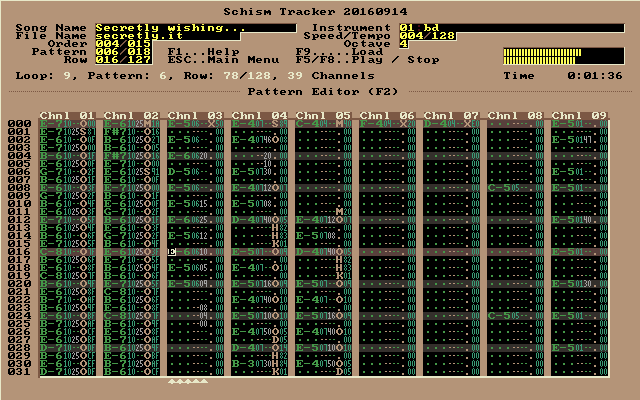
Schism Tracker is a free and open-source reimplementation of Impulse Tracker, a program used to create high quality music without the requirements of specialized, expensive equipment, and with a unique “finger feel” that is difficult to replicate in part. The player is based on a highly modified version of the ModPlug engine, with a number of bugfixes and changes to improve IT playback.
Where Impulse Tracker was limited to i386-based systems running MS-DOS, Schism Tracker runs on almost any platform that SDL supports, and has been successfully built for Windows, Mac OS X, Linux, FreeBSD, OpenBSD, AmigaOS, BeOS, and even Wii. Schism will most likely build on any architecture supported by GCC4 (e.g. alpha, m68k, arm, etc.) but it will probably not be as well-optimized on many systems.
Ecoute was designed in order to be easy to use in any circumstances. We focused on artworks for the main view so you can make your choice more easily. Any item handles a long-press action and brings cool options to facilitate your navigation. Quickly jump on the now playing artist or album and select an other song you wish to listen next. We also rebuilt the standard iOS navigation system from the ground up so you can quickly select / go back while a transition occurs. Moreover, as Ecoute doesn’t need any pull-to-refresh, we decided to use the same principle for the search. Just pull down the current list and the search bar will appear in the coolest way ever.
Wax is a program for cataloging and playing a collection of music recordings. Wax is able to rip CDs and import downloads so that you can create a sound archive complete with metadata.
Wax is fundamentally different from existing music managers in two important ways. First, the fundamental unit for recordings is a “work”, not a track. A work is usually a collection of tracks. It can encapsulate whatever tracks you choose. In pop music, a work can be an album. For symphonic music, a work can be a single symphony, even when the tracks come from a CD with more than one symphony. For operas, a work can be a single opera even when the tracks come from multiple CDs. Music collectors usually think in terms of works, so a music manager that supports the concept makes operation more natural.
The other distinguishing characteristic of Wax is that genres are fundamental to the organization of a collection rather than a mere attribute of a track. Wax recognizes that the ideal way to catalog works varies by genre. For example, symphonic works can be cataloged by composer, work, conductor whereas shows can be cataloged by show, composer, lyricist. By organizing collections around genres, Wax supports an operation sequence that is natural for music lovers: first select the genre, then the work, and finally the tracks.
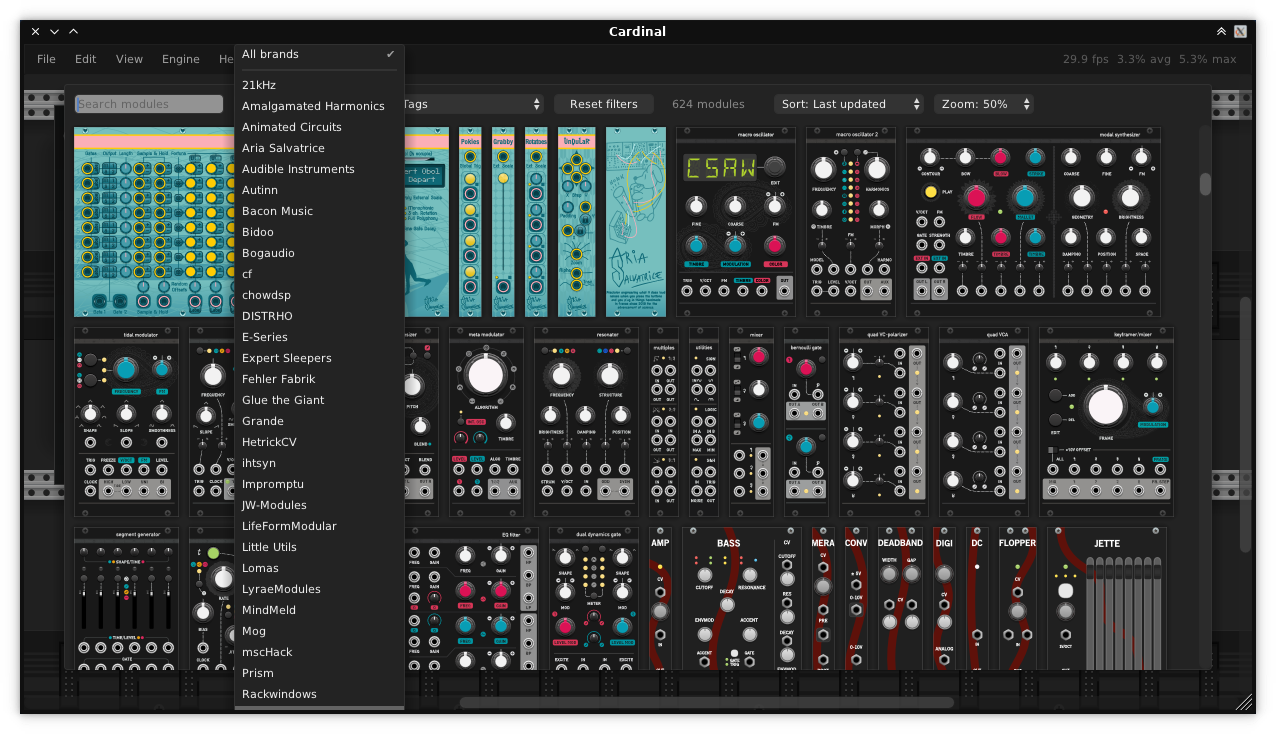
A fully free and self-contained modular synthesizer based on the popular VCV Rack. Available in AudioUnit/CLAP/LV2/VST2/VST3 plugin formats and as a standalone app for FreeBSD, Linux, macOS, Windows and the Web.








 , Mac OSX
  and Windows



 The Audio File