OwlPlug is a desktop application for Windows and Mac that simplifies VST Plugin management and installation. User installed plugins are automatically discovered and new plugins can be installed through Stores. The default store called OwlPlug Central delivers quality plugins made by the community. Any third party plugin distributors can set up a compatible Store and let owlplug interact with it. OwlPlug is still in a beta stage, all kind of feedbacks are welcomed.
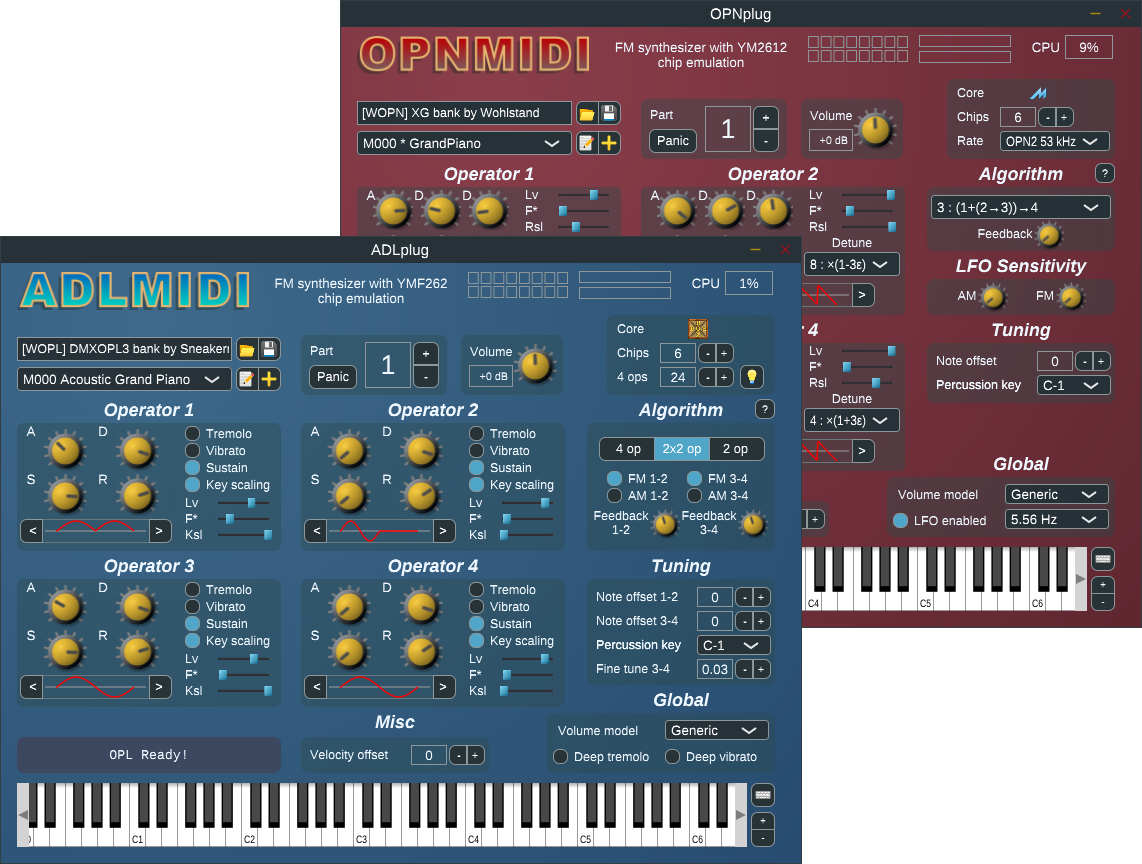
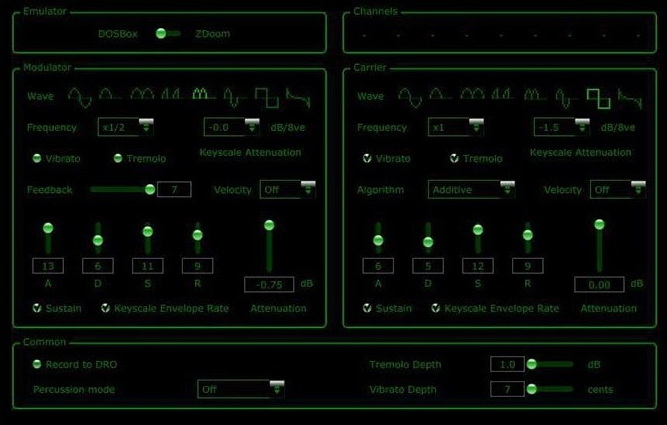
Synthesizer plugin for ADLMIDI and OPNMIDI (VST/LV2). This software package provides FM synthesizer plugins, based on OPL3 and OPN2 sound chip emulations. The emulations and the drivers are provided by libADLMIDI and libOPNMIDI.
control of multiple YMF262/YM2612 emulated chips
high fidelity emulation, with choice of compromise level (good fidelity / fast, excellent fidelity / slow)
synthesis of melodic and percussive instruments
bundled collection of instruments
support for dynamic parameterization and automation
rigorous implementation of the MIDI standard
multi-channel operation with General MIDI compatibility
ability to synthesize entire MIDI files out of the box
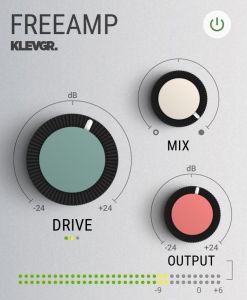
Sounding good has never been this cheap. Even though FreeAMP may look simple, all the algorithms from our amplifying modeler plugin REAMP are still in there. In this free version, we’ve combined our favourite profiles from REAMP into one universal profile. When processing audio through FreeAMP you’ll get the sound of tape and tube saturation at the same time. It can be used on anything that needs to be vitalized, from single tracks, stems or full mixes. And the best thing is that it is Totally free! (requires an account)
Requires macOS 10.9 or later, Windows 7 (SP1) or later, running a AU, VST or AAX compatible 64-bit host.
Zrythm is a cross-platform digital audio workstation designed to be featureful and easy to use. Automate almost anything with automation events using straight lines, ramps and curves, or with LFOs and envelopes. Featuring a chord pad for quickly trying out chords in a scale and a chord track to help with chord progressions.
Complete support for LV2 and VST2, with experimental support for VST3, AU, SFZ and SF2. Fully JACK aware, including support for JACK transport, ALSA, WASAPI, Windows MME, CoreMidi and CoreAudio.
Zrythm (Basic) is free software. Use, study, share and improve it freely. Available in multiple languages including English, French, Galician, Portuguese, Japanese and German.
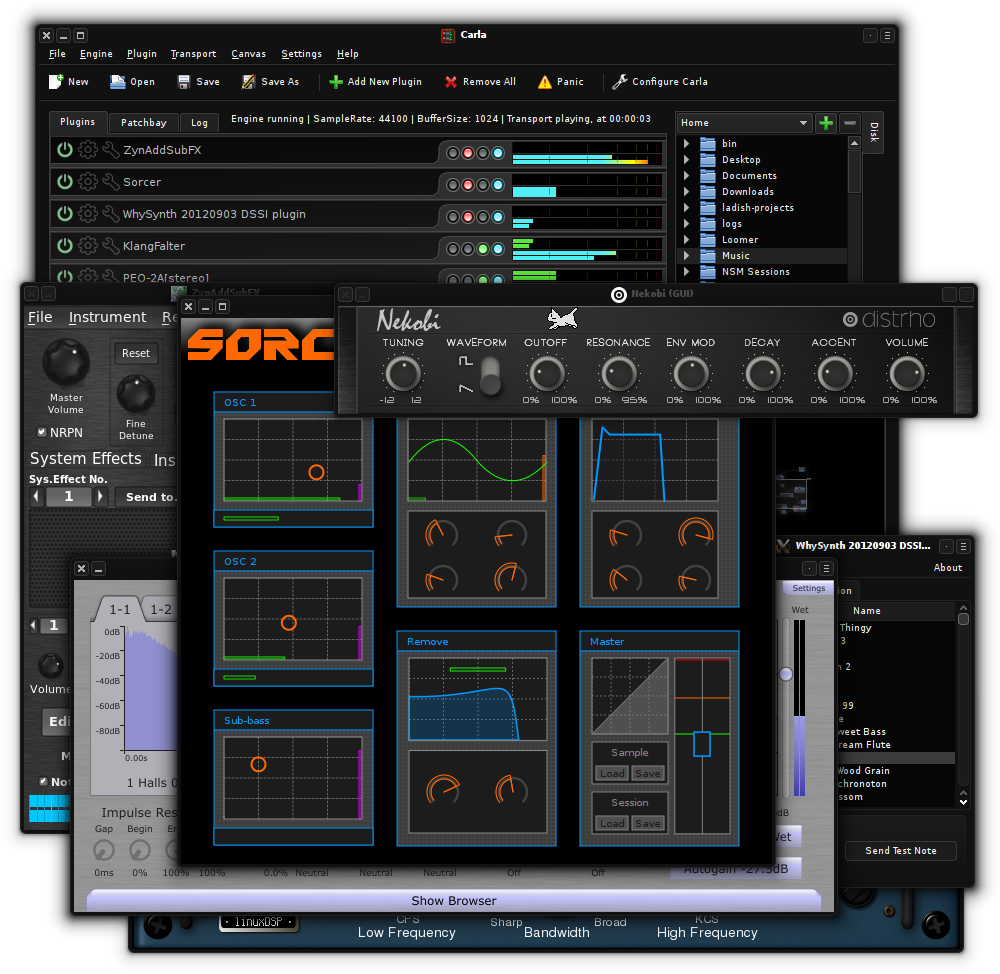
Carla is a fully-featured modular audio plugin host, with support for many audio drivers and plugin formats. It has some nice features like transport control, automation of parameters via MIDI CC and remote control over OSC.
Carla currently supports LADSPA (including LRDF), DSSI, LV2, VST2, VST3 and AU plugin formats, plus SF2 and SFZ file support. It uses JACK as the default and preferred audio driver but also supports native drivers like ALSA, DirectSound or CoreAudio.
There are 4 types of engine processing:
Single-client: (JACK driver only) Same as Multi-client, except that all JACK ports belong to a single master client. This is needed when a setup doesn’t support multi-client JACK apps, such as LADISH.
Multi-client: (JACK driver only) Every single plugin is exposed as a new JACK client. Audio and MIDI ports are registered as needed.
Rack: Plugins are processed in order, from top to bottom. Plugins with non-stereo audio channels are not supported, but a forced-stereo option is available for Mono ones.
Patchbay: Modular patchbay mode, just like in JACK Multi-client and many other modular applications. Every plugin gets its own canvas group and ports allowing you to interconnect plugin audio and MIDI.
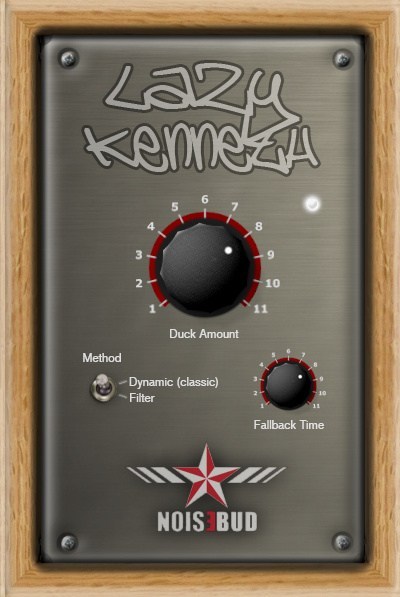
Lazy Kenneth will help those who don’t know how to use, or are too lazy to use sidechain to handle heavy basslines that collide with the bass drum in 4/4 music. That is music where you put a bass drum on all fours, techno, house, trance, minimal, tribal and so on. Put Lazy Kenneth on the bassline track and it will automatically duck the signal when the bass drum hits. You could place a LK on all tracks except the bass drum for some real heavy pumping effect.
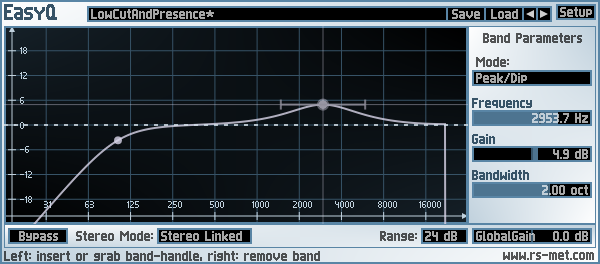
EasyQ is an easy-to-use equalizer with an arbitrary number of filter stages in series connection. Each of the filter stages can operate in one of the following modes: peak/cut (aka bell or parametric EQ), high- or low-shelving, notch and low- or highpass (both with either 6 or 12 dB/oct slope). EasyQ is also easy on the CPU and just does what an EQ is supposed to do without performing any additional voodoo. As such, it is well suited to serve as a go-to EQ for the routine equalizing tasks.
Key Features:
unlimited number of filter stages (“bands”)
each stage can be one of the following characteristics: bell, low-/high-shelf, low-/highpass (6 or 12 dB/oct), notch
clean equalization – no additional colorations
low CPU usage
+-48 dB gain range
stereo modes: linked, left/right, mid/side and mono
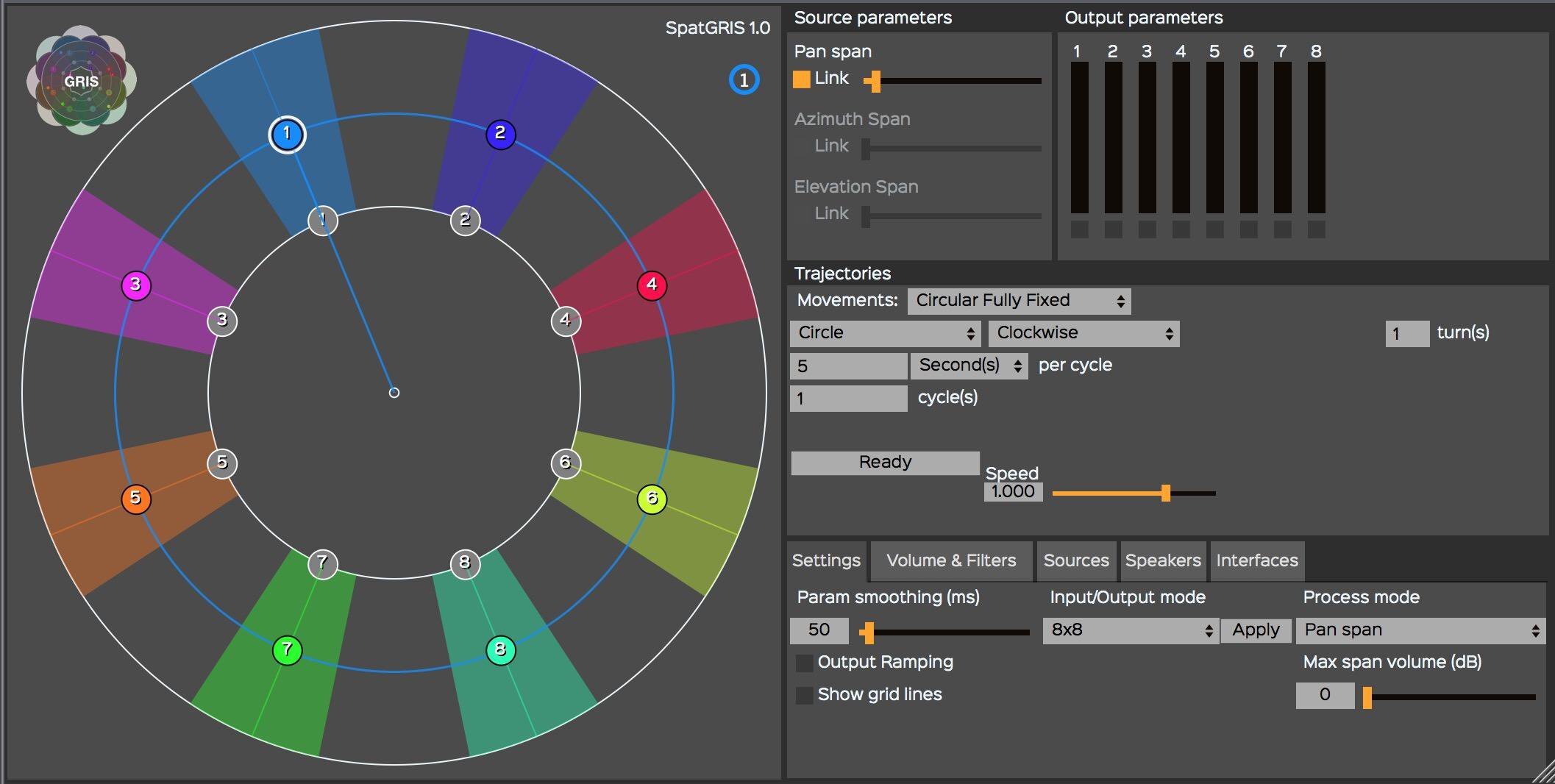
The SpatGRIS is a plugin (Mac AU/VST and VST Windows format) designed to compose multichannel space. It allows the user to spatialize the sound in 2D (up to 16 speakers) or in 3D (up to 128 speakers) under a dome of speakers (with the ServerGRIS, available also on SourceForge). It includes two audio modes, — Free Volume and PanSpan — and one OSC mode. SpatGRIS is a fusion of two former plugins by the GRIS: OctoGRIS and ZirkOSC with a lot of new features. Automated Trajectories are included. It is possible to control it from external controllers such as Joystick, iPad or Leap Motion.
Features:
Three modes: Free Volume, Pan Span, OSC Spatialization
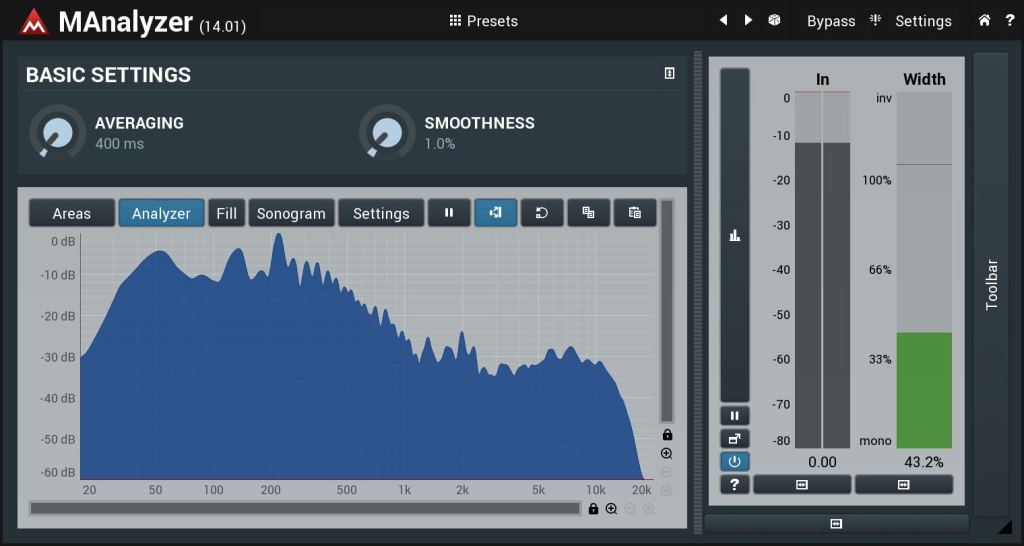
MAnalyzer is an advanced spectral analyzer and sonogram containing unique features such as smoothing, normalization, super-resolution, prefiltering and deharmonization. The included meters provide a peak meter and EBU R128 and ITU-R BS 1770-3 compliant loudness meter.
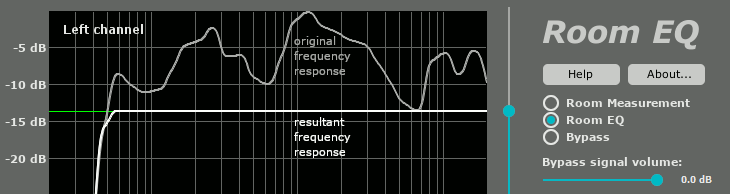
The frequency response of your room is very different in every point of the room. “Good” equalization in one point can worsen the sound in the neighboring point. Single-point equalization is not reliable and cannot be used in a professional room correction system. On the other hand, multipoint equalization is not simple; both the volume and the phase of the testing signal are very different in different points of the room. Simple averaging is not applicable. MathAudio Room EQ applies a state-of-the-art multipoint correction algorithm which ensures the best possible improvement in every point of the listening area.
Corrects deficiencies of room acoustics (multipoint compensation).
Corrects acoustic imperfections of speakers.
Avoids the pre-echo (pre-ringing) problem of conventional convolver-based room correction systems. The absence of pre-echo ensures the neutrality of the sound.
Works in rooms, halls and outdoor venues of any size.
Works with zero latency. Perfect for live performances and studio monitoring.
Doesn’t delay the audio track when playing video.
Corrects both amplitude and phase components of frequency response.
Quells resonance peaks of frequency response while leaving the deep notches.
Avoids the overcompensation which happens in conventional linearizing room correction systems.
Manually adjustable level of compensation allows one to reach the maximum transparency of the sound.
Supports full range of sample rates from 44,056 kHz up to 384 kHz. All sample rates are supported without resampling to avoid any possible loss in quality.
Includes a custom target curve feature.
Applies 64-bit signal path throughout.
Works with USB measurement microphones (e.g. MiniDSP UMIK-1 or Dayton Audio UMM-6) or standard measurement microphones (e.g. NADY CM100 or Dayton Audio EMM-6).
Supports microphone calibration files.
Applies a patented method of frequency response correction.













 The Audio File