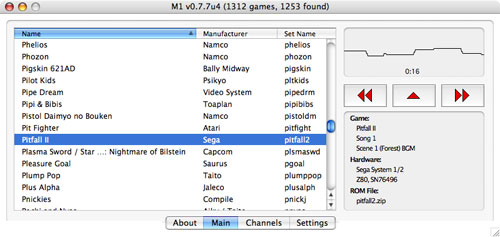
M1 plays the music from arcade games by running the code in the original ROMs (not supplied). This allows entirely authentic playback of classic video game tunes while you work. M1 does not play music from console and computer games; for that you should use Audio Overload.
System-wide audio equalizer for the Mac. Basic edition is free and open source. Improves your audio listening on OSX / macOS. Experience music on your Mac, how it’s meant to be.
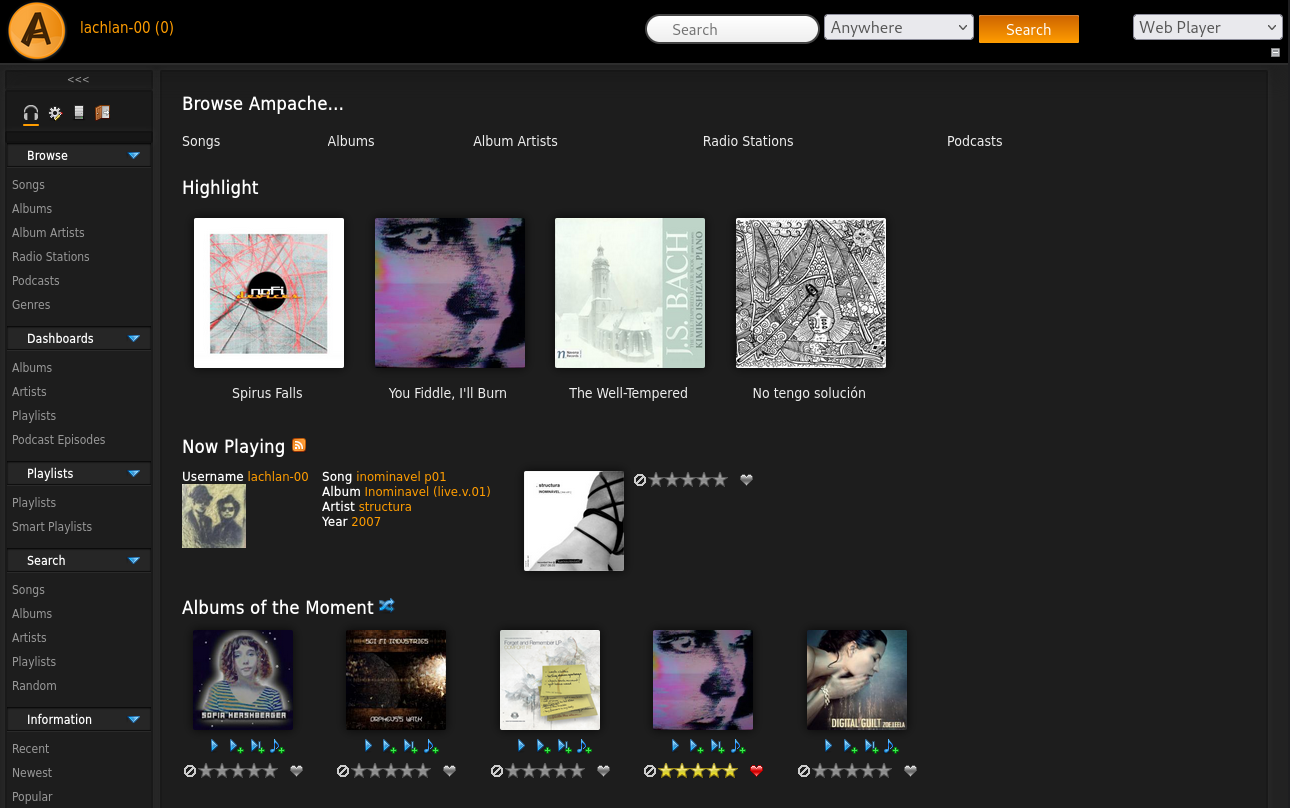
A web based audio/video streaming (PHP) application and file manager allowing you to access your music & videos from anywhere, using almost any internet enabled device.
Music Player Daemon (MPD) is a flexible, powerful, server-side application for playing music. Through plugins and libraries it can play a variety of sound files while being controlled by its network protocol.
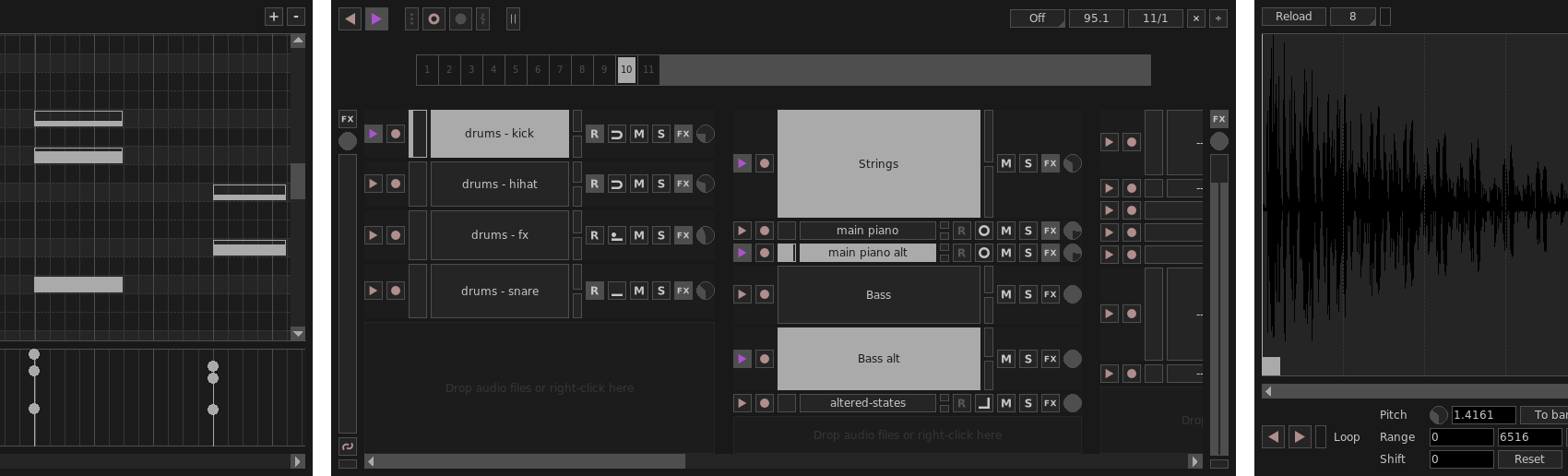
Giada is a free, minimal, hardcore audio tool for DJs, live performers and electronic musicians. How does it work? Just pick up your channel, fill it with samples or MIDI events and start the show by using this tiny piece of software as a loop machine, drum machine, sequencer, live sampler or yet as a plugin/effect host. Giada aims to be a compact and portable virtual device for Linux, Mac and Windows for production use and live sets.
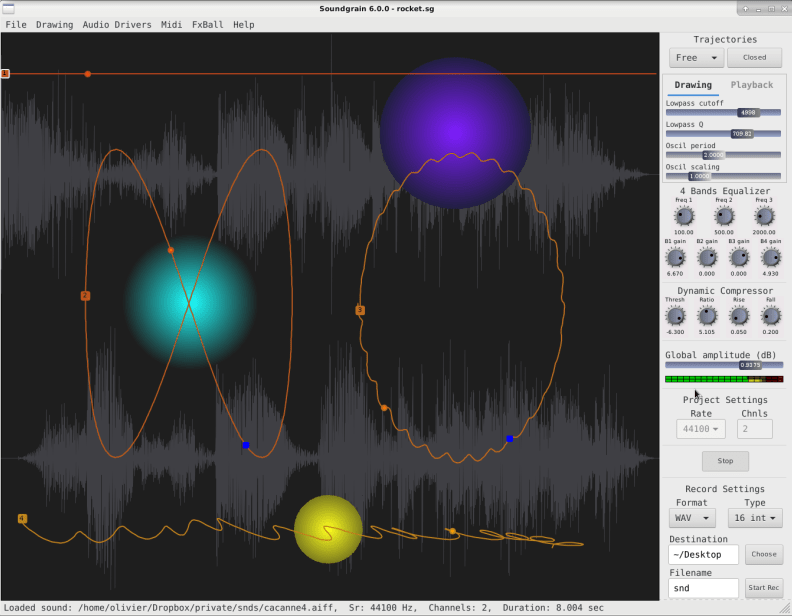
Soundgrain is a graphical interface where users can draw and edit trajectories to control granular sound synthesis. Soundgrain is written with Python/WxPython and uses Pyo as its audio engine.
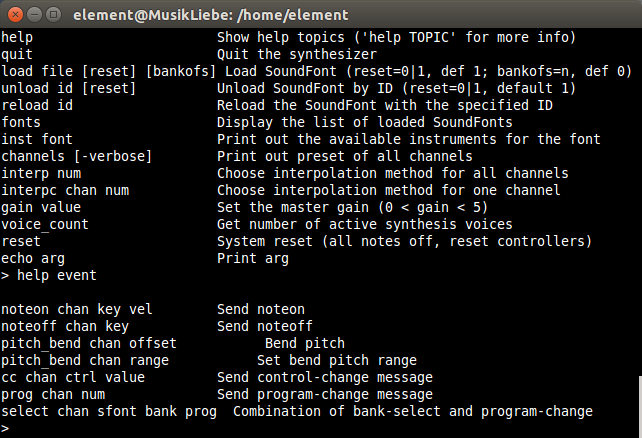
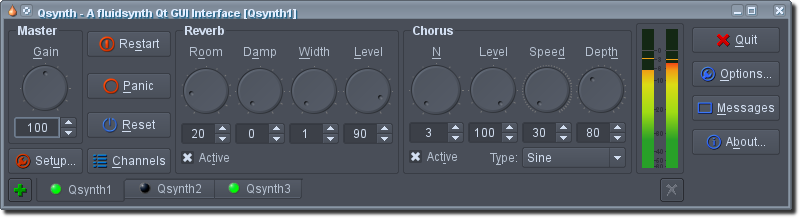
FluidSynth is a real-time software synthesizer based on the SoundFont 2 specifications and has reached widespread distribution. FluidSynth itself does not have a graphical user interface, but due to its powerful API several applications utilize it and it has even found its way onto embedded systems and is used in some mobile apps.
Features:
Cross platform support (Linux, macOS and Windows to name a few)
SoundFont 2 support
SoundFont 3 support (vorbis-compressed SF2)
Realtime effect control using SoundFont 2.01 modulators
Playback of MIDI files
Shared library which can be used in other programs
FluidPatcher is a performance-oriented interface for FluidSynth built using wxpython to create a simple GUI that allows live editing, selecting, and playing of patches. A patch is a collection of settings such as soundfont presets for each MIDI channel, control-change/sysex messages to send when the patch is selected, and midi router or effects settings. Groups of patches are stored in banks, which are saved as human-readable and -editable YAML files. This allows a musician to easily create complex combinations of synthesizer settings ahead of time and switch between them on the fly during a performance.
Features:
Live playing: Play on your MIDI controller and hear the results
Customization: Create your own combinations of instruments/effects
Extendability: Use the included libraries to design your own implementations/software
The Facebook 360 Spatial Workstation is a software suite for designing spatial audio for 360 video and cinematic VR. It includes plugins for popular audio workstations, a time synchronized 360 video player and utilities to help design and publish spatial audio in a variety of formats. Audio produced with the tools can be experienced on Facebook News Feed on Android and iOS devices, Chrome for desktop and the Samsung Gear VR headset through headphones.
Soundboard makes building / executing sound cues for theatrical performance a snap. With a mix of sound, fade, stop, pause, and resume cues, you can create elegant designs, and execute them with the simple push of a button.
Create elegant designs using a combination of simple cue types.
Supports popular audio formats, such as wav, mp3, and Ogg
Written in Java for true cross-platform compatibility
Simple to use, so you’ll have a novice operator running the show perfectly in no time.
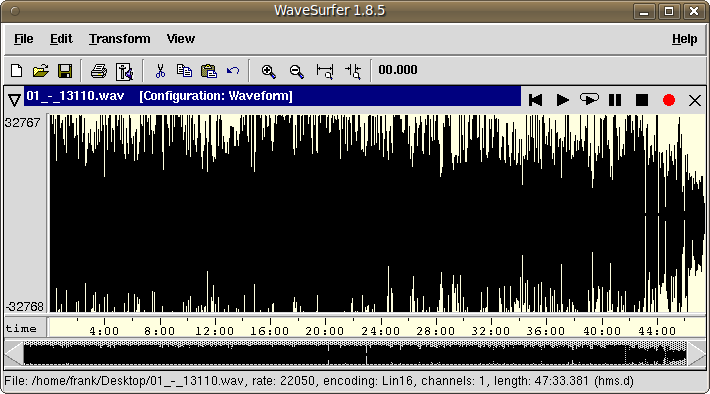
WaveSurfer is an open source tool for sound visualization and manipulation. Typical applications are speech / sound analysis and sound annotation / transcription. WaveSurfer may be extended by plug-ins as well as embedded in other applications. Features:
Customizable – users can create their own configurations. Localization support.
Extensible – new functionality can be added through a plugin architecture.
Embeddable – WaveSurfer can be used as a widget in custom applications.
Transcription file formats – reads, and writes HTK (and MLF), TIMIT, ESPS/Waves+, and Phondat. Support for encodings and Unicode.












 The Audio File