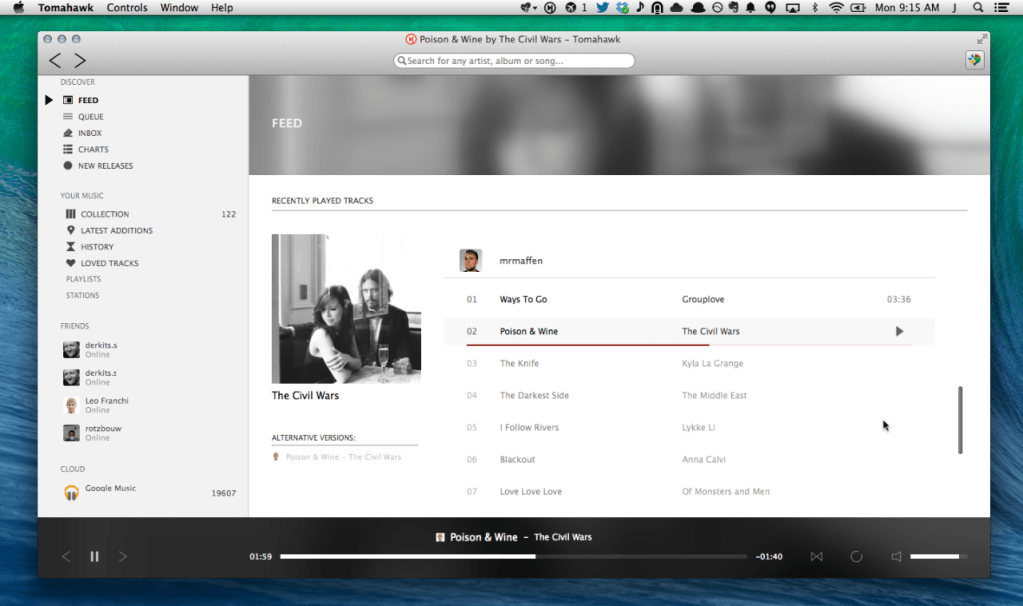
Tomahawk is a free multi-source and cross-platform music player. An application that can play not only your local files, but also stream from services like Spotify, Beats, SoundCloud, Google Music, YouTube and many others. You can even connect with your friends’ Tomahawks, share your musical gems or listen along with them. Let the music play!
Tomahawk is basically a player for music metadata. At its core it decouples the metadata about a song from the source and reassembles it for each user based on their individual music accessibility and rights. In short, given the name of a song and artist, Tomahawk will find the right source, for the right user at the right time. This fundamentally different approach to music enables a range of new music consumption and sharing experiences previously not possible.
Music Sources:
Local music library (MP3, Ogg, FLAC and many other formats)
Networked music libraries (other connected computers)
Third party-developed resolvers have also been written for services like YouTube, Qobuz and others. We’ve also heard of digital music distributors writing their own for their internal CMSes to help them navigate and preview their content. That’s cool.
Tapedeck is an audio editor for Linux with an alternative control interface. Instead of a mouse, keyboard, and screen, it uses the DJ board Hercules DJ Control Instinct, and a set of LED graph displays (not currently implemented, simulated with terminal graphics).
GXLame is an MP3 encoder based off of LAME v3.98.4 and v3.99b0 which has been heavily optimized for high-quality, low-bitrate VBR encoding. It is similar in concept to other popular encoders at these bitrates such as some AAC codecs, Vorbis mods, and so forth at bitrates down to 56kbps. This codec does not rely on aggressive lowpassing or resampling to achieve these low bitrates, and the quality aims to be acceptable at much lower bitrates than have come to be expected of the standard.
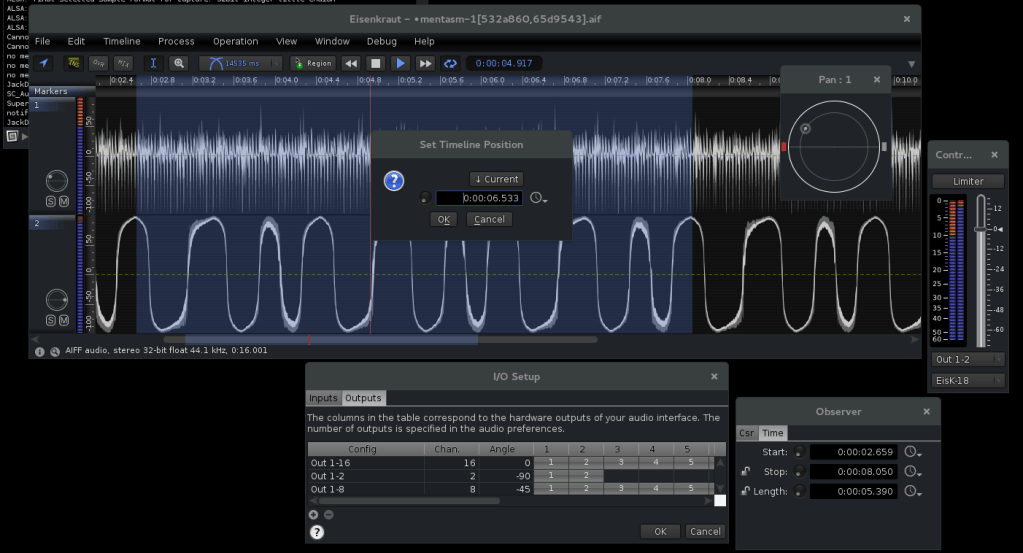
The audio file editor, baptised ‘Eisenkraut’, came into existence (as a scaffold) during a project class on audio programming in Java at the SeaM in Weimar. It is distinguished by a number of traits which makes it particularly interesting in the field of computer music: There are no restrictions with regard to the number of channels in a file, and there is an OSC interface via which the functionality can be extended, for example using the SuperCollider language. Possible applications of such extensions are the transfer of marker information or the maintenance of meta data for segmented files, the algorithmic editing (cut/copy/paste) of files, or the addition of your own sound transformations or special decoders (e.g. an MS matrix).
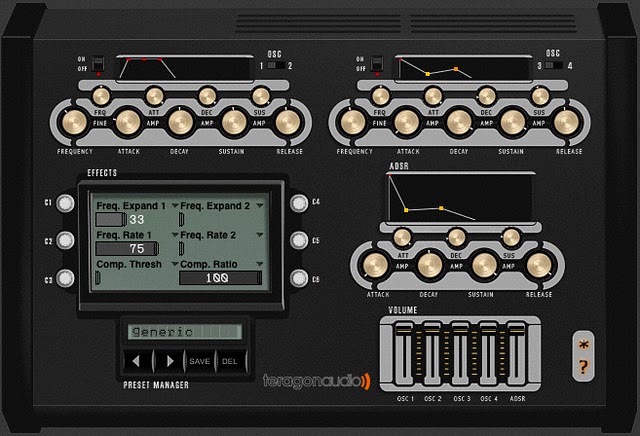
KickMaker is a synthesizer designed specifically to create good kick drum sounds. It uses four independent oscillators and a wide range of effects, allowing one to create perfectly customized beats.
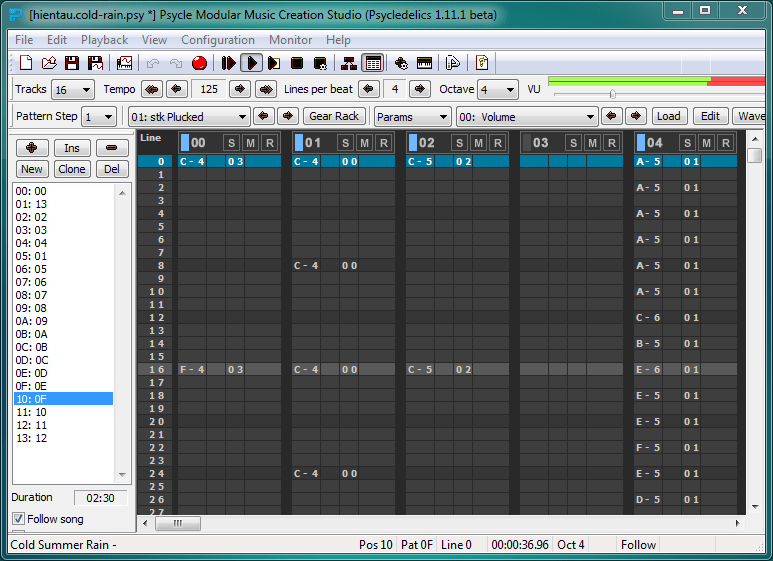
Psycle is a Music tracker (like FastTracker 2 or Impulse Tracker) combined with plugin modularity. It supports its own plugin API, the VST2 plugin standard, and a tracker style sampler playback.
Wok Loudness simulates the loudness button on old HiFi amps, which alters the frequency response curve to correspond roughly with the equal loudness characteristic of the ear at lower volumes.
The level of high and low frequencies is increased at low listening levels, to compensate for the fact that as the volume of audio decreases, the ears lower sensitivity to extreme high and low frequencies may cause these signals to fall below threshold. As a result audio material may seem to become ‘thin’ sounding at low volumes, losing bass and treble, the ‘Loudness compensation’ button (often just labelled ‘Loudness’ or ‘Loud’) is intended to rectify this situation.
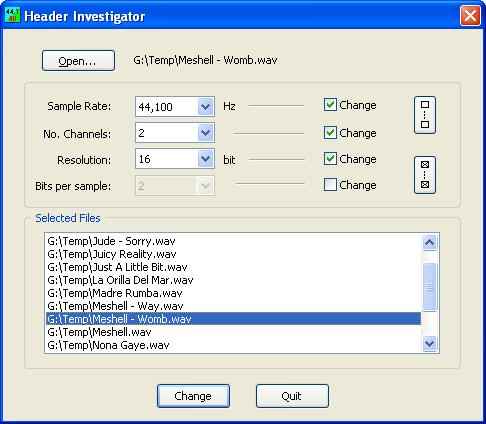
Header Investigator allows the user to open WAV audio files and display the header information and make changes. The actual audio data is never changed… simply the header information. This is useful if the user has accidentally recorded audio while locked to an external digital clock source so that the header sample rate is a mismatch to the actual sample rate of the data – which causes the sound file to play back at the wrong pitch. By simply changing the sample rate in the header – the WAV files can be corrected without having to retransfer or sample rate convert the file.
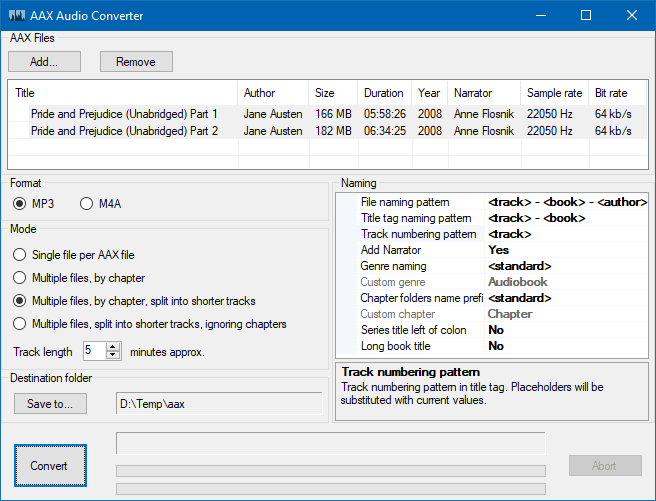
A cross-platform, multi-format audio conversion and tagging suite for .NET and PowerShell. Formats currently supported are MP3, MP4 AAC, FLAC, Apple Lossless (ALAC), Opus, Ogg Vorbis and Wave.
This project supplants PowerShell Audio by targeting both Windows PowerShell and PowerShell Core (Windows, Linux and MacOS).

Distraction-free – Helio is an attempt to rethink a music sequencer to create a tool that feels right. It provides a lightweight UI to help you get into the zone and focus on your ideas.
Clear over clever – Visualize music in a way that doesn’t seem so smoke and mirrors. The app may serve as a learning tool you need to grow as a composer.
Cross-platform tech – Available for all major platforms, desktop and mobile. Hosts VST and AudioUnit, runs on CoreAudio, ASIO, DirectSound, ALSA, JACK and OpenSLES. Exports to MIDI, WAV and FLAC.