Adcd is a CD player for GNU/Linux with a ncurses (text mode) interface.
Adcd can play all the tracks from a disc in order (linear mode), or in the order specified by the user (playlist mode), and includes all the functions expected in a stand-alone cd player, including random play and loop mode.
Adcd also features a non-interactive mode for those who want to play their CDs while using the console for something else.
Most probably the CD drive needs to be connected to the audio card through an analog audio cable for adcd to be able to play the CD. You may also need a mixer program like rexima or aumix to activate the audio card.
“Fluajho” (with jh as in pleasure) means fluid in Esperanto. It is a simple sf2 soundfont host/player for Linux. Behind the scenes the Fluidsynth library is at work, hence the name. .sf2 is an old file format for making MIDI signals audible through virtual instruments, although it is still in moderate use today.
Why does Fluajho exist? There are many soundfont players for Linux, most of them even based on Fluidsynth. Fluajho was written for a clearly defined use case: Load an .sf2 in the New Session Manager (Agordejo) and save the soundfont in the session directory. This makes it possible to archive the session, for example as a backup or to share it. You can load one soundfont file per Fluajho instance. Each instance holds 16 of the soundfonts instruments that can be assigned to 16 MIDI channels. Finally connect external sequencers, such as Laborejo, Patroneo or Vico, through JACK-Midi to play the instruments.
This is a very simple application to organize your files.
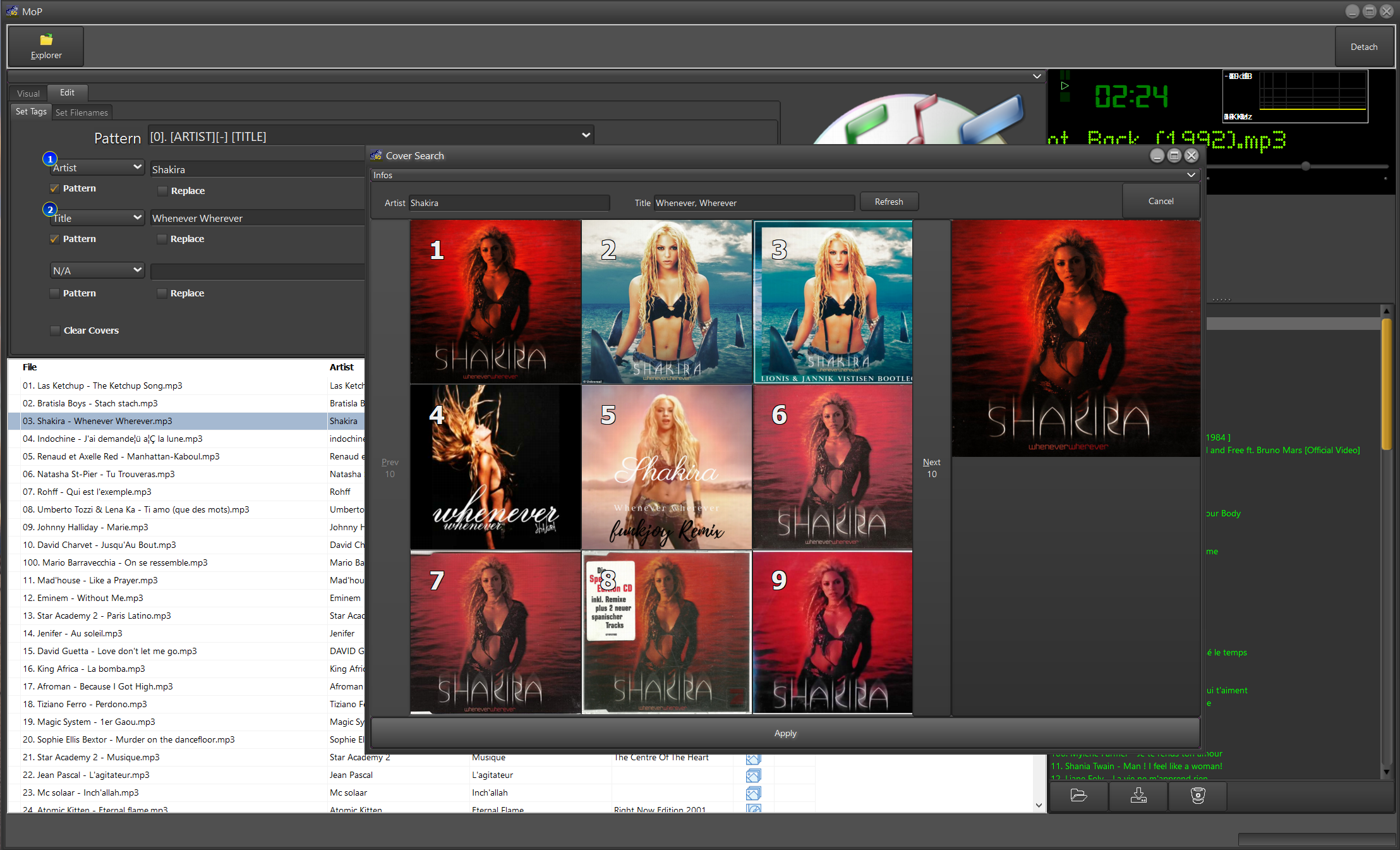
MoP does not use a database. It focuses on the files. The aim is to quickly and easily clean up your MP3 tags and filenames but, more important, to find the covers that are missing.
Where other softwares uses the “Album” to retrieve a cover, MoP uses the Artist AND the Title. So when you have huges collections of singles or compilations, you are able to find the covers for that song only. Of course, it can search for albums covers as well.
MoP as a built in RegEx engine that will allow you to extract the missing tags based on the file name. You will also be able to rename your misformed MP3 files based on the tags according to any pattern you provide.
MoP will always be improved ….. As it will be my main application to manage and edit my huge MP3 collection. I will be more than happy to receive critics, suggestions and demands to make it evolve 🙂
Features:
Organize music media files
Edit main tags (Artist, Title, Album, Genre, Cover)
Search Covers ON-LINE based on the artist and title, NOT ONLY on albums
CloudTunes provides a unified interface for music stored in the cloud (YouTube, Dropbox, etc.) and integrates with Last.fm, Facebook, and Musicbrainz for metadata, discovery, and social experience. It is similar to services like Spotify, except instead of local tracks and the fixed Spotify catalog, CloudTunes uses your files stored in Dropbox and music videos on YouTube.
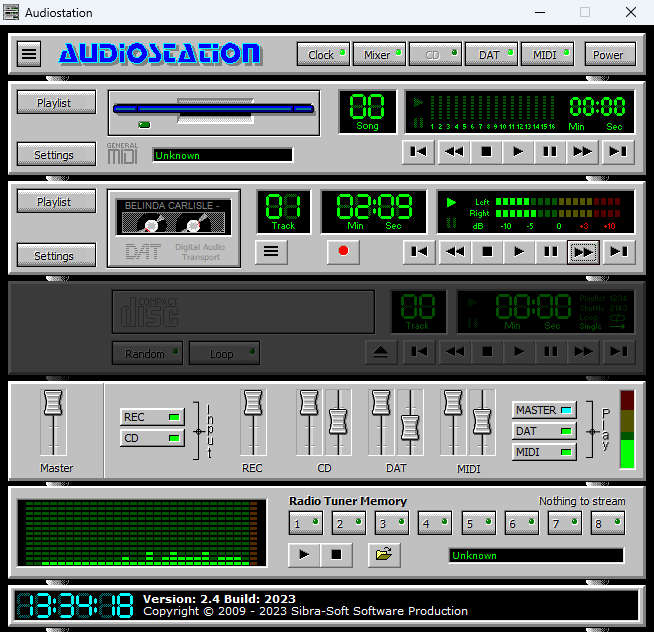
With AudioStation you can easily listen to the most common music files like mp3 and wav etc. Just click on the music file and AudioStation will automatically start playing your favorite music.
Features:
With original Creative Labs™ sample files (reggae.mid, jaz.mid, etc.)
Support for multiple playlists (wpl, pls, m3u, etc.)
Track repeat and random shuffle functions
Supporting languages: English & Dutch
Plays all common audio files like mp3, wav, mid, etc.
Midi Player, Wav Player, Mp3 Player & CD Player
Also support for cda, m4a, ra, rm, act, caf, wsaud, w64, ogg, amo, voc
With Floppy, Tape and CD-ROM animations
Working mixing sliders
With audio record function
With audio capture function to record speaker sound
RuneAudio is a free and open source software that turns embedded hardware into Hi-Fi music players. We want to make a cheap, low-consumption and silent mini-PC perform as an high fidelity digital source. RuneAudio features a custom-built Linux distribution (RuneOS) and a web player (RuneUI) which allows to remote control playback and setup options, from multiple devices (desktop PC, netbook, tablet, smartphone).
Features:
Easy to install and use
A custom built, optimized and small footprint Linux-based OS (RuneOS)
Runs on a variety of embedded platforms
Works with almost every model of USB DAC in commerce
Bitperfect and gapless playback of common audio formats (FLAC, WAVE, MP3, AAC, ALAC, etc.)
Supports native DSD playback with DSD-over-PCM
Playback from network drives (over CIFS and NFS protocols) and USB drives (FAT32 and NTFS)
Playback of web radio streams
Built-in web interface (RuneUI) for playback and setup control
Can be controlled from a lot of third party clients (desktop and mobile)
Bongo is a flexible and usable media player for GNU Emacs. If you store your music collection locally and use structured file names, then Bongo is a great way for you to play music from within Emacs.
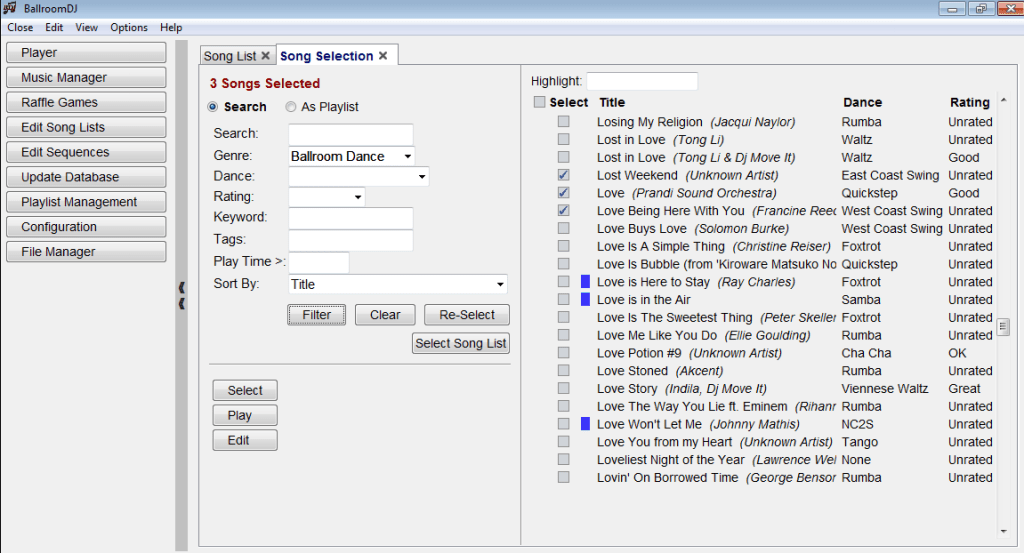
BallroomDJ is a ballroom music player. It is designed to be able to play music the entire evening without intervention. Use for your personal training, dance studio, and ballroom, dancesport, Argentine tango, country western, or west coast swing events.
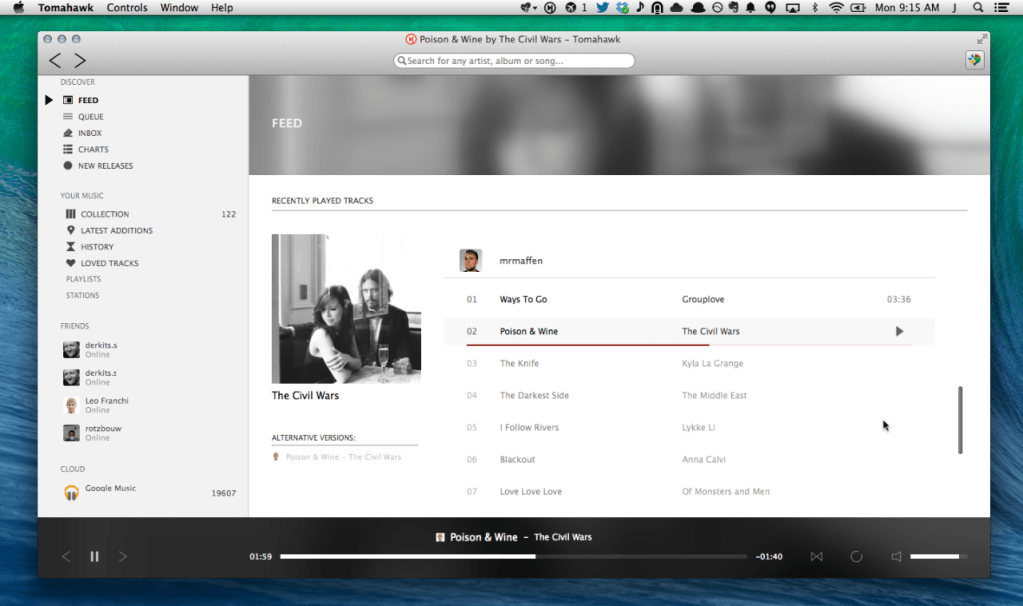
Tomahawk is a free multi-source and cross-platform music player. An application that can play not only your local files, but also stream from services like Spotify, Beats, SoundCloud, Google Music, YouTube and many others. You can even connect with your friends’ Tomahawks, share your musical gems or listen along with them. Let the music play!
Tomahawk is basically a player for music metadata. At its core it decouples the metadata about a song from the source and reassembles it for each user based on their individual music accessibility and rights. In short, given the name of a song and artist, Tomahawk will find the right source, for the right user at the right time. This fundamentally different approach to music enables a range of new music consumption and sharing experiences previously not possible.
Music Sources:
Local music library (MP3, Ogg, FLAC and many other formats)
Networked music libraries (other connected computers)
Third party-developed resolvers have also been written for services like YouTube, Qobuz and others. We’ve also heard of digital music distributors writing their own for their internal CMSes to help them navigate and preview their content. That’s cool.
Shairport Sync is an AirPlay audio player – it plays audio streamed from iTunes, iOS, Apple TV and macOS devices and AirPlay sources such as Quicktime Player and ForkedDaapd, among others.
Audio played by a Shairport Sync-powered device stays synchronised with the source and hence with similar devices playing the same source. In this way, synchronised multi-room audio is possible for players that support it, such as iTunes and the macOS Music app.
Shairport Sync runs on Linux, FreeBSD and OpenBSD. It does not support AirPlay video or photo streaming.












 The Audio File