A MIDI-controlled harmonizer audio plugin.
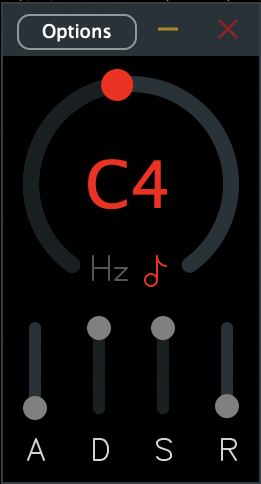
github.com/maxwellpollack/repitch

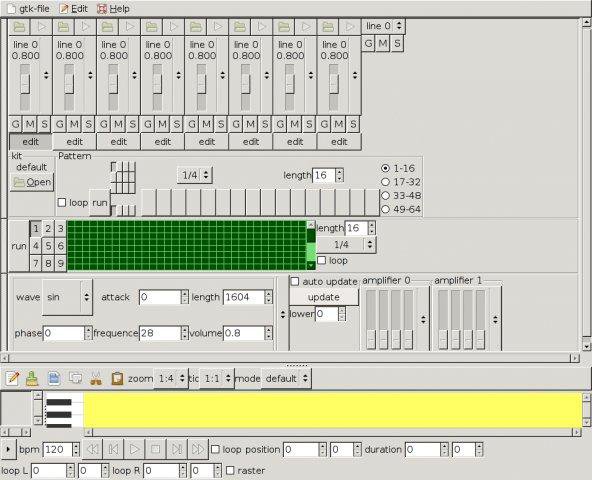
Advanced GTK+ Sequencer is intended to use for music composition. It features a piano roll, as well a synth, matrix editor, drum machine, soundfont2 player, mixer and an output panel.
It’s designed to be highly configurable, you may add effects to its effect chain, add or remove audio channels/pads.
You may set up a fully functional network of engines, therefore exists a link editor for linking audio lines.
In conjunction with AGS you need a realtime kernel and alsa support. `ags` uses conditional locks to keep several threads in sync that’s why you need at least a preemptible kernel.

KXStudio is a collection of applications and plugins for Linux, Mac and Windows audio production. KXStudio also provides Debian and Ubuntu compatible repositories.

“Fluajho” (with jh as in pleasure) means fluid in Esperanto. It is a simple sf2 soundfont host/player for Linux. Behind the scenes the Fluidsynth library is at work, hence the name. .sf2 is an old file format for making MIDI signals audible through virtual instruments, although it is still in moderate use today.
Why does Fluajho exist? There are many soundfont players for Linux, most of them even based on Fluidsynth. Fluajho was written for a clearly defined use case: Load an .sf2 in the New Session Manager (Agordejo) and save the soundfont in the session directory. This makes it possible to archive the session, for example as a backup or to share it. You can load one soundfont file per Fluajho instance. Each instance holds 16 of the soundfonts instruments that can be assigned to 16 MIDI channels. Finally connect external sequencers, such as Laborejo, Patroneo or Vico, through JACK-Midi to play the instruments.

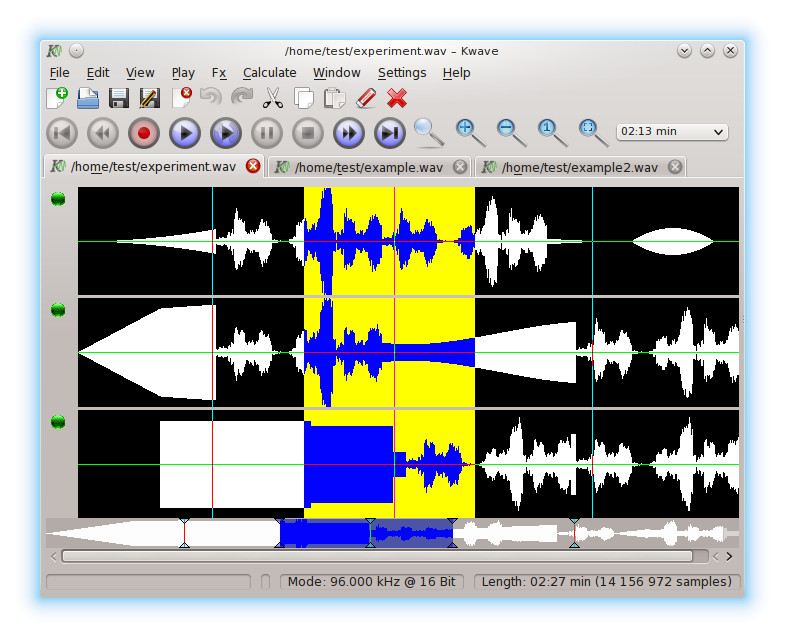
Kwave is a sound editor for the KDE environment. It is written with KDE/QT and is extendable through a powerful plugin interface. For the moment it supports .wav files and many other formats, recording/playback via PulseAudio, Qt Multimedia, OSS and ALSA and some simple effects.
sourceforge.net/projects/kwave/

SeekMIDI is a simple multi-channel MIDI sequencer for quick song creation.

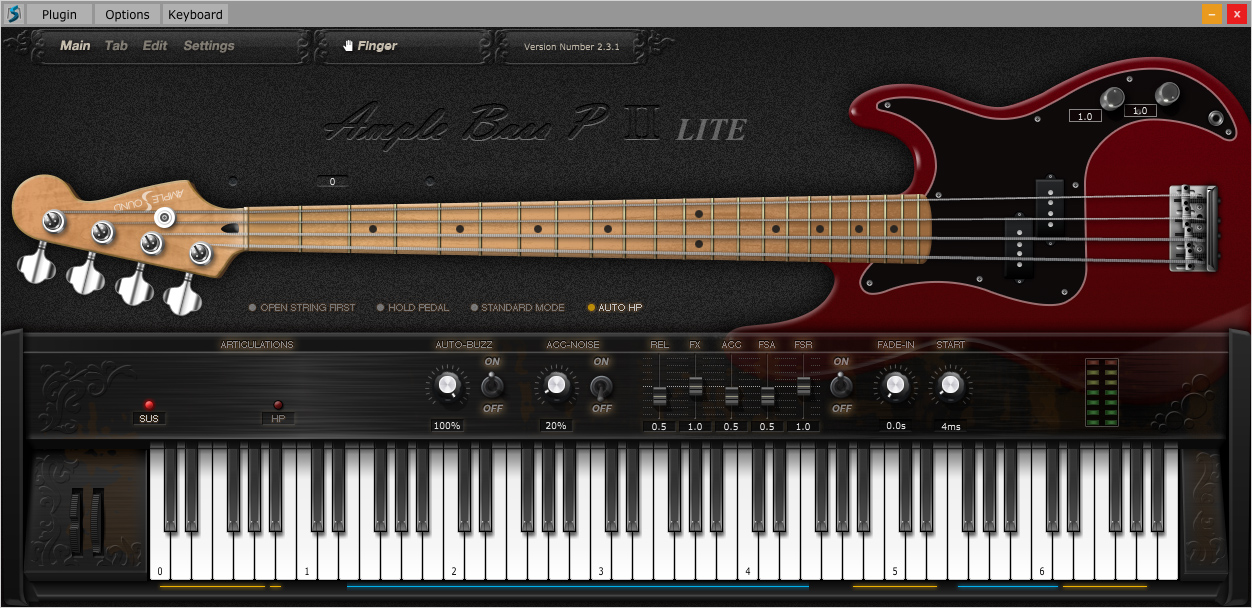
Ample Bass P Lite aims to bring the Fender Precision Bass sound to your studio.
www.amplesound.net/en/pro-pd.asp?id=19

Ample Guitar M Lite aims to bring a Martin D-41 Acoustic Guitar sound to your studio.
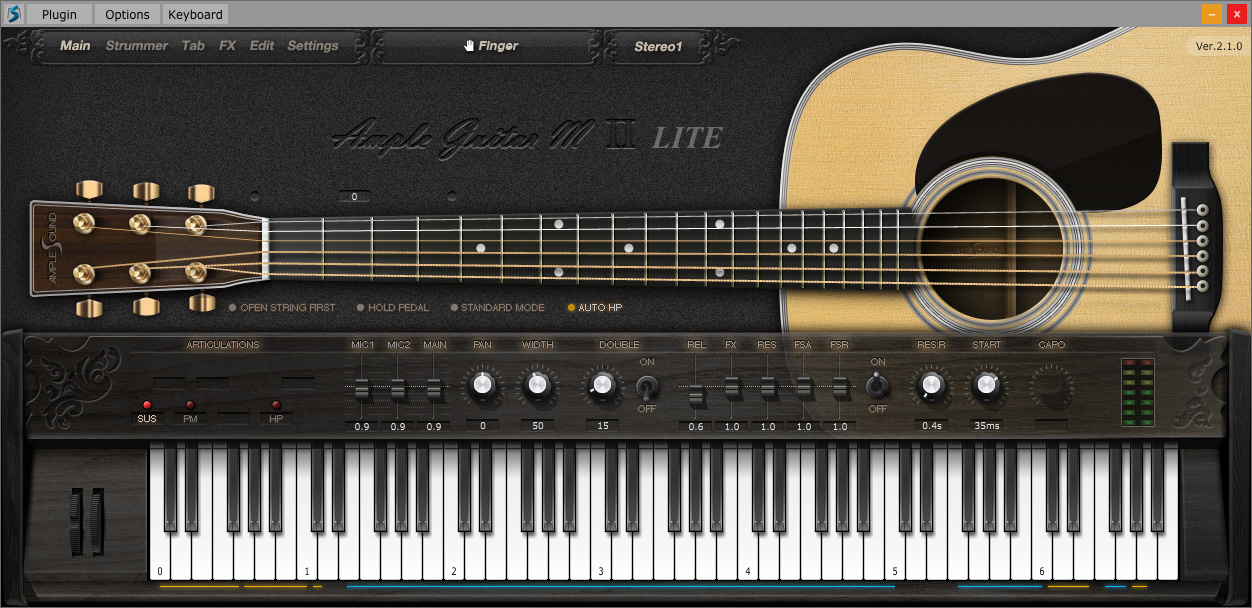
www.amplesound.net/en/pro-pd.asp?id=7

Cloudrum is a unique and relaxing Steel Tongue Drum with a range of 3 octaves. It produces wonderful tones, add color and a unique moderation to your music no matter the genre.
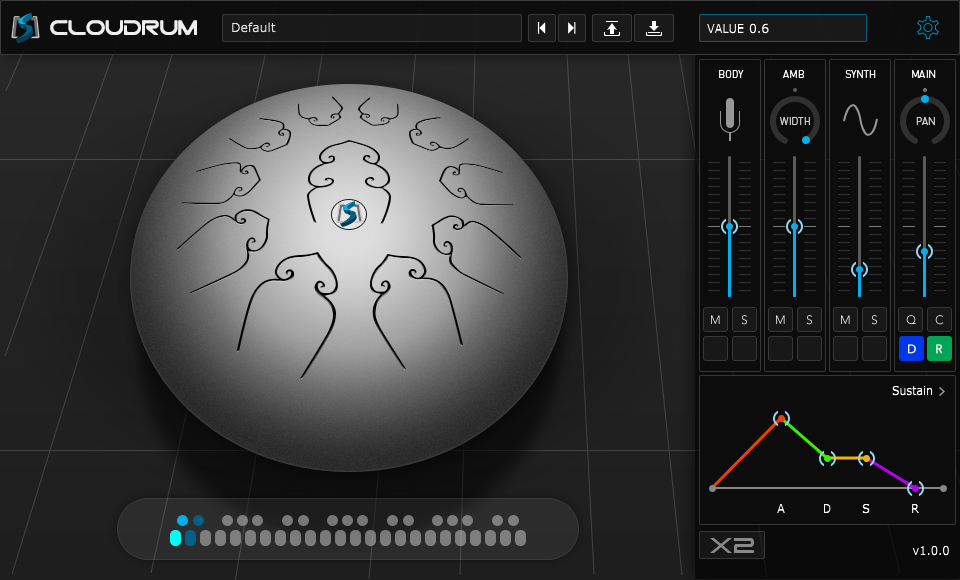
www.amplesound.net/en/pro-pd.asp?id=27

tomita is a command-line music and synthesizer package based on PySynth.
github.com/g4brielvs/python-tomita

PySynth is a suite of simple music synthesizers and helper scripts written in Python 3. It is based on a synth script I found on the Web and then modified for my purposes. The goal is not to produce many different sounds, but to have scripts that can turn ABC notation or MIDI files into a WAV file without too much tinkering.
There are nine PySynth variants now: PySynth A, the oldest variant, only needs Python itself, and sounds somewhat like a cross between a flute and organ. PySynth B is more complex in sound and needs NumPy. It is supposed to be a little closer to a piano. No competition for Pianoteq of course, but a reasonable fit for keyboard music. PySynth E is similar, but an FM-synthesized e-piano so it sounds much brighter than B (slightly DX7 e-piano-like; I used the DX7 presets in hexter as a basis). PySynth S is more comparable to a guitar, banjo, or harpsichord, depending on note length and pitch. PySynth C, D, and P are subtractive synths, reminiscent of 1970s analog synthesizer voices.
The synthesizers are all monophonic, i.e. they can only play one note at a time. (Although successive notes can overlap in PySynth B and S, but not A.) However, two or more output files can be mixed together…
github.com/g4brielvs/python-tomita

All the mp3 files of the music albums that you can download have different name formats or the information tags are empty. AudiQ is a very easy to use application that allows you to format the mp3 file names the way you decide. This application also fills the ID3 tags with the information of each song from the filename. Normalize your audio library.
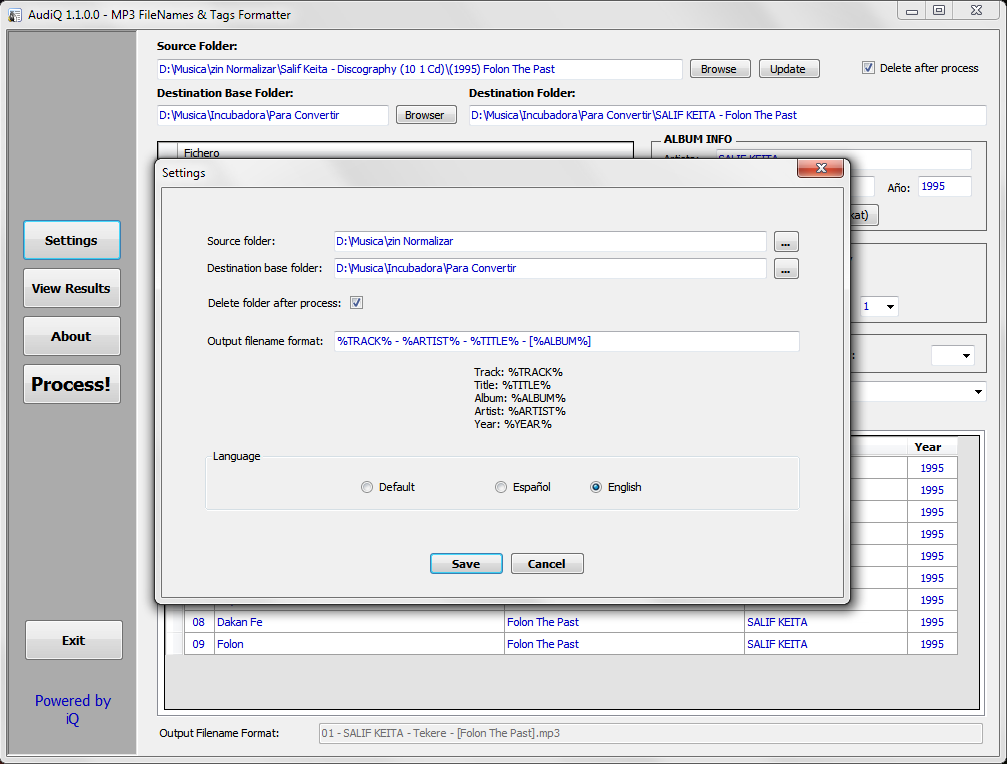
https://sourceforge.net/projects/audiq/


 The Audio File