Wax is a program for cataloging and playing a collection of music recordings. Wax is able to rip CDs and import downloads so that you can create a sound archive complete with metadata.
Wax is fundamentally different from existing music managers in two important ways. First, the fundamental unit for recordings is a “work”, not a track. A work is usually a collection of tracks. It can encapsulate whatever tracks you choose. In pop music, a work can be an album. For symphonic music, a work can be a single symphony, even when the tracks come from a CD with more than one symphony. For operas, a work can be a single opera even when the tracks come from multiple CDs. Music collectors usually think in terms of works, so a music manager that supports the concept makes operation more natural.
The other distinguishing characteristic of Wax is that genres are fundamental to the organization of a collection rather than a mere attribute of a track. Wax recognizes that the ideal way to catalog works varies by genre. For example, symphonic works can be cataloged by composer, work, conductor whereas shows can be cataloged by show, composer, lyricist. By organizing collections around genres, Wax supports an operation sequence that is natural for music lovers: first select the genre, then the work, and finally the tracks.
RTL Utility is a tool for measuring the Round Trip Latency of your Digital Audio Workstation (DAW) and audio interface. The utility is used for low latency performance testing by system builders, reviewers, device manufacturers and at dawbench.com.
When your DAW sends data to your audio interface for playback, it doesn’t send a continuous stream of data one bit at a time. What it does is fill up a section of RAM called a buffer and sends that in a single message when it is ready. Before sending the next message it has to fill the buffer again. This wait time introduces a latency, or delay, between something happening in your DAW and when you actually hear it.
While you are recording, the audio interface buffers and sends data to your DAW in a similar fashion. This introduces latency into your recordings.
If you send a signal from your DAW, out through the audio interface and back in via a loopback patch, then there will be a round trip latency which is the sum of the output and input delays. This is the RTL.
Phoniebox is a contactless jukebox for the Raspberry Pi, playing audio files, playlists, podcasts, web streams and Spotify triggered by RFID cards. All plug and play via USB, no soldering iron needed. It also features GPIO buttons control support.
The MuPiBox is an easy-to-use music player. Local music files, Spotify and streams from the Internet can be played. Operation via touchscreen is child’s play for young and old…
Features:
Music box for young and old
Touch display
easy to use (no access to the shell necessary!)
Update function
Spotify – album, playlists (premium account is required)
Local music – MP3, Flac, WAV, WMA
Generate local playlists at the touch of a button
Streams / radio via internet
Simple administration via display
Advanced administration via web interface
Easy installation (without shell access)
Automatic power off
Display timeout
Resume function
Read aloud collection/artist and album (Google TTS)
own sorting by radio play, music, playlist and radio
automatic offline / online switching depending on availability
Simple user interface
Cover ad
Add additional WiFi hotspots on the go
Construction of an individual housing (3D printing)
Tested hardware list
Slim OS (dietPi)
Few file accesses – logs etc. in RAM to protect the SD card
Navidrome is a piece of software that allows you to listen to your own digital music in the same way you would with services like Spotify, Apple Music and others. It also allows you to easily share your music and playlists with your friends and family
How it works?
After a simple installation, Navidrome indexes all digital music stored in your hard drive and makes it available through a nice web player and also by using any Subsonic-API compatible mobile client. Your music becomes searchable and you can create playlists, rate and “favourite” your loved tracks, albums and artists
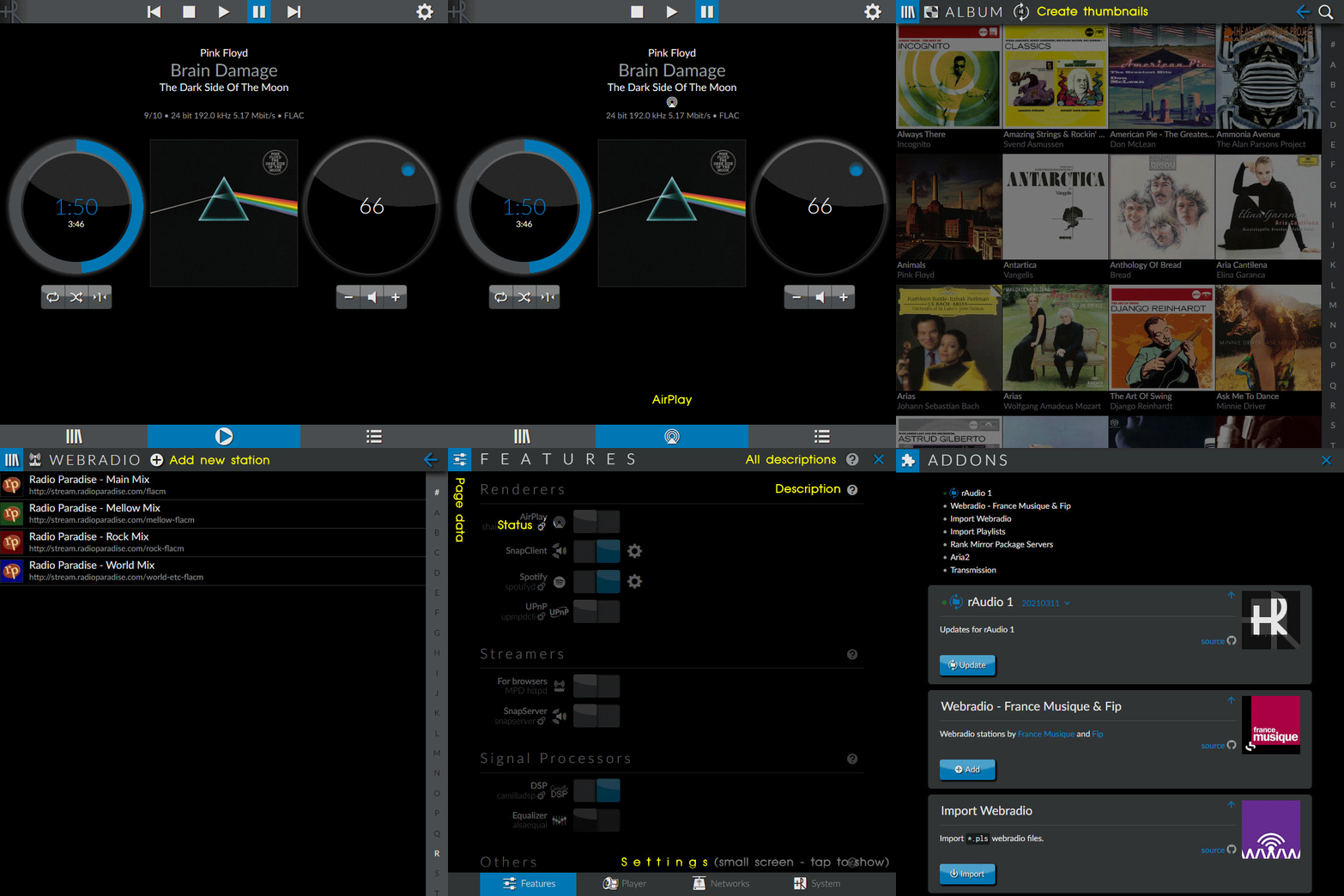
RaspyFi is an open source linux distribution. It will transform your Raspberry Pi into an audiophile source, in 10 minutes without hassles. It comes ready to play, and it’s compatible with almost every USB DAC available. You can consider it as a Voyage-MPD version for Raspberry Pi. But it’s simpler to use and it has several other functionalities!
With RaspyFi you’ll be able to play your music library directly from an USB Storage or from your NAS. You can also listen to your favourite web-radios and scrobble your favourite tunes from Spotify, Last.fm and Soundcloud. You will be amazed about the sound quality! RaspyFi’s core feature is this. We are trying to get every bit of your music to play as accurate as can be, optimizing every aspect of the system.
RaspyFi supports asynchronous playback to take advantage of the latest DACS, it features a nice webgui you can use to configure it without hassles and to play your library from your pc, your smartphone or your tablet.
You can connect your little Raspberry Pi to your Audio System, sit on your couch, use your favourite device (Win,Mac,Android,iOS) as a remote control and enjoy your music as it is. With RaspyFi your Pi never sounded so good!
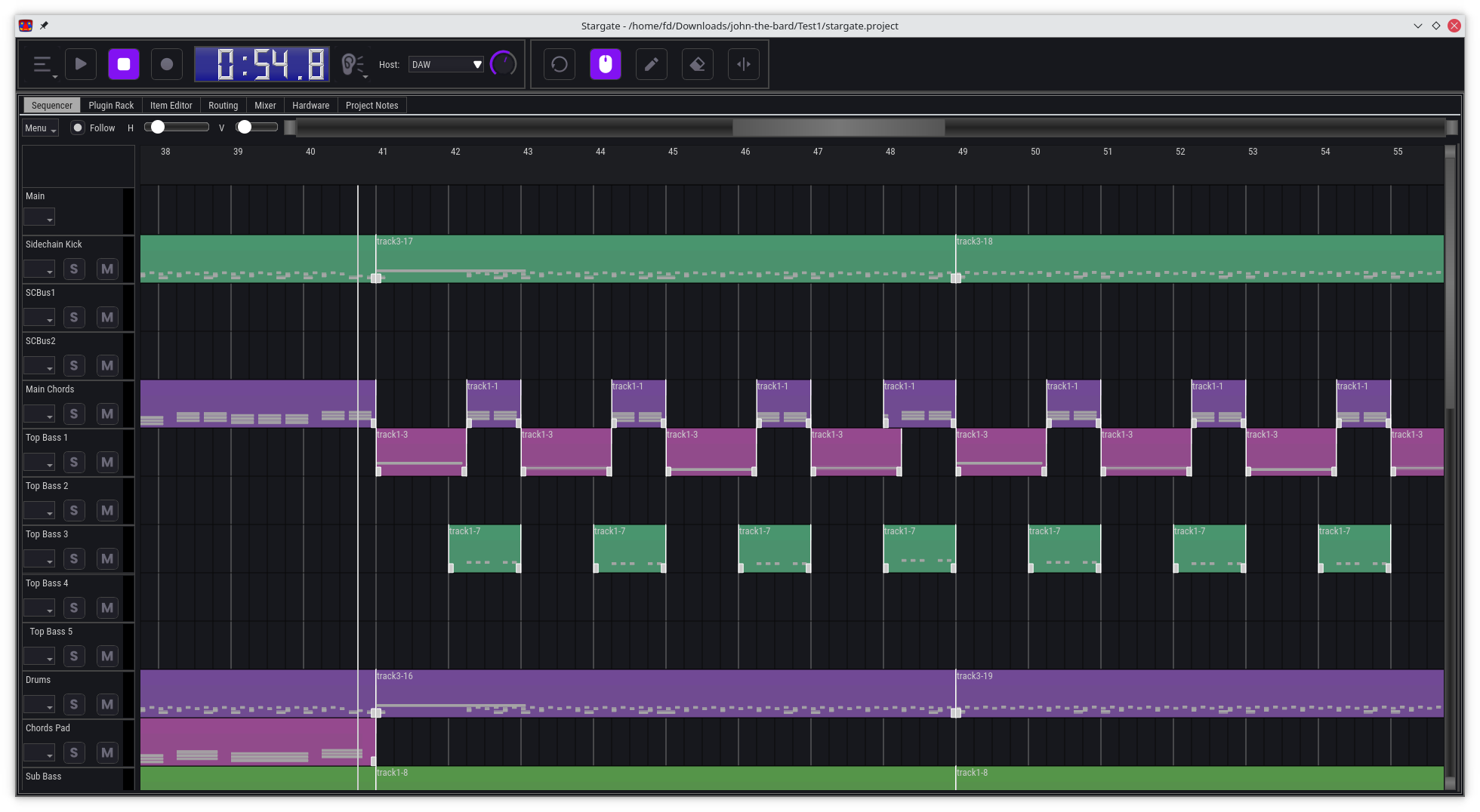
Stargate is an all-in-one DAW and plugin suite, designed to be a comprehensive solution for music production, with a focus on providing unique and innovative features, especially for EDM production.
Features:
A digital audio workstation (DAW) with a powerful pattern-based workflow
A comprehensive suite of built-in instrument and effect plugins
A basic wave editor
Powerful track routing matrix with easy sidechaining
Modular mixer architecture. Mixer channels are a type of plugin that can be chosen per track send, mix and match plugins, or skip them when not needed
Runs on Windows, Mac and Linux, x86 and ARM. Can be ported to other platforms if there is sufficient demand
Everything you need to create music in a single package, no need to install additional software
Revolutionary CPU efficiency for DAW and plugins, minimum recommended hardware: Raspberry Pi 4, or a 15 year old laptop with a dual core CPU, 1GB of RAM and a 720p display.
Support for display resolution from 720p to 4k and above.
Optional portable flash drive install on Windows and MacOS
Broad audio and MIDI hardware support using Portaudio and Portmidi





 The Audio File