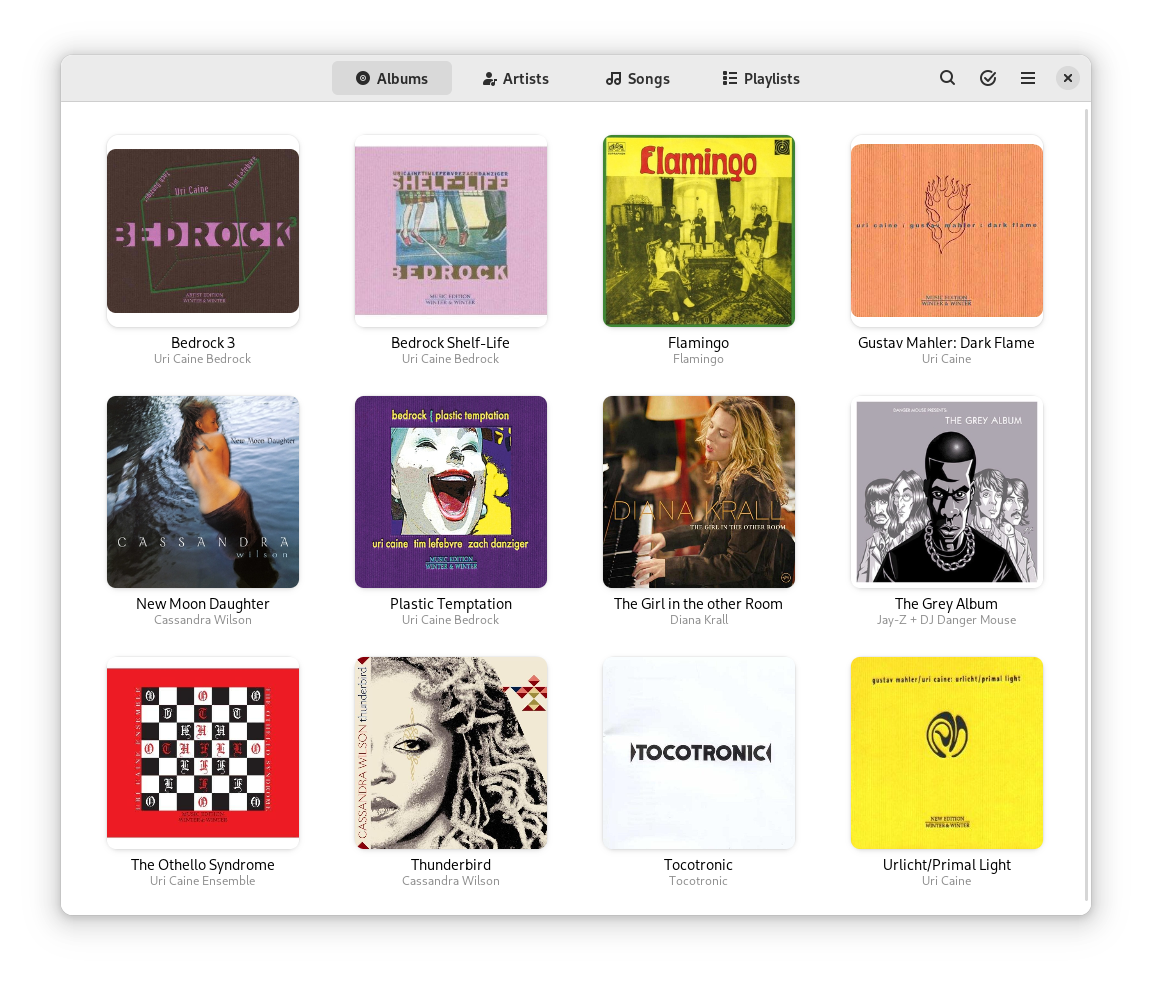
Satunes is an mp3 player on Android. Use it to listen your music from your audio files stored in your Android phone (Android Lollipop 5.1.1 and later).
This entire project is under GNU/GPL v3 and it’s applied on all versions of this project (even the code pushed from the very first commit.)
Audiophile Linux is the operating system optimized for high quality digital audio reproduction. Created by audiophiles for people who share the same dream. To have their system a bit more better. AP-Linux is easily installed, user friendly, and absolutely free. Install it like any other GNU/Linux distribution and enjoy the music playback. Audiophile Linux comes with everything you need for playing your audio and video files.
Audiophile Linux Features:
System and memory optimized for quality audio
Custom Real-Time kernel
Latency under 5ms
DSD support
Lightweight window manager
Pre installed audio and video programs
Lightweight OS, free of unnecessary daemons and services
Natural crossfeed Foobar2000 component designed to give a realistic crossfeed / speaker simulation effect on headphones or earphones while producing a wide soundstage and zero sound coloration.
Simulates speakers spaced 30+30 degrees apart (classic stereo setup with better front projection of imaging) or 50+50 degrees apart (widened stereo setup with more similarity to classic headphone soundstage width)
Update 2016-07-26: I’ve put the “secret” update in public as v2.1, containing a new set of impulses. They also come in 30+30 degree and 50+50 degree versions but are derived from actual measurements around my head.
Navidrome is a piece of software that allows you to listen to your own digital music in the same way you would with services like Spotify, Apple Music and others. It also allows you to easily share your music and playlists with your friends and family
How it works?
After a simple installation, Navidrome indexes all digital music stored in your hard drive and makes it available through a nice web player and also by using any Subsonic-API compatible mobile client. Your music becomes searchable and you can create playlists, rate and “favourite” your loved tracks, albums and artists
OooPlayer is a free audio player for Microsoft® Windows®. It has a clean, lightweight user interface and it is also friendly with your computer resources. It is one of the best candidates if you’re looking for an alternative to Winamp® or just looking for a simple, easy-to-use music and radio player. It’s written in Delphi and uses Bass library and its plugins from www.un4seen.com
The listed versions are clean, without no bundles/installers and it has support for most popular audio formats (see below in the features section). This player is released under the GNU General Public License version 2.0 and is available in two versions: installer and portable.
Features:
user-friendly and with a low impact on resource usage
support for most audio formats: MP3, FLAC, OGG, MPC, WMA, AC3, SPX, AAC, ALAC, APE, TTA, OFR, WV, OPUS, TAK etc.
support for gapless playback (uninterrupted playback of sequential/consecutive audio tracks)
support for M3U and M3U8 playlists
integrated lyric downloader (it doesn’t work with certain files such as covers)
save your own playlists in M3U, M3U8 or PPF format
built-in support for radio stations (huge list available) including details about the current radio
multiple options available: shuffle, repeat, search, jump, find etc.
What sets this frontend for ffmpeg apart from other stereo simulators is it creates an illusion of actual stereo separation. More importantly, it produces none of the weird phasing, and/or time delay artifacts. And very little, if any of the tone discoloration, when those others aren’t meticulously set up just right. All this is accomplished by using the ffmpeg crossover audio filter to split the sound into 8 frequency bands. The split points are based on center frequencies of a typical 1/3 octave equalizer. Those 8 bands are then panned in varying degrees to left and right. The varying width of each band is set to achieve the best balance between the left and right channels.
DR14 T.meter is a free and open source command line tool for computing the Dynamic Range of your music according to the procedure used in the off-line meter released by the Pleasurize Music Foundation.
This tool is a very useful measure of how loud your music is, and for understanding that a good quality album always has a wide dynamic range, and it’s also useful for understanding the effects of the so called ‘loudness war’.
Dr14 t.meter is released under the terms of the GNU GPLv3 license and is intended for the Linux users who can not use the Windows application released by the Pleasurize Music Foundation, or the plugin for Foobar2000.
I’ve largely tested this application and it has always returned results identical to those of the official off-line meter.
R128GAIN is a FFmpeg and SoX based EBU R128 compliant loudness scanner. It helps you normalizing the loudness of your audio and video files to the same level.