SSE is a powerful and versatile software environment designed for soundscape visualisation and quantification. It provides a robust platform for processing audio files, generating useful metrics, and presenting data through intuitive visualisation interfaces. Catering to bioacousticians and data scientists alike,
SSE encompasses an extensive range of tools and capabilities to fulfil diverse user requirements.
FluentFlyout is a simple and modern audio flyout for Windows, built with Fluent 2 Design principles. The UI seemingly blends in with Windows 10/11, providing you an uninterrupted, clean, and native-like experience when controlling your media.
FluentFlyout features smooth animations, blends with your system’s color themes, includes multiple layout positions and a suite of personalization settings while providing media controls and information in a nice and modern looking popup flyout.
Features:
Native Windows-like design
Uses Fluent 2 components
Utilises Windows Mica blur
Supports Light and Dark mode
Matches your device color theme
Smooth animations
Customizable flyout positions
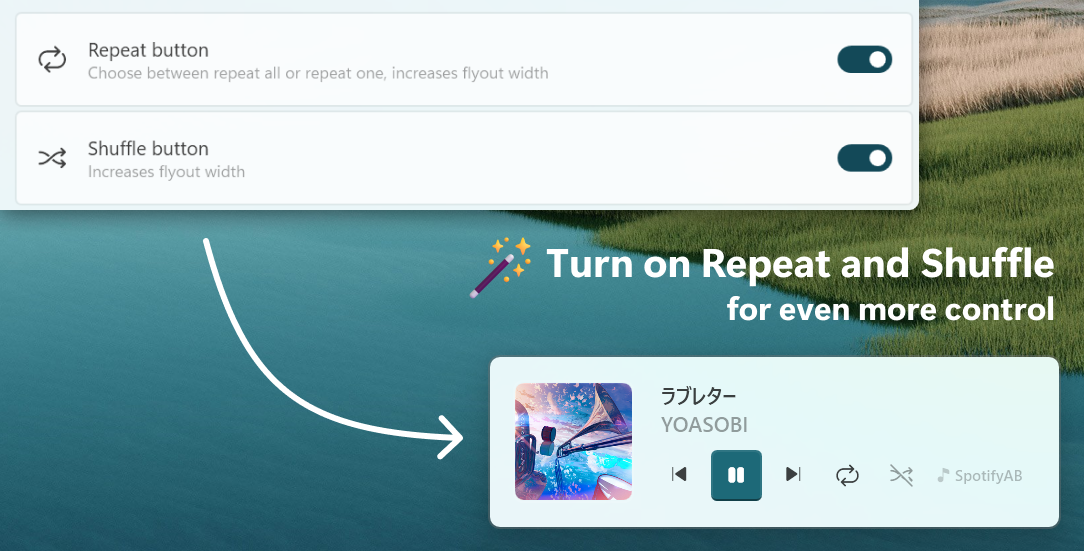
Includes Repeat All, Repeat One and Shuffle
Listens to both volume and media inputs
Sits unobtrusively in system tray
Audio flyout: Displays Cover, Title, Artist and media controls
“Up Next” flyout: shows what’s next when a song ends
Lock Keys flyout: displays the status of lock keys at a glance
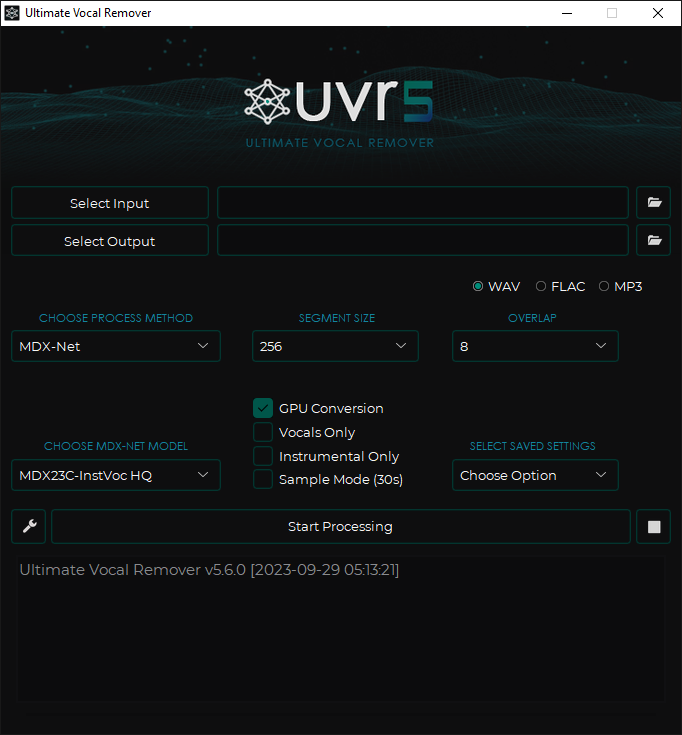
This application uses state-of-the-art source separation models to remove vocals from audio files. UVR’s core developers trained all of the models provided in this package (except for the Demucs v3 and v4 4-stem models).
The programming language for writing fast, portable audio software.
You’ve heard of C, C++, C#, objective-C… well, Cmajor is a C-family language designed specifically for writing DSP signal processing code.
Our goal is to improve on the current status-quo for audio development in quite a few ways:
To match (and often beat) the performance of traditional C/C++
To make the same code portable across diverse processor architectures (CPU, DSP, GPU, TPU etc)
To offer enough power and flexibility to satisfy professional audio tech industry users
To speed-up commercial product cycles by enabling sound-designers to be more independent from the instrument platforms
To attract students and beginners by being vastly easier to learn than C/C++
If you’re keen to learn the nitty-gritty of the language itself, the language guide offers a deep dive. To see some examples of the code, try the examples folder.
Sac is a state-of-the-art lossless audio compression model.
Lossless audio compression is a complex problem, because PCM data is highly non-stationary and uses high sample resolution (typically >=16bit). That’s why classic context modelling suffers from context dilution problems. Sac employs a simple OLS-NLMS predictor per frame including bias correction. Prediction residuals are encoded using a sophisticated bitplane coder including SSE and various forms of probability estimations. Meta-parameters of the predictor are optimized with DDS on by-frame basis. This results in a highly asymmetric codec design.
Technical features:
Input: wav file with 1-16 bit sample size, mono/stereo, pcm
Output: sac file including all input metadata
Decoded wav file is bit for bit identical to input wav file
Live Compositor is an engine for applying effects to videos and for combining multiple videos together. On a very basic level, it is an application which exposes an HTTP API. The API allows you to specify where to get input videos, and how to modify and compose them together. The resulting outputs can then be written to a file or streamed to a separate service.
This Digital Media Renderer Analyser is a test application that evaluates the capabilities of a selected UPnP / DLNA Digital Media Renderer and recommends the optimum server settings for it to run with JRiver Media Center.
Optional Test Files
In addition to the tool, you can also download an optional set of sample test files here – warning download size 100 MByte
Database of Renderer Test Reports
You can download the database collection of the test results of all renderers so far tested here. Note if you want to add your renderer to this collection please email me the report.
This tool removes every kind of trash from your mp3-files. It searches for valid mp3 audiodata-frames and removes everything else. This has the big advantage that it will also remove tags which are in the middle of the file (as is the case with joined tracks) as well as broken frames (half-downloads) and malicious tags (Tag-buffer-overflow bug in WinAMP and Windows XP). Use this tool to cleanup your mp3 files before you add your own tag. No more double tags, or annoying ‘Lyrics’ data containing group names or misspelled song names.
A web-synthesizer that generates sound from the binary code of any files. It can synthesize sound directly in the browser, or be a generator of MIDI messages to external devices or DAWs, turning any file into a score. All the application code is written in Javascript and along with everything you need is packed into a single .html file of about 750kb. The synthesizer doesn’t need internet, it can be downloaded and run locally on any device with a browser.
The application reads the file sequentially, and due to the high speed of reading and random deviation of reading duration, we can get quite unpredictable generation of timbre nuances, and at certain settings we can switch to granular synthesis.
Picard Barcode Scanner helps you to tag your physical releases with MusicBrainz Picard. It allows you to scan the barcode of e.g. a CD and have the corresponding metadata from MusicBrainz automatically loaded into Picard on your desktop.
This is especially useful if you have your physical music collection already digitized and want to tag the files using the correct album.







 The Audio File