Wax ~ Catalog & Play Recordings


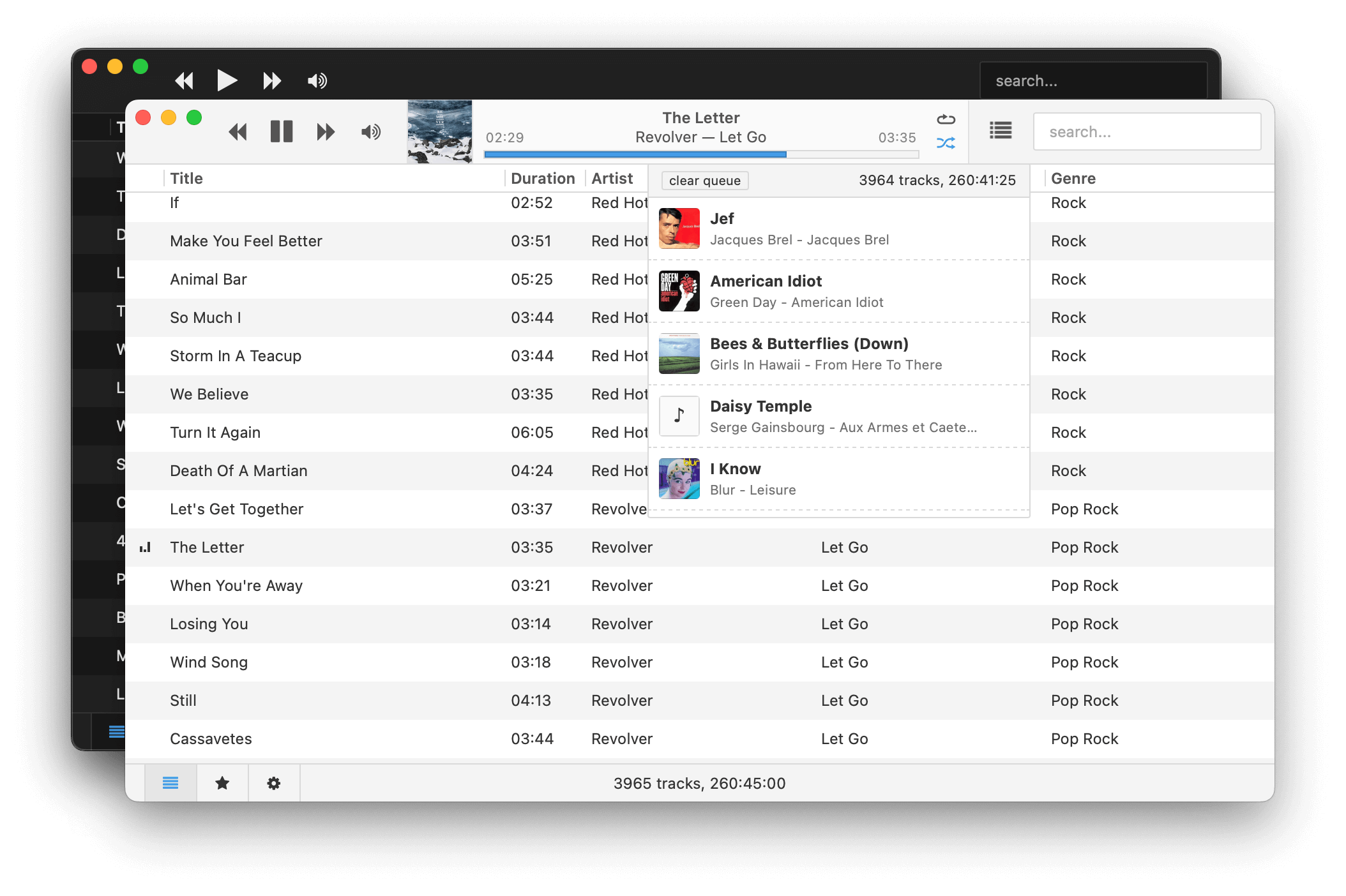
Wax is a program for cataloging and playing a collection of music recordings. Wax is able to rip CDs and import downloads so that you can create a sound archive complete with metadata.

Wax is fundamentally different from existing music managers in two important ways. First, the fundamental unit for recordings is a “work”, not a track. A work is usually a collection of tracks. It can encapsulate whatever tracks you choose. In pop music, a work can be an album. For symphonic music, a work can be a single symphony, even when the tracks come from a CD with more than one symphony. For operas, a work can be a single opera even when the tracks come from multiple CDs. Music collectors usually think in terms of works, so a music manager that supports the concept makes operation more natural.

The other distinguishing characteristic of Wax is that genres are fundamental to the organization of a collection rather than a mere attribute of a track. Wax recognizes that the ideal way to catalog works varies by genre. For example, symphonic works can be cataloged by composer, work, conductor whereas shows can be cataloged by show, composer, lyricist. By organizing collections around genres, Wax supports an operation sequence that is natural for music lovers: first select the genre, then the work, and finally the tracks.

github.com/jeffbarish/wax
github.com/jeffbarish/wax-install

Cardinal ~ Virtual Modular Synthesizer Plugin


A fully free and self-contained modular synthesizer based on the popular VCV Rack. Available in AudioUnit/CLAP/LV2/VST2/VST3 plugin formats and as a standalone app for FreeBSD, Linux, macOS, Windows and the Web.

cardinal.kx.studio
github.com/DISTRHO/Cardinal

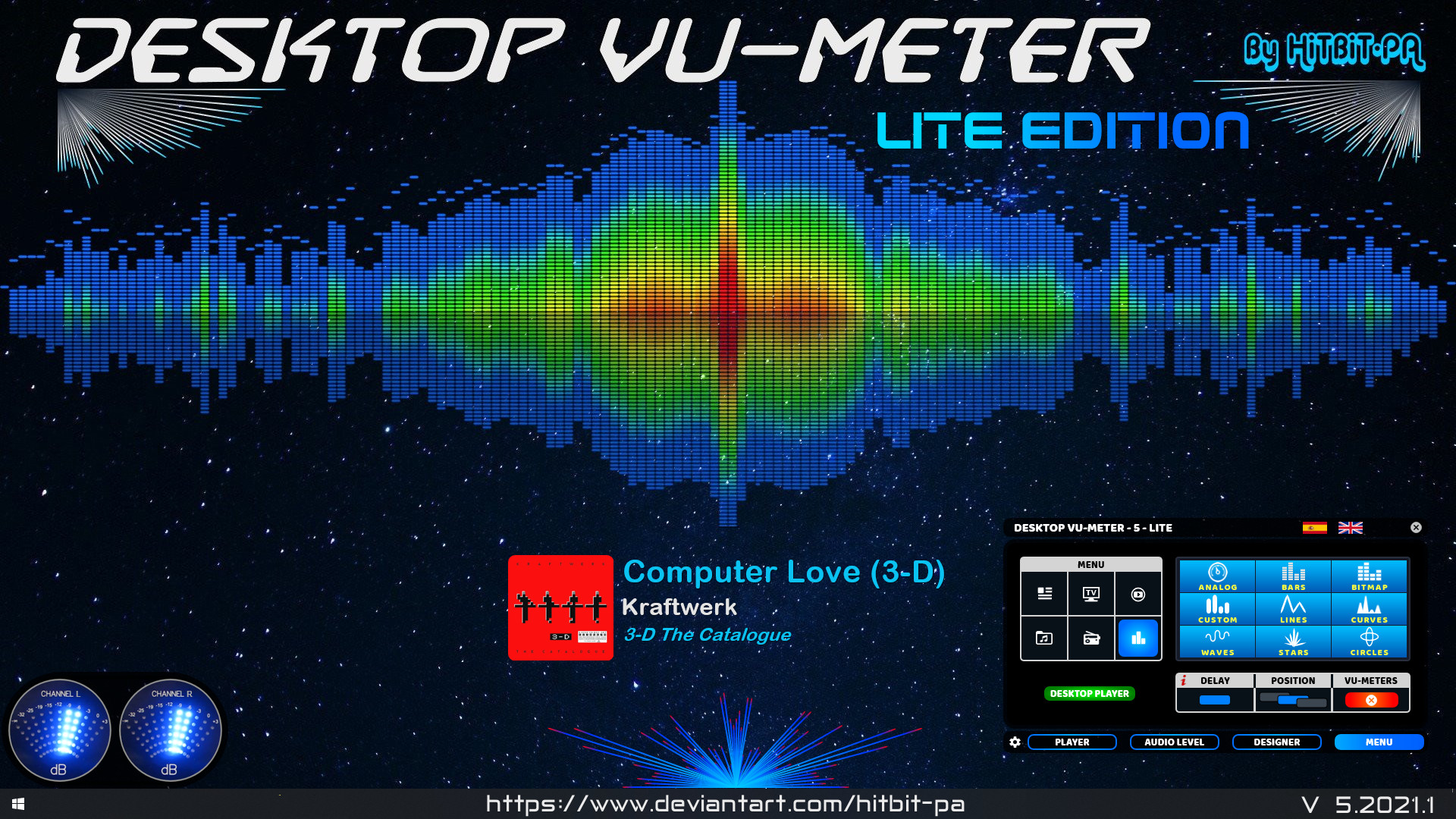
Cavalier ~ Visualize Audio With CAVA


  • 11 drawing modes!
  • Set any single color, a gradient or an image for background and foreground.
  • Configure smoothing, noise reduction and a few other CAVA settings.

github.com/NickvisionApps/Cavalier
Cava ~ Cross-platform Audio Visualizer

AudDMusic ~ Song Recognition Browser Extension


Recognize any music from any website in your browser. Install the AudD extension and click on its icon to identify the song playing on the current tab.

The AudD extension:

  • Recognizes the music playing in your browser
  • Finds music in the AudD database with more than 80 million songs using its music recognition technology
  • Shows lyrics for identified songs
  • Shows links to listen to the songs on Apple Music, Spotify, Deezer, YouTube Music
  • Displays the exact moment in the recognized song when the sound from the browser is played

audd.cc/chrome
github.com/AudDMusic/chrome-extension
github.com/AudDMusic/firefox-extension
audd.io

Foobar2000 ~ Installing Encoders, Decoders & Inputs


Foobar2000 plays most audio files but can be extended. There is an official Encoder Pack which is a good place to start.

www.foobar2000.org/encoderpack

After downloading the latest version of the encoder pack, launch the installer and confirm it’s found the correct foobar2000 installation.

The next step is to deselect any encoders you don’t need.

And then click Install

Installing Additional Encoders

You may also need to install additional encoders; these are installed as components. For instance, foo_midi.fb2k allows foobar to play midi files. The component’s download page is here:

www.foobar2000.org/components/view/foo_midi

After you’ve downloaded the component, double click it and foobar should start the component installation procedure.

Click Yes and foobar will install foo_midi and require a restart. Once this is done, you should confirm that foo_midi was installed.

References:

Encoder & Input List
www.foobar2000.org/components/tag/decoder
www.foobar2000.org/encoderpack
wiki.hydrogenaud.io/index.php?title=Foobar2000:Free_Encoder_Pack
wiki.hydrogenaud.io/index.php?title=Foobar2000:Converter
www.foobar2000.org/components/view/foo_midi

foo_enhanced_playcount ~ Enhanced Playback Statistics


This Foobar2000 component collects and maintains enhanced statistics for played songs; primarily it records the timestamp of every play of a song, and not just the first and last. It will also query last.fm and record play times of every scrobble for a song.

foo_enhanced_playcount provides some additional functionality that foo_playcount does not, but is missing some functionality that foo_playcount has. They work well together, and foo_playcount should NOT be uninstalled when foo_enhanced_playcount is installed.

This component should be installed with foo_playcount and the same time foobar2000 is installed so playback statistics are maintained from the beginning.

New Fields:

  • %played_times% – Date formatted list: ["2012-08-04 15:58:37", "2012-12-10 14:40:46", "2018-01-02 23:38:13"]
  • %played_times_js% – JS timestamp list: [1344117517000, 1355172047000, 1514957893431]
  • %played_times_raw% – raw foobar timestamps: [129885911170000000, 129996456470000000, 131594314930000000]There’s probably no reason to ever use this.
  • %lastfm_played_times% – Date formatted list of scrobbles: ["2012-08-04 15:58:37", "2012-12-10 14:40:46", "2018-01-02 23:38:13"]
  • %lastfm_played_times_js% – JS timestamp list: [1344117517000, 1355172047000, 1514957893000]
  • %lastfm_play_count% – Count of last.fm plays, a la %play_count%: 5
  • %lastfm_added% – Single date: “2012-08-04 15:58:37
  • %lastfm_first_played% – Always exactly the same as %lastfm_added%. Use whichever one makes most sense logically
  • %lastfm_last_played% – Single date: “2018-04-04 15:58:37
  • %added_enhanced% – Returns the earliest of %added% (from foo_playcount) or %lastfm_added%. Single date: “2023-02-04 15:16:17
  • %first_played_enhanced% – Returns the earliest of %first_played% (from foo_playcount) or %lastfm_added%. Single date: “2023-02-04 15:16:17
  • %last_played_enhanced% – Returns the earliest of %last_played% (from foo_playcount) or %lastfm_last_played%. Single date: “2023-02-04 15:16:17

These fields can be exposed via Title Formatting or used in scripts. This component does generate extra data per song played and may not be suitable for installations with limited storage.

www.foobar2000.org/components/view/foo_enhanced_playcount
github.com/kbuffington/foo_enhanced_playcount
wiki.hydrogenaud.io/…/foo_enhanced_playcount

rt_pvc ~ Realtime Phase Vocoder


rt_pvc is a:

  • real-time phase vocoder library for synthesis/analysis
  • vocoder application that allows the user to do time-expansion, frequency expansion, and cross-synthesis in real-time, from mic-input or from file.
  • real-time phase vocoder visualization
  • learning tool that teaches about the phase vocoder and its implementation
  • open source!

soundlab.cs.princeton.edu/software/rt_pvc
aur.archlinux.org/packages/rt_pvc

rt_lpc ~ Realtime Linear Predictive Coding


rt_lpc is a light-weight application that performs real-time LPC analysis and synthesis. It features the following:

  • real-time LPC analysis
  • real-time LPC synthesis
  • visualization of original, predicted, and error waveforms
  • visualization of vocal tract shape from LPC coefficients
  • adjustable LPC analysis order
  • adjustable synthesis pitch shift
  • MIDI controlled pitch (hit ‘m’)
  • lots of other choices (pitch pulse source selection, emphasis filter)
  • STFT plot
  • modular LPC library
  • available on MacOS X, Linux, and Windows under GPL
  • part of the sndtools distribution

soundlab.cs.princeton.edu/software/rt_lpc/
en.wikipedia.org/wiki/Linear_predictive_coding
github.com/lewark/lpc.lv2

sndpeek ~ Realtime Audio Visualizer


sndpeek is just what it sounds (and looks) like:

  • real-time 3D animated display/playback
  • can use mic-input or wav/aiff/snd/raw/mat file (with playback)
  • time-domain waveform
  • FFT magnitude spectrum
  • 3D waterfall plot
  • lissajous! (interchannel correlation)
  • rotatable and scalable display
  • freeze frame! (for didactic purposes)
  • real-time spectral feature extraction (centroid, rms, flux, rolloff)
  • available on MacOS X, Linux, and Windows under GPL
  • part of the sndtools distribution.

www.gewang.com/software/sndpeek
soundlab.cs.princeton.edu/software/sndpeek
www.cs.princeton.edu/sound/software/sndpeek/look

Foobar2000 ~ Installing A Component


One of the reasons for Foobar2000’s versatility is extensibility. Its capabilities can be greatly extended by adding components.

For example, it’s good to keep track of information right from the start. An important first addition is playback statistics which are generated and maintained by foo_playcount.fb2k-component. Also consider installing foo_enhanced_playcount.

To add Playback Statistics to foobar2000, follow these steps:

  1. Download The New Component:
  2. Install The Component:
    • Go to File > Preferences, or press Ctrl + P.
    • In Preferences, go to Installed components on the left-hand side.
    • Click the Install button at the bottom of the section.
    • Navigate to and select the foo_playcount.fb2k-component file, then click Open and then Apply.
    • After installation is complete, foobar2000 will prompt you to restart.
  3. Verify Installation:
    • Once foobar2000 restarts, you should check File > Preferences > Components to confirm the component is now installed and active.

It’s also possible to install a Foobar2000 component by either dragging and then dropping a component on the component pane or double clicking a component if the file association is working.

The Get Updates button will download and update all the installed components but not Fobar2000 itself, that must be done via the Help Menu. It’s good to update the components occasionally.

The Copy Report button copies a list of installed components to the clipboard.

If the component has a visual element, you’ll also need to add the component to the DUI (Default User Interface) now. Toggle View\Layout\Enable Layout Editing Mode and then add a new panel or tab. Right click the new panel or tab area and select “Add New UI Element …“, then select the new component from the list. You may need to adjust borders to fit, then Exit layout mode.

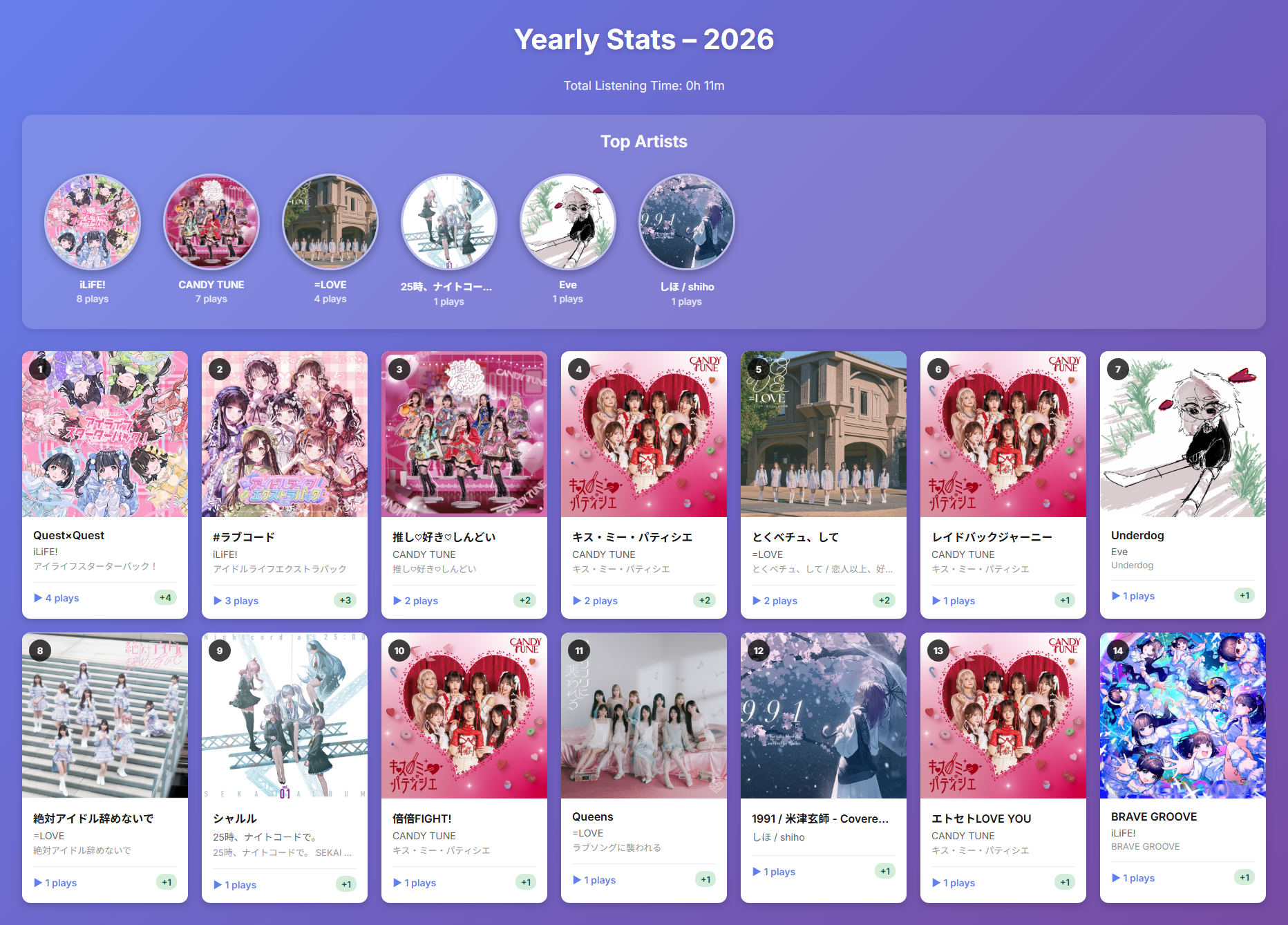
The Playback Statistics Component keeps track of the following data:

  • Time/date first played
  • Time/date last played
  • Playback count
  • Time/date added to the Media Library
  • Rating

The Playback Statistics Component also allows playback statistics to be backed up or easily transferred to other Foobar2000 instances.

‘You can export playback statistics to an XML file and import them later, through Library => Playback Statistics menu commands, or through context menu on specific tracks. This can be used to easily transfer playback statistics between different foobar2000 installations or profiles.’ ~ XML Backup Functionality

foobar2000 version 1.6 required for compatibility with this component​

References:

www.foobar2000.org/components/view/foo_playcount
wiki.hydrogenaud.io/…/Playback_Statistics_v3.x_(foo_playcount)
foo_enhanced_playcount ~ Enhanced Playback Statistics
foobar2000 ~ Adding Panels To The DUI


audioMotion ~ Player & Realtime Spectrum Analyzer


audioMotion is a media player and high-resolution real-time audio spectrum analyzer that allows you to SEE your music! ♪♫🤩

It is completely free, open-source software, created out of my passion for the graphic spectrum analyzers of hi-fi systems from the 1980s.

Features:

Dual channel high-resolution real-time audio spectrum analyzer

  • Media player with subtitles support for audio and video files
  • Fullscreen and Picture-In-Picture display at 60fps, ready for Retina / HiDPI screens
  • Logarithmic, linear and perceptual (Bark and Mel) frequency scales, with customizable range
  • Visualization of discrete FFT frequencies or up to 240 frequency bands (supports ANSI and equal-tempered octave bands)
  • Decibel and linear amplitude scales, with customizable sensitivity
  • Optional A, B, C, D and ITU-R 468 weighting filters
  • Optional effects: vintage LEDs, variable opacity, mirroring and reflection, radial spectrum
  • 17 beautiful color gradients, plus a visual editor to easily create your own gradients
  • Support for M3U playlists (.m3u and .m3u8 file extensions)
  • Visualize audio from your microphone (or “stereo mix”, if your soundcard supports it)

audiomotion.app
github.com/hvianna/audioMotion.js

Hi-Res Audio For Android


Enable high resolution audio for MediaTek devices up to 32-bit/192kHz (if device supports). This module only changes the configuration on “audio_policy” because most Android devices limit their capabilities to 16-bit/48kHz only, the rest depends on whether the device used supports Hi-Res Audio™ or not.

*applies to internal Speakers & Wired (not for Bluetooth/USB devices).

github.com/adivenxnataly/Hi-ResAudio