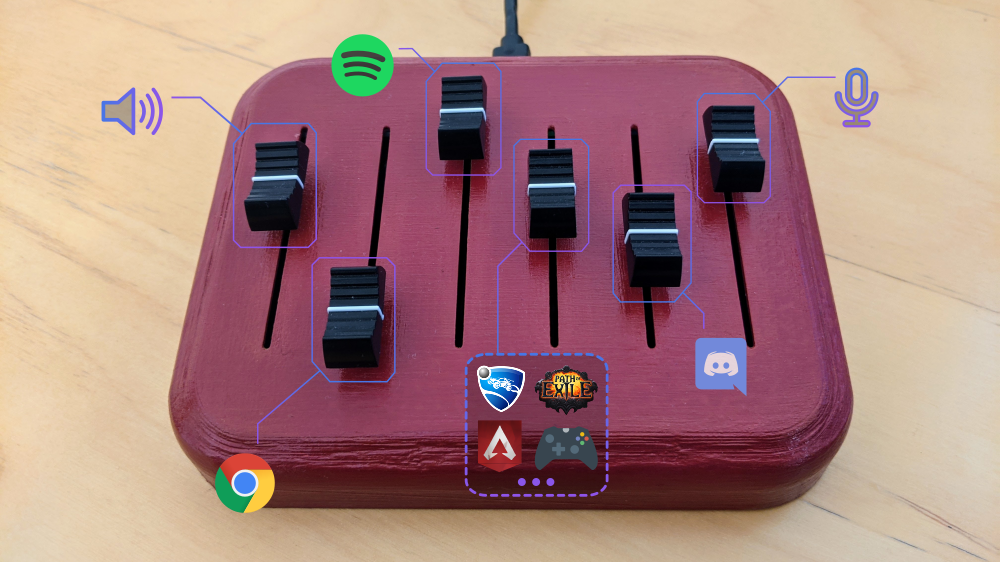
deej is an open-source hardware volume mixer for Windows and Linux PCs. It lets you use real-life sliders (like a DJ!) to seamlessly control the volumes of different apps (such as your music player, the game you’re playing and your voice chat session) without having to stop what you’re doing.
The MuPiBox is an easy-to-use music player. Local music files, Spotify and streams from the Internet can be played. Operation via touchscreen is child’s play for young and old…
Features:
Music box for young and old
Touch display
easy to use (no access to the shell necessary!)
Update function
Spotify – album, playlists (premium account is required)
Local music – MP3, Flac, WAV, WMA
Generate local playlists at the touch of a button
Streams / radio via internet
Simple administration via display
Advanced administration via web interface
Easy installation (without shell access)
Automatic power off
Display timeout
Resume function
Read aloud collection/artist and album (Google TTS)
own sorting by radio play, music, playlist and radio
automatic offline / online switching depending on availability
Simple user interface
Cover ad
Add additional WiFi hotspots on the go
Construction of an individual housing (3D printing)
Tested hardware list
Slim OS (dietPi)
Few file accesses – logs etc. in RAM to protect the SD card
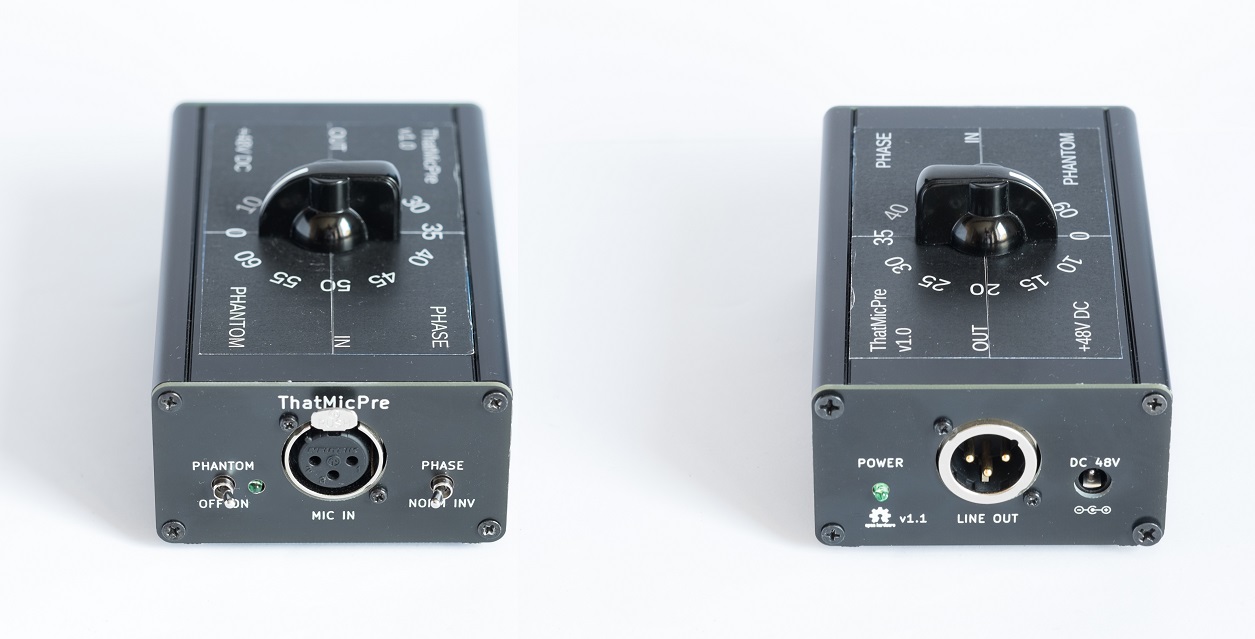
A simple, high-quality DIY microphone pre-amplifier with switched gain. The background for this project was that I needed a simple but good microphone preamp for doing acoustic measurements. I needed a switched gain to be able to reproduce the gain setting in a more predictable way than what is possible with a potmeter. I could not find any existing DIY designs, so I decided to make one.
The design is based on the excellent THAT1510 or THAT1512 preamp ICs. It is also compatible with SSM2019 or INA217. I have followed all THAT’s datasheets and app-notes to implement a robust, best-practice design.
A goal was to use simple through-hole parts that I and other DIYers usually have in our parts drawer. So there are no additional IC’s or voltage regulators for example, it just uses simple transistors, capacitors and zener diodes for supply filtering and regulation. I selected affordable switches and connectors to keep cost down. Many parts can be substituted without sacrificing performance.
There are two versions of this design, one suited for a desktop encolsure with gain switch on top, and one suited for a rack-mount enclosure with gain switch on the front.
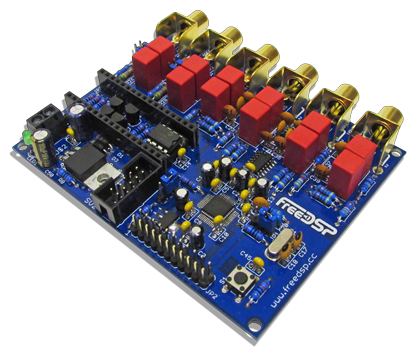
The freeDSP is an open-source digital signal processor family for the do-it-yourself community. The applications range from active loudspeaker concepts (digital crossovers, bass enhancement, …) and room equalization over advanced musical effect processors to car audio signal processing.





 The Audio File