Benihora is a Rust library and VST Plugin that generates voice based on a vocal tract model. This is a Rust port of Pink Trombone developed by Neil Thapen with some customizations.
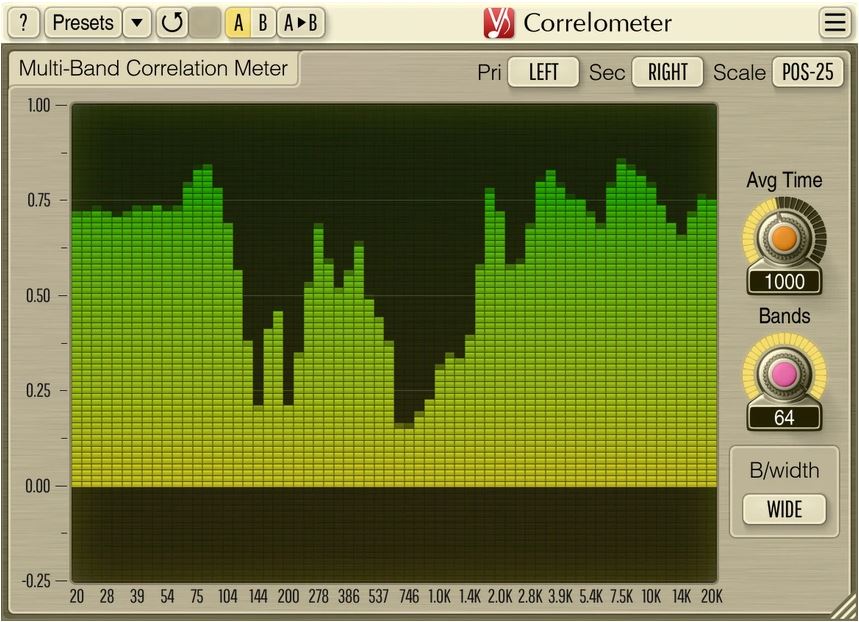
Correlometer is an analog-style stereo multi-band correlation meter.
Multi-band correlation meter is an advanced way to check for presence of out-of-phase elements in the mix. Broadband correlation metering reports overall phase issues and may misrepresent problems present in select spectral bands, while multi-band correlation meter easily highlights problems present in mid to high frequencies that are not easily heard by ear, but may still reduce clarity of the mix. Another application of multi-band correlation metering is phase- and time-aligning of channels and tracks, especially bass and bass-drum pairs, guitar mic and D.I. source pairs, two-microphone stereo recordings, etc.
Correlometer can display 4 to 64 individual spectral bands, with adjustable band quality factor that controls the degree of band’s selectivity. Averaging time of correlation estimator can be adjusted. Correlometer supports side-chain inputs for easy correlation estimation between separate audio tracks.
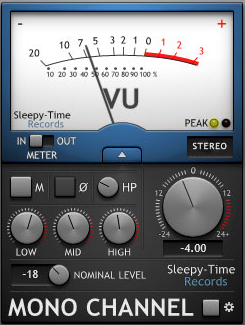
MonoChannel is a EQ and VU meter with basic console channel controls.
Insert MonoChannel on your audio tracks to monitor your audio signal and adjust its tonal balance. It is designed only to encourage the use of proper gain staging and audio balance workflows in digital audio. MonoChannel is NOT a distortion/saturation/console emulation plugin.
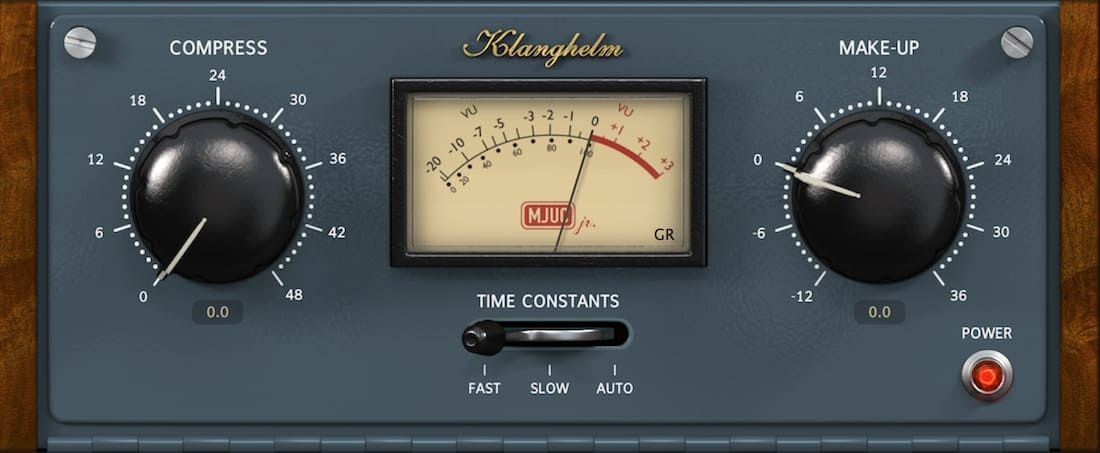
MJUC jr. is the little brother of the colorful MJUC.
It’s a variable-mu design with lots of vibe, capable of smooth leveling but also heavy pumping effects. With its two gain stages and interstage transformer simulation it offers a very deep and lively soundstage.
The three-position timing switch not only controls the attack and release times of the unit, but also the slew rate of the transformers and the timing of the other parts of the circuitry, that are directly influencing the generated harmonics (saturation).
Aqualizer, a computer program that can be used in order to filter sound. In fact it is a digital equalizer. However, it is an equalizer for connoisseurs, so to say, as we researched how we could improve the existing equalizer to fit the needs of DJ’s and sound designers even better.
Marvel GEQ is a free linear-phase 16-band graphic equalizer AudioUnit, AAX, and VST plugin with multi-channel operation support (supporting up to 8 input/output channels, audio host application-dependent) for professional music production applications. Marvel GEQ offers extensive internal channel routing capabilities, and supports mid/side channel processing.
Yet Another way to use Windows audio plugins on Linux. Yabridge seamlessly supports using both 32-bit and 64-bit Windows VST2, VST3, and CLAP plugins in 64-bit Linux plugin hosts as if they were native plugins, with optional support for plugin groups to enable inter-plugin communication for VST2 plugins and quick startup times. Its modern concurrent architecture and focus on transparency allows yabridge to be both fast and highly compatible, while also staying easy to debug and maintain.
IVGI can deliver very soft and subtle saturation, that feels at home on the master buss. It is equally capable of very dense and dirty distortion effects to spice up single tracks.
IVGI reacts dynamically to the input signal. Even the modeled fluctuations react dynamically and also change depending on the drive setting, so that it doesn’t get in the way of the SOUND. Stereo tracks benefit from it’s modeled crosstalk behavior.
IVGI features a Controlled Randomness, which determines the internal drift and variance inside the unit. It contributes to the liveliness and realness of IVGI’s saturation character. To achieve this, all internal processes are modulated to some extent.
IVGI gives you a sensible amount of controls to manipulate the character of the saturation itself. It offers a unique ASYM MIX knob to alter the symmetry of the signal without affecting the harmonic content much.
IVGI also lets you alter the frequency dependency of the saturation with the RESPONSE control.