Bitter shows how many of the available bits are being used by the audio signal, reports clipping samples, and estimates when digital-to-analog conversion would cause inter-sample clips. Typical uses for a bitscope include: verifying that a render dither is working properly; verifying that a particular plugin is not reducing the signal bit depth; testing for faulty audio source data.
Features:
Check for Intersample Clipping that may appear during digital-to-analog conversion
Detailed display of the usage density of each bit
Reveal the bitrate of the digital signal, which may well differ from that of the file’s bitrate or your DAW’s audio engine bitrate
This project is for a DirectSound DLL replacement. It implements the DirectSound interfaces by translating the calls to OpenAL, and fools applications into thinking there is a hardware accelerated sound device. EAX is also implemented (up to version 4) by using OpenAL’s EAX extension, allowing for environmental reverb with sound obstruction and occlusion effects.
Effectively, this allows DirectSound applications to enable their DirectSound3D acceleration path, and turn on EAX. The actual processing is being done by OpenAL with no hardware acceleration requirement, allowing it to work on systems where audio acceleration is not otherwise available.
Or more succinctly: it enables DirectSound3D surround sound and EAX for systems without the requisite hardware.
OpenMusic (OM) is a visual programming language based on Common Lisp. Visual programs are created by assembling and connecting icons representing functions and data structures. Most programming and operations are performed by dragging an icon from a particular place and dropping it to an other place. Built-in visual control structures (e.g. loops) are provided, that interface with Lisp ones. Existing CommonLisp/CLOS code can easily be used in OM, and new code can be developed in a visual way.
OM may be used as a general purpose functional/object/visual programming language. At a more specialized level, a set of provided classes and libraries make it a very convenient environment for music composition. Above the OpenMusic kernel, live the OpenMusic Projects. A project is a specialized set of classes and methods written in Lisp, accessible and visualisable in the OM environment. Various classes implementing musical data / behaviour are provided. They are associated with graphical editors and may be extended by the user to meet specific needs. Different representations of a musical process are handled, among which common notation, midi piano-roll, sound signal. High level in-time organisation of the music material is proposed through the concept of “maquette”.
Sequencer64 is a live MIDI looper with a song-creation layout window. Sequencer64 is a reboot of seq24, extending it greatly over the last six years. The heart of seq24 remains intact. It is an old friend with a whole lot of added equipment. It has an extensive manual and Windows installers. Sequencer64 has build options for ALSA, PortMidi, JACK, Gtkmm 2.4, Qt 5, Windows, and a command-line/daemon.
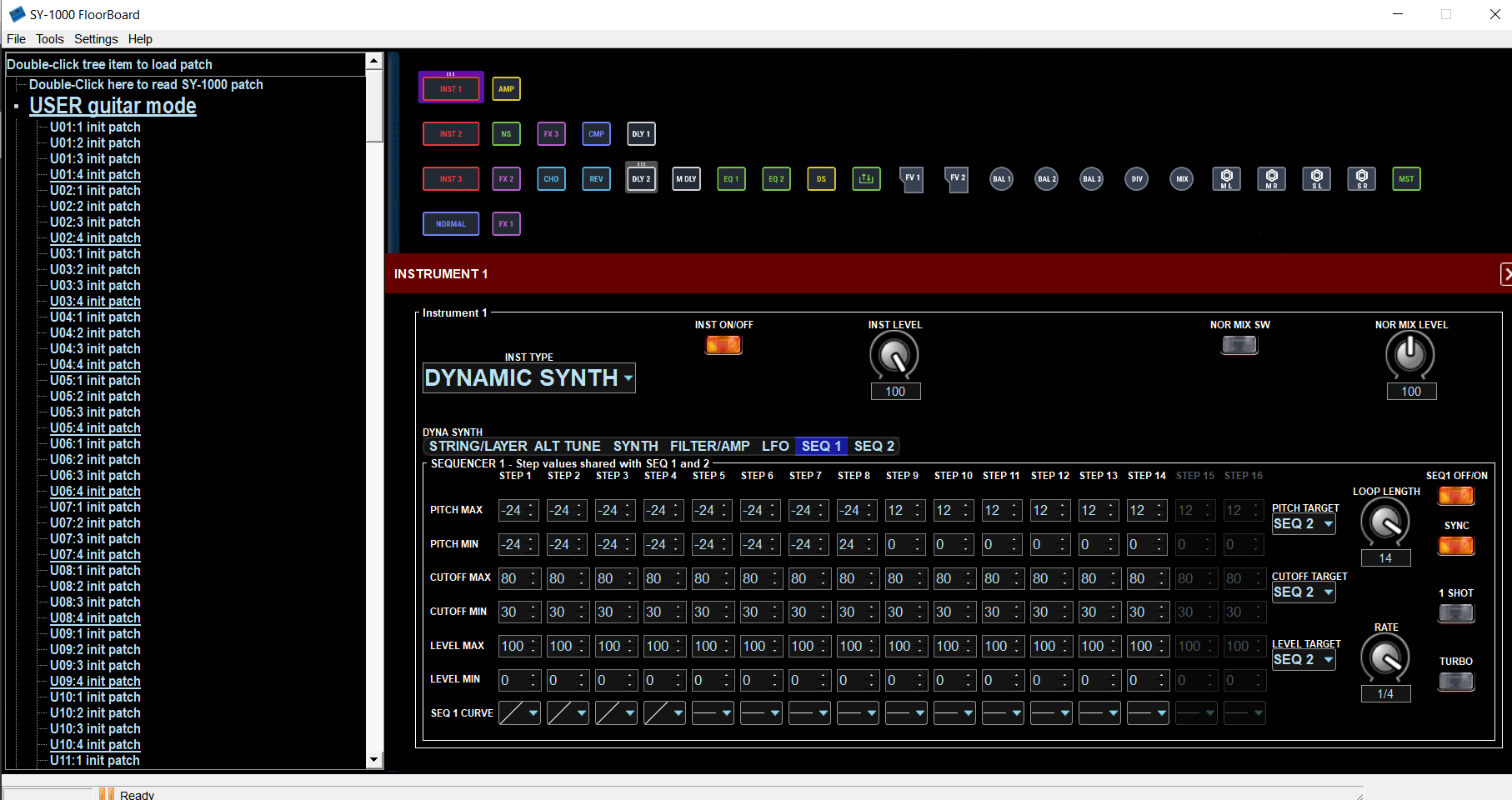
MIDITONES: Convert a MIDI file into a simple bytestream of notes.
MIDITONES compiles a MIDI music file into a much simplified compact time-ordered stream of commands, so that the music can easily be played on a small microcontroller-based synthesizer that has only simple tone generators. This is on github at www.github.com/LenShustek/miditones.
Volume ("velocity") and instrument information in the MIDI file can either be discarded or kept. All the tracks are processed and merged into a single time-ordered stream of "note on", "note off", "change instrument" and "delay" commands.
MIDITONES was written for the "Playtune" series of Arduino and Teensy microcontroller software synthesizers.
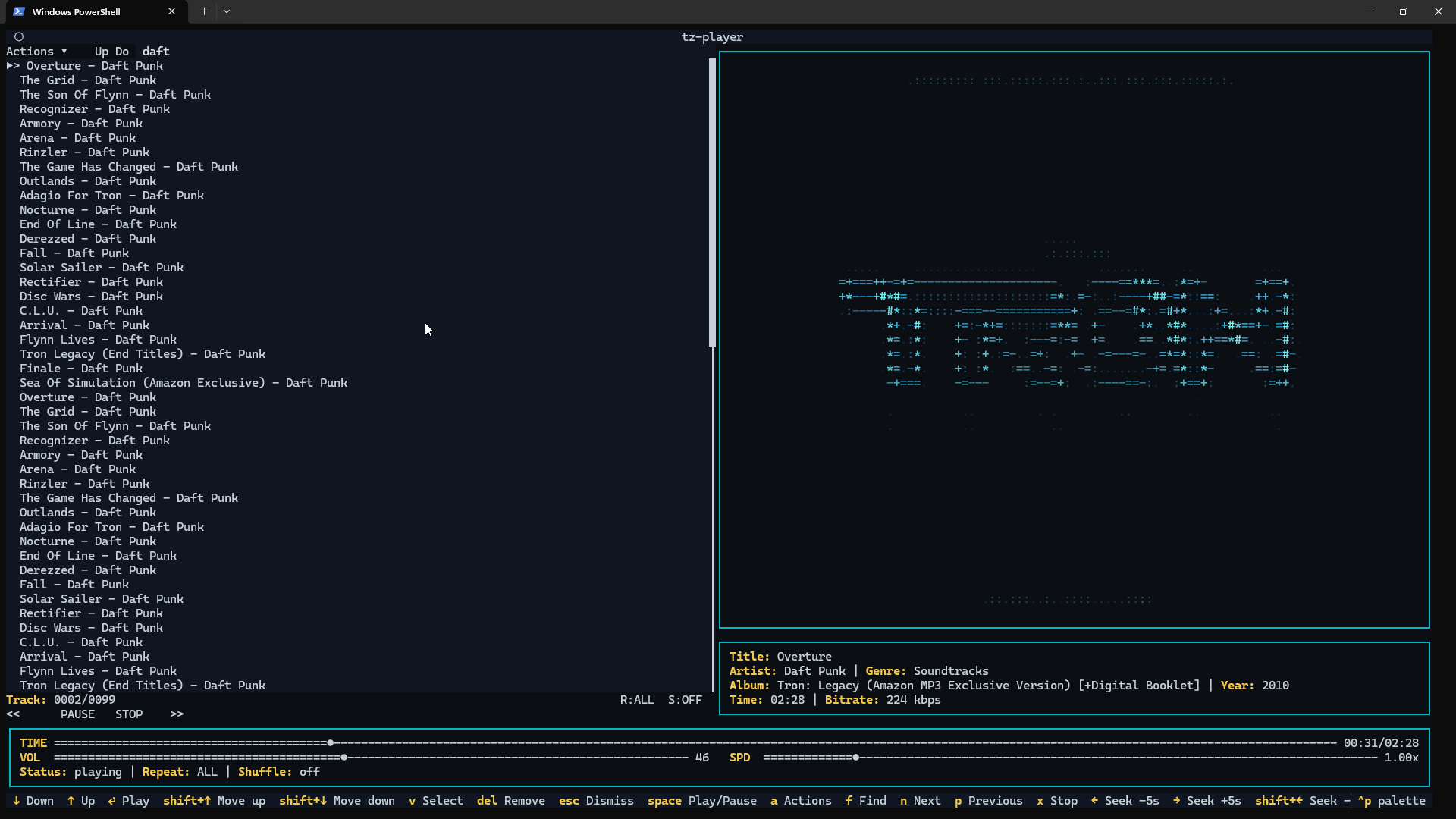
Amethyst is an cross-platform audio player with a node-basedaudio routing system, the main goal of this project is to make a music player in TypeScript to see how far the language can be stretched to prove it’s possible to provide pro-level features as most DAWs / DAEs, while also providing useful tools and customizability to the end-user.
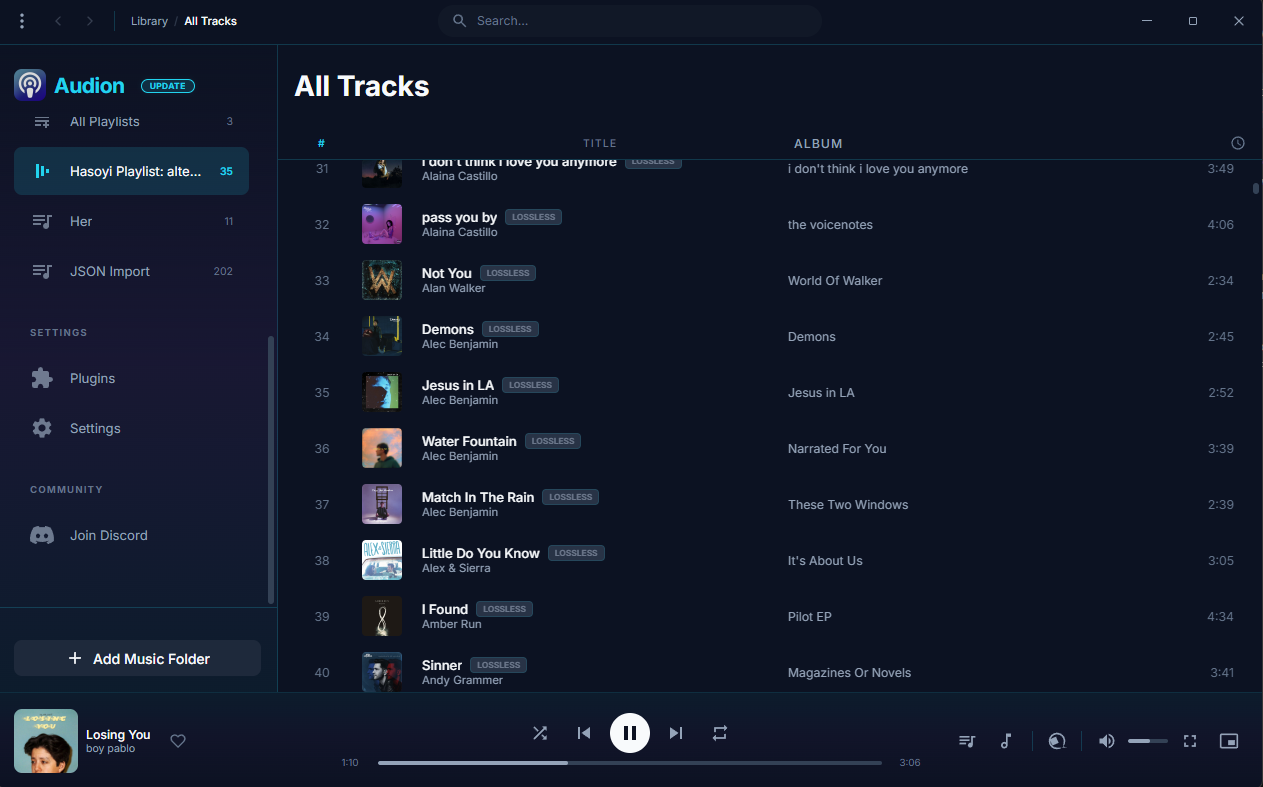
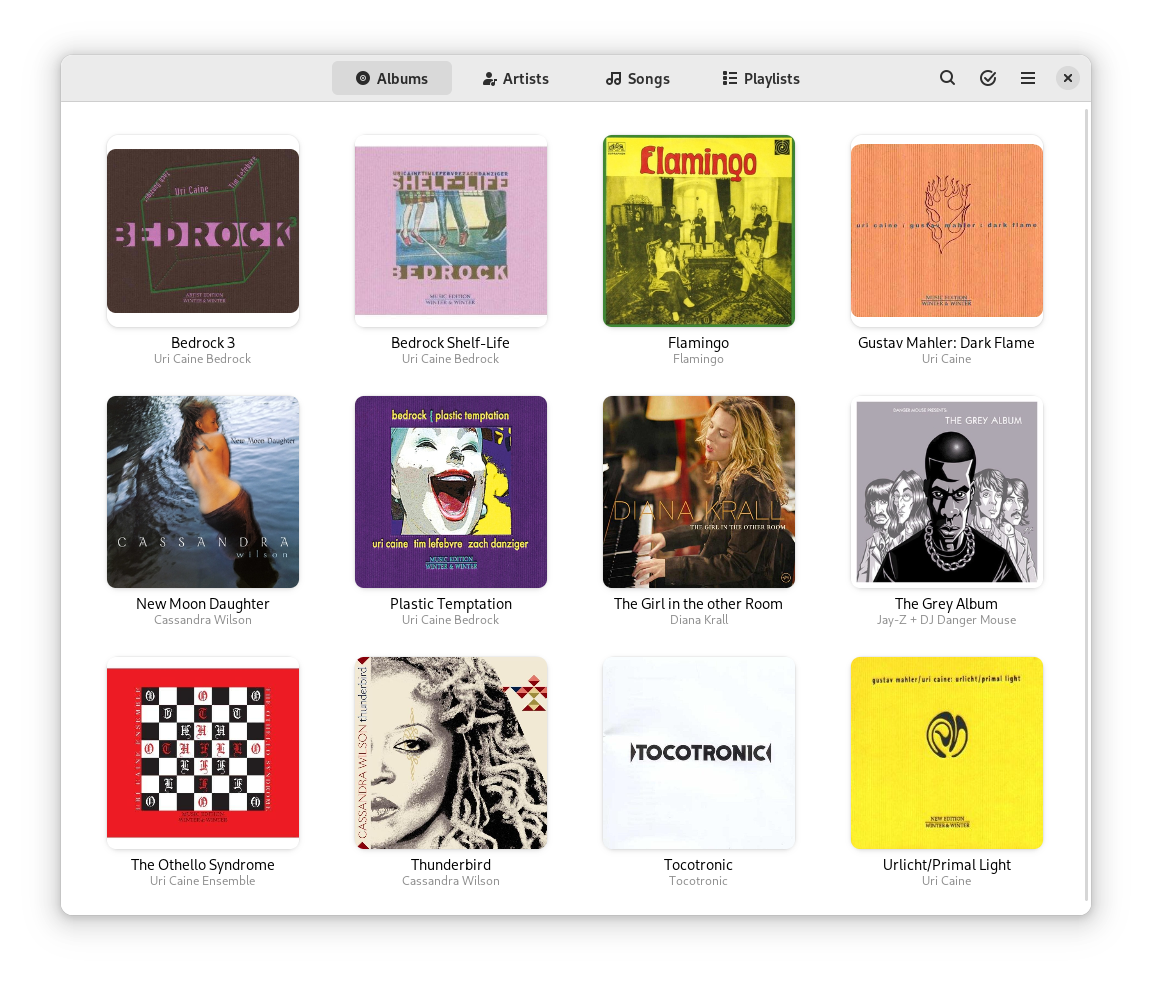
Bloomee🌸 is my Flutter project, An Open-Source Music app designed to bring you Ad-free tunes from various sources. Dive into a world of limitless music from platforms like YouTube and Jio Savan, with more sources blooming soon! 🌼🎵
Why Bloomee? 🌟 Ad-Free Experience: Say goodbye to interruptions and enjoy uninterrupted musical bliss.
🌍 Multi-Source Player: Access your favorite tracks from diverse platforms, with more sources continually joining our melody garden.
🚀 Flutter-Powered Learning: Bloomee is not just about music; it’s about learning and growing with Flutter and BLoC architecture. Explore the intersection of beautiful design and smooth functionality while mastering the art of app development.
Schism Tracker is a free and open-source reimplementation of Impulse Tracker, a program used to create high quality music without the requirements of specialized, expensive equipment, and with a unique “finger feel” that is difficult to replicate in part. The player is based on a highly modified version of the ModPlug engine, with a number of bugfixes and changes to improve IT playback.
Where Impulse Tracker was limited to i386-based systems running MS-DOS, Schism Tracker runs on almost any platform that SDL supports, and has been successfully built for Windows, Mac OS X, Linux, FreeBSD, OpenBSD, AmigaOS, BeOS, and even Wii. Schism will most likely build on any architecture supported by GCC4 (e.g. alpha, m68k, arm, etc.) but it will probably not be as well-optimized on many systems.