Overtone GEQ ~ Harmonic Graphic Equalizer


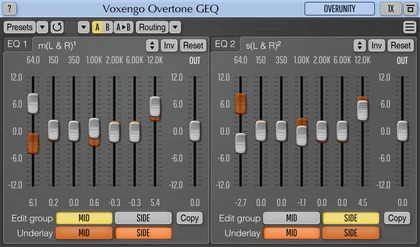
Overtone GEQ is a free 7-band harmonic (overtone) graphic equalizer AudioUnit, AAX, and VST plugin with multi-channel operation support (supporting up to 8 input/output channels, audio host application-dependent).  Overtone GEQ offers extensive internal channel routing capabilities, and supports mid/side channel processing.

Beside equalizing, Overtone GEQ applies harmonic enhancement: it uses 7 harmonic enhancement modules, one for each EQ band.  This generates a complex harmonic coloration you will probably like a lot.

Overtone GEQ was designed to allow audio engineers to apply quick EQ shape adjustments together with adding a bit of harmonic richness to the audio material (mainly mixes and sub-mixes due to a comparably high load this EQ puts on a CPU).

www.voxengo.com/product/overtonegeq

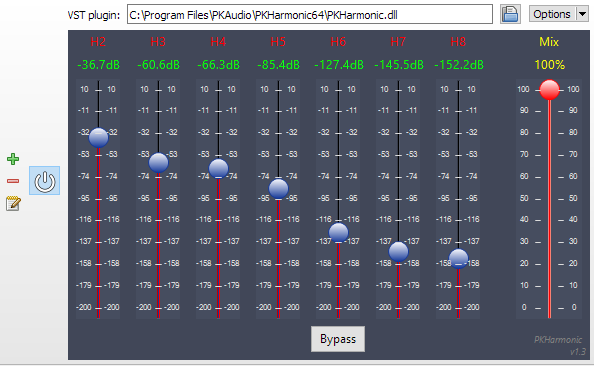
PKHarmonic VST Plugin ~ Audiophile Harmonics Generator


distortaudio.org/pkharmonic

Twonker ~ Overtone Series MIDI VST


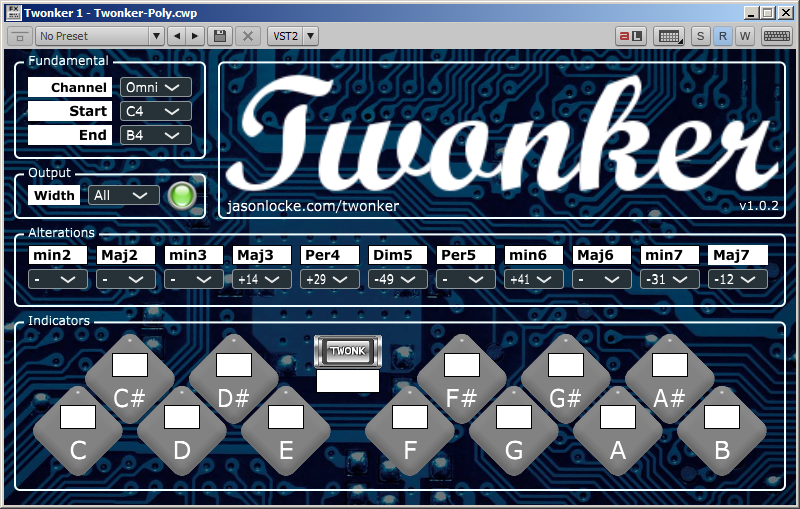
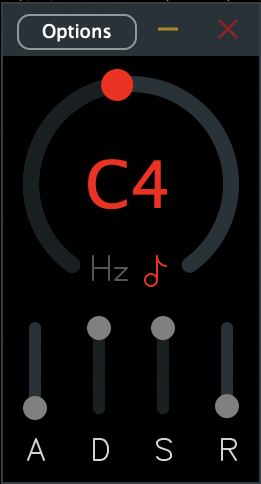
The Twonker is a free VST MIDI Plugin that allows a digital piano (or any MIDI instrument) to play tones from the Overtone Series. It is designed to run within most Digital Audio Workstations as a Synth Plugin on MacOS, Windows, and Linux.

The Twonker allows a musician to play overtones in a predictable and flexible manner, using a regular MIDI-based keyboard. In essence, it behaves like twelve different pianos tuned to twelve different “Overtone Scales”.

Features:

  • Runs on MacOS, Windows, and Linux
  • Built on the portable JUCE application framework
  • Functions as a Synth with MIDI input and output

www.jasonlocke.com/twonker

sourceforge.net/projects/twonker

repitch ~ MIDI Pitch Shift


A MIDI-controlled harmonizer audio plugin.

github.com/maxwellpollack/repitch

Jniz ~ Compose With Harmonies


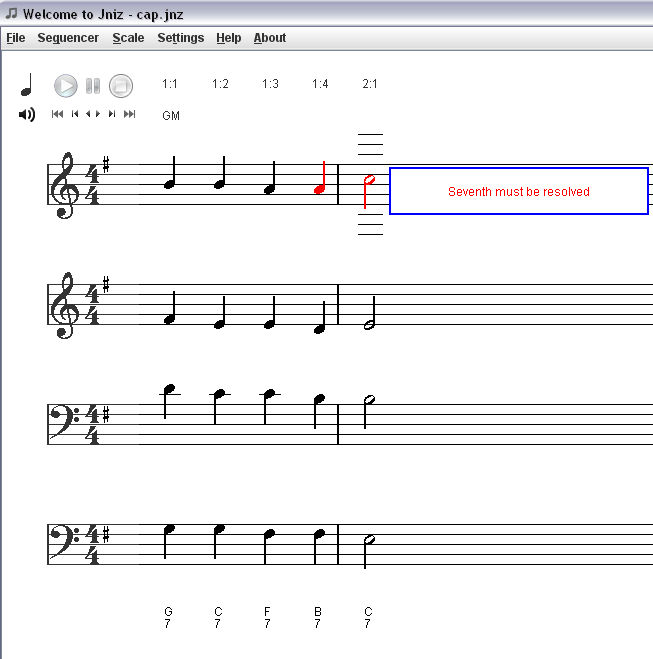
Jniz is a free proprietary piece of software designed for musicians as a support tool to the musical composition. It allows you to build and to harmonize several voices according to the rules of classical harmony.

To be convinced of the limitations observed and of the work done by the great classical masters such as Bach, Mozart or Beethoven, please refer to Wikipedia, the Walter Piston Harmony book or the Schonberg theory.

The perfect knowledge and the good practice of these rules are not required but you will undoubtedly save time and it will help you greatly in using and understanding the mechanism of Jniz.

  • interface of musical notation which allows you to create, edit, save a score
  • number of voices up to 16 (256 with layers).
  • possibility to change of Key at any time.
  • Jnz, MusicXml, LillyPond, Midi, PDF export.
  • listen to the available Midi ports.
  • scale
  • redo / undo
  • Non harmonic tones (appoggiatura, echappee, suspension, passing, pedal, cambiata, anticipation)
  • Minor melodic keys
  • Chords notation recognition
  • harmonic correction of your work following the set of predefined rules
  • to give one or several solutions in case of fault if one or more rules are circumvented (Solver module).
  • Empty staves filled up by Solver (Auto Harmonizing)
  • Keys / modulations simulation tool
  • Cadences
  • Solvers serialization
  • multi-cores support
  • Input with Midi keyboards or microphones / input lines
  • Audio / sound to midi converter (monophonic)
  • Windows, Linux, OS X compatible (32/64 bits)
  • multi-languages support
jniz

www.jniz.org