/synth is a minimalist, array-oriented synthesis environment. Heavily inspired by the K/Simple lineage and the work of Arthur Whitney, it treats sound not as a stream, but as a holistic mathematical vector.
📐 The Philosophy
This isn’t a DAW; it’s a vector-processing engine designed for “Base Camp” signal processing.
It uses:
One-Letter Variables: A-Z globals only.
Right-Associativity: Expressions evaluate from right to left.
Vectorized Verbs: Math applied to entire buffers at once.
Sound is a vector. A kick drum is a vector. A two-second bell tone is a vector. You do math on vectors and the result is audio. There are no tracks, no timelines, no patch cables — only expressions.
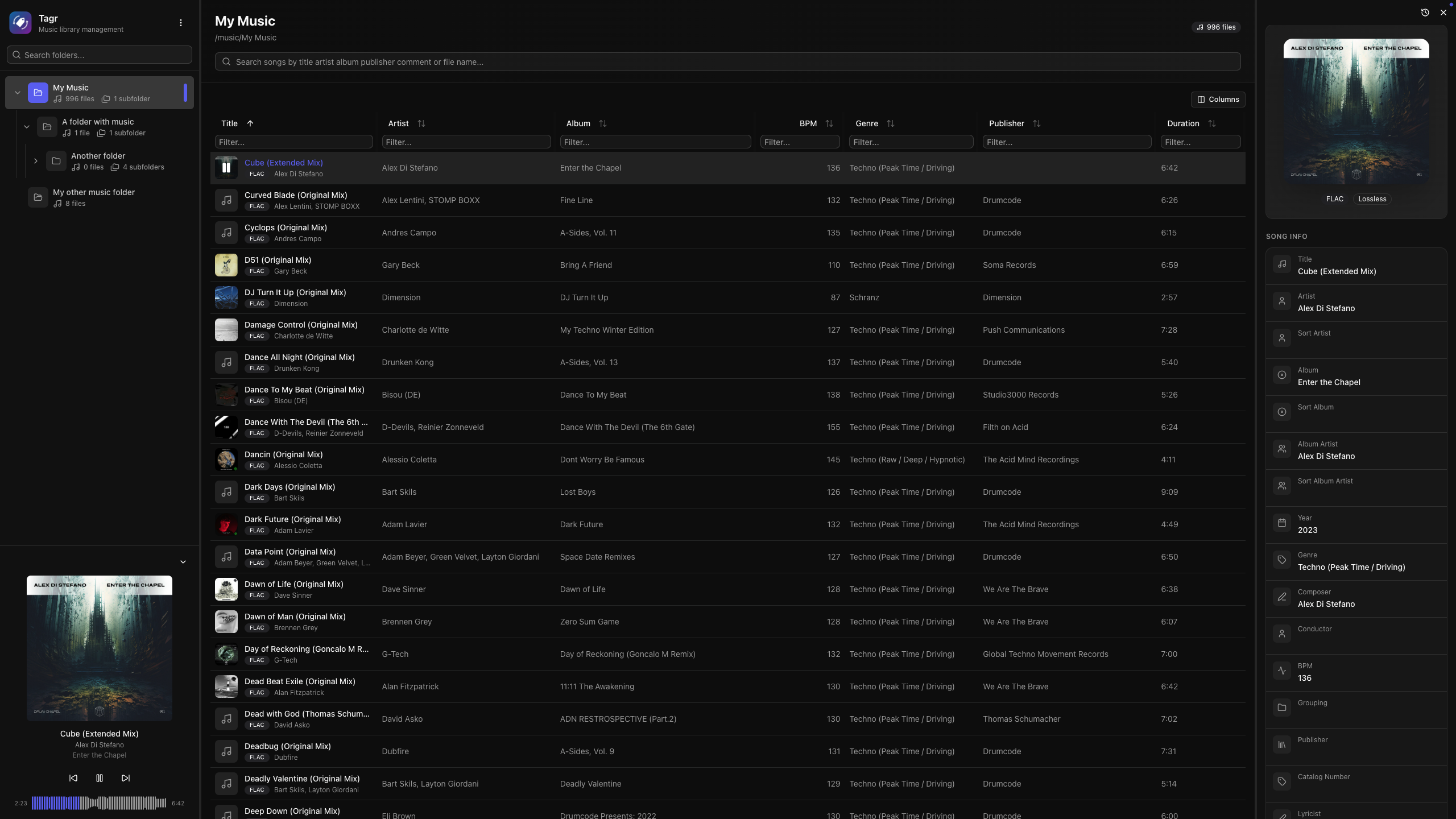
Self-hosted web app for browsing, playing, and editing music file metadata. Features a three-panel UI to navigate your library, listen to tracks, and write tag changes directly back to audio files. Built with Next.js, React, Prisma + SQLite, and node-taglib-sharp.
Most metadata editors are either desktop-only, command-line tools, or bloated apps with steep learning curves. If your music lives on a NAS, a server, or a headless machine, editing tags means SSH, mounting drives, or syncing files back and forth.
Tagr takes a different approach:
Run it anywhere — Docker, bare metal, your NAS. If it runs Node.js, it runs Tagr.
Edit from any browser — No installs, no plugins. Just open a tab.
Do one thing well — Browse your library, edit tags, save. That’s it.
Features:
Metadata Editing
Edit 40+ metadata fields inline — title, artist, album, year, genre, composer, BPM, lyrics, and more
Album art management — view, replace, and upload cover images directly
Star ratings (1–5) with a visual widget
Support for track/disc numbering, sort fields, catalog numbers, barcodes, and extended tags
Read-only display of audio properties (codec, bitrate, sample rate, channels, bits per sample)
Music Player
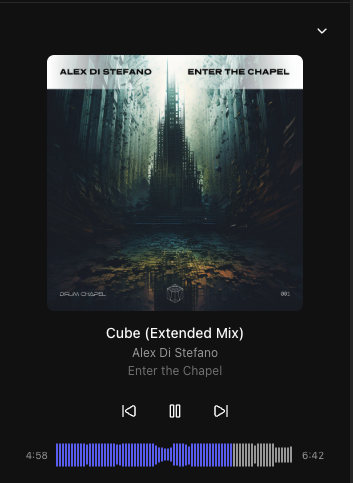
Built-in audio player with interactive waveform visualization (WaveSurfer.js)
Play/pause, previous/next track navigation
Click-to-seek on the waveform
Auto-advance to next song
Collapsible sidebar player with album art, title, and artist display
Library Browsing
Three-panel layout — folder tree, song list, and detail editor side by side
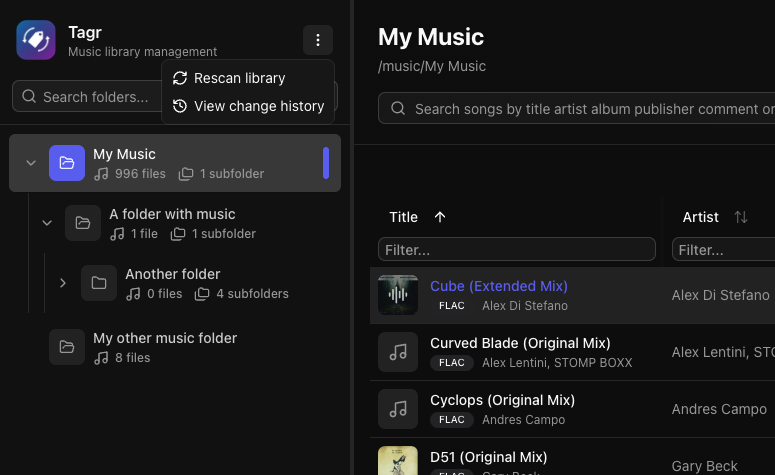
Folder tree with hierarchical navigation and real-time search
Sorting on any column — title, artist, album, year, duration, bitrate, date added, and dozens more
Advanced filtering — text, numeric ranges, date ranges, and boolean filters across all fields
Customizable columns — show/hide any of 40+ columns to match your workflow
Virtual scrolling and infinite pagination for large libraries
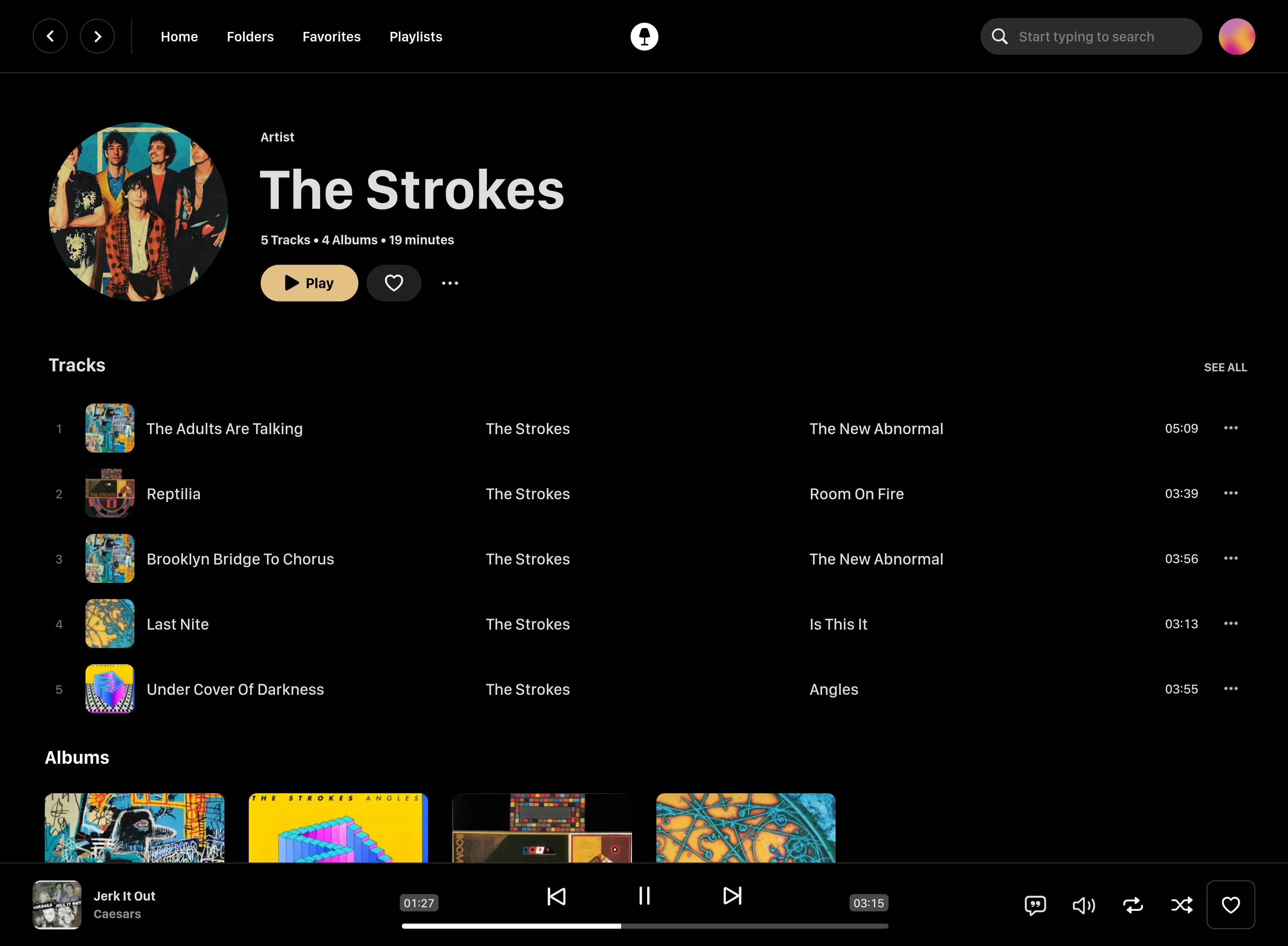
Swing Music is a fast and beautiful, self-hosted music player for your local audio files. Like a cooler Spotify … but bring your own music. Just run the app and enjoy your music library in a web browser.
Features:
Daily Mixes – curated everyday based on your listening activity
Metadata normalization – a clean and consistent library
Album versioning – normalized albums and association with version labels (eg. Deluxe, Remaster, etc)
Related artist and albums
Folder view – Browse your music library by folders
Playlist management
Beautiful browser based UI
Silence detection – Combine cross-fade with silence detection to create a seamless listening experience
Collections – Group albums and artists based on your preferences
Statistics – Get insights into your listening activity
Lyrics view
Android client
Last.fm scrobbling
Multi-user support
Cross-platform – Windows, Linux, MacOS (coming soon), arm64, x86
I had one of these trivial problems. Yesterday I wanted to create a new stroboscope disc for my Metzner rebuild (now with 50HZ 🙂 … After fiddling around with some graphic tools I decided to build a small Web-App (quick and dirty) to support me on this task. It might be of interest? You can use it offline or via the web site…
Main Features:
– Supports 33⅓, 45, 78 RPM + custom speeds – 50Hz, 60Hz, 300Hz lamp frequencies + custom frequency – Adjustable disk size, bar length, smoothing – Custom colors and logo upload – Drag/rotate/resize logo interactively – Export: SVG (print), STL/3MF (3D print), FreeCAD macro – Light/dark theme, EN/DE bilingual – Offline-capable (standalone download)
This is a web version of the Roland TR-909 drum-machine with painfully hand-made generated html, svg & css and a proper web-audio-api sound engine. It emulates the exact same cumbersome user experience of the original machine.
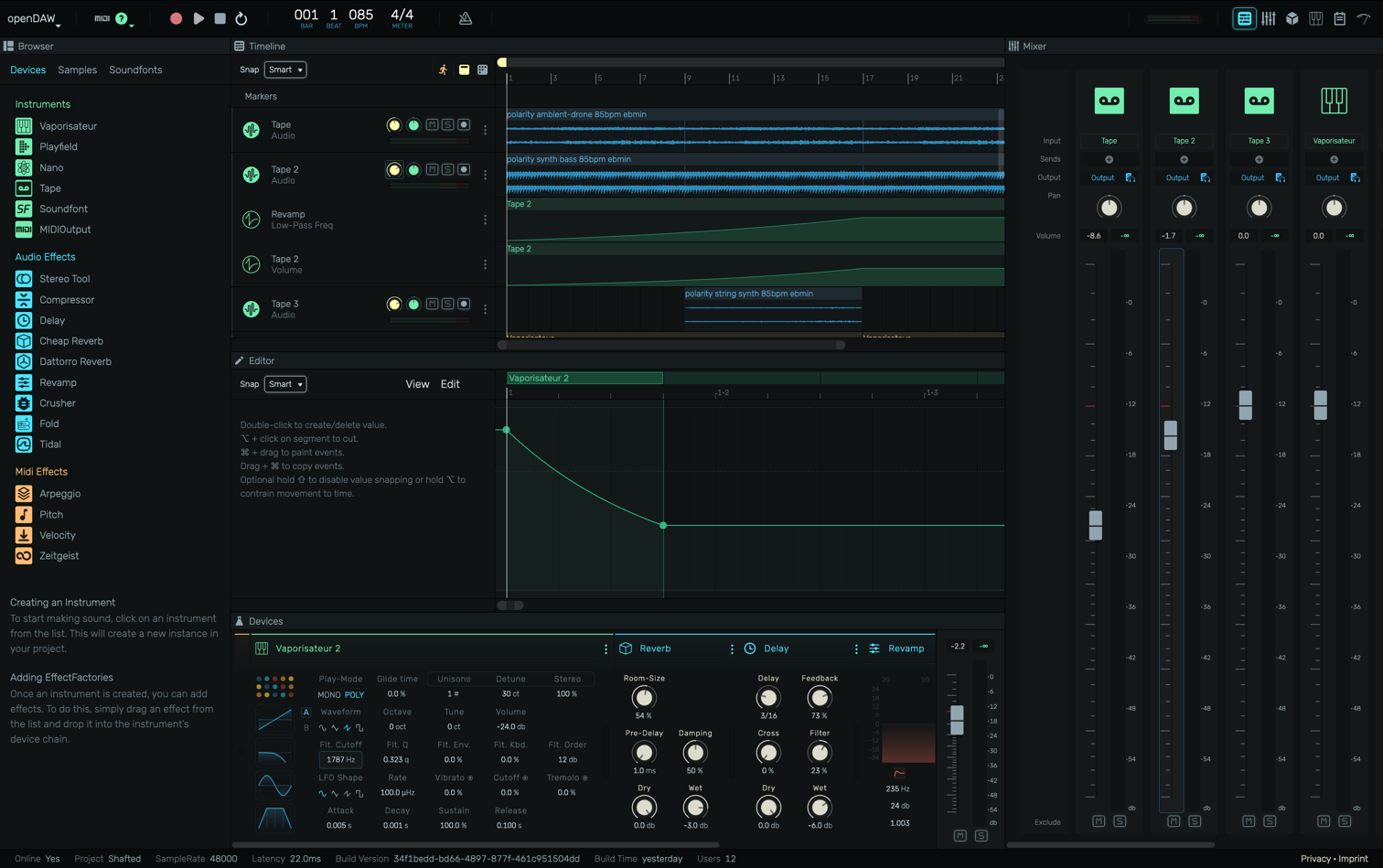
openDAW is a next-generation web-based Digital Audio Workstation designed to democratize music production by making professional creation tools accessible to everyone. Built entirely in TypeScript with Web Audio API, it runs in your browser with no required login and no vendor lock-in. Open-source under AGPL-3 and designed with education at its core.
cplayer is a small, statically served, client-side album-based audio player for modern web browsers. You simply drop a build into a directory on your web server, create a manifest.json file that describes the album metadata and track URIs and you’re done.










 The Audio File