A command line tool for fast frame accurate audio image + cue sheet splitting.
This project is started mostly out of frustration over supporting split2flac with all the external dependencies and their quirks.

A command line tool for fast frame accurate audio image + cue sheet splitting.
This project is started mostly out of frustration over supporting split2flac with all the external dependencies and their quirks.

split2flac splits one big APE/FLAC/TTA/WV/WAV audio image (or a collection of such files, recursively) with CUE sheet into FLAC/M4A/MP3/OGG_VORBIS/OPUS/WAV tracks with tagging, renaming, charset conversion of cue sheet, album cover images. It also uses configuration file, so no need to pass a lot of arguments every time, only an input file. Should work in any POSIX-compliant shell.
https://github.com/ftrvxmtrx/split2flac

LSP (Linux Studio Plugins) is a collection of open-source plugins currently compatible with LADSPA, LV2 and LinuxVST formats. The basic idea is to fill the lack of good and useful plugins under the GNU/Linux platform.
lsp-plug.in
sourceforge.net/projects/lsp-plugins

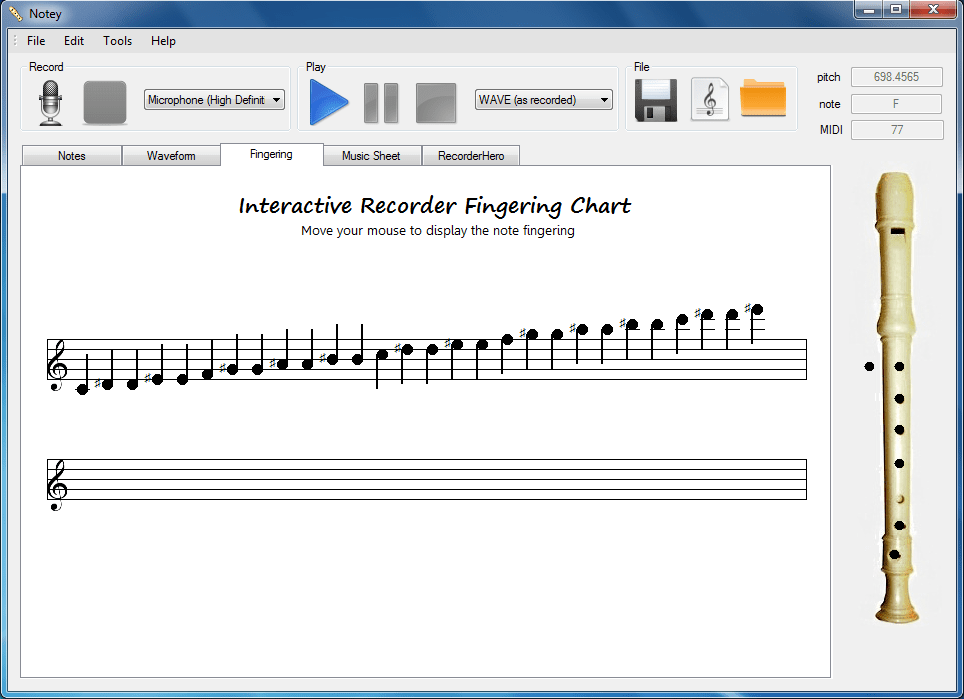
Play in the recorder next to your computer, and the notes will appear on screen in real time! Given a music sheet, the software shows the note to play and if you played correctly.
sites.google.com/site/noteysoftware/
sourceforge.net/projects/noteyrecorder/

KRadio is an Internet and/or AM/FM radio application for KDE Frameworks 5. It has support for V4L and V4L2 radio devices, internet radio, RDS, lirc remote control, MP3 and Ogg/Vorbis recording, TimeShift playing, alarms and much more. Try it out!
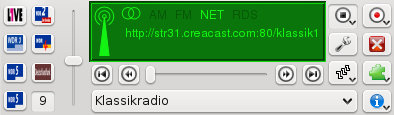
sourceforge.net/projects/kradio/

Core ideas behind this project:
* Your filesystem should remain tidy and clean – let’s pack tracks into uncompressed archives a.k.a. “libraries” (this was inspired by a common practice of video game developers to store all game resources in one or several packages). Less files – less clutter.
* Tags suck (especially ID3) – let’s utilize XML/YAML/JSON to describe entire albums.
* Storing cover image in every track is a waste of space – let’s have one TIFF/PNG/FLIF file per library.
* Being able to verify integrity of files in your music collection is a good feature, so let’s use hash lists (MD5, SHA1 etc.) for libraries.
* Rather than having to dig through lots of directories in order to select what you want to listen at the very particular moment it is much more convenient to have a centralized per-user database with a quick access to any track/album in your precious collection.
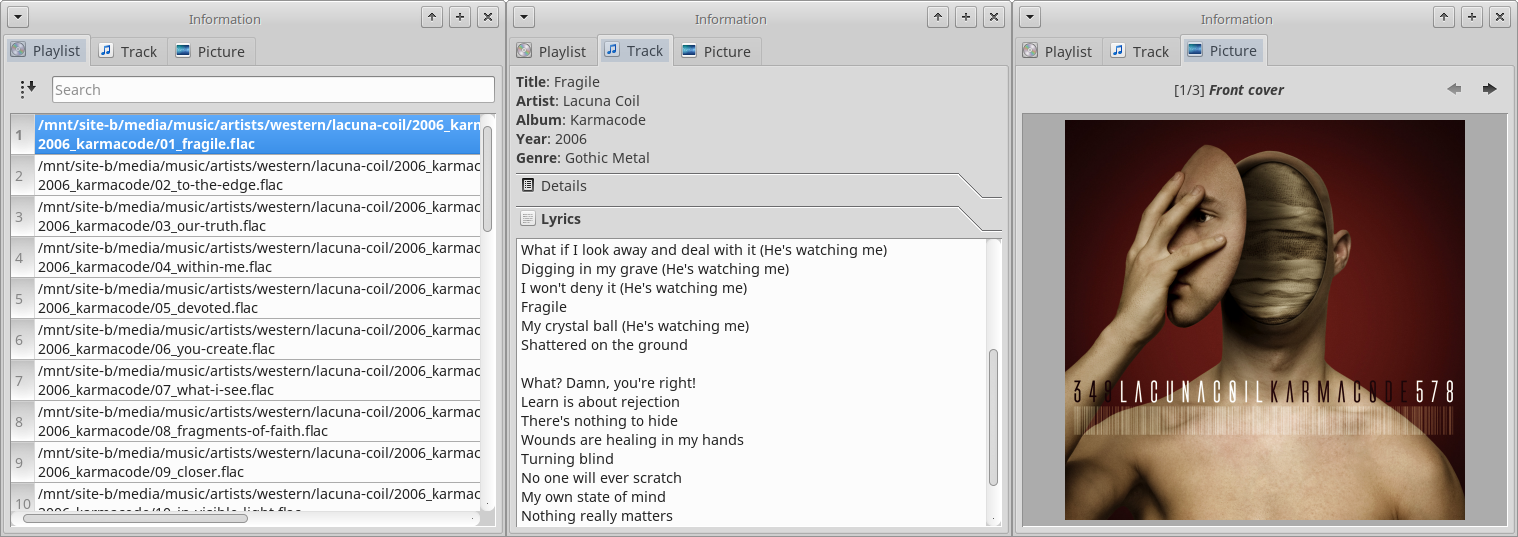
sourceforge.net/projects/arita/

A GTK+ Shoutcast / Icecast client with two main media players, a jingles player, crossfader, ogg and mp3 streaming, stream automation timers, aux input, Voice and VoIP integration. File formats: mp3, ogg, flac, wma, wav, m4a, m3u, pls, and others.
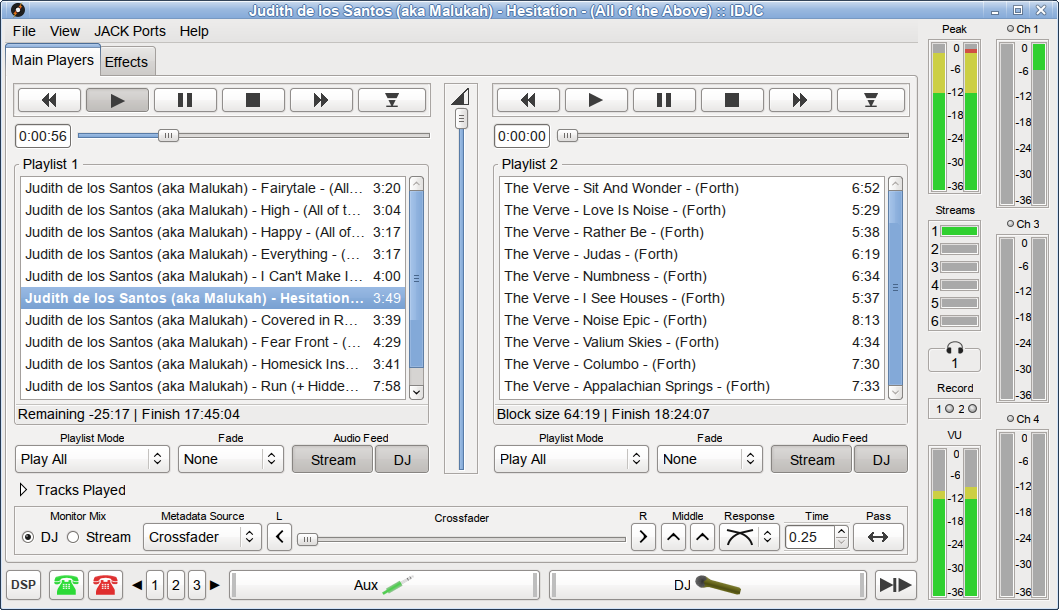
sourceforge.net/projects/idjc/

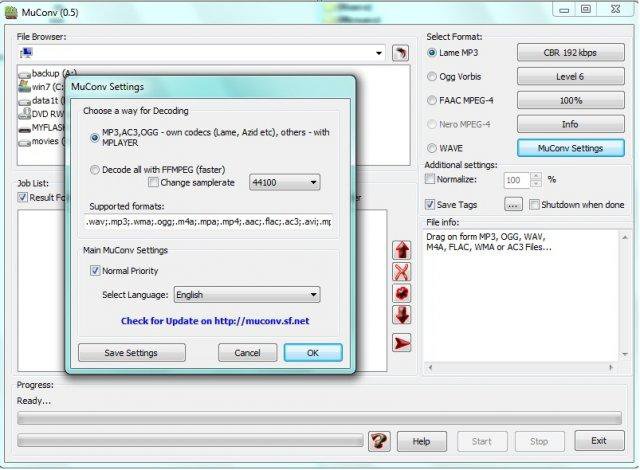
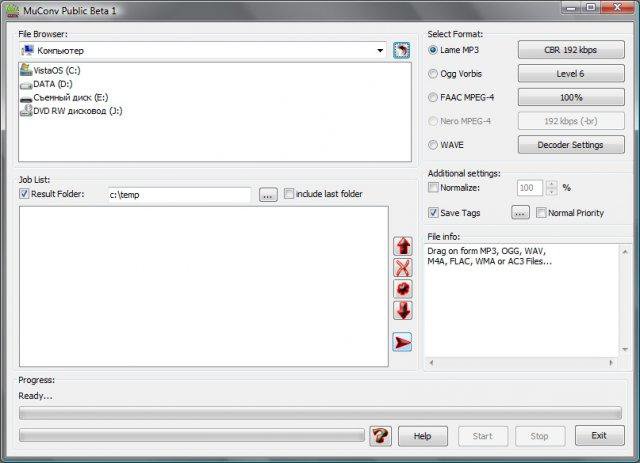
Music CONVerter (MuConv) – GUI for the LAME, OGG, FAAC, MPlayer for converting between most popular audio formats, volume normalizing and saving or automatically filling in id3tags
sourceforge.net/projects/muconv/

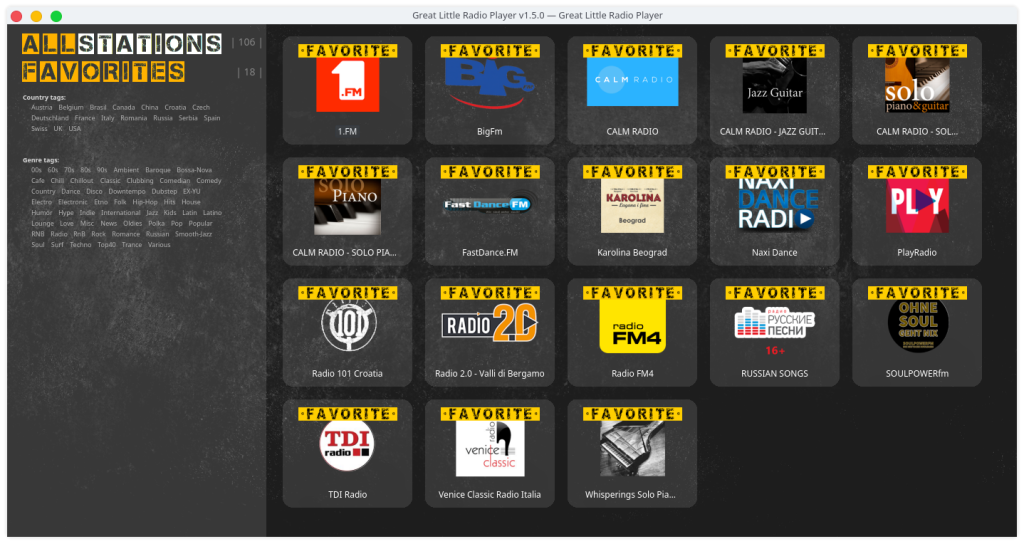
This is ‘Great Little Radio Player’. It is a robust internet radio station streamer. It connects to web sites offering radio streaming and lets you play radio stations directly from that location. Developed for Windows, Linux and MacOSX.
sites.google.com/view/greatlittleradioplayer/home
sourceforge.net/projects/glrp/

Midi Router Client is an advanced, cross-platform tool designed to route and manipulate MIDI signals in real time. It allows users to create virtual MIDI ports, map MIDI events (e.g., CC to pitch wheel), monitor inputs, and build custom controls like program change dropdowns — all with minimal latency.
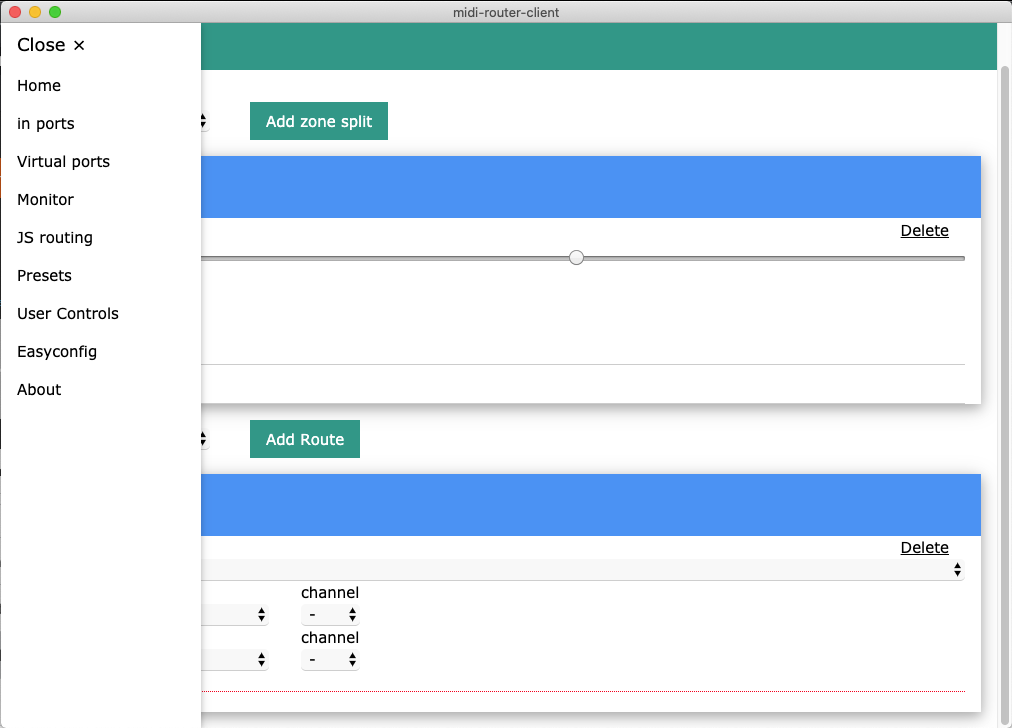
Client git (vuejs, typescript, electron):
github.com/shemeshg/midi-router-client
Server git (C++, Qt webchannel):
github.com/shemeshg/RtMidiWrap
Online client:
shemeshg.github.io/midirouter-online/#/
sourceforge.net/projects/midi-router-client

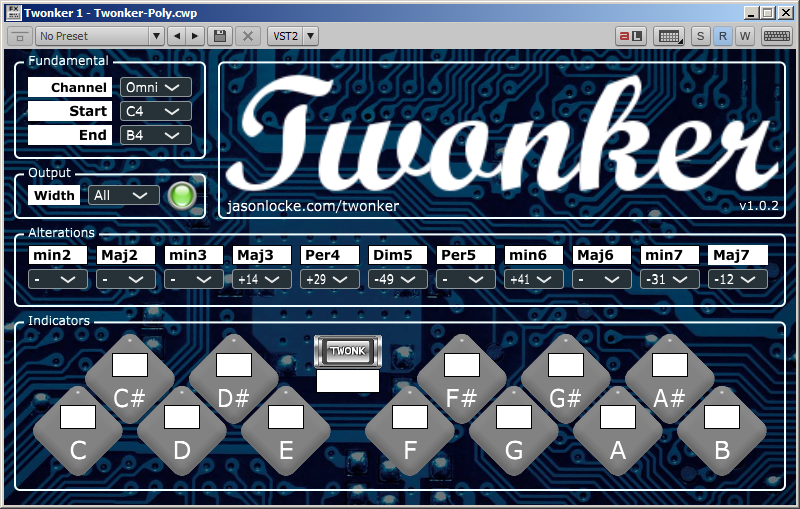
The Twonker is a free VST MIDI Plugin that allows a digital piano (or any MIDI instrument) to play tones from the Overtone Series. It is designed to run within most Digital Audio Workstations as a Synth Plugin on MacOS, Windows, and Linux.
The Twonker allows a musician to play overtones in a predictable and flexible manner, using a regular MIDI-based keyboard. In essence, it behaves like twelve different pianos tuned to twelve different “Overtone Scales”.
sourceforge.net/projects/twonker

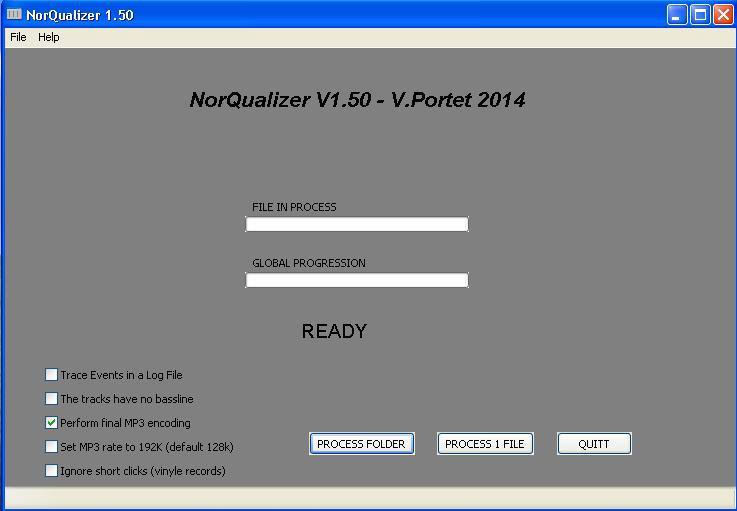
NorQualizer is a smart audio equalizer / normalizer which corrects audio files to get them all similar in terms of bandwidth and volume level. Especially useful for preparing audio CDs with files from different sources.



 The Audio File