daktilo (“typewriter” in Turkish, pronounced “duck-til-oh”, derived from the Ancient Greek word δάκτυλος for “finger”) is a small command-line program that plays typewriter sounds every time you press a key. It also offers the flexibility to customize keypress sounds to your liking. You can use the built-in sound presets to create an enjoyable typing experience, whether you’re crafting emails or up to some prank on your boss.
This application can be used to find artifacts in audio files generated by signal processors. It analyses the signal variance across the audio duration, then generates a graph of the results.
The following types of audio can analysed: * Music * Sine Tones * Noise (White, Pink, etc)
If the audio recording is split across multiple files, they can be loaded into this application collectively and will be treated as a single stream. Multiple batches can also be loaded, in order to process multiple recordings in one continuous operation. The scanners can only process audio files up to 2.5GB, but the file splitter function can be used to break up large files into smaller ones.
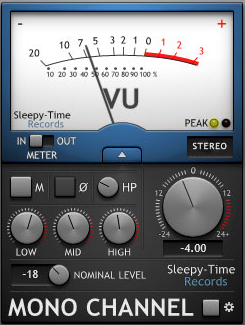
MonoChannel is a EQ and VU meter with basic console channel controls.
Insert MonoChannel on your audio tracks to monitor your audio signal and adjust its tonal balance. It is designed only to encourage the use of proper gain staging and audio balance workflows in digital audio. MonoChannel is NOT a distortion/saturation/console emulation plugin.
Windows VU Meter is a standalone application that mimics an old stereo’s VU or audio level meters. Designed for Microsoft® Windows Vista® and up (even tested on Windows 7®), the program has no intervening toolbars or window frames to allow the program to allow a clean interface and make it easy to overlay on top of a program you’re using. Features of the program include:
For Microsoft ® Windows Vista ®, and after testing, works with Windows 7 ® as well.
Clean interface that includes no toolbars or window dressings
Ability to select response time of VU Meter, selectable of 150ms or default 300ms. Response time is the amount of time it takes the needles to make a full swing of the gauge.
User selectable interface component coloring. Program saves and remembers settings the next time it’s run.
Option setting to allow always-on setting, allowing the program to be laid over another program that you’re monitoring the audio levels for. An example image.
User option to alter the maximum value of the VU Meter. This is handy for videos or music that were recorded at a lower value. The above example image is an example of this too.
All program options and commands are handled by right-clicking the interface.
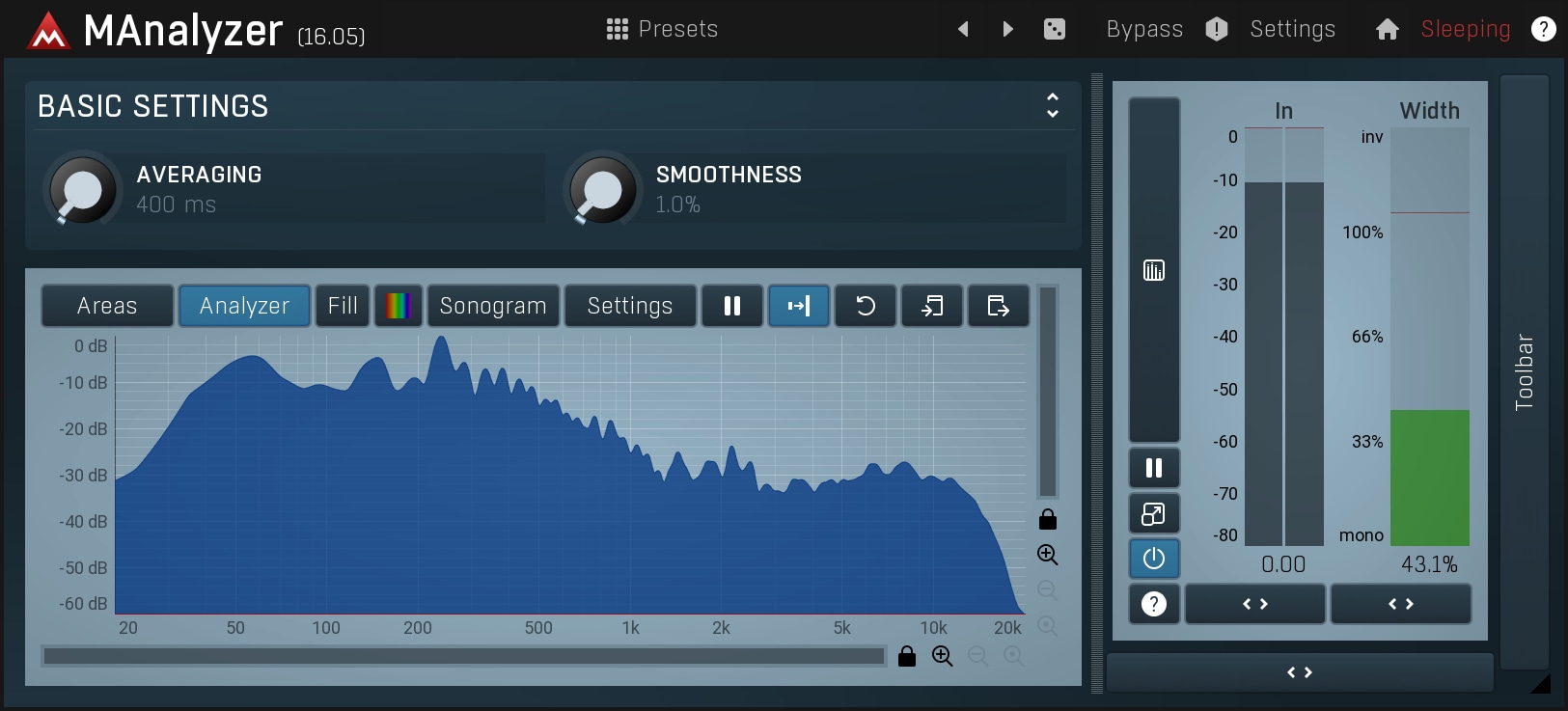
MAnalyzer is an advanced spectral analyzer and sonogram plugin containing unique features such as smoothing, normalization, super-resolution, prefiltering and deharmonization. The included meters provide a peak meter and EBU R128 and ITU-R BS 1770-3 compliant loudness meter.
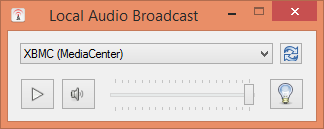
This simple application captures the local audio playback in Windows and sends it over the local network to a UPnP renderer. I originally wrote it to stream Spotify music playback from my computer over the home network to my HTPC running XBMC/Kodi (since I wasn’t satisfied with the available Spotify plugins), it can be used for any audio though.









 The Audio File
